The paradigm of digital discovery is undergoing a profound structural shift as search engines transition from traditional blue links to synthesized, conversational answers driven by generative artificial intelligence. As consumers increasingly rely on conversational platforms like OpenAI’s ChatGPT, Google’s Gemini, and Perplexity for product recommendations and brand discovery, digital marketers are confronted with a critical operational dilemma: how to measure, analyze, and optimize brand presence within AI-generated responses. This emerging discipline—often referred to as Answer Engine Optimization (AEO)—has sparked a race among software developers to provide actionable visibility data.
At the forefront of this marketplace are three distinct offerings: Ahrefs Brand Radar, which embeds AI visibility tracking into a traditional search engine optimization suite; Profound, a dedicated, enterprise-grade AEO and AI intelligence platform; and HubSpot AEO, an integrated tracking and workflow tool designed to bridge the gap between AI visibility analytics and content creation. Evaluating these platforms requires a rigorous examination of their methodologies, data sources, pricing structures, and utility for modern marketing teams navigating the post-click search ecosystem.
The Shift from Traditional SEO to Answer Engine Optimization
Traditional rank tracking relies heavily on fixed keyword positions within a standardized search engine results page (SERP). However, this methodology fails to capture the nuances of AI-driven search environments, where answers are dynamically generated, conversational, and frequently devoid of traditional ranking positions. The necessity of adopting specialized AI visibility metrics is underscored by shifting consumer behavior. A landmark 2025 research analysis conducted by the Pew Research Center, which examined the browsing habits of 900 U.S. adults, revealed that users clicked on a traditional organic result link in only 8% of web visits that featured an AI-generated summary, compared to 15% of visits without one.

This dramatic decline in outbound click-through rates fundamentally alters the economics of digital visibility. When fewer users click through to external websites, being explicitly named, cited, or recommended within the body of an AI-generated answer carries immense commercial weight. Brands that fail to register within these synthesized summaries risk losing top-of-funnel discovery entirely, regardless of their traditional organic ranking positions. Consequently, software vendors have rushed to build tools capable of monitoring brand mentions, sentiment, and competitive share of voice across various large language models (LLMs) and conversational engines.
Ahrefs Brand Radar: AI Visibility Within an Established SEO Workflow
For organizations deeply entrenched in the Ahrefs ecosystem, Ahrefs Brand Radar offers a streamlined entry point into AI visibility tracking. Rather than forcing teams to adopt an entirely separate software stack, Brand Radar integrates AI monitoring directly into the broader suite of SEO tools utilized by millions of digital marketers globally.
The primary differentiator for Brand Radar lies in its expansive data sourcing methodology. Ahrefs constructs its comprehensive prompt database by leveraging real-world keyword volumes, which are subsequently expanded into natural, conversational questions through the analysis of "People Also Ask" data and semantic fanout techniques. These generated prompts are then continuously executed across multiple AI platforms to evaluate brand presence. According to documentation from Ahrefs, the platform’s prompt database encompasses more than 400 million search-backed queries, offering broad coverage across major AI engines, including Google AI Overviews, ChatGPT, Perplexity, Gemini, and Microsoft Copilot, with Claude available for customized prompt configurations.
Despite its impressive scale, Brand Radar operates primarily as an analytical observation tool rather than an active workflow manager. While it excels at mapping out brand sentiment, share of voice, and citation frequency across a vast array of keywords, it lacks deep CRM integrations and automated, one-click content generation capabilities. For teams that view Ahrefs as their operational home base, Brand Radar provides sufficient depth to monitor AI positioning without requiring supplementary software subscriptions. However, organizations seeking specialized consumer prompt demographics, advanced server-log agent analytics, or direct pathways from insight to published content may find the feature set somewhat constrained.

Profound: Specialist Depth for Enterprise AEO Intelligence
In contrast to feature sets bolted onto traditional SEO suites, Profound was built from the ground up as a dedicated AEO and AI intelligence platform. Designed to meet the rigorous demands of enterprise-level marketing and PR teams, Profound executes daily prompt analyses and incorporates specialized modules that standard SEO tools cannot replicate.
Profound’s core strength lies in its granular approach to AI discovery. While generalist tools track high-level brand visibility scores, Profound offers advanced tracking capabilities that encompass consumer prompt demographics, detailed crawler analysis, and specialized shopping analytics. This makes it particularly valuable for e-commerce brands, multinational enterprises, and agencies managing complex portfolios where minor fluctuations in AI citations can translate into significant revenue shifts. Furthermore, Profound’s capacity to track up to nine distinct engines on its enterprise tier ensures comprehensive coverage of emerging conversational platforms.
Nevertheless, this specialist depth comes with notable trade-offs. Profound sits firmly at the higher end of the pricing spectrum, making it a prohibitive investment for smaller marketing teams or organizations still in the exploratory phases of AI optimization. Additionally, the platform’s advanced interface and dense analytical reports often require specialized training, separating it from the plug-and-play simplicity desired by agile inbound marketing squads. Enterprises that choose Profound typically do so because they require a dedicated command center for reputation management, competitive intelligence, and deep technical crawler auditing within generative search environments.
HubSpot AEO: Connecting Visibility Data to Marketing Actions

Addressing the operational disconnect between merely observing visibility data and taking corrective action, HubSpot AEO approaches the market from an action-oriented perspective. Rather than isolating metrics in a standalone analytics dashboard, HubSpot AEO bridges the gap between tracking, content creation, and campaign execution.
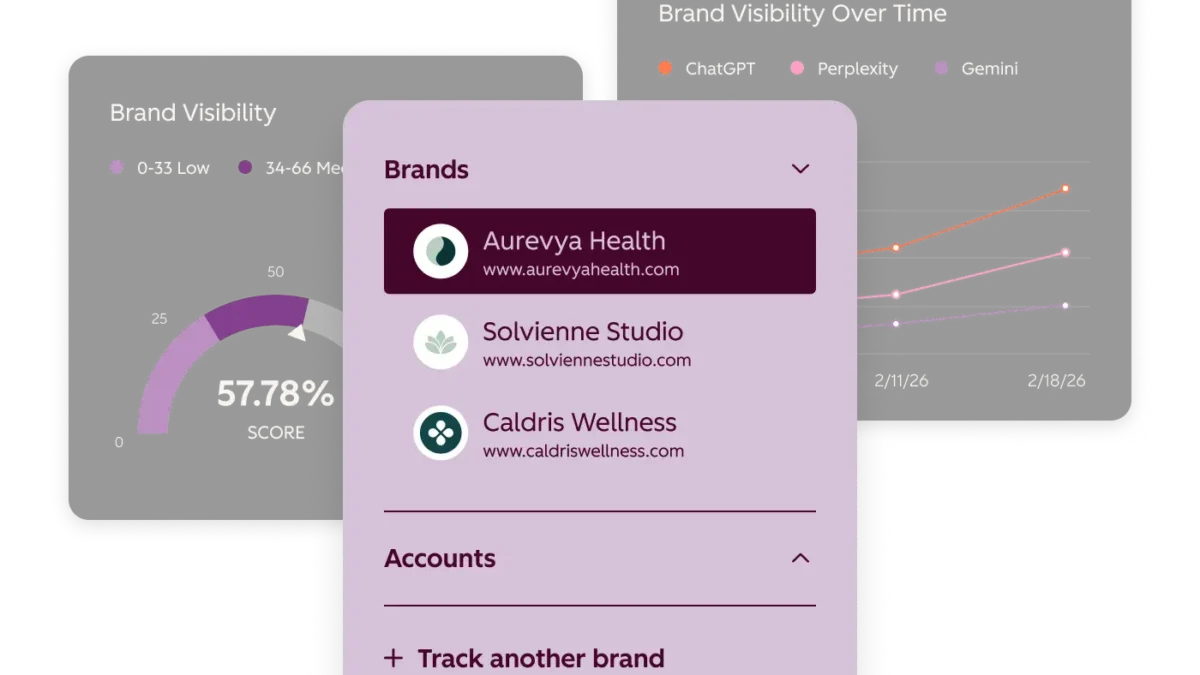
Priced accessibly at $50 per month ($45 billed annually) without requiring an overarching HubSpot subscription or CMS, the standalone HubSpot AEO tool tracks brand visibility scores, competitor share of voice, citations, and sentiment across ChatGPT, Gemini, and Perplexity. More importantly, it translates identified visibility gaps into prioritized, actionable recommendations—such as publishing a new resource, updating an outdated blog post, or pitching an external media outlet. For users operating within HubSpot Marketing Hub Pro and Enterprise tiers, the platform leverages CRM data to suggest highly relevant industry prompts, allowing marketing teams to draft optimized content in their brand voice using one-click generative tools.
This connected workflow presents a compelling value proposition for inbound marketing teams whose primary objective is speed-to-market. By placing visibility analytics, strategic recommendations, and content creation tools within a single interface, HubSpot minimizes the friction typically associated with multi-platform software stacks. However, the platform does have limitations: it currently tracks three primary engines (ChatGPT, Gemini, and Perplexity), meaning teams requiring native coverage of Microsoft Copilot, Claude, or specialized shopping agents will need to supplement their stack with alternative tools. Furthermore, it lacks server-log agent analytics, positioning it as a content-first optimization tool rather than a technical crawler audit suite.
Comparative Feature Overview and Buyer Fit
Choosing the appropriate AI visibility tool depends heavily on an organization’s existing software stack, technical requirements, and strategic objectives.

For teams already utilizing Ahrefs for backlink analysis, keyword research, and technical site audits, Ahrefs Brand Radar represents the path of least resistance. It eliminates the need for onboarding onto a new platform and keeps traditional SEO metrics adjacent to emerging AI visibility data.
Conversely, enterprises operating at scale—particularly those with complex e-commerce inventories, global brand protection concerns, or heavy reliance on PR and reputation management—will find the advanced modules of Profound indispensable. Its daily automated tracking, consumer demographic insights, and extensive engine coverage justify the higher investment for specialized operations.
Meanwhile, inbound marketing teams focused on content velocity and operational efficiency are increasingly gravitating toward HubSpot AEO. By collapsing the workflow from analytical discovery to content generation into a single environment, it addresses the fundamental challenge of AEO: translating data insights into published assets that actively influence generative search algorithms.
Strategic Implications for Digital Marketers
As generative search continues to mature throughout 2026 and beyond, the integration of AEO into standard marketing operations is no longer optional. The ongoing decline of traditional click-through rates in the wake of AI summaries necessitates a fundamental re-evaluation of digital real estate. Brands must actively monitor how large language models perceive, describe, and cite their products and services.

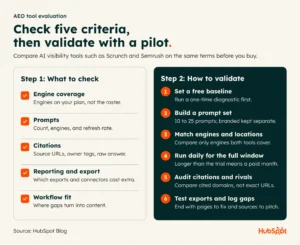
Whether an organization opts for the integrated convenience of Ahrefs Brand Radar, the specialist intelligence of Profound, or the action-oriented workflow of HubSpot AEO, the primary objective remains consistent: transforming passive observation into proactive optimization. Marketers are advised to leverage trial periods, run baseline evaluations using targeted prompt sets, and align their software investments closely with their team’s existing skill sets and operational workflows. As the rules of digital discovery continue to be rewritten by artificial intelligence, the organizations that successfully bridge the gap between measurement and execution will secure a definitive competitive advantage in the conversational search era.