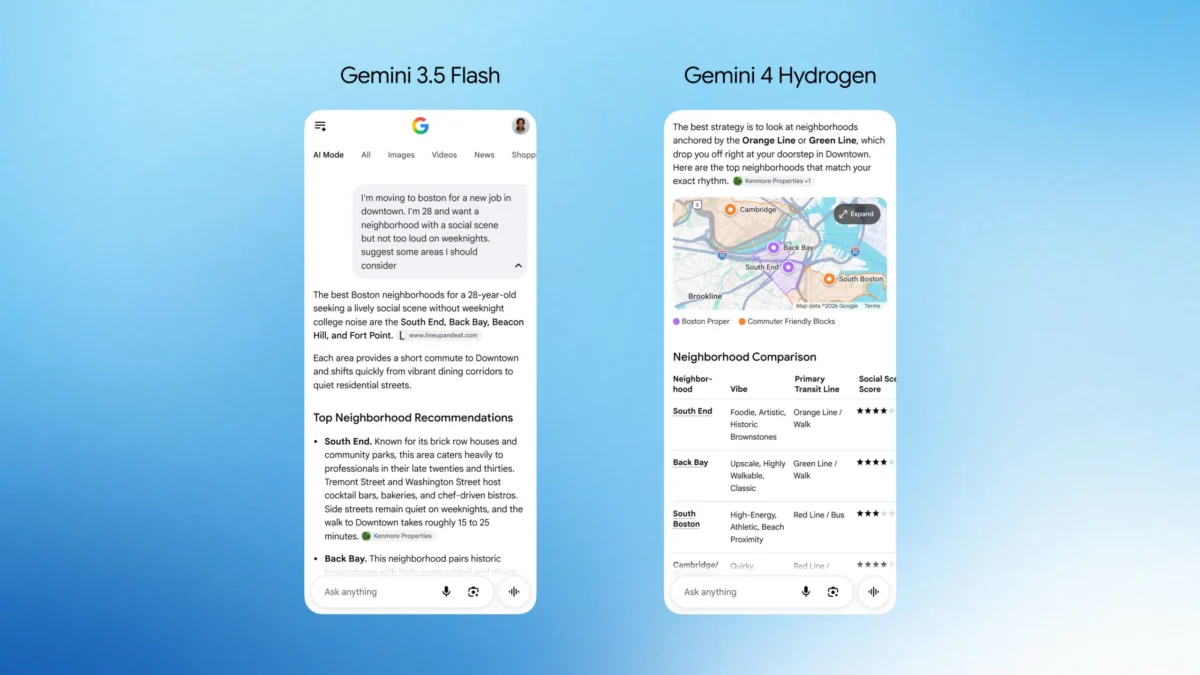
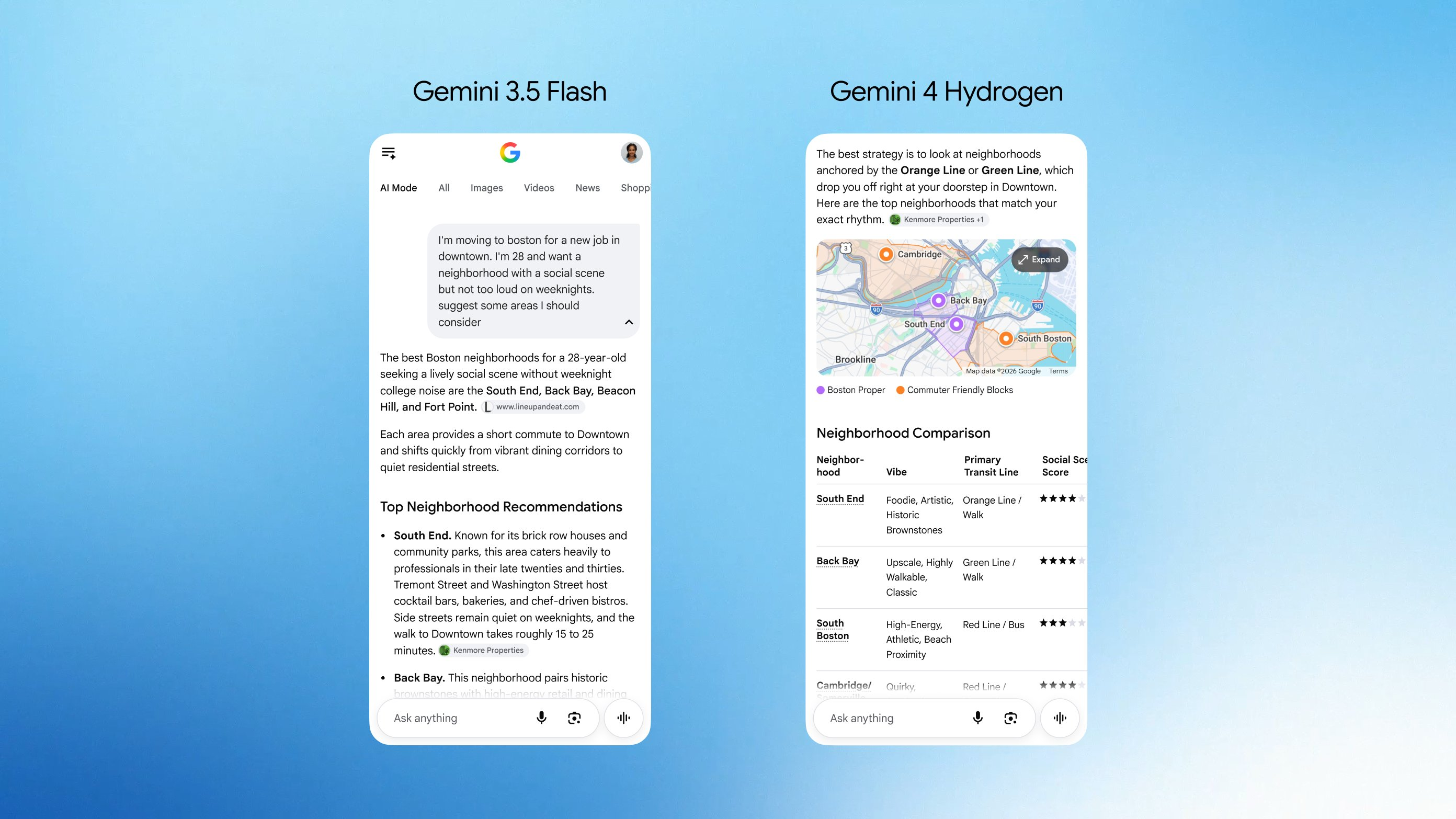
Google has officially transitioned its search infrastructure to Gemini 4 Hydrogen, establishing the new model as the default engine for AI Mode across all global markets. This significant architectural shift, announced today by Robby Stein, VP of Product for Google Search, marks a major milestone in the company’s ongoing effort to integrate advanced generative capabilities into its core search product. The deployment of Hydrogen, which is also being tasked with processing the most complex inquiries within AI Overviews, signals a departure from the previous reliance on the Gemini 3.5 Flash architecture that has powered the service since its implementation earlier this year.
This transition occurs amidst a period of heightened activity for Google’s search division, coinciding with the broader rollout of the November 2026 core update. As SEO professionals and digital analysts scramble to calibrate their metrics, the introduction of Hydrogen adds a new variable to the complex ecosystem of AI-driven search results.
A Chronology of Model Evolution in AI Mode
The evolution of Google’s AI-powered search features has been rapid, characterized by iterative updates aimed at balancing speed, computational efficiency, and depth of reasoning. In May 2026, during the annual Google I/O conference, the company introduced Gemini 3.5 Flash as the global standard for AI Mode. This model was lauded for its low-latency performance, enabling users to receive near-instantaneous responses to a variety of queries.
However, the rapid pace of artificial intelligence research necessitated further advancements. By mid-October 2026, Google began testing more sophisticated iterations of its Gemini 4 family. On October 13, Gemini 4 Argon was made available as an exclusive option for Google AI Pro and Ultra subscribers. This was followed shortly by the introduction of Gemini 4 Carbon on November 10, another model geared toward power users requiring "deep thinking" capabilities.
The release of Gemini 4 Hydrogen on November 12 serves as the bridge between these high-performance models and the standard user experience. While Argon and Carbon are optimized for long-running, complex reasoning tasks, Hydrogen has been engineered specifically to optimize speed and efficiency for the average search user, ensuring that everyday queries are handled with greater nuance and improved structural clarity.
Technical Enhancements and Query Fan-out
According to official documentation from Google, the transition to Gemini 4 Hydrogen provides several tangible improvements over its predecessors. Most notably, the model is designed to better interpret multi-part inquiries and queries that contain common user errors, such as typos or ambiguous phrasing. By leveraging a more robust internal architecture, Hydrogen can effectively parse intent even when the input is imprecise.
A critical technical advancement highlighted in the rollout is the improvement of "query fan-out." This process involves the search engine’s ability to simultaneously execute multiple sub-queries based on a single user prompt. By branching out across various subtopics, the engine can synthesize information from a broader array of sources. This results in a richer set of citations, often including high-quality, niche websites that might not have appeared in traditional top-ten search results.
Furthermore, the integration of Gemini 4 Hydrogen allows for more sophisticated visual output. Users can expect an increase in the deployment of structured responses, including comparison tables, interactive maps, and diverse image sets. These visual aids are intended to reduce the need for users to click through multiple websites to gather information, effectively centralizing data within the AI interface while maintaining links to original sources.
Implications for AI Overviews and Search Accuracy
The role of Hydrogen extends beyond standard AI Mode, reaching into the critical infrastructure of AI Overviews. Since the initial launch of AI Overviews, Google has utilized a tiered model approach: simpler, faster models handle common queries, while more computationally expensive, "smarter" models are reserved for complex, multi-layered questions.
By designating Gemini 4 Hydrogen as the engine for the "hardest" AI Overview questions, Google is attempting to mitigate the persistent issue of AI hallucinations and logical errors. The model’s ability to provide nuanced, multi-dimensional answers in every language supported by AI Mode is a key component of this strategy. However, the exact taxonomy of what constitutes a "hard" question remains proprietary, leaving researchers and content creators to infer the model’s reasoning based on the consistency of its output.
Navigating the November 2026 Core Update
The release of Gemini 4 Hydrogen is occurring in parallel with the November 2026 core update, a massive initiative by Google to refine its ranking algorithms. For webmasters and SEO specialists, this overlapping of events creates a complex diagnostic environment. Because the core update began on November 10 and the model shift occurred on November 12, site owners may observe significant volatility in their search traffic and referral data.
Industry analysts suggest that site owners should treat these as two distinct variables. The core update generally addresses the quality and relevance of indexed content, while the model shift impacts how that content is retrieved, summarized, and presented within AI Mode. To accurately gauge the impact of these changes, organizations should segment their data using November 12 as a primary pivot point in their internal tracking reports.
Strategic Distinctions: Hydrogen, Carbon, and Argon
Google’s current portfolio of Gemini 4 models represents a tiered approach to artificial intelligence services. As outlined in the company’s recent support documentation, the distinction between these models is based on intended utility:
- Gemini 4 Hydrogen: Positioned as the default "all-rounder." It is optimized for speed, efficiency, and broad utility, making it the primary interface for the general public.
- Gemini 4 Carbon: Currently available to Ultra subscribers, this model is designed for complex, time-intensive reasoning tasks, such as coding, deep analysis, or long-form document synthesis.
- Gemini 4 Argon: While currently less prominent in public documentation, it represents a high-capacity tier for specialized, intensive applications.
This segmentation allows Google to manage compute resources effectively while providing different levels of service based on user needs. For the average user, the shift to Hydrogen is largely invisible, manifesting simply as faster, more accurate, and more visually descriptive search results.
Broader Industry Impact and Future Outlook
The global deployment of Gemini 4 Hydrogen signals that the competition for AI-driven search supremacy has shifted from "can we do it?" to "how efficiently can we scale it?" By replacing the earlier 3.5 Flash model, Google is demonstrating confidence in the stability of its 4-series architecture.
For the broader digital ecosystem, the move reinforces the necessity of structured data and high-quality, unique content. As the AI model becomes more adept at "connecting to a broader range of helpful links," the value of being cited as an authoritative source becomes increasingly important. Sites that provide clear, structured data and well-researched information are likely to see better integration into these new AI-generated summaries.
Looking ahead, the industry awaits further clarification from Google regarding the criteria for "hard" questions in AI Overviews. As Google continues to iterate on its models, transparency regarding how these systems interpret and attribute data will remain a focal point of debate. For now, the integration of Gemini 4 Hydrogen represents a significant leap in the capability of the world’s most widely used search engine, setting a new baseline for what users should expect from AI-assisted information retrieval.
As the November core update concludes and the dust settles on this transition, stakeholders are advised to closely monitor their referral traffic and citation rates. With the search landscape in a state of constant, algorithmically-driven flux, the ability to adapt to these rapid model deployments will likely be a defining characteristic of successful digital strategies in the coming year.