
The landscape of personal finance has undergone a radical transformation over the last three decades, shifting from a tactile, ritual-heavy experience to an invisible, automated series of digital data points. In 1990, money was a physical reality that required active engagement; today, it is an abstraction. While the digitalization of currency has brought unprecedented convenience, financial psychologists and economic historians increasingly point to a "visibility gap" that has eroded the psychological boundaries necessary for long-term wealth accumulation. This shift has prompted a movement among financial planners and savvy households to "translate" the high-friction habits of the 1990s into modern, digital equivalents to combat rising consumer debt and declining savings rates.

The Evolution of Financial Friction: 1990 to Present
In the early 1990s, the household economy was defined by "friction"—the physical effort required to move, spend, or save money. Banking was a Saturday errand involving physical lines and paper passbooks. Savings were kept in jars or government bonds that required years to mature. Spending often required a trip to the store to make a "layaway" payment. These rituals served a psychological purpose: they forced a pause between the impulse to spend and the act of transaction.
The chronology of the disappearance of these rituals follows the rise of the internet and the refinement of financial technology (fintech). The mid-1990s saw the birth of online banking, followed by the proliferation of debit cards in the early 2000s, which began the process of separating the "pain of paying" from the act of purchasing. By the 2010s, mobile apps and one-click ordering had removed the final barriers to consumption. Today, the rise of "Buy Now, Pay Later" (BNPL) services has effectively inverted the 1990s concept of layaway, allowing consumers to take items home before they are paid for, often leading to a "debt spiral" for younger demographics.

The 16 Habits of the 1990s Household and Their Modern Translations
To understand how to reclaim financial control, analysts have identified 16 core habits from the 1990s that provided psychological security and disciplined growth. These habits are now being reintroduced as "modern friction" strategies.
16. The Layaway Wait
In the 1990s, the store held the item while the customer paid it off in installments. This provided "proof of desire"—a period during which the buyer could determine if they truly wanted the item.
Modern Translation: The "Cart Test" or "Sinking Fund." Consumers are encouraged to leave items in a digital shopping cart for 72 hours or save the specific cash in a sub-account before clicking "buy."

15. The Check Register
Manual record-keeping was a daily or weekly ritual. Every cent spent was written down, creating a mental map of one’s net worth.
Modern Translation: The "Weekly Balance Audit." While apps track spending automatically, experts suggest a manual weekly check to force the brain to acknowledge the outflow of capital.
14. The Saturday Bank Trip
The physical inconvenience of visiting a bank branch prevented "raiding" savings accounts.
Modern Translation: "Intentionally Annoying" Savings. Planners suggest keeping emergency funds in a separate online bank with no linked debit card, ensuring transfers take at least 24 hours.

13. The Passbook
The passbook provided a visual, ink-on-paper record of compounding interest.
Modern Translation: The Visual Dashboard. Using apps that provide "progress bars" for savings goals replicates the satisfaction of seeing a passbook balance grow.
12. The Coin Jar
The jar on the dresser turned "micro-waste" into a significant annual windfall, such as a vacation fund.
Modern Translation: Automated Round-Ups. Many modern banks offer features that round up every purchase to the nearest dollar, funneling the change into a high-yield savings account.

11. Savings Bonds as Gifts
Paper bonds taught children that money is a seed that takes time to grow.
Modern Translation: Educational 529 Contributions. Replacing a portion of physical toys with contributions to an investment account reinstates the "long-term gift" philosophy.
10. CD Ladders
Certificate of Deposit (CD) ladders were the primary yield strategy for 1990s households, providing structured access to cash.
Modern Translation: The Return of the Ladder. With interest rates rising after a decade of near-zero levels, the CD ladder has become a relevant tool again for risk-averse savers.
9. The One-Banker Relationship
Personalized banking provided a human advocate who understood a family’s long-term goals.
Modern Translation: Fee-Only Fiduciaries. In an era of automated customer service, hiring a professional advisor ensures the "human element" remains in financial planning.
8. The Payday Ritual
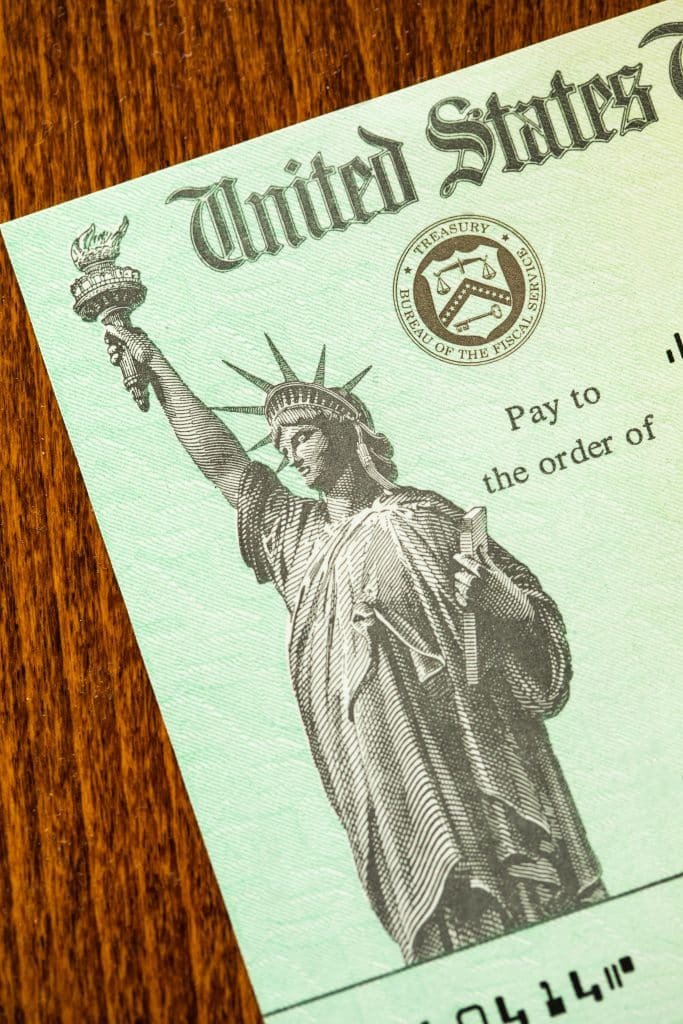
Receiving a physical check made the connection between labor and reward explicit.
Modern Translation: The "Payday Five-Minute Routine." Upon receiving a direct deposit notification, individuals should manually move money to savings to acknowledge the "earning event."

7. The Family Ledger
A single source of truth for household finances, often updated monthly at the kitchen table.
Modern Translation: The Annual One-Page Summary. A simplified document that tracks total assets versus total liabilities, shared between partners to ensure alignment.
6. The Kid’s First Account
Opening a bank account was a rite of passage that signaled the beginning of financial adulthood.
Modern Translation: Ceremonial Youth Accounts. Maintaining the "ceremony" of opening a child’s first digital account to emphasize the responsibility of ownership.

5. Cash at Home
Maintaining a modest cash reserve provided resilience against system failures or local emergencies.
Modern Translation: The Physical Emergency Buffer. Keeping a small amount of currency in a secure home location for "grid-down" scenarios.
4. The Raise Rule
In 1990, a salary increase was immediately diverted to savings before the household could adjust its lifestyle.
Modern Translation: Automated Escalation. Modern 401(k) plans allow users to "auto-increase" their contribution percentage annually, neutralizing "lifestyle creep."

3. The Pension Mindset
Pensions functioned as an automated, decision-free path to retirement.
Modern Translation: The Automation Stack. Recreating the pension’s reliability by automating contributions to the maximum employer match and beyond.
2. The Mortgage-Burning Party
Celebrating the end of debt was a public and community-focused event.
Modern Translation: Debt-Free Milestones. Publicly celebrating the final payment on student loans or car notes to reinforce debt-aversion as a social value.

1. “We Can’t Afford It”
This phrase was a common, shame-free boundary in 1990s households. It ended the conversation and focused the family on priorities.
Modern Translation: "That’s Not in the Plan." Reasserting control over finite resources in an era where "easy credit" suggests everything is always affordable.
Supporting Data: The Cost of Convenience
Recent data from the Federal Reserve highlights the impact of moving away from these high-friction habits. As of late 2023, total U.S. household debt reached a record $17.5 trillion. Credit card balances, in particular, have surged, surpassing $1.1 trillion. Analysts point to the "invisible" nature of digital spending as a primary driver. A 2022 study on consumer behavior found that individuals using contactless payments or mobile wallets spent up to 15% more than those using physical cash for the same categories of goods.

Furthermore, the personal savings rate in the United States, which hovered around 10-12% in the early 1990s, has fluctuated wildly in the digital age, often dipping below 4% in recent years. The loss of the "pension mindset" has shifted the burden of retirement entirely onto the individual, yet only 51% of workers feel they are on track for retirement, according to the Transamerica Center for Retirement Studies.
Official Responses and Expert Analysis
Financial educators are increasingly advocating for a return to "tactile" finance. "The brain processes digital numbers differently than it processes physical cash," says Dr. Elena Rossi, a behavioral economist. "When you swipe a card, the ‘pain centers’ of the brain are significantly less active than when you hand over a twenty-dollar bill. By recreating the friction of the 1990s—even in a digital format—we can re-engage the prefrontal cortex and make better long-term decisions."

Major financial institutions have begun to respond by integrating "friction-heavy" features into their apps. Several leading banks now offer "goal-based" savings accounts that allow users to "hide" money from their main balance, mimicking the Saturday bank trip’s inconvenience.
Broader Impact and Implications
The "translation project" from 1990s habits to modern tools is more than just nostalgia; it is a necessary adaptation to a financial environment designed to encourage constant consumption. For the next generation—Gen Z and Gen Alpha—who may never use a physical check or visit a bank branch, these lessons are critical.

The broader implication for the economy is a potential shift back toward "intentionalism." As households reclaim the "Raise Rule" and the "Pension Mindset," the reliance on high-interest consumer credit may diminish, leading to a more stable, though perhaps slower-growing, consumer economy. The ultimate lesson of the 1990s household was not that they knew more about the stock market or global economics, but that they could not avoid looking at their money. In the digital age, the most valuable financial asset is not a new app, but the willingness to see the numbers clearly and say the sentence that defined a generation: "That is not in the plan."