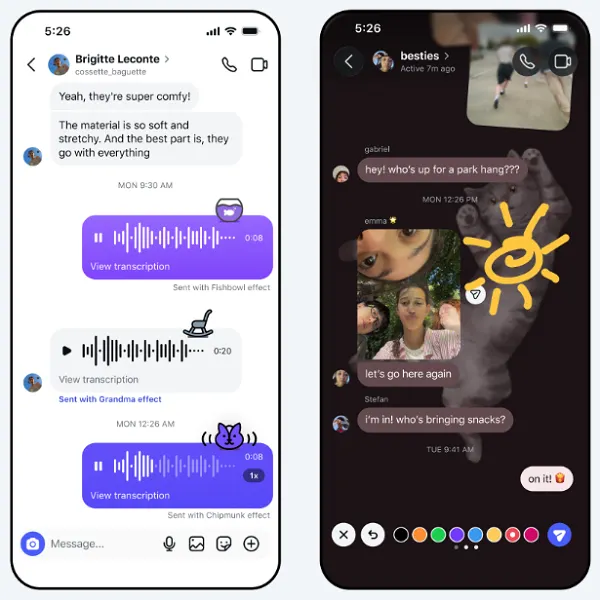
Tech giant Meta is once again dipping its toes into the standalone messaging market by testing a dedicated application called "Direct." Designed specifically to expand Instagram Direct Messages (DMs) onto a separate, standalone platform tailored for younger audiences, the app arrives at a time of shifting global regulations regarding youth access to traditional social media. By offering a suite of creative features that resonate with teenage digital habits—such as interactive chat drawing, customizable stickers, voice effects, and inbox notes ported directly from Instagram—Meta is positioning the tool as a primary communication hub for Gen Z and younger demographics.
However, the strategy extends far beyond mere product diversification. The launch of "Direct" serves a dual strategic purpose: it capitalizes on the declining user metrics of its chief messaging rival, Snapchat, and provides a loophole-friendly alternative to navigate an increasingly restrictive wave of international legislation aimed at banning teenagers from mainstream social media platforms.
A Flashback to 2017: History Repeats Itself
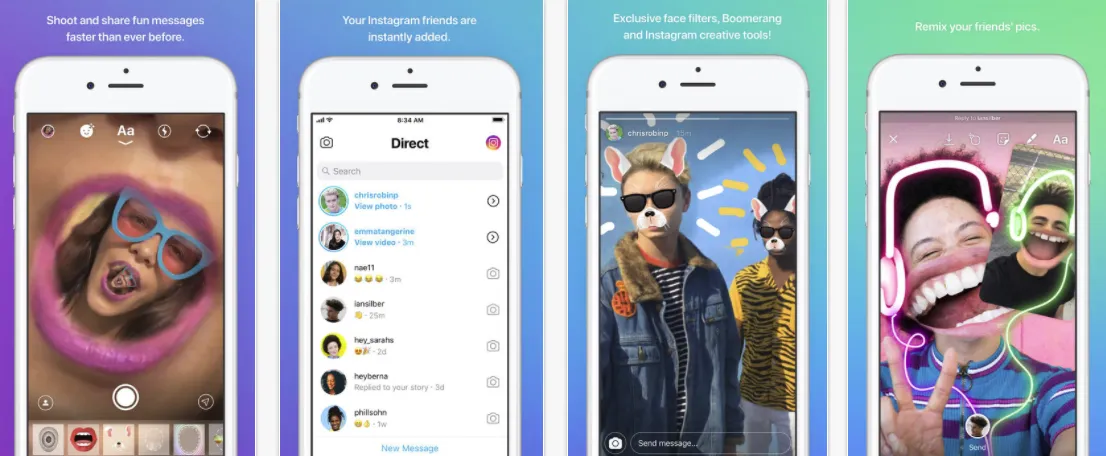
To fully understand the current iteration of Direct, industry analysts are looking back nearly a decade. In late 2017, Meta—then operating under the corporate banner of Facebook—launched a remarkably similar experimental messaging app also named "Direct."
During the initial 2017 test phase, the application was rolled out selectively in choice international markets, including Chile, Israel, Italy, Portugal, and Uruguay. Like the current 2026 test, that version required users to open the standalone app to access their Instagram inbox, emphasizing visual communication, ephemeral content, creative drawing tools, and rapid-fire video and photo messaging.

Despite the hype, the 2017 experiment failed to capture a sustainable market share. Users demonstrated a distinct aversion to "app fatigue"—the friction caused by forcing individuals to switch back and forth between a primary social media platform and a fragmented standalone messaging client. Instagram eventually sunsetted the experiment, reintegrating messaging capabilities firmly back into the main application ecosystem where they steadily grew into one of the platform’s most dominant features.
Given this historical precedent, tech watchers are questioning why Meta is retracing its steps. The answer lies in a drastically altered regulatory and competitive landscape.
Capitalizing on Snapchat’s Stalling Growth
The timing of the new Direct test is closely tied to the vulnerabilities currently facing Snapchat. Over the past year, Snapchat’s daily active user (DAU) counts have stagnated or outright declined across core Western markets, including the United States and Europe. While Snapchat has historically dominated the teen demographic through its focus on ephemeral visual messaging, changing user preferences, heightened competition, and rigorous regulatory pressures have strained its growth trajectory.
Meta recognizes an opening. By offering a lightweight, feature-rich messaging app that replicates the familiar social mechanics of Instagram DMs without the broad content exposure of a traditional social media feed, Meta aims to siphon away disaffected users. Because messaging ecosystems exhibit powerful network effects—users migrate to wherever their friends are communicating—a successful standalone app could allow Meta to capture a larger share of daily youth communication time, diluting Snapchat’s remaining market dominance.
Navigating the Global Wave of Teen Social Media Bans
The most pressing catalyst for the revival of Direct, however, is the sudden acceleration of government-mandated age restrictions targeting social media platforms worldwide.
In recent months, lawmakers across multiple continents have implemented or proposed strict legislative measures designed to bar minors from accessing traditional social networks. Turkey serves as a prime testing ground for these shifting dynamics. On November 1, a comprehensive Turkish law took effect, barring individuals under the age of 15 from accessing foreign-originated social media applications. Crucially, the legislation explicitly drew a regulatory distinction: while content-discovery and public-feed platforms fall under the ban, dedicated messaging applications are largely exempt.
Meta initiated early tests of the Direct app in Turkey just as these regulations were implemented. This timing suggests a calculated effort to capture an influx of young users who have been abruptly locked out of conventional social networks like Instagram, Facebook, and TikTok, but who still retain the legal right to use dedicated interpersonal communication tools.
Similar legislative dominoes are falling elsewhere. In Australia, strict new laws aimed at curbing youth social media exposure have forced companies like Snapchat to deactivate hundreds of thousands of user accounts belonging to individuals under the age of 16. In February, Snapchat disclosed that it had locked more than 415,000 accounts in Australia alone to comply with the mandate. With Australia’s population representing roughly a third of Turkey’s, the precedent highlights the massive scale of displaced users seeking alternative digital havens. Furthermore, reports from outlets like Thai PBS World indicate that Thailand is actively weighing similar legislative frameworks restricting social media access for minors under 16, prompting Meta to introduce the Direct test to Thailand as well.
Parental Controls and Safety Architecture
Anticipating inevitable scrutiny from child safety advocates, educational institutions, and international regulators, Meta has integrated robust safeguards into the Direct application.
According to company disclosures, the platform will feature advanced protection mechanisms designed to shield younger users from cyberbullying, predatory behavior, and unsolicited contact from adult accounts. Additionally, Direct will be fully integrated into Meta’s existing suite of parental supervision tools. These controls allow parents and guardians to monitor daily time limits, view contact lists, and receive alerts regarding safety reports, aligning the application with global compliance standards for youth-oriented software.
Industry Implications and Future Outlook
The deployment of Direct raises complex regulatory and economic questions. Local officials and policy watchdogs may view the app as a calculated workaround designed to bypass the spirit of youth social media bans. However, legal experts point out a fundamental distinction: the legislative rationale behind teen social media bans typically centers on the addictive nature of algorithmic content feeds, endless scrolling, and exposure to unregulated public media. Pure messaging applications, which rely on closed peer-to-peer communication, operate under a different regulatory framework.
From a business perspective, the implications are multifaceted. While launching a standalone messaging app successfully insulates Meta’s overall engagement metrics against impending global bans, it presents monetization challenges. Because Direct is focused purely on interpersonal messaging, injecting traditional targeted advertisements into chat threads would likely alienate the very teen demographic Meta is working to attract. Consequently, the primary objective of the app remains user acquisition and ecosystem retention rather than immediate ad revenue generation.
As the test phase expands across strategic international markets, the success of Direct will depend heavily on whether Meta can overcome the historical friction of app fragmentation. If modern teenagers prove more willing to adopt a dedicated messaging client today than they were in 2017, Meta could successfully transform a regulatory crisis into an unprecedented opportunity for market consolidation, cementing its communication infrastructure as an indispensable utility for the next generation of digital natives.