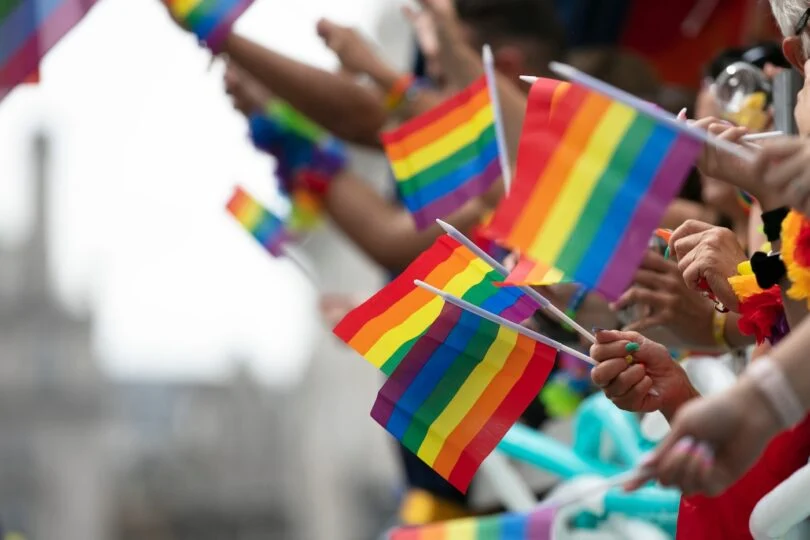
As the United States approaches the 248th anniversary of its founding this July 4th, the nation is simultaneously entering the peak of preparations for "America 250," the official semiquincentennial commemoration of the signing of the Declaration of Independence. This milestone, culminating on July 4, 2026, serves as a period of profound national reflection, prompting a critical examination of the American identity. Central to this discourse is the question of whose stories are elevated in the official narrative. While government and corporate entities prepare large-scale festivities, a growing movement among communications professionals and historians emphasizes the necessity of a fully inclusive history—one that explicitly recognizes the contributions and struggles of LGBTQ Americans as an integral part of the 250-year journey.
The America 250 initiative is managed by the U.S. Semiquincentennial Commission, established by Congress in 2016. The commission’s mandate is to orchestrate a celebration that is "the most inclusive in our nation’s history." However, observers note a disconnect between this stated goal and the practical execution of promotional campaigns. Current "official" government promotions and corporate sponsorships have occasionally been criticized for focusing on a sanitized or narrow version of the American "melting pot," often bypassing the more complex, divided, or marginalized aspects of the country’s heritage. In the context of Pride Month, the intersection of these two milestones—the 250th anniversary and the ongoing push for LGBTQ visibility—presents a unique challenge for the communications industry to move beyond symbolic gestures toward authentic historical integration.
The Legislative and Historical Framework of America 250
The path to the semiquincentennial began officially with the passage of the United States Semiquincentennial Commission Act of 2016 (Public Law 114-196). This bipartisan legislation created a body tasked with planning and coordinating commemorations across all 50 states and U.S. territories. Unlike the Bicentennial of 1976, which was criticized in hindsight for its relative lack of diversity and its focus on a predominantly Eurocentric view of American progress, the 2026 event is legally and socially positioned to be more expansive.
The chronology of American commemorations shows a clear evolution in national self-perception:
- 1876 (Centennial): Held in Philadelphia, the celebration focused on industrial progress and the reconciliation of the North and South following the Civil War, largely ignoring the ongoing failures of Reconstruction and the rights of Black Americans.
- 1926 (Sesquicentennial): Marred by the Great Depression’s onset and a rise in isolationism, the event was smaller in scale but began to touch upon the "melting pot" concept, though still within a restricted framework.
- 1976 (Bicentennial): A massive cultural phenomenon involving "Tall Ships" and local "Freedom Trains." While more inclusive than 1876, it occurred before the mainstreaming of LGBTQ rights and often sidelined the more radical elements of the 1960s civil rights movements.
- 2026 (Semiquincentennial): The current planning phase occurs in a hyper-polarized environment where "history" itself has become a political battleground, specifically regarding how race, gender, and sexuality are taught in schools and represented in public squares.
Statistical Landscape and Public Sentiment
The push for inclusion is backed by significant demographic and social data. According to 2024 Gallup polling, approximately 7.6% of U.S. adults identify as LGBTQ, a figure that has doubled since 2012. Among Gen Z (those born between 1997 and 2012), who will be the primary demographic driving the economy and culture during the 2026 celebrations, nearly 20% identify as LGBTQ.
However, this demographic growth is met with a complex social climate. While a 2023 Gallup report found that 71% of Americans support the legality of same-sex marriage, there has been a documented "cooling" in corporate and legislative support for LGBTQ-specific initiatives. In 2023 and 2024, hundreds of bills were introduced in state legislatures targeting LGBTQ rights, particularly those of transgender individuals. This political friction has led to a phenomenon known as "pinkhushing," where corporations—fearful of political backlash or consumer boycotts—quietly withdraw their public support for Pride Month or reduce the visibility of LGBTQ themes in their marketing, even as they maintain internal DEI (Diversity, Equity, and Inclusion) policies.
The Role of Communications Professionals
For public relations and communications experts, the America 250 milestone is viewed as a test of professional integrity. The industry, governed by standards such as the PRSA Code of Ethics, emphasizes accuracy, honesty, and the representation of diverse perspectives. Experts argue that communications should not be about "whitewashing" history to avoid controversy, but about respecting the reality of the American experience.
Authentic engagement in this context requires moving beyond "rainbow washing"—the practice of using rainbow logos in June without substantive support. Industry leaders suggest that for America 250 to be successful, it must acknowledge that LGBTQ history is not a separate "thread" but a foundational component of the national fabric. This includes recognizing figures like Baron von Steuben, the Prussian-born military officer who played a critical role in training the Continental Army during the Revolutionary War and who is widely believed by historians to have been gay. By integrating these stories into the 250th-anniversary narrative, communicators can help shift the perception that LGBTQ inclusion is a "modern" or "partisan" addition to American history.
Corporate Responses and the Economic Impact
The business community’s participation in America 250 is expected to be a multi-billion-dollar endeavor involving sponsorships, limited-edition products, and national advertising campaigns. However, the current trend shows a retreat from bold social stances. Following the 2023 backlash against brands like Bud Light and Target, many companies have adopted a more cautious approach to Pride 2024.
Data from the Human Rights Campaign (HRC) indicates that while the number of companies earning a top score on the Corporate Equality Index remains high, the public-facing "boldness" of these companies has diminished. Communications strategists warn that this retreat may be counterproductive in the long term. The "LGBTQ+ consumer power" is estimated at $1.4 trillion in the U.S. alone. Brands that "pinkhush" risk alienating both the LGBTQ community and the broader Gen Z and Millennial demographics who prioritize brand authenticity and social responsibility.
In the context of America 250, the advice from communications veterans is for brands to align their participation with their core values. If a company claims to support "American values," it is argued that they must define those values as including equality and the celebration of all citizens. This involves continuous support that extends beyond the month of June and integrates into the multi-year America 250 timeline.
Broader Implications and Historical Integrity
The debate over America 250 and LGBTQ inclusion reflects a broader national struggle over historical "truth." Critics of inclusive history often label it as "un-American" or "revisionist." Conversely, proponents argue that the "official" history has always been revisionist by omission—deliberately excluding the contributions of anyone who did not fit a specific mold.
The inclusion of LGBTQ narratives in the 250th anniversary is framed not as a political favor, but as a commitment to factual accuracy. LGBTQ individuals have served in every American conflict, contributed to every scientific advancement, and participated in every social movement since 1776. Acknowledging the suffering they endured at the hands of past legal and social systems is seen as a necessary step for national growth.
As the U.S. Semiquincentennial Commission continues its work, the pressure remains on organizers to ensure that the "America 250" logo represents the "complete richness of the country." The transition from the 200th to the 250th anniversary marks a half-century of significant progress in civil rights; failing to reflect that progress in the celebrations would, according to advocacy groups, result in a narrative that is fundamentally incomplete.
Conclusion: Shaping a New Future
The America 250 celebrations offer a rare opportunity to reset the national dialogue. For the communications industry, the task is to guide clients toward a version of "American Pride" that is inclusive, courageous, and historically grounded. The goal is a celebration where "Pride" is not just a seasonal event for a specific community, but a shared American virtue rooted in the recognition of all people who have helped build the nation.
By embracing the complexity of the American story—including its failures and its progress—the semiquincentennial can serve as a moment of genuine unification. As the country moves toward 2026, the mandate for those telling the story is clear: to ensure that when the question "Who are we celebrating?" is asked, the answer is a truthful reflection of every individual who constitutes the American quilt, rainbow threads included. This approach does not just honor the past; it sets a precedent for the next 250 years of the American experiment.