
In the fast-evolving landscape of digital marketing, understanding how a brand stands out among a sea of competitors has never been more critical. Enter share of voice (SOV), a foundational metric that has undergone a dramatic transformation over the past several decades. Originally confined to the realm of traditional media and paid advertising, SOV now serves as a comprehensive indicator of a brand’s total online visibility, encompassing social media mentions, news coverage, organic search rankings, and digital ad impressions.
For marketing leaders and business strategists, tracking share of voice is no longer just about seeing who is the loudest in an industry. Instead, it is treated as a vital leading indicator of future business performance. By analyzing the percentage of the total conversation a brand commands within its category, organizations can forecast market shifts, optimize budget allocation, and evaluate the long-term effectiveness of their campaigns long before sales figures are officially reported.

The Evolution and Strategic Importance of Share of Voice
Historically, share of voice was calculated primarily by comparing a brand’s advertising expenditures against total category spending. If a company spent $100,000 on television and print ads in a market where total category advertising was $1 million, its share of voice was 10 percent.
However, the proliferation of digital channels, social media platforms, and search engines has redefined the metric. Today, SOV measures a brand’s share of overall online visibility, capturing organic conversations, earned media, and digital engagement. This modern definition bridges the gap between raw data and actionable competitive intelligence.

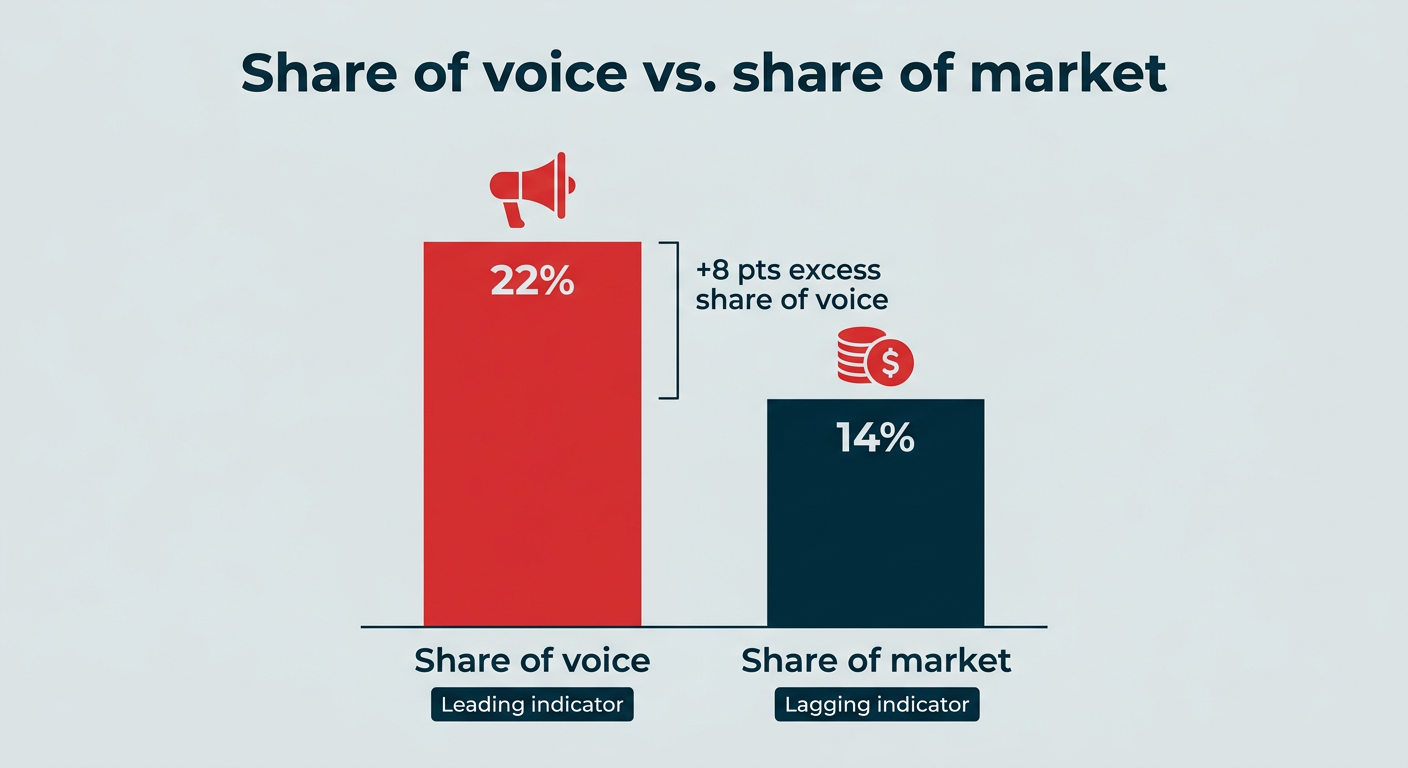
The strategic value of this metric was significantly reinforced by landmark marketing research conducted by Les Binet and Peter Field, published by the Institute of Practitioners in Advertising (IPA) in their influential report, The Long and the Short of It. Binet and Field popularized the concept of "excess share of voice" (eSOV)—the phenomenon that occurs when a brand’s share of voice consistently outpaces its share of market. According to their extensive empirical research, maintaining a positive eSOV almost invariably drives long-term market share growth. Conversely, brands that allow their share of voice to fall below their market share frequently find themselves losing ground to competitors, ultimately requiring much higher financial investments to reclaim lost attention.
Decoding the Core Formula and Cross-Channel Applications
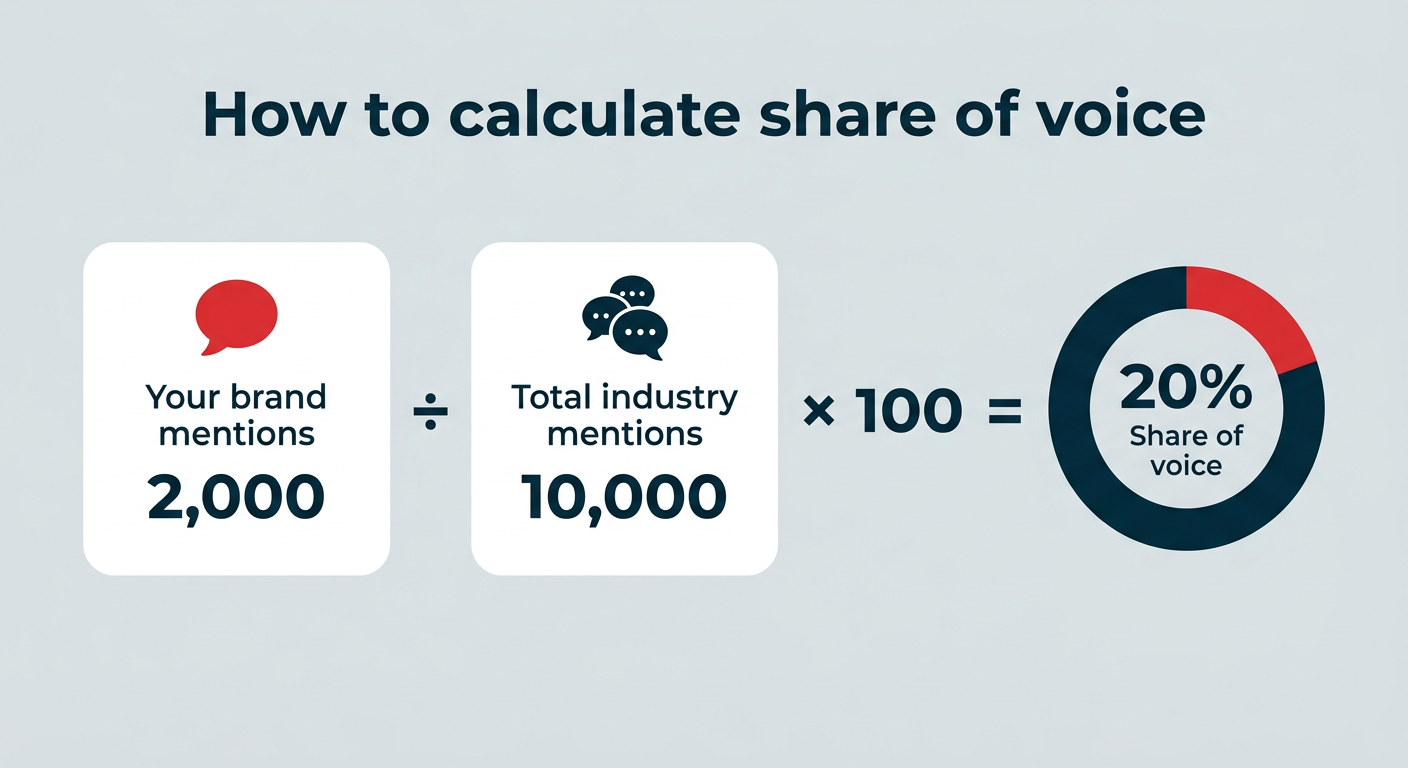
At its core, the mathematical formula for share of voice remains straightforward, regardless of the specific channel being evaluated:
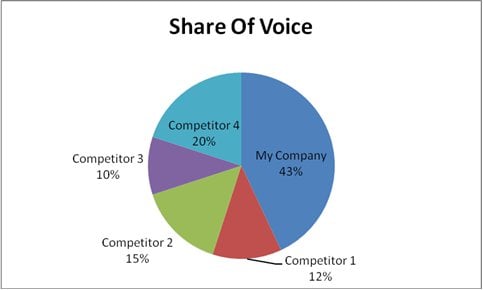
(Your Brand Metrics / Total Industry Metrics) × 100 = Share of Voice
While the equation is simple, the inputs vary depending on the marketing dimension being analyzed. Modern organizations typically measure share of voice across four distinct pillars: social media, organic search (SEO), paid search (PPC), and earned media.
Measuring Social Share of Voice
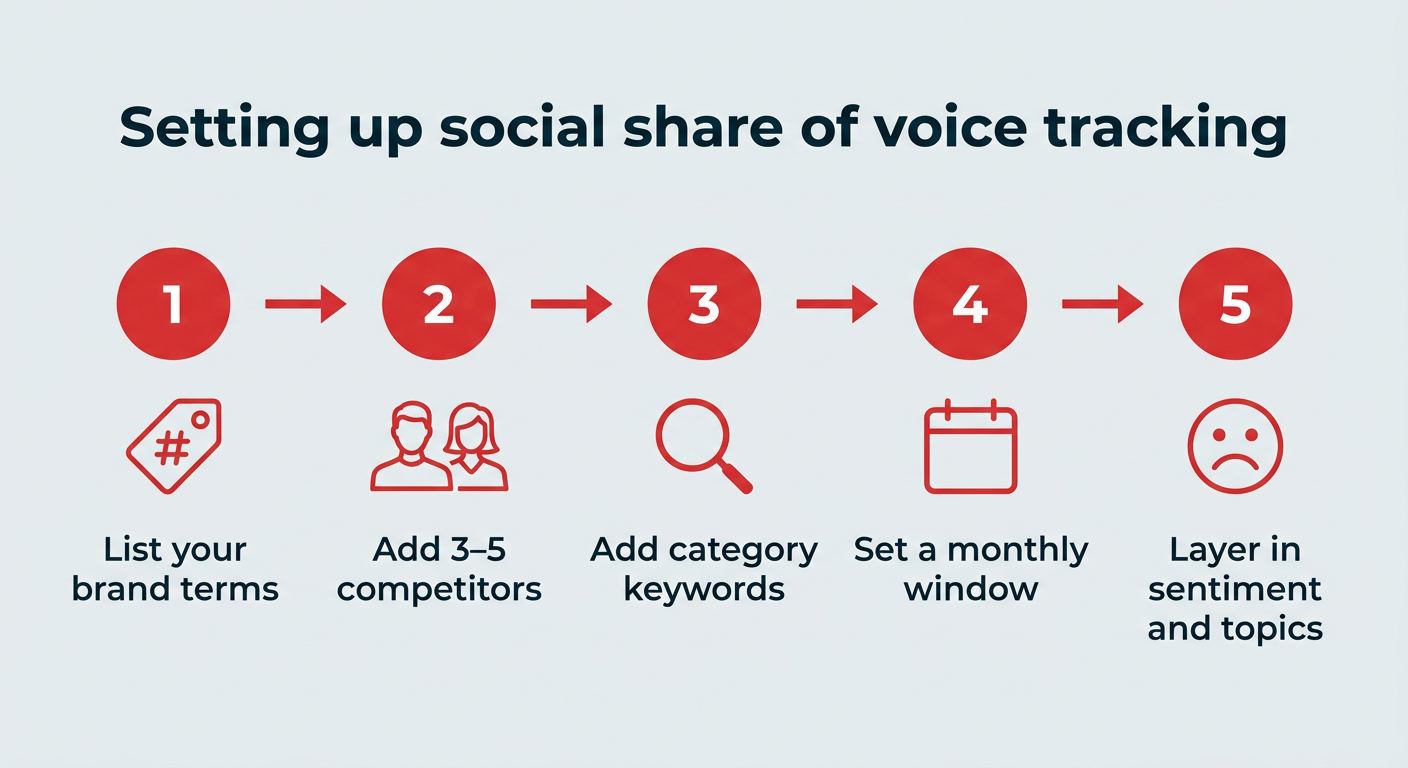
Social share of voice tracks the volume of conversations happening about a brand on platforms like X, Instagram, TikTok, Facebook, and LinkedIn compared to its competitors. It represents the intersection of social listening and competitive analysis. By aggregating total brand mentions against total industry mentions, companies can determine how effectively they are participating in relevant consumer dialogues. Advanced analysis often segments these conversations by demographic filters, geographic locations, sentiment, and specific topics to uncover regional strengths or brand vulnerabilities.
Evaluating Search Engine Optimization (SEO)
In the realm of organic search, share of voice measures a website’s visibility in search engine results pages (SERPs) relative to its competitors. Rather than relying solely on average keyword rankings, SEO share of voice is calculated by weighting ranking positions against search volumes and click-through potential for a defined set of commercially relevant keywords. A high SEO share of voice indicates that a brand dominates the critical search queries buyers use before making a purchasing decision.
Assessing Pay-Per-Click (PPC) Advertising
For paid search marketers, share of voice closely mirrors what Google defines as "impression share." This metric calculates the percentage of times a brand’s paid ad was displayed compared to the total number of times it was eligible to appear for targeted keywords. Tracking impression share alongside metrics that isolate losses due to budget constraints or ad rank provides paid media teams with clear levers to pull for optimization.
Monitoring Earned Media Coverage
Media share of voice evaluates how frequently a brand is mentioned across news publications, industry blogs, and digital outlets compared to its competitors. To maintain accuracy, sophisticated marketing teams weight these results by publication reach and authority, recognizing that a placement in a premier trade publication often carries significantly more strategic weight than numerous mentions in low-tier aggregator blogs.
Share of Voice vs. Share of Market: A Comparative Analysis
While share of voice and share of market are frequently discussed in tandem, they measure fundamentally different aspects of business performance. Understanding the distinction between the two is essential for accurate forecasting.
| Dimension | Share of Voice | Share of Market |
|---|---|---|
| What it measures | Brand visibility and conversation volume | Percentage of category sales or revenue |
| Data source | Social mentions, media coverage, search visibility, ad impressions | Sales data, revenue reporting, industry market research |
| Indicator type | Leading indicator | Lagging indicator |
| Example metric | 22% of all industry mentions last quarter | 14% of category revenue last quarter |
| Channels applied to | Social, organic search, paid search, earned media | Whole business enterprise |
| Review frequency | Weekly or monthly | Quarterly or annually |
As illustrated by this comparative framework, share of voice acts as a leading indicator of business health, moving dynamically in response to marketing efforts, PR initiatives, and campaigns. Share of market, by contrast, operates as a lagging indicator, reflecting the commercial reality of those marketing efforts over a longer temporal horizon.
Practical Strategies for Growing Share of Voice
For organizations looking to expand their footprint and outpace rivals, industry experts recommend six proven tactics to systematically elevate share of voice across digital channels:
-
Maintain a Consistent and Active Presence
Reliability builds recognition. Establishing an optimized social media content calendar ensures that brands remain active and responsive when audiences are engaged. Posting consistently and timing content to align with periods of peak user activity maximizes potential reach and organic pickup.
-
Spark Engaging Conversations
Generating buzz requires giving audiences a compelling reason to talk. While taking bold stances on cultural or industry topics can drive massive spikes in mentions, brands must weigh potential visibility gains against public sentiment risks. Alternatively, interactive prompts, polls, open calls for ideas, and innovative product design naturally invite consumer participation and expand conversation volume. -
Create Highly Shareable Content
Originality is a powerful driver of earned reach. Formats that rely on distinctive brand voices, visual storytelling, or humorous cultural commentary encourage users to share content organically, turning a single brand post into hundreds of independent consumer mentions. -
Prioritize Responsive Customer Engagement
Customer service interactions significantly impact brand perception and advocacy. Research indicates that prompt, empathetic responses—such as customer service agents including their names or initials in replies—substantially increase consumer trust and future brand loyalty, transforming potential detractors into vocal advocates.
-
Allocate Marketing Budgets Strategically
Continuous monitoring of share of voice highlights specific platform gaps and regional weaknesses. By identifying where competitors dominate and where the brand holds strong, marketing leaders can reallocate ad spend, influencer partnerships, and community management resources to maximize return on investment. -
Invest in Employee Advocacy Programs
Employee advocacy remains one of the most effective, underutilized levers for expanding digital reach. Because employees collectively hold significantly more connections than corporate social channels, encouraging internal teams to share authentic company content introduces the brand to untapped networks through trusted, human voices.
Implications for Future Marketing Leadership

As digital ecosystems become increasingly crowded, the ability to measure and interpret share of voice provides a distinct competitive advantage. By treating SOV not merely as a vanity metric, but as an integrated indicator spanning social media, search visibility, and earned media, forward-thinking organizations can make data-driven budgeting decisions, accurately gauge campaign effectiveness, and successfully forecast long-term market dominance.