TikTok has officially labeled more than one billion videos as artificial intelligence-generated, a staggering milestone that highlights both the massive surge in synthetic media creation and the platform’s rigorous enforcement mechanisms. As AI-powered video, audio, and image generation tools become increasingly sophisticated and accessible to the general public, major social media platforms are racing to establish clear boundaries regarding transparency, authenticity, and consumer trust.
For content creators, digital marketers, and global brands alike, understanding how to correctly identify and label AI-generated content on TikTok is no longer optional—it is a critical requirement for maintaining platform compliance, avoiding content restrictions, and preserving audience trust. This comprehensive guide breaks down TikTok’s evolving AI disclosure policies, outlines precisely what requires a label, details the mechanisms used to enforce these rules, and offers strategic advice for building compliant publishing workflows.
Background Context and the Rise of Synthetic Media on Social Platforms

The proliferation of generative artificial intelligence over recent years has fundamentally transformed digital content creation. Tools capable of generating hyper-realistic human faces, mimicking specific human voices through voice cloning, and synthesizing entire video scenes from simple text prompts have moved from experimental research labs into the hands of millions of everyday users. While these technologies offer unprecedented creative freedom, they also introduce significant challenges related to misinformation, digital deception, and consumer manipulation.
In response to these growing concerns, regulatory bodies, technology companies, and platform moderators have intensified their focus on digital provenance. Platforms like TikTok have taken a proactive stance by implementing strict community guidelines focused on integrity and authenticity. By requiring transparent disclosures, platforms aim to empower viewers with the necessary context to distinguish between authentic human experiences and synthetic media creations. The revelation that over one billion videos have already been labeled on TikTok underscores the sheer volume of AI-assisted content circulating through the digital ecosystem and demonstrates the platform’s unwavering commitment to automated and manual oversight.
Decoding TikTok’s AI Disclosure Policy: What Needs a Label and What Doesn’t
TikTok’s official policy permits the use of artificial intelligence in content creation, provided that creators explicitly disclose its use whenever synthetic tools are employed to generate or significantly alter realistic-looking people, environments, or events. The foundational rule hinges on a single key concept: realism. If an AI-generated or AI-edited element could reasonably pass for reality in the eyes of an average viewer, it falls under the mandatory disclosure requirement.

To provide clarity for creators, TikTok categorizes content into specific tiers determining whether an AI label is necessary:
Content That Requires an AI Label:
- AI-Generated Video and Imagery: Any video sequences or static images depicting realistic people, animals, or physical environments created entirely through artificial intelligence.
- Voice Cloning and Synthetic Audio: Audio tracks that utilize AI to accurately mimic the voice of a real person without their physical presence or direct recording.
- Dialogue Modification: Using AI tools to alter what a real person is saying within a recorded video clip.
- Face Swapping: Digital techniques that seamlessly transplant one person’s face onto another individual’s body or performance.
- Misleading Visual Alterations: Adding, removing, or substantially altering people, objects, or backgrounds in a way that alters the factual context of the scene.
Content That Does Not Require an AI Label:
- Minor Post-Production Edits: Standard video editing techniques such as color correction, cropping, reframing, and basic lighting adjustments.
- Everyday Aesthetic Filters: Standard platform filters designed to enhance features, such as adding digital makeup or modifying general color tones.
- Generic Text-to-Speech: Standard automated robotic voiceovers provided by platform tools that do not attempt to clone a specific, identifiable human voice.
- AI-Assisted Scriptwriting: Using language models to draft captions, brainstorm video concepts, or write underlying scripts, provided the final audio and visual execution is human-performed or explicitly labeled where applicable.
Furthermore, certain categories of AI-generated content remain strictly prohibited on TikTok, regardless of whether a disclosure label is applied. This includes deepfake media designed to seriously mislead the public regarding important civic issues, content intended to harass or defame real individuals, and synthetic media that poses a direct risk of physical or financial harm.

The Three Pillars of AI Labeling: Creator Toggles, Auto-Labels, and Ad Disclosures
To manage compliance efficiently, TikTok utilizes a multi-layered labeling system comprising three distinct mechanisms:
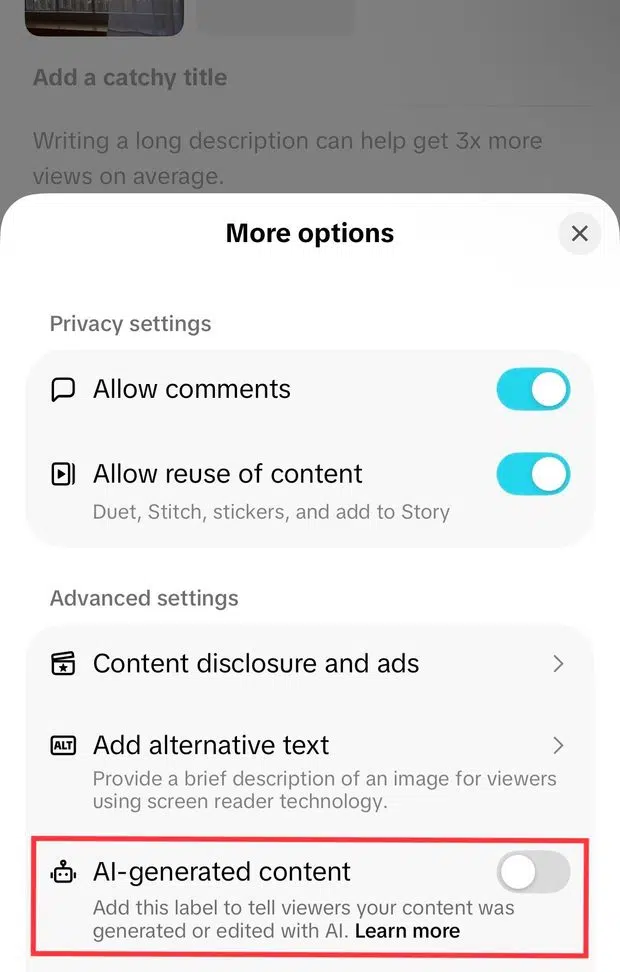
- The Creator Toggle: For organic posts, creators must manually activate the "AI-generated content" toggle within the app’s publishing interface if their video features significant synthetic elements. Once applied, a clear tag reading "Creator labeled as AI-generated" appears directly below the video caption.
- Auto-Labels: TikTok employs sophisticated automated detection systems designed to recognize synthetic media. If the platform’s algorithms detect AI content—particularly media created using TikTok’s native AI effects or files carrying standardized metadata such as Content Credentials—an automatic label is applied without requiring manual creator intervention.
- Ad Disclosures: Advertisers utilizing TikTok Ads Manager must apply mandatory AI disclaimers when running paid campaigns that incorporate realistic AI-generated or significantly edited elements. Notably, these ad disclosures do not always carry over automatically when campaigns are duplicated, requiring marketers to verify settings manually for every new ad iteration.
Implications for Brands and Corporate Communications
For corporate brands, adhering to TikTok’s AI disclosure mandates is essential for risk management and brand reputation protection. In an era where consumers are increasingly skeptical of digital authenticity, failing to properly disclose synthetic media can trigger severe public backlash. Industry experts emphasize that transparency builds foundational trust, whereas perceived deception can alienate core consumer bases.

From a regulatory standpoint, unlabelled or deceptively deployed AI content can result in severe platform penalties. TikTok routinely restricts the visibility of non-compliant posts, removes offending videos entirely, or blocks paid ad campaigns during the review phase. For brands investing substantial advertising budgets into social media marketing, such disruptions can derail campaigns and waste valuable resources.
Moreover, brand partnerships with external influencers introduce additional complexities. While a corporation may enforce strict internal guidelines regarding artificial intelligence, contracted creators may utilize synthetic tools differently. Establishing clear expectations within creator briefs and vetting sponsored content prior to publication ensures that external partnerships do not inadvertently expose a brand to compliance failures or public relations crises.
Step-by-Step Guide: How to Properly Label AI Content on TikTok
Ensuring compliance on TikTok requires integrating disclosure practices directly into the content creation and publishing workflow.

For Organic Content:
- Open the TikTok application and upload or record your finalized video content.
- Proceed through the editing screens until you reach the final posting page where you enter your caption and hashtags.
- Tap on "More options" or look for the advanced settings menu.
- Locate the toggle labeled "AI-generated content" and switch it to the on position. This ensures the official disclosure tag will appear beneath your caption upon publishing.
For Paid Advertising Campaigns:
- Access TikTok Ads Manager and navigate to the campaign creation dashboard.
- Upload your creative assets within the ad group setup phase.
- Locate the designated legal and content disclaimer section.
- Select the required AI disclosure checkbox confirming that the ad contains realistic artificial intelligence-generated elements.
- Review the entire ad configuration carefully before submission, keeping in mind that duplicating ad sets may reset disclosure toggles and require manual re-verification.
Consequences of Non-Compliance and Algorithmic Impact
Failing to disclose AI-generated content on TikTok triggers automated enforcement protocols. If the platform’s detection systems flag unlabeled synthetic media, TikTok may intervene by manually applying an auto-label, restricting the post’s distribution within the For You feed, or removing the content entirely depending on the severity of the violation.
A common concern among digital marketers is whether applying an AI label negatively impacts a video’s organic reach or algorithmic performance. Official statements from TikTok indicate that applying an AI-generated content label does not inherently penalize a post’s distribution or visibility. However, as platforms continue to roll out user-facing controls allowing audiences to filter out synthetic media from their feeds, maintaining transparent labeling practices remains the safest and most sustainable strategy for long-term account health.
Building an Internal AI Governance and Approval Workflow
To mitigate human error and ensure seamless platform compliance across large marketing teams, organizations should establish formal internal processes for handling AI-generated assets:
- Audit Platform-Specific Regulations: Recognize that AI disclosure policies vary significantly across social media platforms. A video that requires an explicit label on TikTok may be subject to entirely different standards on competing networks such as Instagram or YouTube. Cross-platform marketers must verify compliance requirements individually for every destination channel.
- Define Clear Guidelines in Creator Briefs: When collaborating with third-party influencers, agencies must clearly outline acceptable uses of artificial intelligence in project briefs. Contracts should specify when AI tools are permitted, what requires prior brand approval, and how mandatory platform and sponsorship disclosures must be handled.
- Establish Handoff Protocols: Because social media content frequently passes through multiple team members—from copywriters and graphic designers to video editors and final schedulers—it is vital to implement clear internal communication. Every AI-generated element must be explicitly flagged during file handoffs to prevent oversight.
- Integrate Compliance Checks into Approval Workflows: Incorporating dedicated review stages into social media management tools ensures that no post goes live without a final compliance check. Utilizing specialized software solutions equipped with custom approval routing allows designated team members to verify AI disclosures systematically before content hits the live feed.
Leveraging Technology to Maintain Compliance at Scale
Managing multi-channel social media strategies while keeping pace with evolving platform regulations requires robust technological infrastructure. Advanced social media operations platforms, such as Hootsuite and its specialized ecosystem suites, provide comprehensive tools designed to streamline governance, approval workflows, and audience monitoring.
Through modular applications, marketing teams can embed mandatory disclosure checks directly into pre-publishing approval calendars, ensuring that content reviewers evaluate AI labeling requirements as a standard routine rather than an afterthought. Furthermore, centralized governance layers empower administrators to control publishing permissions across enterprise accounts, restricting advanced tool access exclusively to authorized personnel. Finally, sophisticated social listening and sentiment analysis tools allow brands to continuously monitor public reactions, track brand mentions across millions of sources worldwide, and gauge audience sentiment regarding AI-driven marketing campaigns in real time.
Conclusion
As artificial intelligence continues to redefine the boundaries of digital media, transparency remains the cornerstone of sustainable social media strategy. TikTok’s strict enforcement of its AI disclosure policies serves as a clear reminder that authenticity and accountability are paramount in modern digital marketing. By understanding platform requirements, leveraging built-in labeling tools, and embedding compliance checks into routine workflows, creators and global brands can harness the full creative power of artificial intelligence while maintaining audience trust and protecting their brand reputation for the future.