The integrity of modern sociological research rests upon the rigor of its methodology, and the Pew Research Center’s 2026 initiatives represent a significant milestone in how global public opinion is captured, analyzed, and interpreted. As the organization navigated the complexities of the mid-2026 geopolitical climate, its dual approach—combining international field studies with the domestic depth of the American Trends Panel (ATP)—provided a comprehensive, albeit technically demanding, snapshot of contemporary sentiment. This report delineates the foundational processes, statistical safeguards, and analytical frameworks that governed these findings, offering transparency into the mechanisms that underpin high-stakes data collection.

The Global Landscape: Methodology and Standardization
The Spring 2026 Global Attitudes Survey was executed through a multi-modal strategy, utilizing a blend of telephone, face-to-face, and online interviews. This international endeavor was spearheaded in collaboration with expert research partners, including Gallup, Langer Research Associates, and the Social Research Centre. By employing diverse contact methods, the researchers aimed to maximize representativeness across varying cultural and technological landscapes.
To ensure consistency across international borders, the research team utilized standardized demographic variables. One of the most critical challenges in global polling is the variance in socioeconomic and educational definitions. To mitigate this, Pew Research Center utilized the United Nations’ International Standard Classification of Education (ISCED). This allowed for a systematic comparison of educational attainment across disparate national systems, providing a common yardstick for analyzing how education influences attitudes toward issues such as global governance, technology, and economic integration.
Furthermore, the categorization of nations into high- and middle-income groups followed the World Bank’s rigorous per-capita gross national income (GNI) benchmarks. This classification is not merely administrative; it serves as a foundational analytical tool that has been instrumental in previous longitudinal studies, including assessments of global perspectives on China, the perceived health of democratic institutions, and the evolving definitions of national identity. By maintaining these consistent metrics, researchers can track shifts in public sentiment with greater precision over time.
The American Trends Panel: A Domestic Deep Dive
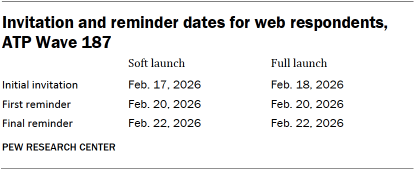
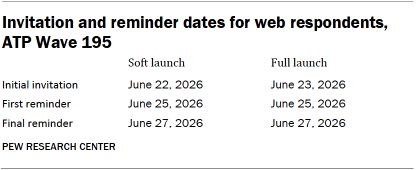
While the global survey provides a broad international perspective, the American Trends Panel (ATP) remains the primary engine for understanding the nuances of U.S. public opinion. The data analyzed in this report were derived from two specific waves: Wave 187 (W187), conducted from February 17 to February 23, 2026, and Wave 195 (W195), conducted from June 22 to June 28, 2026.
The ATP’s strength lies in its longitudinal nature and its reliance on address-based sampling (ABS), a method adopted in 2018 to improve coverage of the U.S. population. By utilizing the U.S. Postal Service’s Computerized Delivery Sequence File, which covers an estimated 90% to 98% of all households, researchers can draw a stratified, random sample. Within each household, the selection of the adult with the "next birthday" serves to randomize the participant pool, reducing the bias inherent in self-selection.
Chronology and Operational Execution
The operational lifecycle of these surveys involved a meticulous sequence of planning, testing, and deployment. The 2026 cycle followed a strict timeline:
- February 2026 (W187): The initial phase commenced with a soft launch on February 17, followed by a full-scale deployment on February 18. This phase, involving over 5,000 respondents, prioritized the collection of data regarding the early-year political and social climate in the United States.
- June 2026 (W195): The second phase, conducted four months later, utilized a similar soft launch on June 22 and full deployment on June 23. This wave focused on capturing the evolution of public sentiment leading into the summer months.
The logistical coordination between the Center and its research partner, SSRS, was characterized by rigorous quality control. Before the surveys were released, the web-based platforms were subjected to comprehensive testing on both desktop and mobile devices. Test data were populated and analyzed using statistical software to verify that randomization, logic, and question sequencing were operating exactly as designed.
Data Quality and Statistical Integrity
The validity of any survey is only as strong as its data quality checks. In 2026, the researchers implemented stringent protocols to identify "satisficing"—a phenomenon where respondents provide perfunctory or rushed answers, such as selecting the first or last option in every category or leaving items blank.
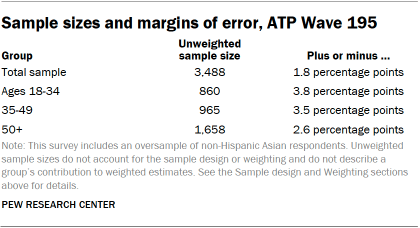
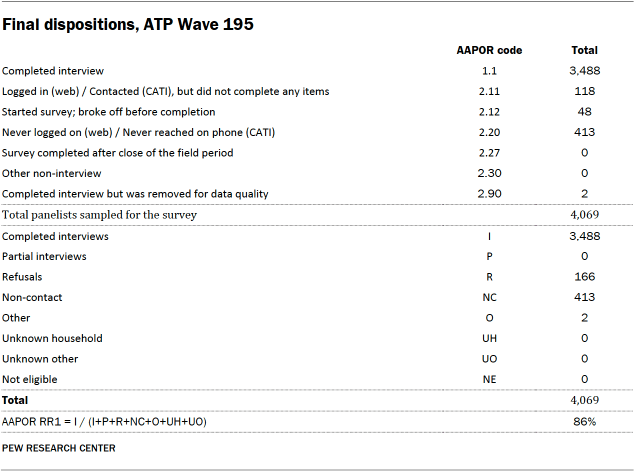
In W187, seven respondents were disqualified from the final dataset due to these indicators of poor data quality, while two were removed from W195. This pruning process is essential to maintaining the integrity of the weighted results.
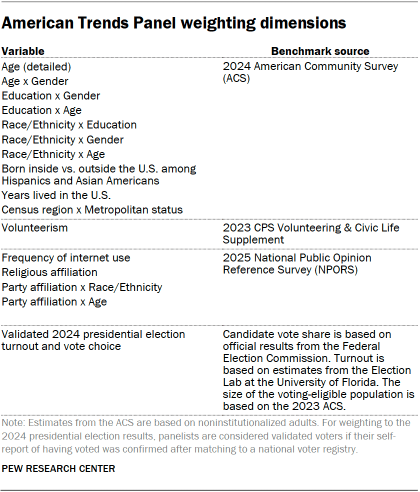
Weighting remains the most complex aspect of the process. To ensure the final figures reflect the demographic reality of the United States, the ATP data underwent a multi-stage calibration. Initial base weights—reflecting the probability of recruitment into the panel—were adjusted to account for non-response and panel attrition. These weights were then further calibrated against population benchmarks and trimmed at the 1st and 99th percentiles to minimize the variance that can arise from extreme weighting.
Response Rates and Demographic Representation
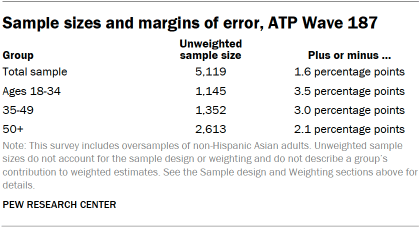
Achieving a representative sample requires more than just random selection; it necessitates proactive engagement with underrepresented populations. The 2026 surveys included deliberate oversampling of non-Hispanic Asian adults. By increasing the sample size for this specific subgroup, the researchers were able to provide more precise estimates that would otherwise be obscured by smaller sample sizes. These oversampled groups were subsequently weighted back to reflect their actual proportions within the national population.
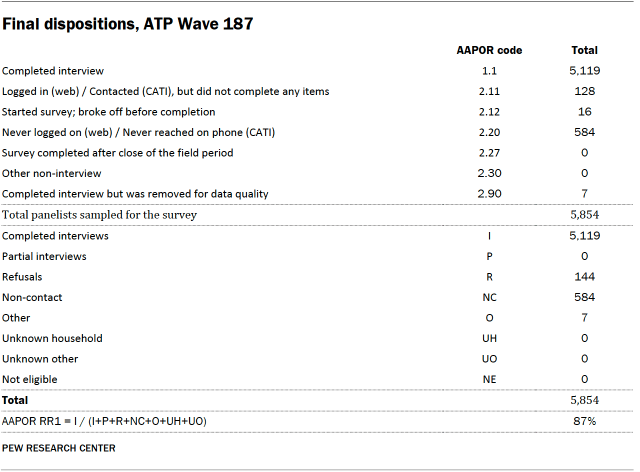
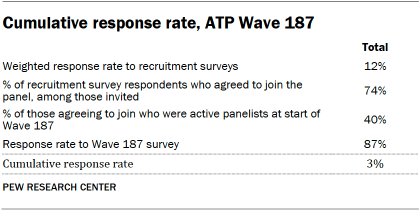
The survey-level response rates were notably high for modern standards, reaching 87% for W187 and 86% for W195. However, researchers are careful to note the distinction between survey-level response rates and the cumulative response rate, which accounts for the entire lifecycle of the panel, including recruitment and long-term attrition. The 3% cumulative response rate is a reality of long-term panel research that the Center openly addresses, emphasizing that sampling error is only one component of potential survey bias.
Official Perspectives and Implications
While the data collection process is purely technical, the implications of these findings are profound. By measuring attitudes on such diverse topics as artificial intelligence, democratic dissatisfaction, and globalization, the Pew Research Center provides a mirror for society.
The use of post-paid incentives, ranging from $5 to $20, serves as an essential mechanism to bolster participation among demographic groups that are historically harder to reach. This practice reflects a broader commitment to ensuring that the voices of the economically diverse are not drowned out by more easily surveyed demographics.
From a policy standpoint, the consistent methodology employed in 2026 allows for a more reliable comparison between current data and historical trends. When policymakers or the public observe shifts in, for example, the perceived importance of national identity, they can be confident that the change is reflective of actual public sentiment rather than a byproduct of inconsistent survey design.
Broader Impact and Future Research
The 2026 Global Attitudes Survey and the associated ATP waves represent a significant investment in the infrastructure of public opinion research. As the world becomes increasingly polarized and technologically interconnected, the need for objective, high-quality data has never been greater.
The transparency with which the Center documents its methodology—from the specifics of its SMS reminders and postcard notifications to the exact weighting dimensions used—provides a blueprint for academic and commercial researchers alike. By adhering to international standards like the ISCED and maintaining rigorous internal data quality checks, the Center ensures that its findings remain a cornerstone of modern sociological discourse.
Ultimately, the data gathered in early and mid-2026 serve as a foundation for understanding the complex currents of the modern age. Whether analyzing the influence of political ideology on social attitudes or the impact of globalization on national identity, the methodology ensures that the findings are not just numbers on a page, but accurate representations of the human experience in a rapidly changing world. The rigor of this process ensures that as we look toward the future of 2027 and beyond, the baseline of our understanding remains grounded in objective, repeatable, and transparent research.