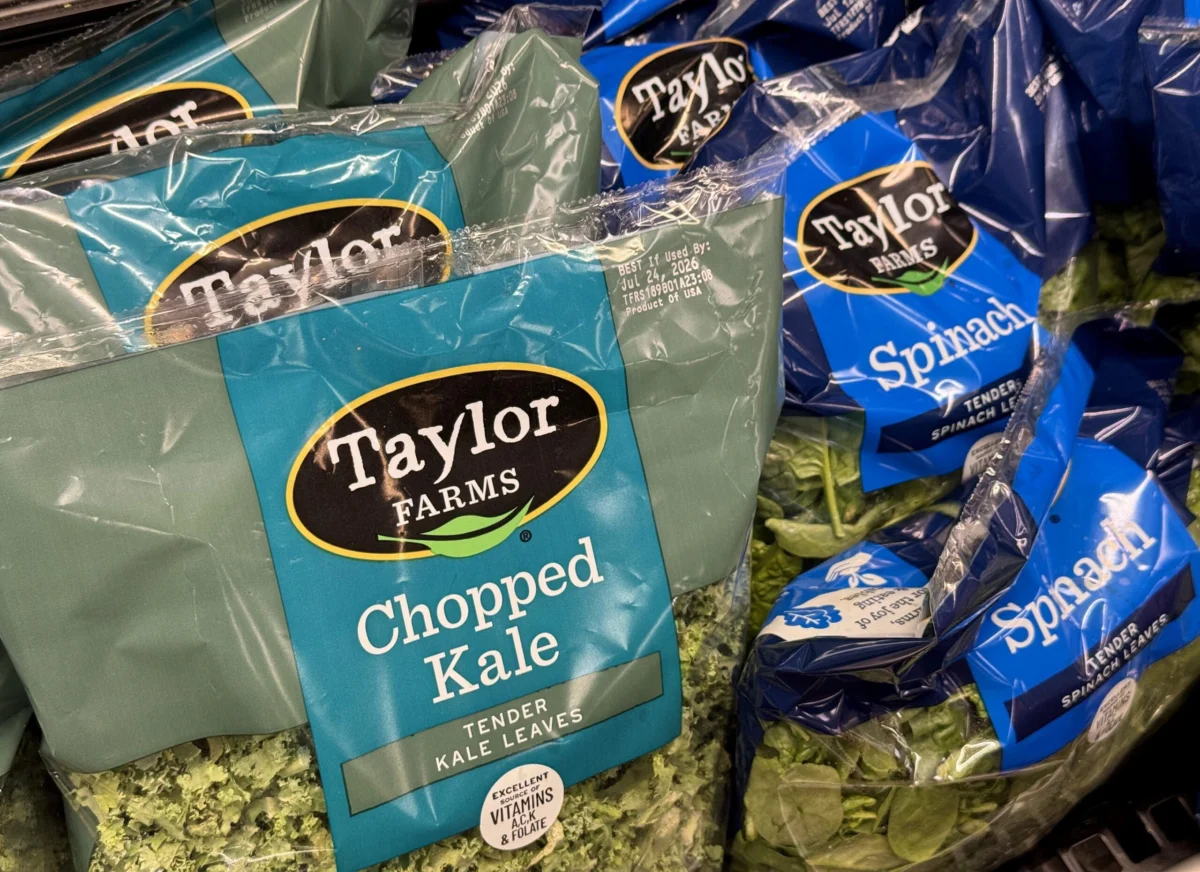
Walmart Inc. has officially announced the removal of four specific bagged iceberg lettuce salad products from its store shelves following a broader recall initiated by supplier Taylor Farms. This move is the latest development in a widening investigation into a multi-state outbreak of cyclosporiasis, a gastrointestinal illness caused by a microscopic parasite. While Walmart has emphasized that the removal is a precautionary measure and that no confirmed illnesses have been directly linked to the products sold under its "Marketside" store brand, the scale of the outbreak has already reached significant proportions across the United States.
The recall specifically targets shredded iceberg lettuce and salad mixes produced at a Taylor Farms facility in Central Mexico. According to company statements and regulatory filings, the affected products were distributed to various retail locations and food service providers between June 29 and July 16. As federal health authorities, including the Centers for Disease Control and Prevention (CDC) and the Food and Drug Administration (FDA), work to contain the spread, the incident highlights the ongoing challenges of maintaining food safety in a complex, globalized supply chain.
Understanding the Scope of the Cyclospora Outbreak
The current outbreak of cyclosporiasis has become one of the most significant foodborne illness events of the year. As of the latest reports from the CDC, infections have been confirmed in 34 states. The epicenter of the outbreak appears to be the Midwest, with Michigan reporting the highest concentration of cases. State health officials in Michigan have recorded more than 5,000 illnesses as of July 17, a figure that continues to rise as laboratory results are finalized and reported to federal agencies.
Cyclosporiasis is caused by the parasite Cyclospora cayetanensis. Unlike bacterial contaminations such as E. coli or Salmonella, which often manifest symptoms within hours or a few days, Cyclospora has a prolonged incubation period. Symptoms typically appear approximately two weeks after the ingestion of contaminated food or water. This delay creates a substantial "traceback" challenge for health investigators; by the time a patient falls ill and seeks medical attention, the contaminated product has often been consumed or discarded, and the patient’s memory of what they ate two weeks prior may be imprecise.
The primary symptom of the infection is severe, watery diarrhea, which can last from a few days to several months if left untreated. Other common symptoms include loss of appetite, weight loss, stomach cramps, bloating, increased gas, nausea, and fatigue. While the illness is rarely fatal, it can be debilitating, particularly for individuals with weakened immune systems, the elderly, and young children.
Chronology of the Recall and Investigation
The timeline of the current crisis suggests a rapid escalation from localized reports to a national retail disruption.
Late June to Early July: The CDC begins receiving reports of increased cyclosporiasis cases in several Midwestern states. Initial interviews with patients suggest a common link to fresh produce, specifically leafy greens.
Mid-July: Epidemiological data begins to point toward a specific source. Health officials in the Midwest identify a connection between a cluster of illnesses and Taco Bell locations in the region. The investigation reveals that the lettuce supplied to these locations originated from Taylor Farms.
July 16: Taylor Farms identifies a potential contamination issue at one of its processing facilities in Mexico. The company begins notifying its commercial clients, including major retailers and fast-food chains, that certain lots of shredded iceberg lettuce may be at risk.
July 17: The state of Michigan reports a surge in cases, surpassing 5,000 confirmed infections. The FDA issues a formal notice regarding the investigation into Taylor Farms’ iceberg lettuce.
July 18-19: Taylor Farms expands its recall to include all iceberg lettuce products sourced from the implicated Mexican facility. The company suspends distribution of the product and begins working with the FDA and CDC to identify the root cause of the contamination.
July 20: Walmart announces the removal of four Marketside brand salad products from select store locations. The retailer clarifies that while there is no evidence the parasite was present in its specific inventory, the supplier notice necessitated an immediate withdrawal to ensure consumer safety.
International Tensions and the Search for the Source
The fact that the contaminated lettuce has been traced back to a farm in Mexico has introduced a layer of international complexity to the investigation. The Mexican government, through its Health Ministry and the National Service for Health, Safety and Quality (SENASICA), has pledged to cooperate fully with U.S. authorities. However, Mexican officials have also been quick to defend the country’s agricultural standards.
In a statement released over the weekend, the Mexican Health Ministry emphasized that identifying the country of origin is merely a "traceability data point" and does not confirm that the contamination actually occurred on Mexican soil. The ministry suggested that contamination could theoretically occur at various points in the supply chain, including during transportation, cross-docking, or final processing.
Currently, research institutions from both the Health and Agriculture ministries in Mexico are engaged in a "continuous exchange of technical information" with the FDA. The goal is to determine whether the parasite was present in the irrigation water, the soil, or introduced via handling at the farm or the processing plant. This collaborative effort is essential for mitigating future risks and protecting the agricultural trade relationship between the two nations, which sees billions of dollars in produce cross the border annually.
Economic Implications for the Retail and Agricultural Sectors
The timing of the recall is particularly damaging for the retail industry. Produce represents a high-margin and high-volume category during the summer months. As American consumers celebrate holidays like the Fourth of July and engage in outdoor dining, the demand for salad kits, berries, and leafy greens typically reaches its annual peak.
Industry analysts suggest that major product removals can dampen consumer demand for weeks or even months. "Food safety scares create a ‘halo effect’ of distrust," says market analyst Marcus Thorne. "When a consumer hears about a recall on iceberg lettuce, they don’t just stop buying that specific brand; they often avoid the entire salad aisle altogether out of an abundance of caution."
For Walmart, the world’s largest retailer, the decision to pull products is a logistical feat but also a necessary step in brand protection. For Taylor Farms, one of the largest fresh-cut vegetable processors in the world, the financial impact includes not only the loss of product but also the potential for litigation and the costs associated with facility inspections and supply chain audits.
Furthermore, the recall affects the broader "fresh-cut" industry. Companies have invested heavily in "value-added" produce—pre-washed, pre-chopped, and bagged salads—which offer convenience to consumers. However, these products involve more handling and processing steps than whole-head lettuce, which theoretically increases the number of points where contamination can occur.
Official Responses and Safety Recommendations
In response to the ongoing situation, Taylor Farms issued a statement emphasizing its commitment to safety: "We are actively removing the implicated products and have stopped receiving product from the implicated lot. We have suspended distribution of the iceberg lettuce from Central Mexico and are continuing to work with the FDA, CDC, and state authorities." The company also noted that its branded salad kits sold in supermarkets, which do not contain iceberg lettuce, are unaffected by this specific recall.
The FDA has warned that the list of affected states and products could grow as the investigation continues. They advise consumers who have purchased Marketside bagged iceberg lettuce or other Taylor Farms iceberg products to check the "Best If Used By" dates and discard any product that falls within the June 29 to July 16 window.
Health experts remind the public that washing lettuce at home may not be sufficient to eliminate Cyclospora. The parasite is known for being resilient and can "stick" to the surface of leafy greens. "The most effective way to prevent infection during an outbreak is to follow the recall notices strictly and avoid the implicated products entirely," the CDC stated in its latest advisory.
Future Outlook: Traceability and Technology
This outbreak underscores the critical need for enhanced traceability in the food supply chain. The "Food Safety Modernization Act" (FSMA) in the United States has already pushed for more rigorous record-keeping, but the two-week incubation period of Cyclospora remains a natural hurdle that technology is struggling to overcome.
Blockchain technology and advanced DNA sequencing are being explored as tools to speed up these investigations. If every bag of salad could be scanned to reveal the exact farm, row, and harvest time within seconds, health officials could potentially issue "micro-recalls" rather than pulling products from 27 states at once.
As the investigation into the Taylor Farms facility continues, the industry will be watching closely to see if the source of the parasite is identified. Whether it was contaminated water, a lack of hygiene facilities for workers, or an environmental factor, the findings will likely lead to new safety protocols for imported produce. For now, the focus remains on containment and ensuring that the thousands of affected individuals receive proper medical care as the U.S. food safety system faces one of its most complex tests of the decade.