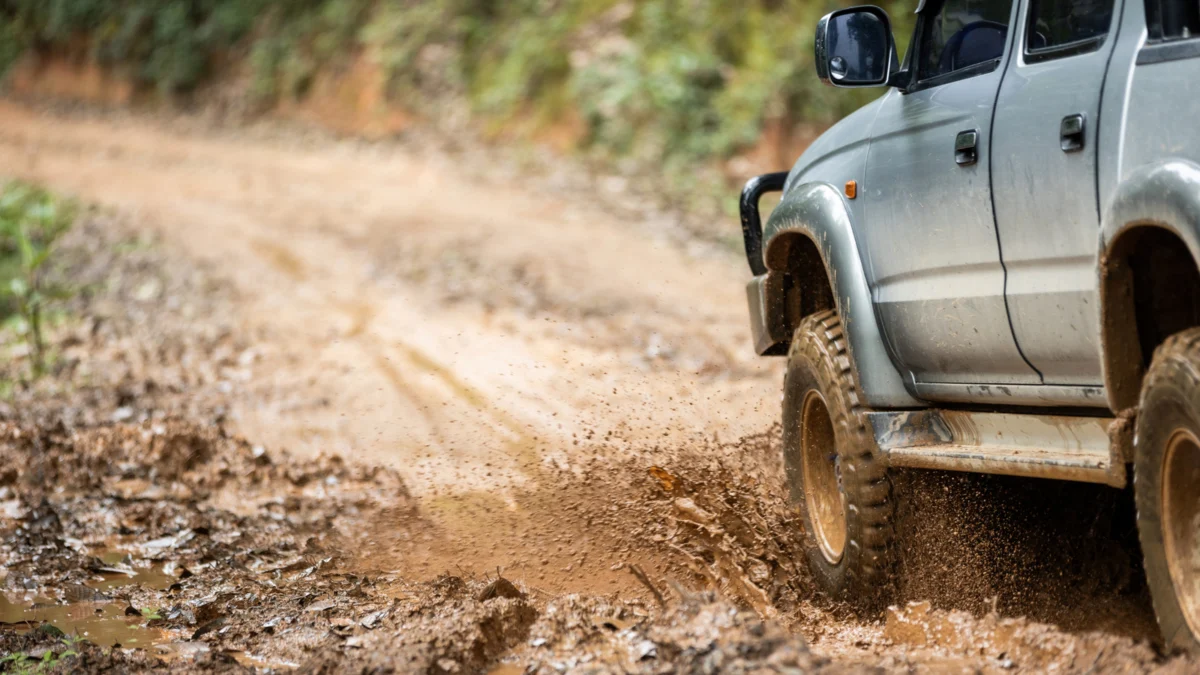
The automotive landscape in the United States has undergone a significant transformation in recent years, with sport utility vehicles (SUVs) rapidly ascending to the pinnacle of consumer preference. Data reveals that SUVs now constitute over half of all new car sales, a stark contrast to previous decades. This dominance is evident across 48 of the 50 American states, driven by a confluence of factors including their elevated seating positions, spacious interiors, and increasingly powerful engine options. Some modern SUVs even boast horsepower figures exceeding 1,000 hp, a testament to their evolving capabilities and performance metrics.
While the allure of higher ground clearance and perceived ruggedness often leads consumers to choose SUVs, the reality of their off-road capabilities is often less robust than perceived. Research indicates a significant disconnect between the rugged image projected by many SUVs and their actual usage patterns. According to Capital One data, an overwhelming 98% of SUV and crossover buyers venture off-road only once a year at most. This suggests that for the vast majority of owners, the primary appeal lies in the vehicle’s aesthetic and practical attributes for daily driving, rather than its potential for conquering challenging terrain. Nevertheless, the added inches of ground clearance are often seen as a valuable, albeit infrequently utilized, asset.
This widespread adoption of SUVs has fostered a general assumption that all vehicles within this segment are inherently capable of handling rough terrain. However, a closer examination reveals a more nuanced reality: not all SUVs are engineered with off-road prowess as a primary design objective. A specific cohort of these popular vehicles, despite their SUV classification, are ill-suited for anything beyond paved roads. This article delves into a selection of these models, exploring the reasons why venturing off the beaten path with them is ill-advised, ranging from the potential for significant financial depreciation to inherent design limitations that compromise their ability to navigate challenging environments.
Land Rover Range Rover: A Luxury Icon’s Delicate Balance
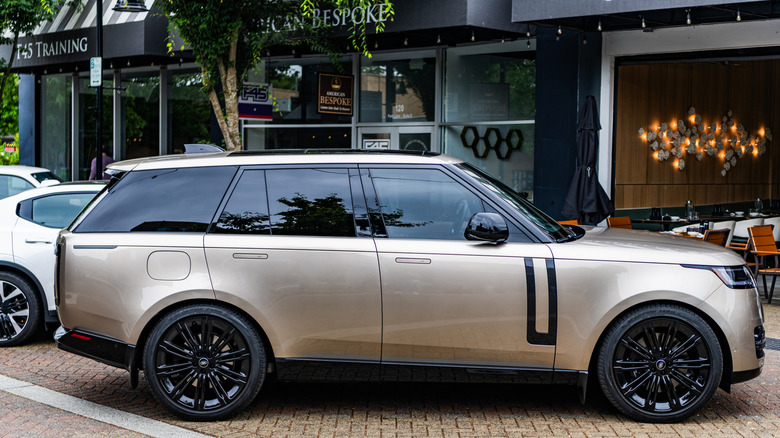
The Land Rover Range Rover, a name synonymous with automotive luxury and capability, paradoxically finds itself on a list of SUVs that should ideally remain on asphalt. Its inclusion is not due to a deficiency in its off-road potential, as the vehicle is demonstrably adept at handling challenging terrains. Its sophisticated air suspension system, a feature since 1994, provides a remarkably smooth ride over uneven surfaces and offers a substantial ground clearance of 8.6 inches for the 2026 model. Furthermore, its towing capacity, with models like the P530 capable of hauling up to 8,200 lbs with its potent 523-hp twin-turbo V8, suggests an inherent readiness for adventure, such as towing a travel trailer to a remote campsite.
The crucial factor that dictates the Range Rover’s exclusion from serious off-roading is its economic vulnerability. As a premier luxury vehicle, its maintenance costs are already substantial. CarEdge data indicates an expected expenditure of over $6,500 for maintenance during the first five years of ownership, with a roughly 24% chance of requiring major repairs within that period. Introducing the stresses and potential impacts associated with off-road driving—such as scrapes to rocker panels or accelerated wear on suspension components—significantly escalates the risk of costly repairs. Compounding this concern is the Range Rover’s depreciation curve, which sees it retain approximately 74% of its value after five years under normal conditions. The added wear and tear from consistent off-roading could further erode its resale value, making it an economically imprudent choice for trail excursions. The preservation of its significant investment often outweighs the occasional utility of its off-road capabilities.
Rolls-Royce Cullinan: Exquisite Engineering Meets Prudent Preservation
The Rolls-Royce Cullinan occupies an even more rarefied stratum within the luxury SUV segment, presenting a unique set of considerations for potential off-road use. While it shares a similar rationale with the Range Rover regarding its suitability for rough terrain, its economic implications are amplified by its ultra-luxury positioning. The Cullinan’s depreciation, though less severe than some rivals, still sees it lose between 40% and 45% of its value over five years. This figure, while better than the substantial depreciation experienced by some other high-end SUVs, still represents a significant financial commitment.
The primary deterrent for taking the Cullinan off-road lies in its unwavering dedication to comfort and opulence. Although equipped with an adaptive suspension system that can achieve nine inches of ground clearance in its off-road setting, the potential consequences of even minor damage are immense. A single scratch from a stray rock on the paintwork could translate to hundreds of thousands of dollars in diminished resale value. Vehicles in this class are often purchased not just for their engineering, but for the statement they make about their owners. A pristine exterior is integral to the Cullinan’s image and, consequently, its market value. The financial risk associated with compromising this aesthetic through off-road excursions far outweighs any marginal benefit gained from its mechanical capabilities in such environments. For owners prioritizing the preservation of their substantial investment, the Cullinan is best enjoyed on meticulously maintained surfaces.
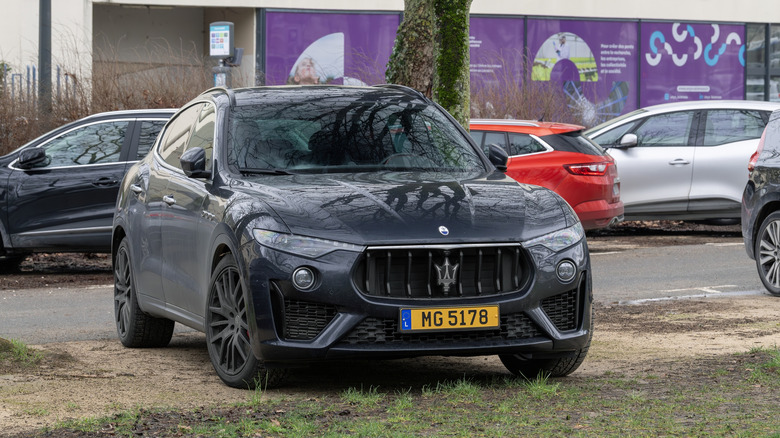
Maserati Levante: Performance Meets Practicality’s Limits
The Maserati Levante, positioned a tier below the ultra-exclusive Rolls-Royce Cullinan, presents a compelling blend of performance and Italian style, but its off-road suitability is significantly curtailed by its design. Having been discontinued in 2024, many examples are now found on the used market, potentially offering a more accessible entry point. Some 2024 models are reportedly available for under $30,000, making them appear as a bargain. However, for those with aspirations of tackling trails, the Levante is best avoided.

The primary concern with the Levante for off-roading is not its price point, although repairs to its sophisticated bodywork can be costly, with paint and panel work potentially exceeding $3,500. The more pressing issue is its mechanical configuration. With a standard ground clearance of approximately eight inches, the unibody construction sits relatively low. This is exacerbated by the use of low-profile tires. These tires, while contributing to a sporty feel on paved roads, offer limited cushioning against impacts. Uneven surfaces and abrupt bumps, common on trails, can be pronounced and increase the risk of tire damage. Furthermore, the inherent vulnerability of the undercarriage to scrapes and impacts from rocks and debris is a significant concern.
Beyond its ground clearance and tire limitations, the Levante’s all-wheel-drive (AWD) system, while competent for adverse weather and light trails, lacks a dedicated low-range transfer case. This essential component is crucial for off-roading, enabling controlled crawling over obstacles at very low speeds. Without it, the Levante’s ability to navigate challenging rocky terrain in a safe and controlled manner is severely compromised, making it an unsuitable choice for serious off-road endeavors.
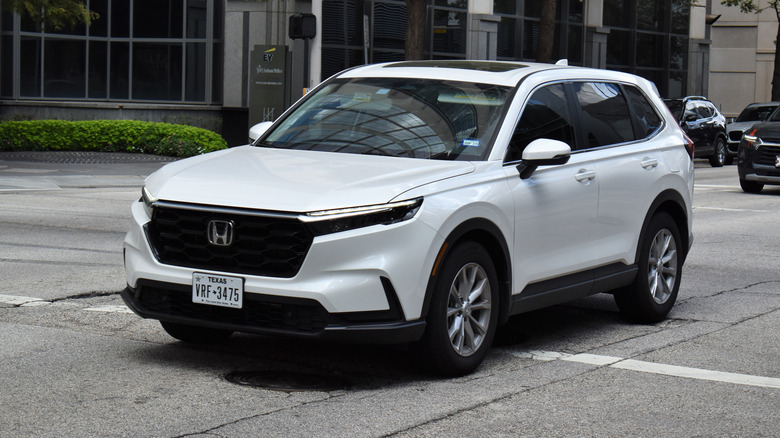
Honda CR-V: Popularity Versus Trail Capability
The Honda CR-V stands as a testament to the broad appeal of compact SUVs, consistently ranking as one of America’s best-selling vehicles. Its reputation for reliability, with many models achieving well over 200,000 miles, makes it an attractive option for families and daily commuters. This inherent durability might lead some owners to consider it for occasional light trail use. However, despite its robust nature, the CR-V has specific limitations that render it ill-suited for challenging off-road conditions.
A significant constraint is its ground clearance. The 2026 model offers either front-wheel-drive (FWD) or AWD configurations, with ground clearance figures of 7.8 inches and 8.2 inches, respectively. While not the lowest on this list, this clearance is insufficient to prevent the undercarriage from potential scrapes and impacts from rocks and debris, a vulnerability further amplified by the plastic underbody shield. A few excursions on a rough trail could necessitate the replacement of this component with more robust aftermarket skid plates. Even the recently introduced TrailSport trim, marketed as the most off-road-capable CR-V, features a cosmetic "skid garnish" rather than substantial underbody protection. While the TrailSport does benefit from 18-inch wheels and all-terrain tires for improved grip, the fundamental limitations of its low unibody and drivetrain prevent it from being a true off-road contender.
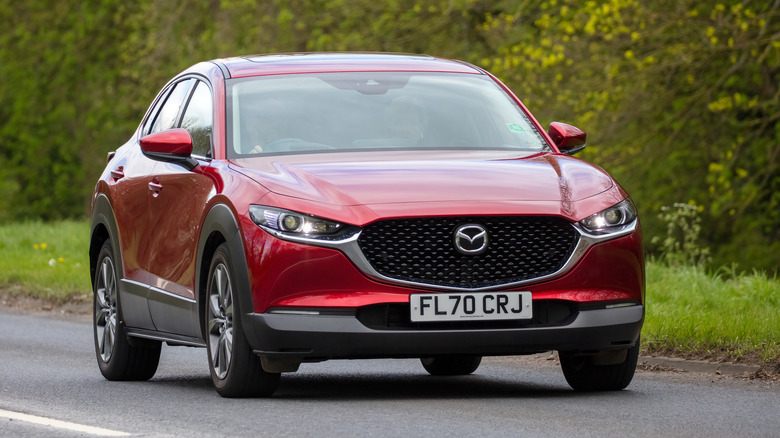
Mazda CX-5: A Refined Crossover’s Off-Road Limitations
The Mazda CX-5, while a global best-seller for the automaker, shares many of the same off-road limitations as its compact SUV counterparts. Its appeal lies in its sophisticated design and engaging driving dynamics, but these attributes do not readily translate to trail conquering. The CX-5’s ground clearance is a primary concern, with trims ranging between 7.6 and 7.9 inches. This height, slightly less than the Honda CR-V, means that smooth progress is challenging once pavement gives way to rougher surfaces.
From a drivetrain perspective, the CX-5 employs Mazda’s i-ACTIV AWD system, which utilizes 27 sensors to proactively shift torque before slippage occurs. This system is effective for enhancing traction in situations like accelerating on wet roads or navigating slippery inclines. However, it lacks the low-range transfer case found in dedicated off-road vehicles. This deficiency becomes a significant limitation when the vehicle needs to traverse obstacles at very low speeds, a common requirement on rocky trails. While the CX-5 can manage light trails and snowy conditions, Mazda itself acknowledges that in particularly demanding terrain where wheels may lose contact with the ground, even its torque-locking capabilities may prove insufficient.
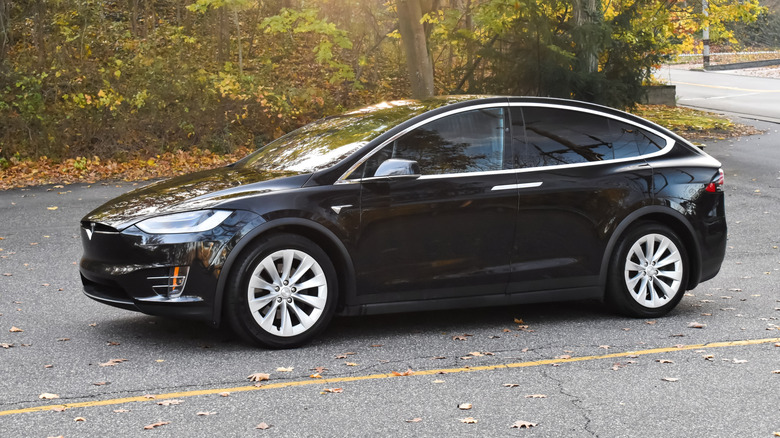
Tesla Model X: Electric Power Meets Battery Vulnerability
The advent of electric vehicles (EVs) introduces a new layer of complexity when considering off-road excursions. While some electric SUVs, like the Tesla Model X with its Plaid trim delivering an astonishing 1,020 hp, boast immense power, this raw output does not automatically equate to off-road prowess. The Model X’s adaptive suspension offers adjustable ground clearance, with options for 5.7, 6.6, and 8.1 inches. While this provides some flexibility, the primary concern for off-roading lies with the vehicle’s integrated battery pack.
The battery, positioned beneath the floor of the Model X’s chassis, serves to maximize range and lower the center of gravity for improved stability. However, this placement renders it highly susceptible to damage from impacts with rocks and debris on the trail. While the battery pack is encased in a reinforced enclosure, a significant impact could still compromise its integrity. The risk of battery damage in an EV is particularly concerning due to the potential for fires, a rare but serious consequence of severe impacts. Consequently, for owners of the Tesla Model X, prioritizing caution and avoiding challenging off-road terrain is a prudent approach to safeguarding both the vehicle and its occupants.
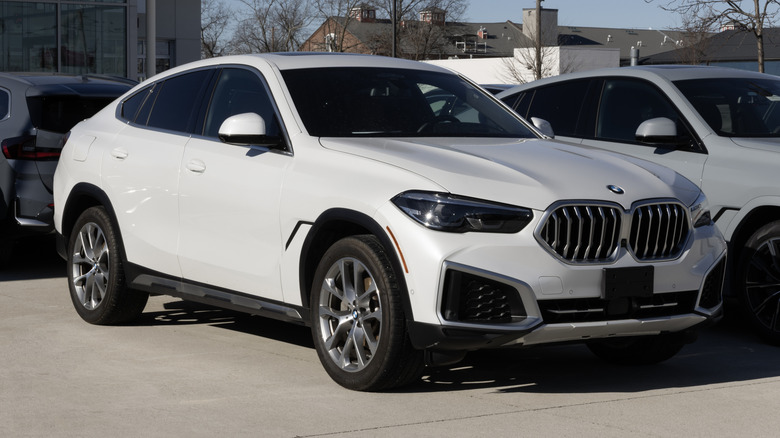
BMW X6: A Coupe’s Compromise on the Trail
The BMW X6, often described as a coupe version of the X5, prioritizes a sleeker, sportier aesthetic. This design philosophy, while visually appealing, comes at the expense of certain practical capabilities, particularly in the realm of off-roading. While the X6 shares its platform and powertrains with the X5, a crucial distinction emerges when comparing their off-road readiness: ground clearance and approach angles.
For the 2026 models, the X5 boasts a ground clearance of 8.3 inches, while the X6 is marginally lower at 8.1 inches. This seemingly small 0.2-inch difference has a notable impact on the vehicle’s ability to navigate obstacles. More significantly, the X6’s approach angle is 21.7 degrees, compared to the X5’s more favorable 25.2 degrees. While the X6 offers a slightly better departure angle, the combination of a lower body and a shallower approach angle makes it less adept at climbing steep inclines or rocky terrain nose-first. Off-roading often requires precise maneuvering, and the X6’s compromised approach angle increases the risk of damaging the front bodywork, making it a less suitable choice for those seeking to venture beyond paved surfaces.
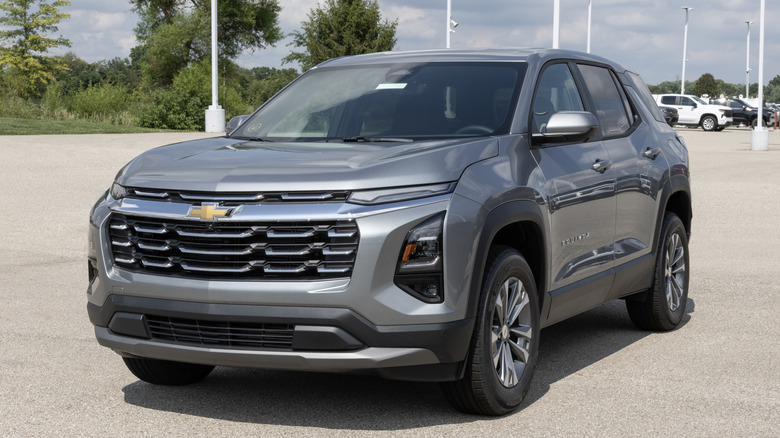
Chevrolet Equinox: Urban Practicality, Not Trail Toughness
The Chevrolet Equinox, a familiar sight on American roads, is a compact SUV designed with urban practicality and fuel efficiency in mind. Its ground clearance of 8.05 inches for the 2026 model places it among the taller SUVs on this list, but this figure alone is insufficient for anything beyond light trails. Online reviews and Consumer Reports have highlighted the Equinox’s handling characteristics, particularly its performance on bends and uneven surfaces. This lack of confidence-inspiring handling is a significant concern when navigating potentially challenging off-road terrain.
Furthermore, the Equinox’s towing capacity serves as a subtle indicator of its intended purpose. FWD models have a maximum towing capacity of just 800 lbs, while AWD versions can handle 1,500 lbs. This is considerably lower than the 5,000 to 7,000 lbs typically offered by compact SUVs designed with more robust capabilities. The deficiency in towing strength suggests that the Equinox was not engineered to withstand the stresses associated with demanding activities like off-roading. Its strengths lie in its everyday usability, not its ability to conquer rugged landscapes.
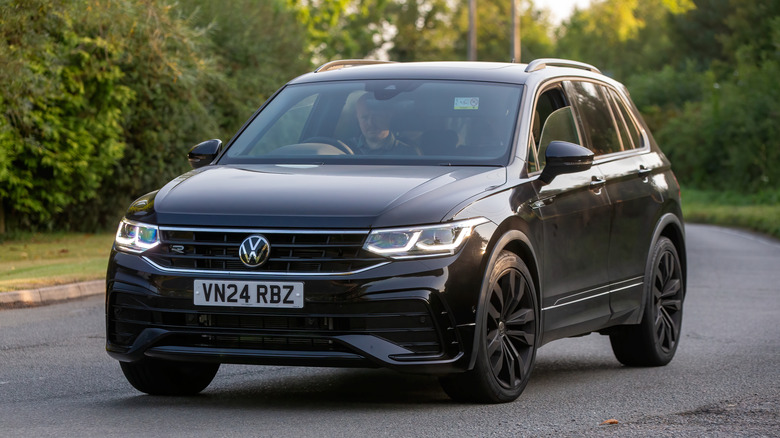
Volkswagen Tiguan: A Crossover’s Limited Off-Road Aspirations
The Volkswagen Tiguan, a popular compact crossover, finds itself on this list primarily due to its modest ground clearance. For the 2026 model year, the Tiguan’s underbody sits just seven inches above the ground. This figure is notably lower than even the Mazda CX-5’s lowest trim, suggesting that off-roading was not a high priority during its design phase.
While the Tiguan’s 4Motion AWD system offers drive modes for various conditions, including "off-road" and "custom off-road," it crucially lacks low-range gearing. This absence of low-range capability limits its effectiveness on moderate off-road paths. Once drivers venture beyond gravel roads and light trails, the Tiguan’s low ground clearance becomes a significant hindrance. While an aftermarket lift kit could increase its height, it would still lack the locking differentials necessary for robust off-road performance. For frequent off-road use, the Tiguan is not the optimal choice, and owners would be better served by a vehicle specifically designed for such endeavors.
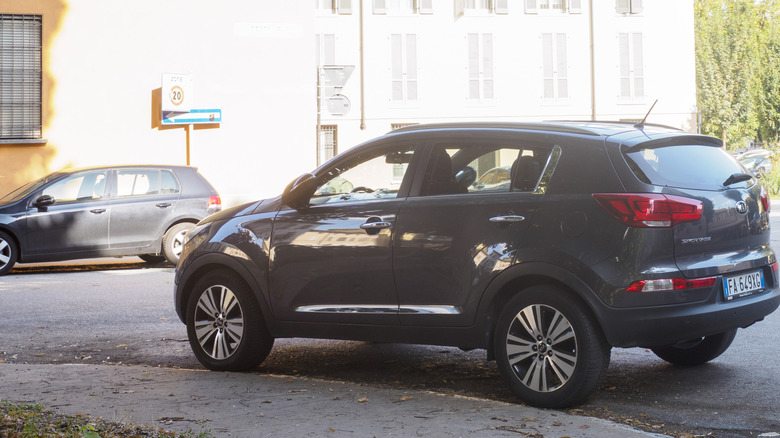
Kia Sportage: Underbody Protection and Ground Clearance Concerns
The Kia Sportage, another contender in the competitive compact SUV segment, presents a mixed bag when it comes to off-road potential. Its lowest trim offers a ground clearance of 7.1 inches, rivaling the Volkswagen Tiguan for the lowest figure on this list. This limited clearance poses a significant risk of underbody damage on rough terrain. While higher SX-Prestige trims offer 8.3 inches of clearance, the non-X-Pro trims suffer from a lack of robust underbody protection.
The plastic front and rear skid plates available on these trims are of a light-duty nature and offer minimal protection against impacts from loose rocks. This is particularly concerning given the exposed suspension components, including lower control arms, multi-link arms, and sway bar links, which are susceptible to damage. Even the X-Pro trims, despite their improved ground clearance, have been noted for their lack of substantial underbody protection. Reviews suggest that while they may perform better off-road than other trims, serious rock-crawling ambitions should be tempered due to the vulnerability of the vehicle’s undercarriage.
Lamborghini Urus: Supercar Performance Meets Luxury’s Fragility
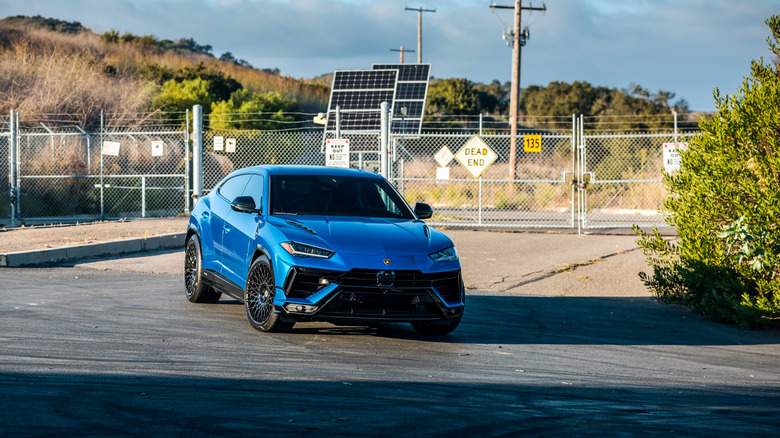
The Lamborghini Urus, the second SUV from the renowned Italian supercar manufacturer, has achieved remarkable sales success. While it offers a degree of off-road capability that surpasses many luxury SUVs, its position on this list is driven by economic prudence. The Urus is a symbol of extreme luxury and performance, and the potential financial repercussions of taking it off-road are substantial.
While its minimum ground clearance of 6.2 inches can be raised to 9.8 inches via its air suspension, the Urus is equipped with low-profile performance tires. These tires, ideal for high-speed on-road grip, have inflexible sidewalls and stiff tread patterns that make them prone to damage from rocks and rough surfaces. Although the Urus is engineered to handle a variety of conditions, any damage sustained on an off-road excursion could easily result in repair costs running into tens of thousands of dollars. Therefore, similar to other ultra-luxury vehicles, keeping the Lamborghini Urus on paved roads is the most sensible approach for preserving its considerable value.
Ford Escape: Everyday Utility Versus Trail Demands
Rounding out the list is the Ford Escape, a practical and popular compact SUV. The 2026 models offer a ground clearance range of 7.5 to 8.2 inches, with the hybrid trim dipping as low as 6.9 inches. This variability, combined with its AWD system, renders it ill-suited for serious off-roading. The Escape’s AWD system is primarily designed for fuel economy, engaging only when wheel slip is detected. While effective for enhanced traction on slippery surfaces like snow or rain, it lacks the robust features necessary for off-road challenges.
The absence of a locking rear differential or a two-speed transfer case means the Escape cannot reliably direct power to specific tires when navigating loose or uneven terrain. Consequently, while it might manage the occasional unpaved path leading to a campsite, venturing onto more demanding trails carries a significant risk of underbody damage. The Escape’s strengths lie in its everyday utility and comfortable ride, not in its ability to conquer challenging off-road environments.