The transportation and logistics sector is currently navigating a period of profound volatility, characterized by surging fuel costs, geopolitical instability in the Middle East, and a rapidly evolving regulatory environment in Washington. Despite the Trump administration’s decision to roll back federal subsidies for electric vehicles (EVs) and its efforts to soften fuel economy standards for heavy-duty truck engines—a move that has drawn sharp criticism from environmental policy experts—the industry is witnessing a notable acceleration toward electrification. This shift is driven less by government mandate and more by the cold, hard logic of the balance sheet, as major corporate shippers move to insulate themselves from the extreme price fluctuations of the global oil market.
The Economic Case for Electrification
The urgency behind the transition to electric trucking is inextricably linked to the current state of global energy markets. With diesel prices reaching record highs this month, fueled by ongoing disruptions in oil production and shipping routes linked to the conflict in the Middle East, fleet operators are facing an existential pricing crisis. Diesel, which typically serves as the lifeblood of the American supply chain, has seen its price nearly double compared to this time last year.
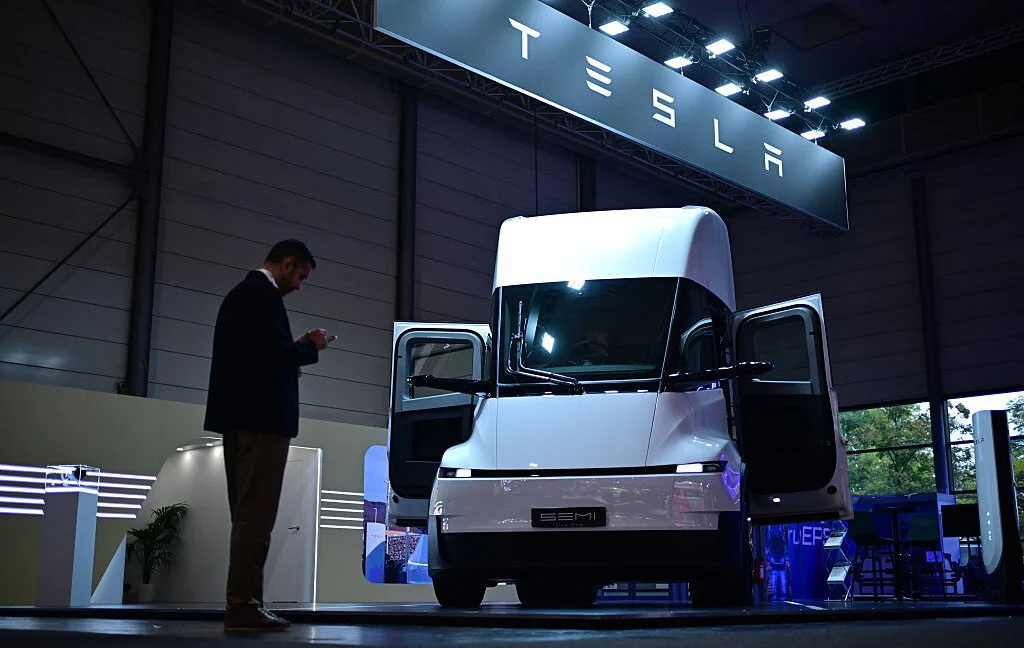
In a pre-taped address regarding the Tesla Semi program, Elon Musk highlighted the disparity between the two fuel sources. Musk, who notably provided significant financial backing to the Trump administration despite its subsequent rollback of green energy initiatives, emphasized that the economic argument for electric trucking has never been more compelling. Because the cost of electricity remains significantly lower and more stable than the price of refined diesel, the Total Cost of Ownership (TCO) for electric heavy-duty vehicles has reached an inflection point. For logistics companies, the transition is no longer a matter of environmental signaling; it is a matter of long-term solvency.
Record-Breaking Procurement and Market Dynamics
This week marked a significant milestone in this transition: a collective of major shippers, including industry giants Microsoft and PepsiCo, announced a record-setting order for 2,500 Tesla Semis. Deliveries are scheduled to commence immediately and will be staggered over the next 18 months. According to data from the ZET (Zero-Emission Truck) dashboard maintained by CALSTART, this single order is poised to nearly double the total number of heavy-duty electric trucks currently operating on United States highways.
The procurement process was facilitated by the Smart Freight Centre, a nonprofit organization that specializes in helping carriers decarbonize their supply chains. Meena Bibra, a spokesperson for the organization, noted that the selection of Tesla over other manufacturers was the result of a rigorous assessment process. "The carriers evaluated price, performance, production capability, and the robustness of service support," Bibra explained.
Crucially, the deal underscores the power of pooled demand. By aggregating their purchasing power, these shippers were able to negotiate more favorable pricing, effectively lowering the barrier to entry for electric vehicle adoption. However, market analysts caution that Tesla is not the only player in this space. While the order favors Tesla, the market for electric freight remains competitive. Carriers with long-standing relationships with legacy manufacturers, or those whose specific operational requirements are better met by alternatives, continue to look toward established players like Kenworth, Volvo, and Ride. These companies are aggressively scaling their own zero-emission programs to capture the growing demand from a logistics sector desperate to escape the volatility of fossil fuels.
Regulatory Headwinds and the Climate Paradox
The paradox of the current market is that this surge in EV adoption is occurring in direct opposition to the federal government’s current policy trajectory. Last year, the Trump administration successfully lobbied for the removal of billions of dollars in federal support for electric vehicles. Furthermore, the administration’s ongoing efforts to weaken fuel economy standards for heavy-duty trucks present a significant challenge to long-term climate targets.
The stakes are high. Heavy trucks account for approximately 7 percent of total greenhouse gas emissions in the United States. While the administration argues that these regulatory rollbacks are necessary to lower costs for the trucking industry and boost domestic manufacturing, critics contend that it creates a long-term disadvantage for American companies. By failing to push for higher efficiency standards, the U.S. risks falling behind international competitors in Europe and China, where electrification mandates and carbon pricing are forcing a faster technological transition.
Technological Evolution and Future Prospects
While the Tesla Semi is currently making waves for its potential to reshape freight economics, the vehicle’s technology stack remains a subject of ongoing scrutiny. During his address, Musk acknowledged that the company’s "Full Self-Driving (Supervised)" software—a driver assistance feature currently available on Tesla passenger vehicles—is not yet integrated into the Semi. Musk promised that the technology would be available in the "very near future," a statement that has met with mixed reactions from industry observers.
The history of the Semi is marked by long development timelines. The project was first unveiled in 2017, at which time Tesla promised the inclusion of "Enhanced Autopilot" technology. Years later, as the first mass-production units reach customers, the focus has shifted from the novelty of autonomous capability to the practical requirements of heavy-duty hauling: battery range, charging infrastructure, and uptime.
The successful deployment of these 2,500 trucks will serve as a bellwether for the rest of the industry. If the vehicles can reliably perform in demanding conditions—maintaining range under heavy loads and surviving the rigorous duty cycles required by logistics firms—it will likely trigger a secondary wave of procurement across the sector.
Implications for the Logistics Sector
The broader implication of this shift is the potential for the decoupling of shipping costs from oil market volatility. For companies like PepsiCo and Microsoft, the move to electric trucking is a strategic hedge against future geopolitical shocks. By investing in a fleet that runs on a domestic, grid-connected energy source, these companies are insulating themselves from the next supply chain crisis.
Furthermore, the secondary infrastructure market is beginning to react. Utilities are under increasing pressure to upgrade grid capacity to support the high-voltage charging stations required for these fleets. The logistical challenges of charging thousands of trucks simultaneously are significant, but they are viewed by industry experts as manageable compared to the unpredictable nature of global oil prices.
As the next 18 months unfold, the performance of the Tesla Semi fleet will be monitored closely by both investors and policymakers. Whether this trend continues will depend on several factors: the ability of manufacturers to maintain production schedules, the ongoing availability of charging infrastructure, and the potential for a shift in federal energy policy following future election cycles.
For now, the message from the private sector is clear: regardless of the regulatory climate in Washington, the economics of electric trucking have reached a point where the risks of inaction far outweigh the costs of transition. The shift is already underway, driven by the necessity of operational stability in an era of unprecedented global uncertainty. As major corporations pivot away from diesel, the American trucking landscape is undergoing a transformation that may define the logistics industry for decades to come.