The Strategic Importance of the J490 Project
For years, Apple has maintained a peripheral presence in the smart home market. While the HomePod and HomePod mini have served as audio-focused entry points, they have lacked the visual interface necessary to compete with established rivals like the Amazon Echo Show or the Google Nest Hub. The J490 device—frequently referred to as the "HomePad"—is designed to bridge this gap. By integrating a 6-inch display, Apple is aiming to provide a central command center for HomeKit-enabled devices, enabling users to manage security systems, lighting, and climate control through a dedicated visual interface.
Industry analysts view this move as a critical component of Apple’s broader "Intelligence" strategy. By embedding advanced Siri capabilities—enhanced by generative AI—directly into the hardware, Apple intends to move beyond basic voice commands. This shift suggests that the new device will leverage on-device processing to provide more intuitive smart home automation, potentially setting a new standard for privacy-focused domestic computing.
Design Specifications and Technical Architecture
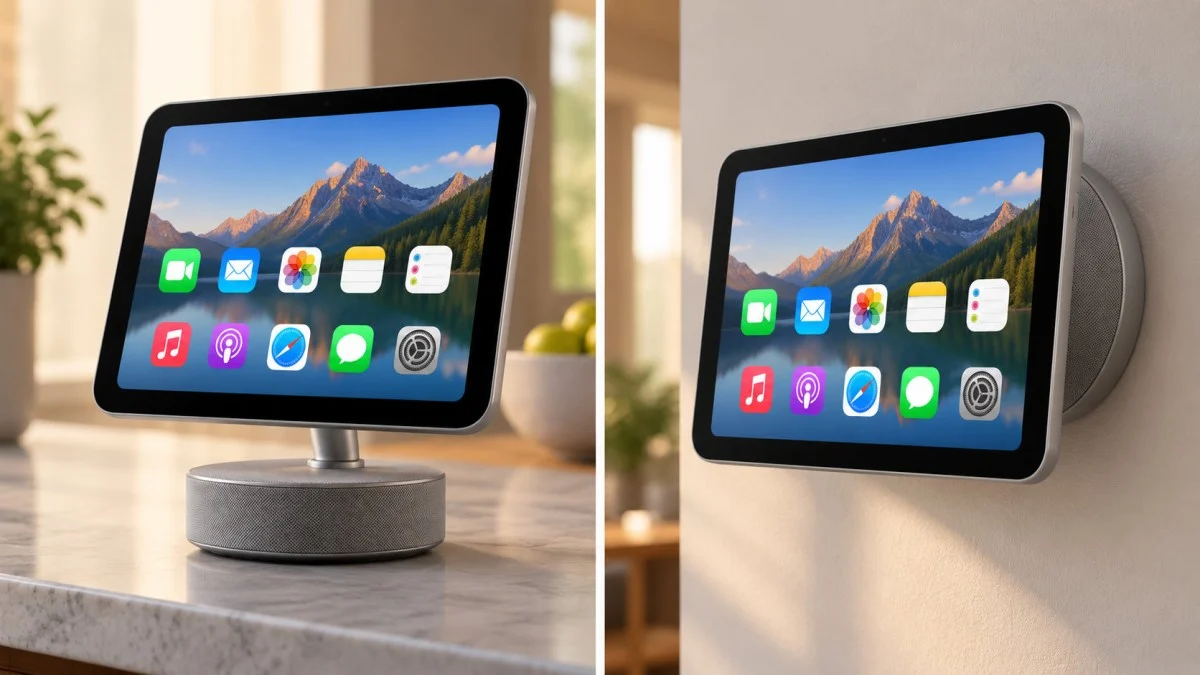
The physical construction of the HomePad reflects Apple’s commitment to premium industrial design. The device features a 6-inch screen, which early reports describe as having a bezel profile comparable to previous-generation iPads. To ensure versatility, the device is engineered with a modular mounting system: it can be placed on a countertop using a robust round metal base or mounted directly to a wall.
A notable design element is the articulating metal arm that supports the display, allowing users to tilt the screen for optimal viewing angles. This mechanical flexibility is complemented by a minimalist aesthetic, with the device finished in Apple’s signature gray aluminum. Power is delivered via USB-C, a departure from legacy proprietary cables, though notably, the device will lack an internal battery. This decision suggests that Apple views the J490 as a fixed-location appliance rather than a portable tablet.
Internally, the device is expected to host a sophisticated array of speakers and microphones housed within the base. The inclusion of facial and voice recognition technology is a significant advancement, allowing the hub to personalize its responses based on the individual user interacting with the system. This multi-user recognition is essential for a shared home environment, ensuring that calendar entries, messages, and smart home preferences are tailored to the specific person in proximity.
Chronology of the Apple Smart Home Journey
The path to the J490 has been a long and iterative process. Apple’s interest in the home automation space dates back to the introduction of HomeKit in 2014. However, the hardware rollout has been sporadic:
- 2014: Apple announces HomeKit, providing a framework for developers to create smart home accessories that work with iOS.
- 2018: The original HomePod is released, focusing on high-fidelity audio rather than visual smart home management.
- 2020: The HomePod mini is launched, bringing a more accessible price point and wider market adoption, though it remains a screenless device.
- 2022: The Apple TV 4K receives its last major update, maintaining its role as a media consumption device rather than a dedicated smart home controller.
- 2023–2024: Persistent rumors surface regarding a device combining a tablet-like screen with smart speaker capabilities.
- October 13, 2026 (Projected): Official launch of the J490 alongside updated HomePod mini and Apple TV 4K hardware.
Complementary Hardware Updates
The concurrent launch of an updated HomePod mini and a refreshed Apple TV 4K suggests a coordinated ecosystem refresh. The current HomePod mini, which has remained largely unchanged since its 2020 introduction, is overdue for an internal overhaul to support the compute-heavy requirements of next-generation Siri. Similarly, the Apple TV 4K has not seen a significant hardware revision since 2022. By updating all three devices simultaneously, Apple is signaling to consumers that the "Smart Home" is a tier-one product category within their portfolio, on par with the iPhone, iPad, and Mac.
Software Functionality and User Interface
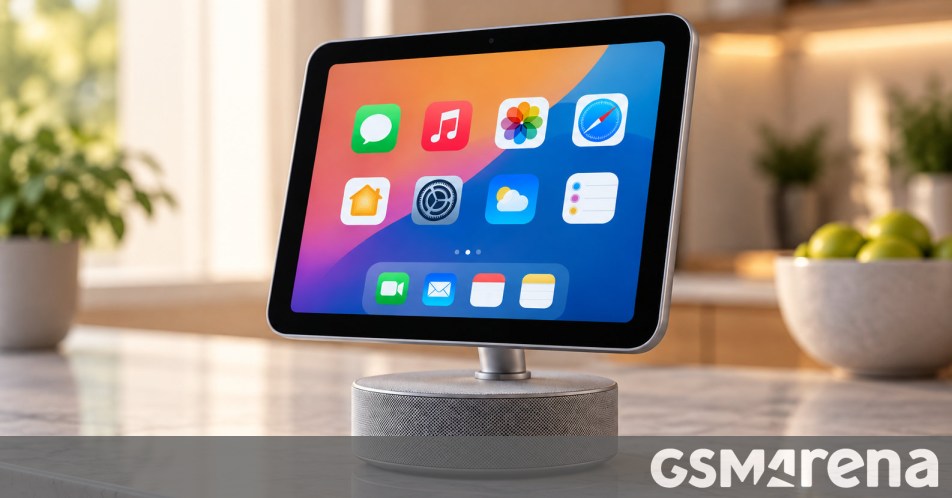
The user experience on the J490 is expected to be a derivative of iPadOS, optimized for a smaller, fixed-mount display. Early indications suggest a two-panel layout that allows for multitasking—such as displaying a security camera feed on one side while managing a shared family calendar or reading messages on the other.
The software integration will extend to intercom-style calling, a feature that facilitates communication between different rooms in a household. This, combined with photo slideshows and music playback, positions the device as a modern digital frame that serves as the "brain" of the home. The integration of Apple’s Intelligence software will likely allow the device to parse complex natural language requests, such as "Siri, show me the front door camera and turn on the porch lights," without the latency issues associated with cloud-only processing.
Market Analysis and Competitive Implications
The smart home market is currently dominated by devices that prioritize broad compatibility and aggressive pricing. Apple’s entry with the J490 is likely to follow its traditional strategy: a premium-priced, ecosystem-locked product that promises superior privacy and seamless integration with the Apple Watch, iPhone, and Mac.
From a competitive standpoint, Amazon and Google have held a significant head start. However, both companies have faced increasing scrutiny regarding data privacy and the efficacy of their AI assistants. Apple’s reputation for data security, combined with the new, more capable Siri, could lure users who are hesitant to place cameras and microphones from other manufacturers in their private living spaces.
Furthermore, the integration of facial recognition technology marks a shift in how smart homes identify and react to occupants. While this raises inevitable privacy questions, Apple’s history of performing biometric processing locally on the device (as seen with FaceID) suggests that the company will likely market the J490 as a more secure alternative to cloud-reliant rivals.
Conclusion and Market Expectations
The announcement on October 13 will be a watershed moment for Apple’s home strategy. While the company has long been successful in individual hardware categories, the "Smart Home" has remained a fragmented experience for many Apple users. By providing a dedicated, visual hub, Apple is attempting to create a cohesive experience that ties together the disparate threads of media, communication, and home automation.
As the launch date approaches, industry observers will be watching to see how Apple prices the J490. A competitive price point could lead to rapid adoption among existing Apple users, effectively locking them deeper into the ecosystem. Conversely, a high entry price may position the device as a niche product for high-end home installations. Regardless of the pricing strategy, the J490 represents the most significant investment in the domestic living space by Apple in nearly a decade, and its performance will likely dictate the company’s trajectory in the smart home sector for the foreseeable future.