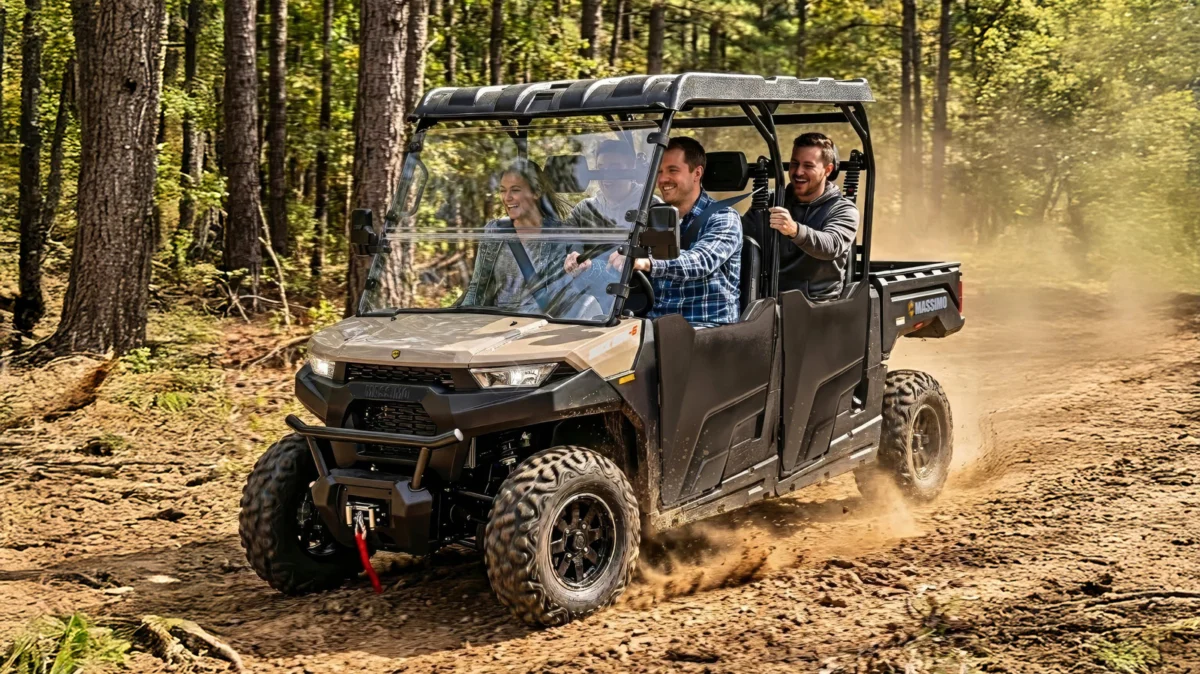
Purchasing a new Massimo vehicle from an authorized U.S. dealer provides owners with a manufacturer-backed warranty covering parts and labor, yet the specifics of this protection remain highly granular and subject to strict conditions. Navigating the Massimo warranty requires a comprehensive understanding of component-specific timelines, maintenance obligations, and the various activities that can render a coverage claim invalid. For consumers, the distinction between a major mechanical failure and a voided policy often comes down to the fine print governing how these vehicles—ranging from high-utility UTVs to recreational mini-bikes—are operated and serviced.
The Tiered Structure of Massimo Coverage
The Massimo warranty framework is built upon a tiered system that differentiates coverage based on the mechanical complexity and expected wear-and-tear of specific vehicle parts. For the brand’s core UTV and ATV lineup, the manufacturer offers a standard period of up to one year or 1,000 miles, whichever threshold is reached first. This primary window is designed to protect the "heart" of the vehicle, encompassing critical systems such as the drivetrain, exhaust architecture, and suspension components. By focusing on these high-stress areas, Massimo aims to provide a safety net for the most expensive potential repairs during the vehicle’s initial break-in and operational phase.
However, the policy narrows significantly for electronic and friction-based components. Wiring harnesses and Electronic Control Units (ECUs), which are sensitive to environmental factors and connectivity issues, are limited to a 180-day warranty window. Even more restrictive are the terms for clutches and Continuously Variable Transmissions (CVTs), which are limited to a 90-day coverage period. This 90-day limitation reflects the nature of these components as "wear items" that are heavily dependent on operator technique, terrain, and load-bearing habits. Furthermore, battery coverage highlights the brand’s reliance on third-party suppliers; while Continental batteries included in select T-Boss and Buck models benefit from their own independent manufacturer warranties, non-Continental batteries are limited to a brief 30-day window, forcing owners to be proactive in verifying the status of their power cells immediately upon delivery.
Diverse Product Portfolios and Varying Policies
Massimo’s growth in the powersports market has led to an expansion into diverse product categories, including mini-truck go-karts, youth-oriented mini-bikes, and golf carts. Because these vehicles serve vastly different functions—ranging from agricultural work to casual recreational transit—the warranty terms are not uniform across the entire catalog. Owners of non-UTV or non-ATV models are cautioned that the standard one-year/1,000-mile limit may not apply. The manufacturer maintains an updated digital repository on its official warranty portal, which serves as the definitive source for coverage terms based on specific model serial numbers. This decentralized approach necessitates that owners verify their specific vehicle’s documentation rather than assuming a universal "blanket" policy across the brand’s entire inventory.
Defining the Boundaries of Exclusions
A significant portion of the warranty’s complexity lies in the explicit exclusions that define when the manufacturer will decline a claim. Massimo maintains that its obligation is strictly limited to defects in materials or workmanship. Consequently, the warranty is effectively nullified if the vehicle has been subjected to commercial or competitive use. Any evidence that a UTV or ATV has been utilized in a rental capacity or as a race vehicle—regardless of the nature of the mechanical failure—will result in an immediate denial of coverage. This policy is standard among many powersports manufacturers, as the extreme physical stress associated with racing or the unpredictable usage patterns of a rental fleet fall outside the scope of "normal consumer use."
Beyond usage patterns, the integrity of the warranty is contingent upon the vehicle’s mechanical purity. Massimo strictly prohibits non-Original Equipment Manufacturer (OEM) modifications. In the eyes of the manufacturer, any alteration to the engine, chassis, or electronics—even those intended to improve performance or utility—can introduce variables that the original warranty cannot account for. If a vehicle has been tampered with or modified, the manufacturer reserves the right to declare the warranty void. Similarly, the use of unauthorized service centers for repairs is a common pitfall; owners who seek out third-party mechanics to save costs or time often find that they have inadvertently forfeited their right to future manufacturer-backed repairs.
The Role of Maintenance and Operator Responsibility
Perhaps the most critical aspect of maintaining warranty eligibility is the adherence to a rigorous maintenance schedule. Massimo places the burden of proof on the owner to demonstrate that the vehicle has been cared for in accordance with the user manual. This includes, but is not limited to, the monitoring of fluid levels and the quality of consumables used during service.
A notable requirement involves engine oil management. To simplify the maintenance process, Massimo has standardized the engine oil requirements across its entire vehicle lineup, including its smaller mini-vehicles. By selling these specific lubricants directly through their website, the manufacturer provides a clear path for owners to fulfill their maintenance obligations using approved products. Failure to perform these routine tasks, or evidence of neglect such as running an engine low on oil, is categorized as "improper maintenance" and serves as a valid justification for the manufacturer to deny a warranty claim.
Furthermore, owners should be aware that the warranty does not cover logistical costs. Even in instances where a component failure is deemed a legitimate manufacturer defect, the expense associated with transporting the vehicle to an authorized dealer rests solely with the owner. Additionally, Massimo does not provide compensation for the loss of use or "inconvenience" while the vehicle is undergoing repairs, emphasizing that the warranty is a remedy for repair costs rather than a comprehensive service guarantee.
Analysis: Implications for the Consumer
The structure of the Massimo warranty reflects a broader trend in the utility and powersports industry, where manufacturers are increasingly tightening the definitions of "covered usage." By delineating specific lifespans for high-wear components like CVTs and enforcing strict prohibitions on unauthorized modifications, the brand effectively manages its liability. For the consumer, this creates an environment where "owner diligence" is just as important as the mechanical quality of the vehicle itself.
The implications for buyers are twofold. First, the 90-day and 180-day limitations on specific electrical and mechanical parts suggest that owners should perform "shakedown" testing immediately upon taking delivery of a new Massimo vehicle. Identifying a defect within the first three months of ownership is critical, as the window for claims on high-stress parts closes rapidly. Second, the prohibition against non-OEM parts underscores the importance of utilizing the authorized dealer network for the entirety of the vehicle’s early life. While aftermarket parts may offer perceived benefits, they pose a significant financial risk to the owner by potentially invalidating the entire warranty package.
Historical Context and Industry Standards
Historically, powersports manufacturers have faced challenges in balancing the "rugged" nature of ATVs and UTVs with the necessity of limited warranties. Unlike passenger automobiles, which operate in predictable environments, Massimo vehicles are often exposed to dust, mud, extreme heat, and heavy hauling, all of which accelerate the degradation of parts. The specific time-and-mileage milestones set by Massimo—1,000 miles or 12 months—are consistent with industry benchmarks for entry-level and mid-range utility vehicles. However, the move to include specific, shorter-term warranties for electronics and transmissions marks a pivot toward more granular risk management.
Industry analysts observe that as companies like Massimo expand their market share—particularly through partnerships with large-scale retailers—the volume of warranty claims naturally increases. This has necessitated the implementation of more robust, albeit restrictive, documentation requirements. By centralizing its warranty information and providing clear, model-specific guidelines, the company is attempting to standardize the claims process, though this inevitably requires a higher level of administrative participation from the consumer.
Best Practices for Warranty Preservation
To maximize the benefits of the Massimo warranty, owners are advised to adopt a "paper trail" approach to vehicle ownership. This includes:
- Digital Documentation: Registering the vehicle immediately upon purchase via the Massimo website to ensure the manufacturer has a record of the sale date and model information.
- Service Records: Maintaining a physical or digital log of all oil changes, filter replacements, and general inspections. Even if the owner performs the maintenance themselves, keeping receipts for oil and OEM-certified filters is essential evidence of compliance.
- Authorized Inspections: During the first 90 days, scheduling a check-up at an authorized dealer if the vehicle displays any signs of performance degradation in the transmission or electronics.
- Usage Awareness: Understanding that "off-road" does not equate to "indestructible." Avoiding modifications that alter the electrical system or engine output is the single most effective way to ensure the warranty remains active.
As the powersports market continues to evolve, Massimo’s warranty policy serves as a reminder of the contractual nature of consumer purchases. While the coverage offers essential protection against manufacturing flaws, it is designed to work in tandem with the owner’s commitment to maintenance and factory specifications. By adhering to these guidelines, owners can mitigate the risks of costly repairs and ensure that their Massimo vehicle remains a reliable asset for its intended purpose. For further clarity on specific exclusions or to check the status of a specific component, the manufacturer encourages owners to consult the official online warranty portal, which serves as the final authority on all claims.