A Timeline of the Launch and Initial Reception
The rollout of the iPhone 18 Pro and iPhone 18 Pro Max began in earnest on Friday, marking the culmination of months of speculation regarding Apple’s latest flagship specifications. Within hours of the devices reaching consumers, the digital ecosystem saw a surge in technical content. By Saturday morning, multiple third-party laboratories and prominent technology influencers had already performed initial teardowns to evaluate the internal layout.
The sequence of events followed a predictable yet rapid pattern:
- Friday Morning: Global retail availability begins, with long queues reported at major Apple Store locations.
- Friday Afternoon: The first wave of “unboxing” and “first impressions” content saturates social media platforms.
- Saturday Morning: Independent technical analysts begin publishing internal hardware mappings, confirming the presence of the new variable aperture camera module.
- Sunday: The release of specialized durability testing videos provides empirical data on the material resilience of the device’s chassis and display glass.
Durability Testing: An Empirical Analysis
Zach Nelson, widely known for his YouTube channel JerryRigEverything, subjected the iPhone 18 Pro to his standardized battery of durability tests. This assessment is significant because it utilizes the Mohs scale of mineral hardness to evaluate the scratch resistance of the front glass panel.
The iPhone 18 Pro’s display demonstrated a superior level of resistance compared to industry standards. Under testing, the glass remained intact until encountering a Mohs pick at level 7, with deeper grooves appearing only at level 8. By contrast, the vast majority of current-generation flagship devices exhibit surface-level scratches at level 6 and deeper structural damage at level 7. This indicates that Apple has likely implemented a new iteration of its Ceramic Shield or a proprietary glass-ceramic composite that offers enhanced molecular density.
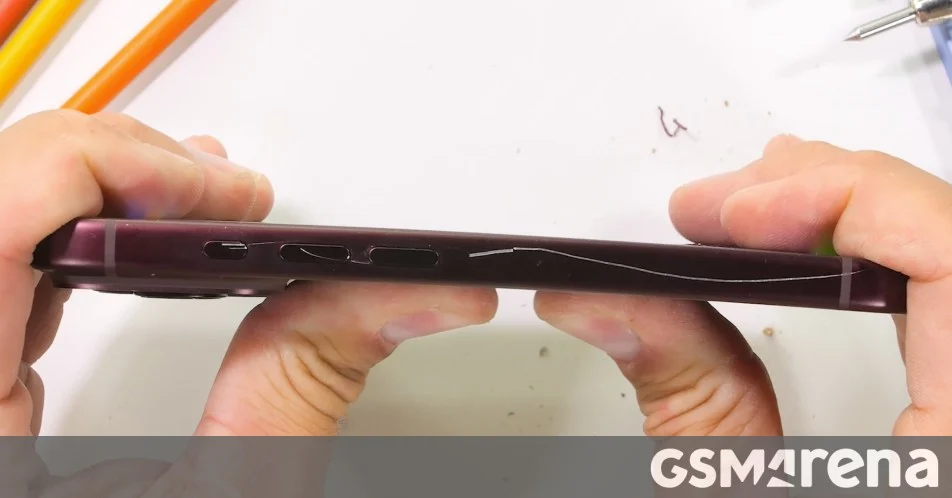
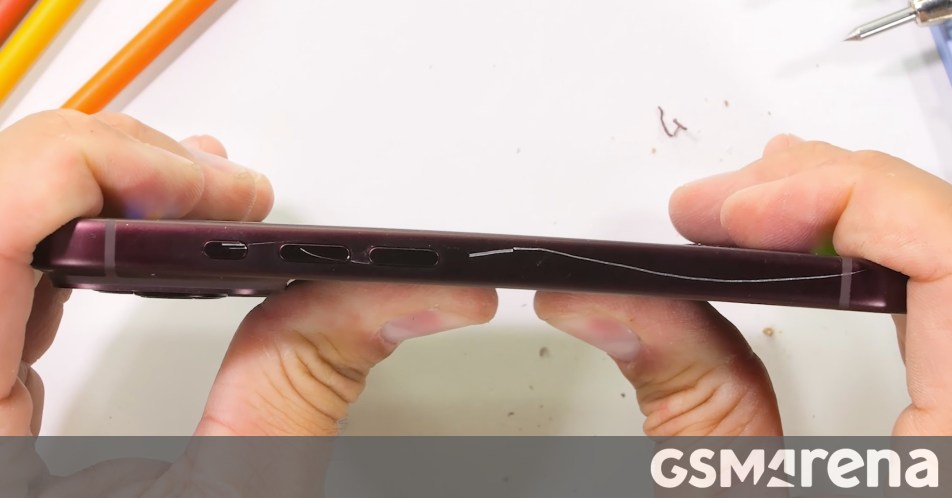
Furthermore, the structural integrity of the frame was evaluated. The iPhone 18 Pro utilizes an aluminum alloy for the primary frame and camera module housing. During the “bend test,” which applies concentrated pressure to the center of the device to check for chassis warping or adhesive failure, the iPhone 18 Pro remained rigid, showing no signs of compromise. The back panel, which is composed of glass, maintained its structural bond with the aluminum frame, suggesting that the internal structural adhesives and the placement of internal components are optimized to absorb and distribute mechanical stress.
Thermal testing also yielded noteworthy results. The display remained functional and structurally sound after being subjected to an open flame for 25 seconds. While pixels in the immediate vicinity of the heat source eventually turned white—a common reaction for OLED panels—the screen recovered fully once the heat source was removed, indicating a high degree of thermal stability for the internal display driver circuitry.
Inside the Hardware: The Variable Aperture Module
The most significant engineering update in the iPhone 18 Pro series is the integration of a variable aperture system in the main camera sensor. A teardown of the device, conducted by the same team that performed the durability tests, provided a rare, granular look at the mechanical components of this module.
Unlike fixed-aperture lenses that rely entirely on software post-processing to manage depth of field and light intake, the iPhone 18 Pro utilizes physical blades within the lens housing. These blades expand and contract to alter the physical size of the aperture. In the teardown, the precision of these microscopic actuators is evident. This development represents a shift for Apple, which has historically prioritized software-driven computational photography. By introducing a physical mechanical component, Apple is signaling a move toward hybrid optical-computational systems, where the lens itself provides the foundation for depth control before software algorithms are applied.
Market Implications and Financial Context
The hardware choices documented in these teardowns have direct implications for the long-term lifecycle of the device. The use of an aluminum frame, rather than the titanium alloys seen in some previous "Pro" models, suggests a strategic decision to balance weight and cost-efficiency without sacrificing durability.
The current market pricing for these devices reflects their high-end positioning. As of the latest reports, the 256GB base model of the iPhone 18 Pro starts at approximately €1,449 in Germany and £1,199 in the United Kingdom. For the Pro Max variant, the entry-level 256GB configuration is priced at €1,599 and £1,299, respectively. These price points suggest that Apple is positioning the iPhone 18 Pro series as a premium tool for professional content creators, where the inclusion of a variable aperture camera is intended to justify the higher cost of ownership compared to base-model iPhones.
Official Stance and Industry Response
Apple has maintained its standard position regarding device durability, emphasizing that the iPhone 18 Pro is designed to withstand the rigors of daily use. While Apple does not comment on specific third-party durability tests, the company’s marketing documentation highlights the “aerospace-grade aluminum” and “toughened glass-ceramic” construction as the pillars of the device’s reliability.

Industry analysts suggest that the positive performance in these durability tests will likely bolster consumer confidence. In an era where smartphone replacement cycles are extending, the ability of a device to withstand physical stress is becoming a critical marketing metric. By maintaining high build quality, Apple is effectively protecting its resale value, which remains the highest in the mobile industry.
Broader Impact on Future Smartphone Design
The widespread availability of teardown data is, in itself, a reflection of the modern consumer’s desire for transparency. As consumers become more aware of the "right to repair" and the environmental impact of disposable technology, the internal layout of the iPhone 18 Pro is being scrutinized not just for its performance, but for its repairability.
The fact that the iPhone 18 Pro is being disassembled within 48 hours of its launch demonstrates a high level of market interest in the internal "secrets" of Apple’s engineering. As the industry moves toward more complex, multi-sensor camera arrays and increasingly dense internal circuitry, the success of the iPhone 18 Pro’s variable aperture module will likely influence competitors in the Android ecosystem. If the implementation proves reliable over time—a factor that long-term usage tests will soon determine—it is highly probable that variable aperture systems will become the new standard for flagship mobile photography in the coming years.
As the industry continues to monitor the performance of the iPhone 18 Pro, the focus will soon shift from initial durability to long-term software stability and battery longevity. Comprehensive reviews are currently underway to synthesize these findings, and the collective data will provide a definitive answer as to whether the iPhone 18 Pro represents a significant leap forward in mobile technology or a refinement of existing, proven hardware architectures. For now, the empirical evidence confirms that Apple has succeeded in creating a device that is as resilient on the outside as it is sophisticated on the inside.