In a move that marks a tectonic shift in the relationship between the executive branch and the Fourth Estate, the White House has effectively cut off a significant segment of the press, prompting a historic walkout by the traditional media pool. On Monday, for the first time in the thirty-year memory of veteran White House correspondents, the President of the United States departed the grounds without the accompaniment of network television cameras. This profound silence was not the result of a scheduling change or a private departure, but a deliberate act of solidarity by major news organizations—ABC, CBS, NBC, and Fox—who refused to staff the rotating TV pool in protest of the administration’s decision to ban CNN, MS NOW, and Politico from the White House premises.
The ripple effects of this standoff were immediate and visually jarring. During a ribbon-cutting ceremony intended to highlight administration initiatives, the lack of professional pool coverage left the event without the standard infrastructure required for national broadcast. When secondary outlets attempted to capture the footage, technical failures—including an inability to pick up the President’s audio—left viewers watching disjointed, amateur-grade segments. This failure underscored the vital, standardized role the media pool plays in maintaining the transparency of the American presidency.
A Chronology of the Conflict
The friction between the current administration and the press has been simmering for months, but the situation reached a breaking point last week. According to multiple reports from inside the West Wing, the administration’s ire was stoked by internal reviews of media coverage. Aides, including Natalie Harp, reportedly presented the President with curated clips of MS NOW anchors and negative analytical graphics from Politico. These reports suggest that the President, frustrated by perceived hostility and critical coverage of issues ranging from foreign policy in the Middle East to domestic economic indicators, ordered the immediate exclusion of the three outlets.
The administration’s rationale, articulated in an official statement titled "White House Access Is a Privilege—Not a Right," argues that the excluded organizations have engaged in a pattern of "false reporting." The White House asserted that the First Amendment provides a right to publish, but does not grant an automatic entitlement to briefing room seats or travel pool access. Furthermore, the administration attempted to frame its actions as consistent with previous presidencies, citing allegations—though lacking in historical parity—that the Obama and Biden administrations had also restricted press access.
The response from the media was swift and coordinated. The five-network pool, which includes the banned CNN alongside ABC, CBS, NBC, and Fox, issued a joint statement declaring that the public has a vital interest in receiving accurate, independent information. By refusing to participate in the pool, these networks effectively dismantled the mechanism used to broadcast the President’s daily movements, signaling that they would not allow the administration to selectively curate which outlets serve as the public’s eyes and ears.
Legal Challenges and Constitutional Precedent
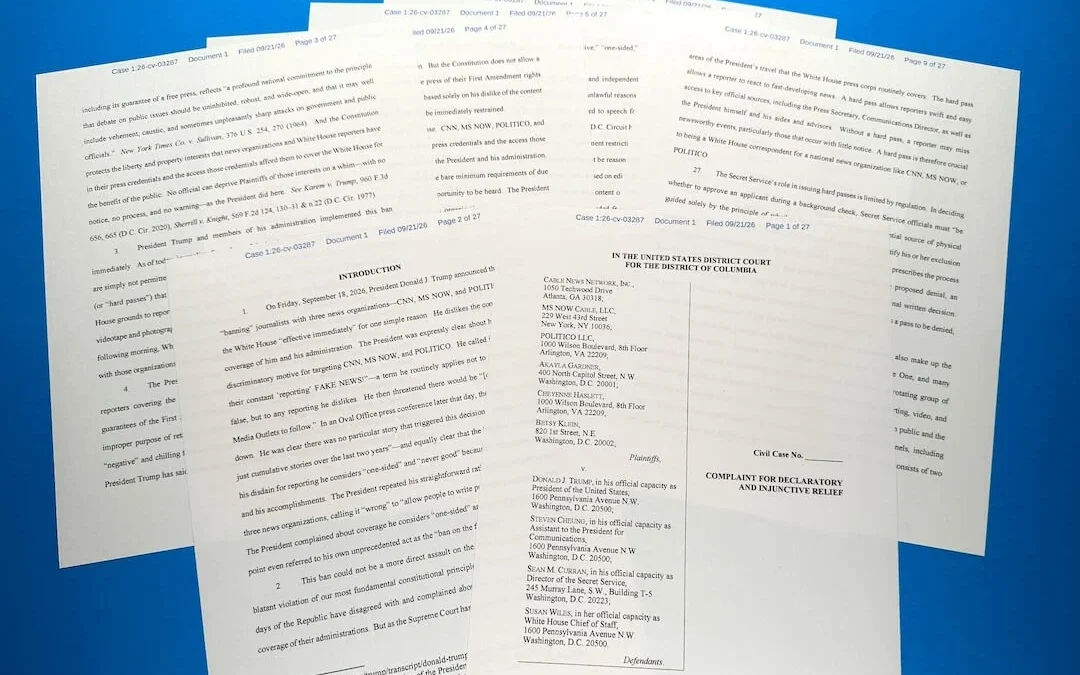
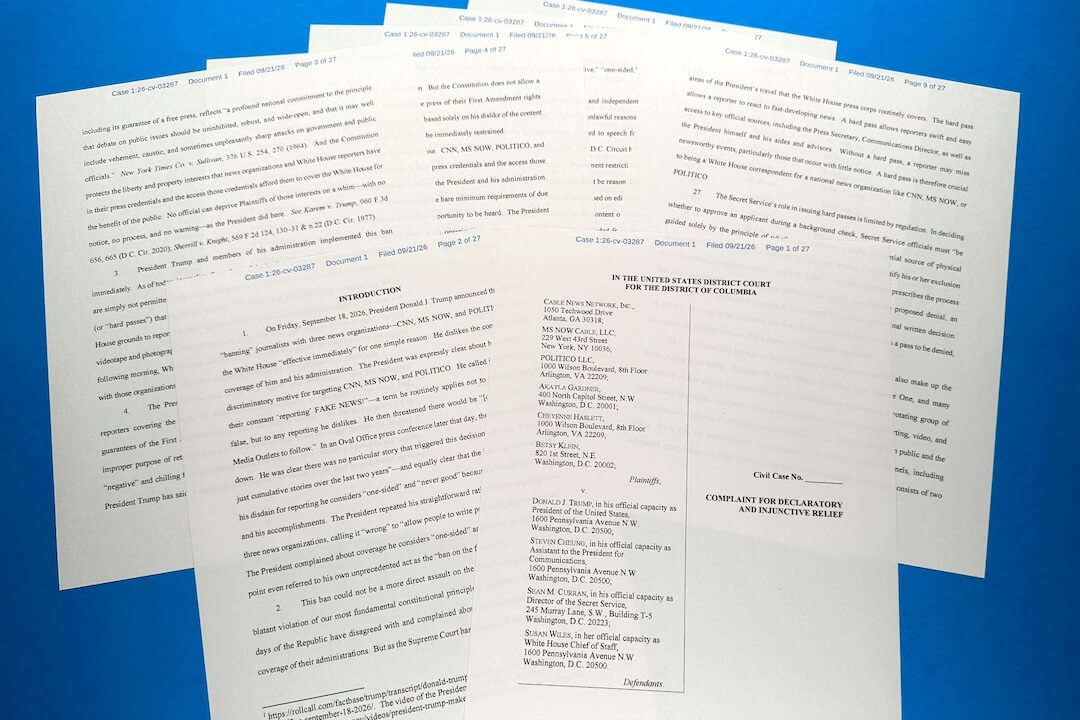
By Monday afternoon, the conflict had moved from the White House lawn to the federal courthouse. The banned organizations—CNN, MS NOW, and Politico—filed a joint lawsuit seeking an immediate injunction against the administration’s ban. Their complaint argues that the government cannot deprive press organizations of their First Amendment rights, nor strip them of access based solely on the content of their reporting.
The case has been assigned to U.S. District Judge Timothy Kelly. Legal observers have noted the significance of this assignment; Judge Kelly was the jurist who, in 2018, ordered the White House to restore the press credentials of CNN reporter Jim Acosta after a similar revocation. While the administration has signaled its intent to appeal any adverse ruling, Judge Kelly has already scheduled a videoconference hearing for Wednesday afternoon, setting the stage for a high-stakes legal battle over the limits of presidential authority regarding the press.
President Trump, utilizing Truth Social as his primary megaphone, has remained defiant. He has characterized the media outlets as a "threat to National Security" and a "cancer" on the country. Despite the legal action, the President has continued to escalate his rhetoric, labeling the mainstream media as a "threat to democracy" and vowing to fight the court challenges regardless of the outcome.
Broader Media Industry Repercussions
The protest against the ban has extended beyond the television networks. Major news organizations have adopted varying forms of non-cooperation to highlight the severity of the access restriction. The Washington Post announced it would delay the publication of all presidential event photography until midnight, while C-SPAN—an outlet that typically prides itself on a neutral, unfiltered presentation of government events—issued a formal condemnation. Sam Feist, CEO of C-SPAN, noted that while the network prefers to stay out of the political fray, the core mission of public transparency is currently at risk. NPR similarly instructed its staff to cease the use of audio tapes from White House events, opting instead to report the substance of presidential remarks without the aid of official recordings.
Corporate Consolidation and the Paramount-WBD Merger
Complicating the landscape of the American news media is the recent clearing of a significant antitrust hurdle: the $111 billion acquisition of Warner Bros. Discovery (WBD) by Paramount. The deal, which creates a media colossus, will consolidate control of CNN and CBS News under a single parent company.
The merger, which faced staunch opposition from a coalition of Democratic-led states, was settled following a series of concessions. Among the conditions of the agreement is the establishment of an "independent editorial board" comprised of journalists intended to safeguard the editorial autonomy of CNN and CBS. However, the efficacy of this board is already being met with skepticism. Critics, including the Freedom of the Press Foundation, argue that such boards are often performative and ultimately subject to the influence of billionaire owners who may have political or business ties to the administration.
David Ellison, who will head the newly merged entity, has faced scrutiny regarding his family’s relationship with the Trump administration. The prospect of having the nation’s two most prominent television news networks under the influence of an ownership group with close ties to the President has fueled concerns about the future of objective journalism. As Joshua Benton of the Nieman Lab noted, "These independent boards are PR gestures, not vehicles for editorial protection."
Implications for the Future of Journalism
The current impasse represents more than a spat between the White House and the press; it highlights a deteriorating consensus on the role of the media in a democracy. Data from the last decade has shown a steady decline in public trust in institutions, a trend that this administration has actively cultivated. By framing the press as "Fake News" or "propaganda," the administration has effectively redefined the role of the journalist from that of a public watchdog to that of a partisan combatant.
The implications of this shift are twofold. First, the erosion of the physical access afforded to the press—the "pool"—makes it increasingly difficult for the public to obtain a consistent, factual record of presidential activities. When the administration controls the camera, the lighting, and the distribution, the line between government communication and independent reporting blurs.
Second, the willingness of the major networks to collectively walk away from the pool indicates a growing realization that the traditional rules of engagement may no longer apply. If the administration is willing to treat access as a reward for favorable coverage rather than a democratic necessity, the media’s only remaining leverage may be the total cessation of that access.
As the legal proceedings in Judge Kelly’s court begin, the nation is witnessing a fundamental test of the First Amendment in the digital age. Whether the courts will compel the White House to restore access or whether the administration will succeed in its attempt to fundamentally alter the relationship between the government and the press remains an open question. For now, the silence in the White House press room remains a testament to a deepening divide, where the administration and the media are not merely disagreeing on the facts, but on the very nature of the reporter’s role in American governance.