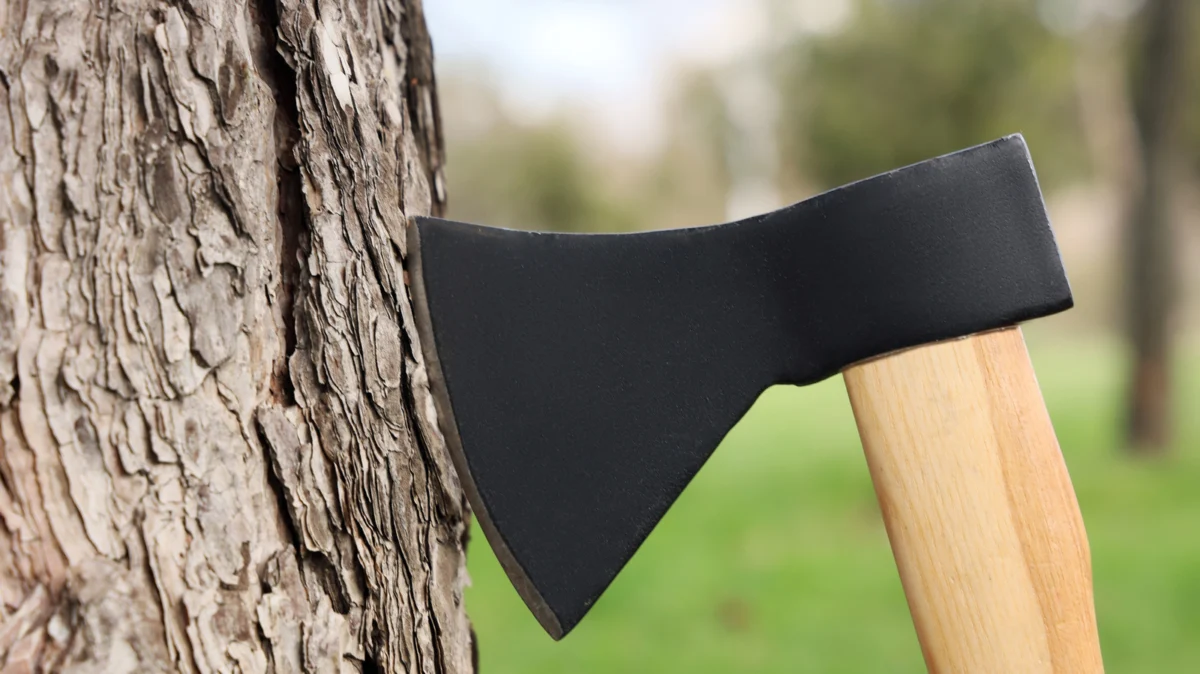
The anatomy of an axe is a testament to centuries of engineering refinement, where every curve, bevel, and indentation serves a distinct mechanical purpose. While the primary function of a hatchet or an axe remains the forceful separation of wood fibers, the presence of specific notches—often misunderstood by casual users—reveals the tool’s specialized utility. These design features are not merely aesthetic; they are functional adaptations that dictate the tool’s balance, versatility, and efficiency in tasks ranging from heavy-duty forestry to delicate finish carpentry.
Understanding the Structural Notches
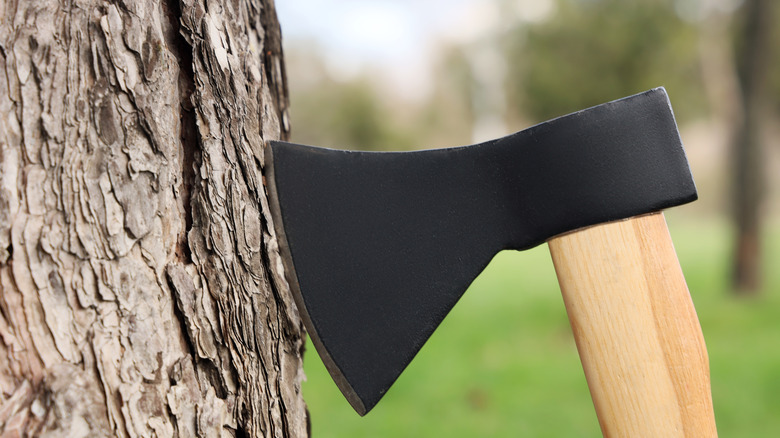
The V-shaped notch frequently observed at the bottom of an axe blade, known as the "beard," is a design element that has evolved significantly over history. By removing material from the lower portion of the blade, manufacturers effectively shift the center of gravity. This reduction in weight at the toe of the axe improves the tool’s overall balance, particularly when used for horizontal strikes. In precision tasks, such as carving or limbing, this weight distribution allows the user to choke up on the handle, placing their hand directly behind the cutting edge for greater control. This grip technique, often referred to as "choking up," is only ergonomically viable when the tool’s weight is balanced to prevent the blade from pulling the wrist downward during a stroke.
Conversely, notches found directly on the cutting edge—often referred to as "nail pullers" or "nail notches"—are hallmarks of multi-purpose tools, such as roofing or lathing hatchets. These features are engineered to leverage fasteners out of timber without damaging the primary cutting edge. By hooking a nail head into the notch, a user can exert leverage against the handle, using the axe head as a fulcrum. This prevents the delicate edge of the blade from suffering nicks or rolls when prying boards, a common issue in construction environments where a dedicated pry bar might not be immediately available.
A Chronological Evolution of Axe Design
The history of the axe is as old as civilization itself. The earliest stone hand axes date back over 1.5 million years to the Lower Paleolithic era. Throughout the Bronze and Iron Ages, the transition to metal heads allowed for the introduction of the socket and the eye, which enabled more secure hafting—the process of attaching the head to a wooden handle.
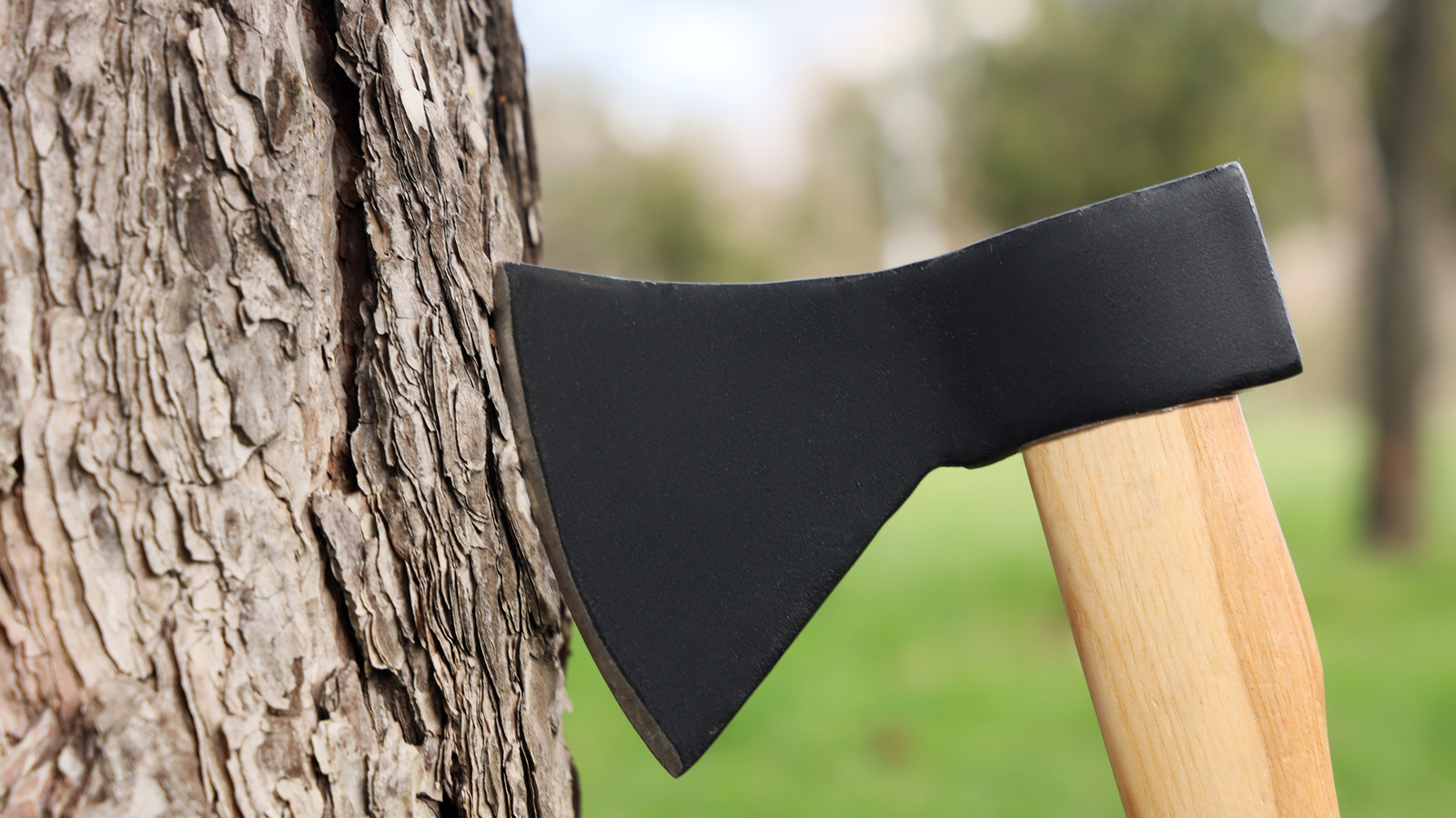
The diversification of the axe began in earnest during the Middle Ages. As specialized trade guilds emerged, tools were adapted to the specific needs of shipwrights, carpenters, and foresters. The "broad axe," for instance, featured a distinct offset handle and a wide, chisel-like blade used for squaring logs into beams. It was during this period that the "beard" became more pronounced in Northern European designs, allowing for a longer cutting edge without increasing the total mass of the iron, which was a precious commodity at the time.
By the 19th century, the Industrial Revolution brought standardized manufacturing to axe production. Companies such as Collins & Co. and Plumb began mass-producing tools with specific regional variations, such as the Hudson Bay axe or the Dayton pattern. The introduction of these variations solidified the categorization of axes into three primary groups: felling axes (designed for cutting across the grain), splitting axes (designed for separating grain), and general-purpose hatchets.
Taxonomy and Categorization of Modern Axes
To understand the utility of these tools, one must recognize that the "axe" is a broad category encompassing hundreds of sub-types. Modern tool taxonomy generally divides them based on their handle length and head geometry:
- Felling Axes: Characterized by a thin, sharp profile and a long handle, these tools are designed for high-velocity swings to sever wood fibers. The flare at the blade is designed to prevent the head from sticking deep in the wood.
- Hudson Bay Axes: These represent a mid-point in the spectrum. With a weight typically between 1.5 and 2.5 pounds, they possess enough mass for moderate tree felling while remaining agile enough for one-handed use, making them a favorite among bushcrafters and wilderness travelers.
- Carpenter’s Axes: These are the precision instruments of the group. Often featuring a straight edge and a flat "poll" (the back of the head) that functions as a hammer, they are essential for framing and construction.
- Broad Axes: Historically significant and still used in timber framing, these feature a single-beveled edge. This allows the tool to shave a flat surface on a rounded log, a process known as "hewing."
Maintenance and the Longevity of Precision Tools
A high-quality axe is a generational investment, provided it receives appropriate maintenance. Data from tool manufacturers suggest that the lifespan of a forged steel axe head can exceed 50 years if kept free from rust and properly honed. The most frequent cause of premature tool failure is improper sharpening.
Sharpening an axe is not equivalent to sharpening a kitchen knife. While a knife requires a fine, razor-like edge, an axe requires a geometry that can withstand high-impact forces. Experts recommend maintaining a "convex" or "apple seed" edge. A flat, thin edge will roll or chip upon contact with hard wood, while an edge that is too blunt will bounce off the work, increasing the risk of injury. Furthermore, the angle of the grind should be consistent across both sides of the blade to ensure the axe tracks straight during a swing. If one side is ground more aggressively than the other, the axe will naturally pull to one side, leading to inaccurate strikes and increased fatigue for the user.
Safety and Ergonomic Implications
The implementation of notches and handle geometries is directly linked to workplace safety. According to occupational health studies, hand-arm vibration syndrome (HAVS) and repetitive strain injuries are common among forestry workers who use poorly balanced tools. A well-designed axe with a functional notch that allows for proper balance reduces the amount of force the user must apply to stabilize the tool during impact.
From a structural perspective, the interface between the handle (haft) and the head is the most critical failure point. Modern handles are typically made from hickory or ash, woods chosen for their ability to absorb shock and their resistance to splitting under tension. The "eye" of the axe—the hole where the handle enters the head—is often tapered. When a wooden wedge is driven into the top of the handle, it expands the wood to create a mechanical lock that prevents the head from flying off during high-velocity swings.
The Broader Impact on Modern DIY and Trade
The resurgence of interest in manual labor, woodworking, and "off-grid" living has led to a renewed appreciation for the nuanced design of hand tools. Retail market analysis indicates that there has been a steady increase in the demand for high-carbon steel axes over the last decade, as consumers move away from mass-produced, low-durability hardware.
The implications of using the correct tool for the correct task cannot be overstated. A homeowner attempting to perform structural demolition with a felling axe will not only likely damage the tool but also increase the risk of personal injury. Conversely, utilizing a specialized roofing hatchet with its integrated nail-pulling notch and hammer-poll allows for a level of efficiency that simplifies complex renovations.
In summary, the notches and structural quirks of an axe are not accidental remnants of manufacturing. They are the result of thousands of years of human trial and error, refined to provide balance, utility, and safety. Whether one is splitting firewood for a hearth or hewing timber for a structural project, understanding the specific purpose of these design features allows the user to transition from merely operating a tool to mastering the craft of manual labor. As modern technology continues to evolve, the fundamental physics of the axe remains a constant, proving that in many cases, the most effective solution to a mechanical problem was perfected centuries ago.