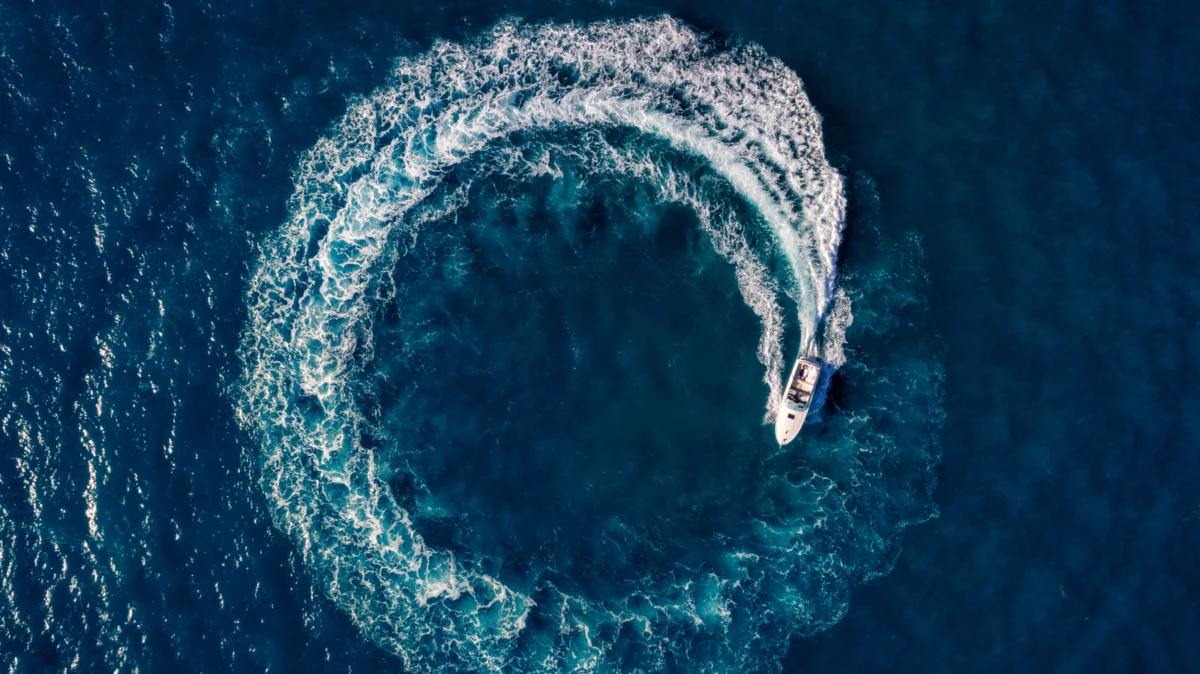
While recreational boating is a favored pastime for millions, the operation of a watercraft demands a level of vigilance comparable to operating a motor vehicle on public roads. A significant, yet often overlooked, maritime hazard is known as the "circle of death." This phenomenon refers to a specific, catastrophic scenario in which a vessel’s steering mechanism becomes locked or loses human input while the engine is engaged, causing the boat to travel in a continuous, high-speed circle. The danger is twofold: the centrifugal force can eject occupants from the vessel, and the unmanned, circling boat then becomes an immediate, lethal threat to anyone in the water.
The Mechanics of the Circle of Death
The physical reality of the circle of death is rooted in the torque produced by an outboard motor or stern drive. Under normal operating conditions, a pilot provides counter-torque to maintain a straight heading. If the pilot loses their grip on the steering wheel or tiller while the vessel is at speed, the natural rotational force of the propeller—often pulling to the left—can force the motor to swing sharply to one side.
As the motor pivots, the vessel executes a violent, high-speed turn. For passengers who are not seated or braced, the lateral acceleration is often sufficient to throw them overboard. Once the operator is displaced, the vessel continues to track in a tight, sustained radius. Because the motor remains locked in a turning position, the boat does not drift away; instead, it remains in the immediate vicinity of the ejected victim. The propeller, spinning at high RPMs, creates a high-risk zone that often leads to severe lacerations or fatal blunt force trauma for those struggling in the water.
Historical Context and Incident Chronology
The term "circle of death" has been utilized by maritime safety experts and law enforcement for decades to describe a recurring pattern in search-and-rescue (SAR) reports. While official accident databases, such as the United States Coast Guard’s (USCG) Recreational Boating Statistics, often categorize these as "operator-ejection" or "loss of control" incidents, the narrative arc is consistent across thousands of cases.

A typical chronology of such an incident begins with an inattentive operator. In the minutes leading up to an event, the operator may have relinquished control to an untrained passenger or attempted to adjust equipment while underway. Following the initial loss of control, the vessel experiences an immediate change in trajectory. Within three to five seconds, the vessel is in a full turn, and passengers are ejected due to the sudden shift in momentum. The "active" phase of the incident occurs when the boat continues to circle for minutes—or until the fuel supply is exhausted—creating a hazardous environment that prevents rescue vessels from approaching the victim without risking a secondary collision.
Statistical Reality and Risk Factors
According to the USCG’s most recent Recreational Boating Statistics report, operator inattention and improper lookout remain among the leading contributing factors to all recreational boating accidents. Although the circle of death represents a subset of these incidents, its fatality rate is disproportionately high. Data indicates that when an operator is ejected from a powerboat, the likelihood of a fatal outcome increases by more than 40% compared to other types of vessel-related accidents, primarily due to the "spinning blade" effect of the unmanned, circling craft.
The risk is significantly exacerbated by three primary factors: speed, weight distribution, and mechanical fatigue. Vessels with high-horsepower outboard engines are particularly susceptible because the torque generated at high speeds is substantial enough to overcome the internal resistance of the steering cable or hydraulic system if the wheel is not held firmly.
The Critical Role of Engine Cut-Off Switches (ECOS)
The most effective technological defense against the circle of death is the Engine Cut-Off Switch (ECOS). An ECOS is a safety device that connects the operator to the ignition system via a physical lanyard. If the operator is moved away from the helm—whether by being thrown overboard or simply slipping—the lanyard is pulled, immediately cutting power to the engine.
In recent years, legislative bodies have taken significant steps to mandate the use of this technology. The United States Coast Guard Authorization Act of 2021 included a provision requiring manufacturers to install ECOS on all new vessels under 26 feet in length that are capable of exceeding 115 pounds of static thrust. Furthermore, many states have enacted laws requiring operators to use the ECOS lanyard whenever the vessel is on plane or traveling above a certain speed. Marine safety organizations, including the National Safe Boating Council, argue that universal adoption of ECOS would virtually eliminate the risk of the circle of death by ensuring that a boat ceases forward motion the moment the operator is compromised.

Best Practices for Prevention
Beyond the installation of safety hardware, maritime authorities emphasize a culture of vigilance. The prevention of the circle of death relies on a combination of mechanical maintenance and operator discipline.
- System Integrity: Steering systems should be inspected annually. Signs of degradation include "play" or "slop" in the steering wheel, excessive resistance when turning, or grinding noises emanating from the steering cable housing. If a boat requires significantly more effort to hold on a straight course than it did previously, it is a primary indicator of a failing steering system that could lead to a sudden, locked-turn failure.
- Operator Protocols: The "never leave the helm" rule is non-negotiable. Even at low speeds, the torque of a motor can cause unexpected shifts. Furthermore, the presence of alcohol is a major compounding variable. The impairment of motor skills and reaction times increases the probability of an operator losing their grip on the wheel, while simultaneously reducing their ability to recover the vessel if a turn begins.
- Passenger Education: Passengers should be briefed on the location of the ECOS and the basic mechanics of how to shut down the engine in an emergency. If the operator falls overboard, a passenger who knows how to kill the engine or operate the "kill switch" can turn a potential fatality into a routine retrieval.
Broader Implications for Maritime Safety
The prevalence of the circle of death underscores the need for a shift in how recreational boating is perceived by the public. Unlike a car, which is supported by a road and possesses a complex suspension system, a boat is an unstable platform operating in a dynamic, three-dimensional environment. The reliance on manual steering input is a fundamental aspect of maritime operation that many novice boaters underestimate.
Legal experts note that in the event of an accident, failure to utilize available safety equipment—such as an ECOS—can result in significant liability for the operator or owner. As navigation technology advances, the maritime industry is moving toward "fly-by-wire" steering and digital helm systems that provide more consistent resistance and emergency automated shutdown capabilities. However, these technologies are not yet universal in the recreational market.
Ultimately, the circle of death is an entirely preventable tragedy. It serves as a stark reminder that the intersection of high-torque propulsion and human error creates a narrow margin for survival. By adhering to rigorous maintenance schedules, embracing Engine Cut-Off Switch technology, and maintaining constant focus while at the helm, operators can effectively mitigate the risks associated with this dangerous maritime phenomenon. The goal of maritime safety education remains clear: ensuring that every excursion on the water concludes as safely as it began, free from the mechanical traps that characterize the circle of death.