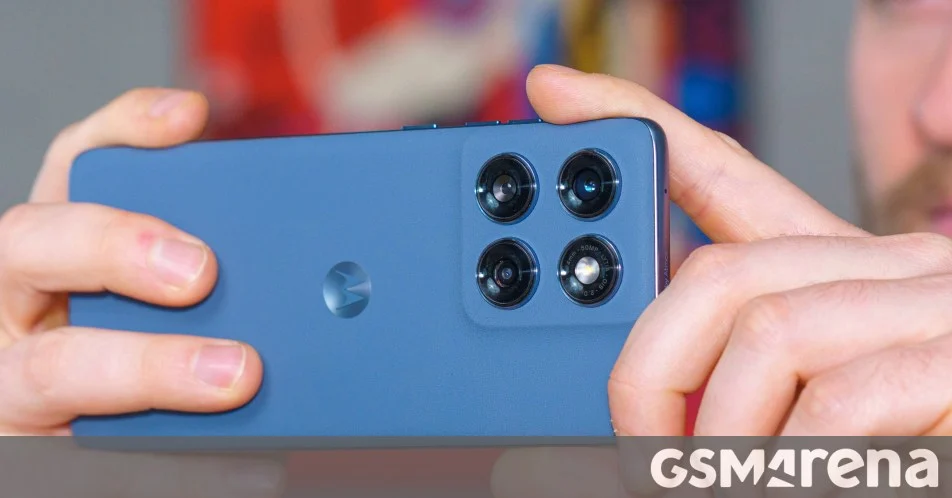
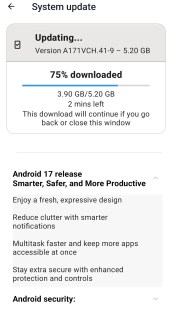
Motorola has officially commenced the rollout of the Android 17 operating system update for the Edge 60 Fusion, marking a significant milestone in the manufacturer’s current software deployment strategy. User reports originating from community platforms such as Reddit indicate that the update, identified by the build version A171VCH.41-9, is currently being distributed as an over-the-air (OTA) package to devices located in the Indian market. The update file is substantial, weighing in at approximately 5.2GB, which necessitates that users ensure they are connected to a stable, high-speed Wi-Fi network to facilitate a successful installation without incurring excessive data charges or risking potential interruptions.
Chronology of the Deployment and User Reception
The emergence of the Android 17 update for the Edge 60 Fusion follows a period of anticipation regarding Motorola’s software roadmap for the 2025 and 2026 fiscal cycles. While the company has maintained a relatively consistent cadence for security patches, the transition to a major platform version like Android 17 represents a more complex engineering undertaking. According to initial reports from early adopters in India, the update began appearing in notification centers during the final week of September.
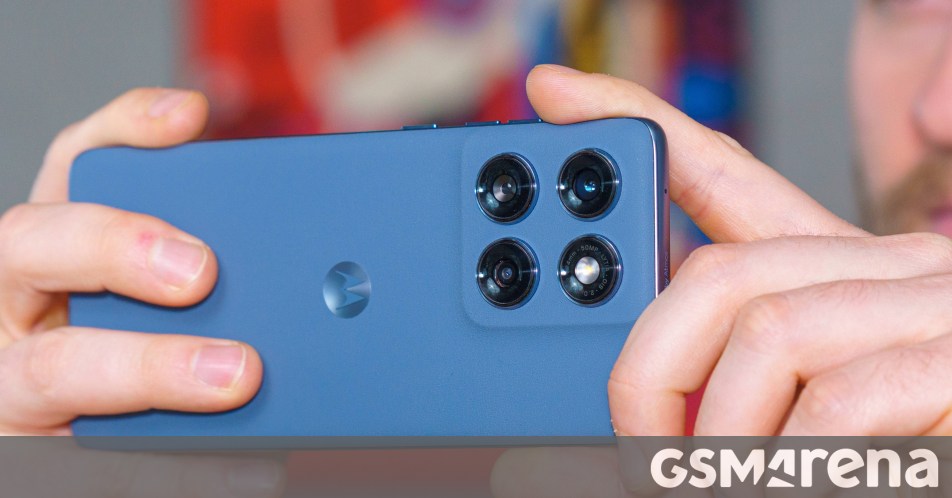
This regional rollout is consistent with Motorola’s historical deployment patterns, which frequently utilize India as a primary testing ground before expanding to broader international markets, including North America and Europe. The size of the firmware update—5.2GB—suggests a comprehensive overhaul of the system architecture, likely encompassing internal API updates, refined UI elements, and a suite of optimizations designed to enhance the longevity of the Edge 60 Fusion’s hardware. As of now, the global rollout schedule remains unconfirmed, though industry analysts anticipate that secondary markets will receive the update within the coming weeks.
Technical Specifications and Firmware Details
The firmware version A171VCH.41-9 signifies more than a routine incremental update. Within the ecosystem of Android development, such a jump typically indicates the integration of new system frameworks. While specific changelogs provided by Motorola at the point of update delivery are often concise, the nature of a 5.2GB download implies the inclusion of significant kernel-level improvements.
One of the most highly anticipated components of this release is the potential inclusion of Qira AI, Motorola’s proprietary artificial intelligence assistant. Although the company has not explicitly confirmed its presence in this specific build, the timing of the Android 17 release aligns with the broader integration of Qira across Motorola’s premium handset lineup. If present, Qira AI is expected to provide users with enhanced predictive text capabilities, advanced photo-editing tools, and improved system-wide energy management that adapts to individual usage patterns.

For owners of the Edge 60 Fusion, the upgrade process requires a minimum battery threshold of 50% or connection to a power source to prevent the device from entering a "brick" state during the file extraction and installation phase. Given the scale of the transition, users are advised to perform a cloud backup of their personal data prior to initiating the update to mitigate any risks associated with data corruption during the migration from Android 16 to Android 17.
Market Context and Competitive Positioning
The Motorola Edge 60 Fusion occupies a strategic position in the mid-to-high-tier smartphone segment, competing directly with devices from Samsung’s Galaxy A series and various offerings from Xiaomi and Realme. Its hardware configuration—typically available in 8GB/256GB and 12GB/256GB variants—requires robust software support to maintain its value proposition over time.
In the current market, the longevity of a smartphone is increasingly defined by its software lifecycle. By pushing Android 17 to the Edge 60 Fusion, Motorola is signaling its intent to remain competitive in the "value-flagship" space. Consumers who opted for the 12GB RAM variant, currently retailing in India at approximately ₹28,799, are particularly focused on how the new software utilizes the additional memory overhead. Android 17 is rumored to include more aggressive background process management, which, when paired with 12GB of RAM, should theoretically lead to improved multitasking capabilities and reduced stuttering during intensive application switching.

Broader Implications for the Motorola Ecosystem
The rapid expansion of the Android 17 update across Motorola’s portfolio suggests a shift in the company’s internal development philosophy. Historically, Motorola was often criticized for its slow transition between major Android versions. However, the current strategy reflects a broader trend among hardware manufacturers to prioritize AI-driven features as a primary differentiator.
The integration of Qira AI, if confirmed as a standard feature within the Android 17 update, would provide Motorola with a cohesive software identity. This move is essential for maintaining brand loyalty, as the hardware specifications between competitors have largely plateaued. By focusing on the "intelligence" of the device, Motorola is attempting to pivot from being a hardware-first provider to a holistic software-and-services provider.
From an analytical perspective, the 5.2GB size of the update is a point of concern for users in regions with limited internet infrastructure. However, for a major OS transition, this is considered within the industry standard. The impact on system storage—where the OS typically consumes a larger percentage of the 256GB storage capacity—is a trade-off that most users appear willing to accept in exchange for the enhanced security protocols and feature sets included in the new version of Android.

Analysis of System Requirements and Performance
Following the installation of build A171VCH.41-9, early benchmarks from community testers suggest that the Edge 60 Fusion maintains its thermal efficiency while benefiting from the updated kernel. Android 17 introduces several under-the-hood changes to how the device manages CPU frequency scaling. This is particularly relevant for the Edge 60 Fusion, which relies on a balanced chipset design.
The update also includes the latest security patches, which are critical for users handling sensitive financial or personal information. With cyber threats becoming increasingly sophisticated, the transition to a newer OS version is the single most effective way for a consumer to protect their hardware from emerging vulnerabilities. Motorola’s commitment to providing this update within the anticipated timeframe serves as a reassurance to customers who have invested in the Edge series.
Future Outlook and User Recommendations
As the rollout continues, the focus will shift to how the Edge 60 Fusion performs after several months of usage under the new OS. Historically, "major" Android updates can sometimes introduce minor bugs related to battery drain or app compatibility. Motorola’s support team is expected to issue minor maintenance updates in the following quarter to address any anomalies discovered by the user base during the initial weeks of deployment.
For users who have not yet received the notification, it is recommended to manually check for updates via the "System" settings menu. It is important to note that the rollout is often staged; if an update is not immediately available, it does not necessarily indicate a problem with the device, but rather that the update is being released in batches to ensure network stability.
In conclusion, the Android 17 update for the Motorola Edge 60 Fusion is a testament to the company’s evolving software strategy. By prioritizing a timely update for a core model in its lineup, Motorola is reinforcing its commitment to its user base. As the industry continues to move toward AI-centric mobile experiences, the success of this deployment will likely serve as a blueprint for the updates slated for the rest of the Edge family. Users are encouraged to remain patient during the staggered release process and to prioritize the security and performance benefits that this significant software upgrade promises to deliver. With the potential arrival of new AI tools and system-level refinements, the Edge 60 Fusion is well-positioned to maintain its relevance in an increasingly crowded and technology-driven smartphone market throughout the remainder of the year and into the next.