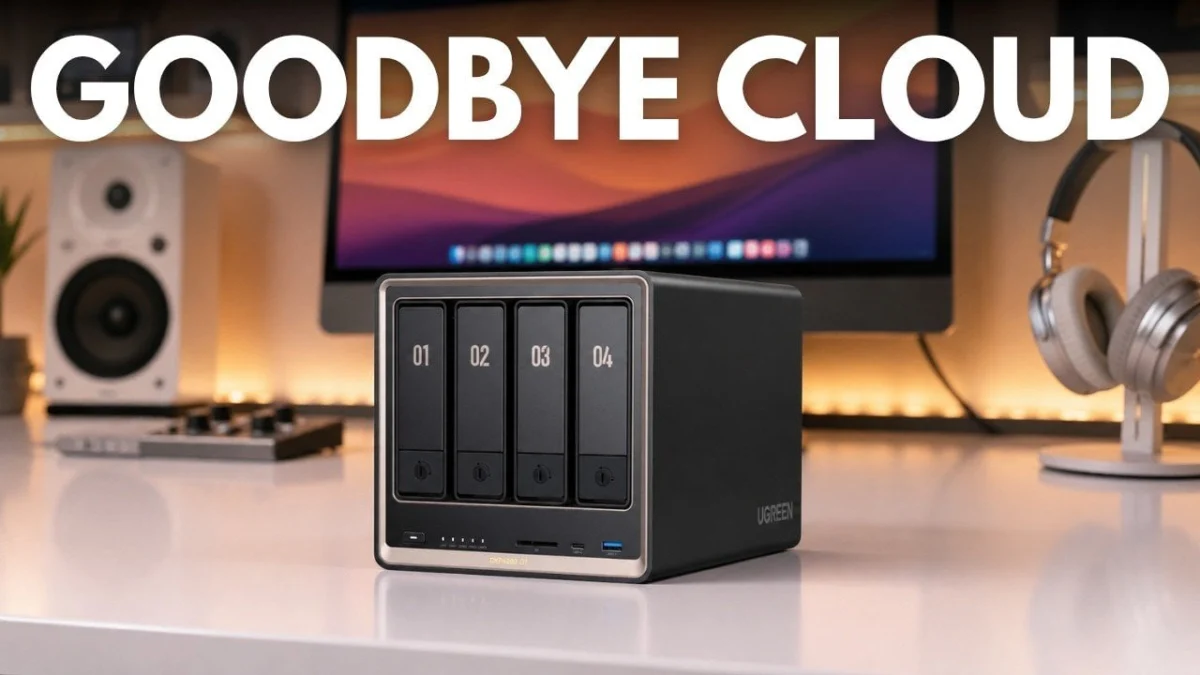
The UGREEN NAS DXP4800GT emerges as a potent solution for centralized data management, engineered to address the escalating storage needs of creative professionals, small businesses, and demanding home users. Boasting an impressive capacity of up to 144 TB, this network-attached storage (NAS) device aims to alleviate the complexities and inefficiencies associated with managing dispersed data across numerous external hard drives and cloud services. By consolidating digital assets into a single, accessible hub, the DXP4800GT promises to streamline workflows, enhance collaboration, and safeguard valuable information, positioning itself as a critical infrastructure component for data-intensive operations.
At the core of the DXP4800GT’s capabilities lies a robust hardware foundation designed for performance and reliability. The system is powered by an AMD processor featuring four cores and eight threads, a specification that ensures ample processing power for concurrent tasks and resource-hungry applications. This is complemented by 8 GB of DDR4 RAM, which can be expanded up to a substantial 64 GB. This scalability is a crucial differentiator, allowing users to tailor the system’s memory capacity to match their specific workload demands, whether it involves intensive video editing, large-scale data analysis, or the management of extensive media libraries. The ability to expand RAM is particularly significant for future-proofing the device, ensuring it can adapt to evolving software requirements and increasing data volumes.
The integration of dual 10-gigabit Ethernet ports represents a significant leap forward in network throughput for this class of device. In an era where file sizes for high-resolution media and complex datasets are continuously growing, the bottleneck of traditional gigabit Ethernet can severely impede productivity. The 10 GbE ports on the DXP4800GT offer a dramatic increase in data transfer speeds, enabling significantly faster file access, sharing, and backup operations. This is particularly beneficial in collaborative environments where multiple users may need simultaneous access to large files, such as 4K or 8K video projects. The reduction in transfer times translates directly into saved hours, allowing professionals to dedicate more time to creative output rather than waiting for data to move.
Furthermore, the DXP4800GT’s support for the SMB (Server Message Block) protocol is a key feature for seamless integration into most modern operating systems, including Windows, macOS, and Linux. SMB facilitates direct file access and editing from network-connected devices, eliminating the need to download files locally to a workstation before editing, and then re-uploading them. This direct access model streamlines the editing process, particularly for applications like video editing software that often work with large project files. It minimizes the risk of version control issues and ensures that all collaborators are working with the most up-to-date versions of their files, fostering a more efficient and cohesive team workflow.
A standout innovation within the UGREEN NAS DXP4800GT is its AI-powered photo management system. Designed with content creators, photographers, and anyone managing vast image archives in mind, this feature leverages artificial intelligence to automatically categorize and tag photos. The system can intelligently identify and group images by subject matter, such as people, places, and events, without requiring manual input. This local processing capability is crucial for maintaining user privacy, as sensitive personal images are analyzed and organized on the device itself rather than being uploaded to external cloud services. The time savings afforded by automated organization can be immense, transforming the often-tedious task of sorting through thousands of images into a more manageable and efficient process.
The UGREEN NAS DXP4800GT also embraces a hybrid storage philosophy, seamlessly integrating with popular cloud storage services such as Google Drive. This hybrid approach offers users the best of both worlds: the immediate accessibility and high-speed performance of local network storage, coupled with the offsite redundancy and accessibility of cloud storage. By synchronizing data between the NAS and the cloud, users can ensure their critical files are backed up remotely, providing an essential layer of disaster recovery. This also allows for flexible access to data whether users are in the office, working from home, or traveling, enhancing overall data accessibility and operational continuity.
Data security is a paramount concern for any centralized storage solution, and the DXP4800GT addresses this through robust RAID (Redundant Array of Independent Disks) configuration support. The device is designed to accommodate multiple hard drives, and users can configure them into various RAID levels, including RAID 1, RAID 5, and RAID 10. Each RAID configuration offers a different balance of data redundancy, performance, and storage efficiency. For instance, RAID 1 (mirroring) provides high redundancy by writing identical data to two drives, while RAID 5 offers a good balance of redundancy and capacity by using parity information distributed across multiple drives. RAID 10 combines mirroring and striping for enhanced performance and redundancy. This flexibility allows users to choose the level of data protection that best suits their risk tolerance and operational needs, safeguarding against potential hardware failures and data loss.
Beyond its powerful hardware and advanced software features, the UGREEN NAS DXP4800GT is designed with user experience in mind. The setup process is engineered to be intuitive and accessible, even for individuals with limited technical expertise. Its compact and modern aesthetic ensures that the device can be seamlessly integrated into any workspace, whether it’s a professional studio, an office environment, or a home office. This focus on user-friendliness, combined with its powerful capabilities, makes the DXP4800GT an attractive option for a broad spectrum of users, from tech-savvy professionals to those who prioritize simplicity and ease of use.
The introduction of the UGREEN NAS DXP4800GT comes at a time when the demand for efficient, high-capacity data management solutions is surging across various sectors. The proliferation of high-resolution digital content, the increasing complexity of data analytics, and the ongoing shift towards remote and hybrid work models have all contributed to the growing need for robust centralized storage. Traditional solutions, such as relying solely on individual external drives or consumer-grade network storage, often fall short in meeting these demands, leading to data silos, security vulnerabilities, and workflow inefficiencies.
The DXP4800GT’s positioning within the market suggests a strategic move by UGREEN to cater to this burgeoning demand. By offering a device that combines substantial storage capacity, high-speed networking, advanced processing power, and intelligent software features, UGREEN is aiming to capture a significant share of the professional and prosumer NAS market. The device’s ability to support up to 144 TB is particularly noteworthy, positioning it as a solution for users with extremely large data repositories, such as videographers working with extensive archival footage, researchers managing vast datasets, or businesses with significant long-term data retention requirements.
The implications of such a device extend beyond mere storage. For creative industries, it represents an opportunity to significantly boost productivity by reducing the time spent on data wrangling and accelerating post-production workflows. For small to medium-sized businesses (SMBs), it offers a cost-effective and scalable way to manage critical business data, enhance collaboration among teams, and ensure business continuity through reliable backup and disaster recovery mechanisms. The AI-powered photo management, in particular, could prove to be a game-changer for digital asset management, streamlining workflows that were previously labor-intensive and prone to error.
While the original announcement provides a strong overview, a deeper dive into the potential impact reveals several key areas of consideration. The integration of 10 GbE ports, for example, not only speeds up data transfer but also enables more fluid remote access and collaboration, especially when paired with appropriate network infrastructure at remote locations. This could be particularly beneficial for distributed creative teams or businesses with remote employees who need to access large files regularly.
The AI photo management system, while impressive, also raises questions about its depth and extensibility. The ability to categorize by people, places, and events is a strong start, but the true value will lie in its accuracy, the breadth of its recognition capabilities, and whether it can be trained or customized further by users. For professional photographers, advanced tagging capabilities for camera models, lens types, or specific shooting conditions could further enhance its utility.
The hybrid storage functionality, with its cloud synchronization, also presents opportunities and challenges. While it enhances accessibility and backup, the cost of cloud storage subscriptions and the potential for data transfer fees need to be factored into the total cost of ownership. The efficiency of the synchronization process and the level of control users have over which data is synced and how will also be critical factors for adoption.
From a security standpoint, the RAID configurations are a fundamental layer of protection. However, comprehensive security also involves robust user access controls, regular software updates to patch vulnerabilities, and potentially built-in firewall or intrusion detection capabilities. As the device becomes a central repository for potentially sensitive data, these aspects will be crucial for user trust and data integrity.
The market for NAS devices has seen consistent growth, driven by an increasing awareness of data management needs and the declining cost of storage hardware. Competitors in this space range from consumer-focused brands to enterprise-level solutions, with a variety of offerings in terms of performance, capacity, and feature sets. UGREEN’s entry with the DXP4800GT appears to target the mid-to-high end of the prosumer and SMB market, where a balance of advanced features, robust performance, and competitive pricing is often sought.
The success of the UGREEN NAS DXP4800GT will likely hinge on its ability to deliver on its promises of performance, reliability, and user-friendliness, while also providing a compelling value proposition compared to established players in the NAS market. The emphasis on centralized storage, high-speed networking, AI-driven organization, and hybrid cloud capabilities positions it as a versatile solution for a wide array of demanding users. As data continues to grow in volume and complexity, devices like the DXP4800GT are set to become increasingly indispensable tools for professionals and businesses looking to effectively manage, protect, and leverage their digital assets. The device’s comprehensive approach to storage, networking, and data management underscores a growing trend towards integrated solutions that simplify complex IT infrastructure for end-users.