In an era where digital marketing budgets face rigorous scrutiny from executive leadership, distinguishing between vanity metrics and true Key Performance Indicators (KPIs) has become an essential competency for social media strategists. With global social network usage projected to scale to 5.75 billion users by the end of 2026, brands are pouring over $121 billion into U.S. social networks alone. Yet, despite massive capital injection, chief marketing officers continually grapple with proving tangible returns on investment. A recent study by Gartner indicates that 46% of CMOs view prioritizing marketing initiatives that drive predictable growth as their primary challenge, prompting a fundamental shift away from surface-level metrics like likes and impressions toward hard-hitting, business-aligned KPIs.

Understanding the Strategic Shift: Metrics Versus KPIs
The cornerstone of modern social media governance is recognizing the fundamental divide between general metrics and core KPIs. While any measurable data point generated from a social media account—such as total post likes, video views, or raw follower counts—qualifies as a metric, a KPI is strictly defined as a metric that measures progress directly tied to a specific business goal.
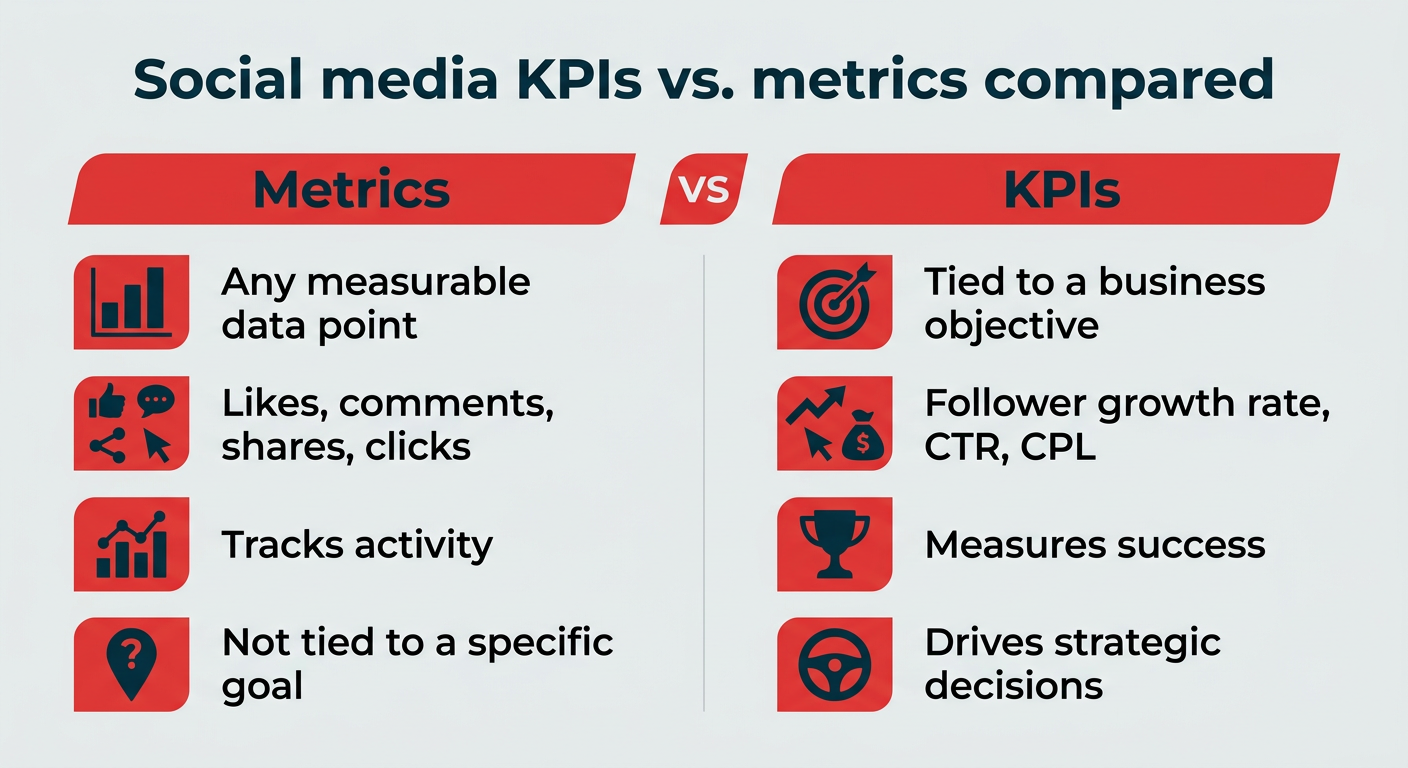
All KPIs function as metrics, but the inverse is rarely true. For instance, while tracking a range of platform data points provides necessary contextual awareness for day-to-day community managers, leadership requires a high-level scorecard. If a company’s primary objective for a quarter is customer acquisition, a metric like total impressions offers little reassurance to the board of directors. Conversely, weekly conversion rates or cost per lead serve as true KPIs, bridging the gap between social media activity and bottom-line corporate revenue.
This distinction dictates operational workflows. Social media teams rely on broad metrics for real-time campaign adjustments, whereas executive leadership depends on KPIs to determine budget allocation, headcount growth, and overarching strategic pivots.
Core Categories of Social Media KPIs
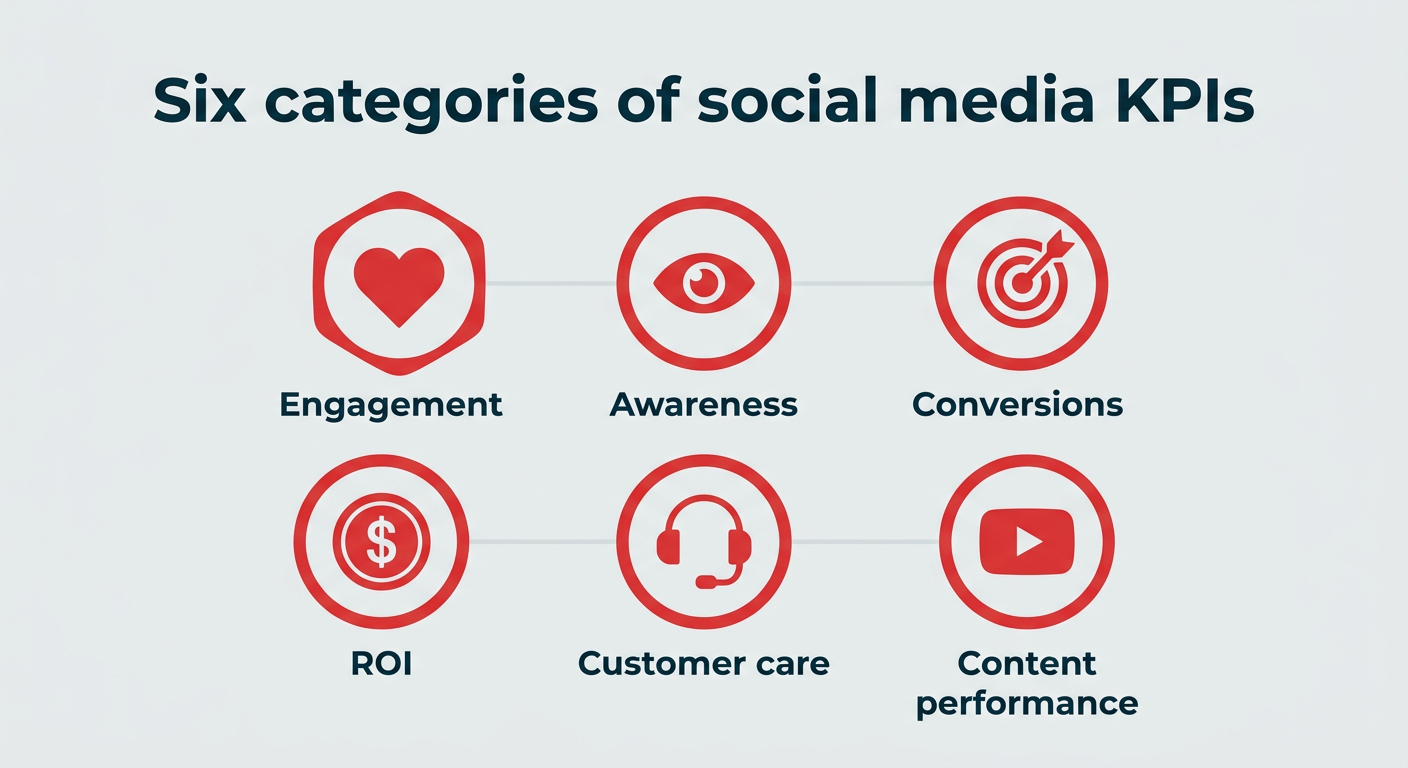
To build a comprehensive measurement framework, organizations typically categorize their key performance indicators into six distinct operational pillars: engagement, awareness, conversions, return on investment (ROI), customer care, and content performance. Each category addresses a different facet of corporate health in the digital ecosystem.
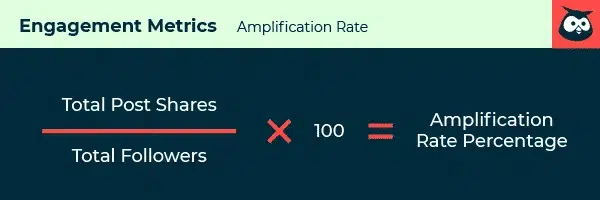
- Engagement KPIs: These metrics evaluate the depth and quality of interactions generated by a brand’s audience. Rather than merely counting passive views, engagement KPIs—such as amplification rate, audience growth rate, and active comment volumes—reveal whether target consumers are genuinely connecting with the brand’s narrative.
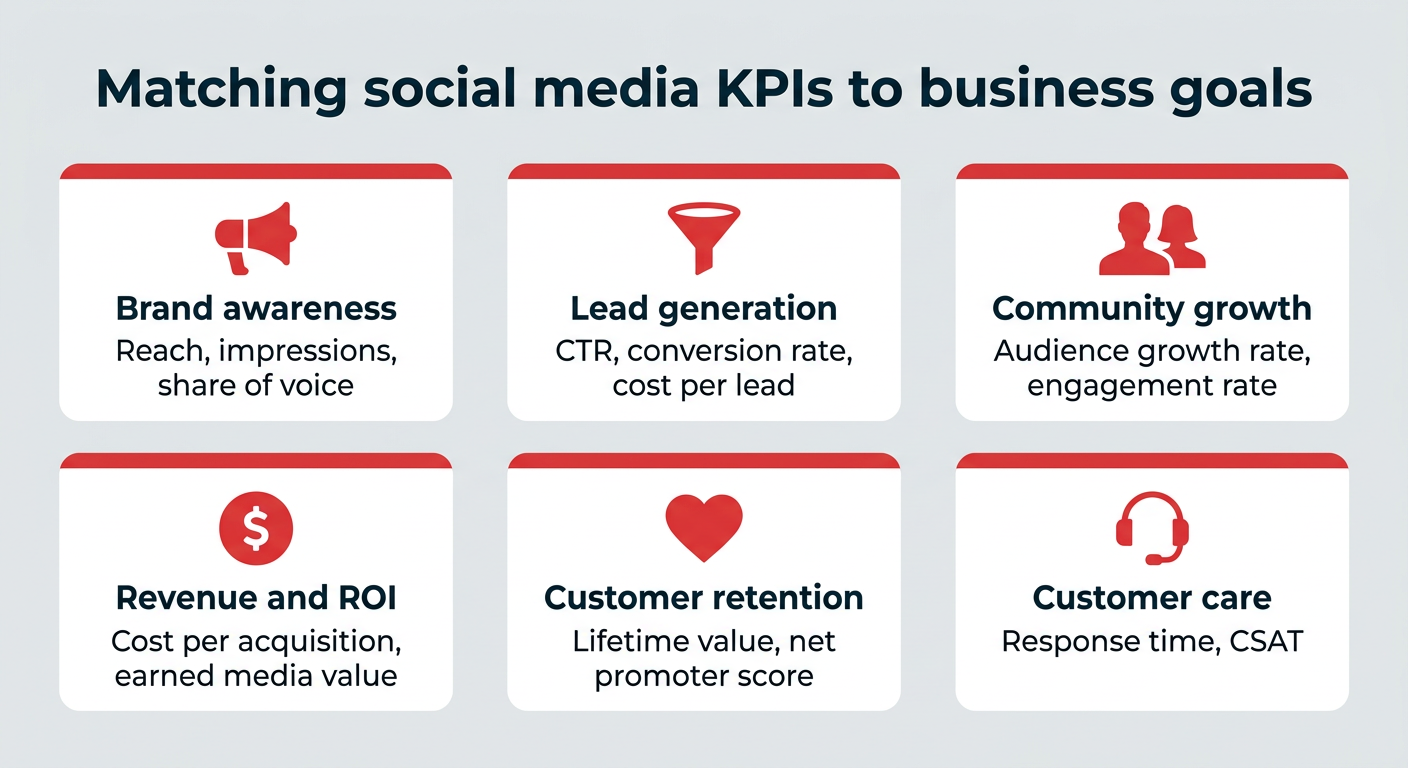
- Awareness KPIs: Essential for brands launching new products or attempting to capture market share in crowded verticals, awareness indicators measure total market visibility. Metrics such as post reach, impressions, and social share of voice quantify how frequently a brand appears across digital feeds.
- Conversion KPIs: With social commerce accelerating—highlighted by forecasts predicting that 51% of U.S. social buyers will complete purchases directly through TikTok—conversion KPIs evaluate real-world commercial outcomes originating from social channels. Key indicators include click-through rates (CTR), conversion rates, and total attributed leads generated.
- ROI KPIs: Establishing a direct line between social media spend and revenue generation is paramount. As corporate ad spending on social networks climbs past $121 billion, metrics like cost per acquisition (CPA), earned media value (EMV), and cost per click (CPC) provide the financial justification required to secure future budgets.
- Customer Care KPIs: Social media has effectively replaced traditional call centers as the frontline for consumer relations. Tracking average response times, first-contact resolution rates, customer satisfaction scores (CSAT), and Net Promoter Scores (NPS) allows brands to gauge public sentiment and long-term customer lifetime value (CLV).
- Content Performance KPIs: With global daily social media usage averaging approximately 141 minutes per day, analyzing content performance helps organizations refine their creative output. Tracking saves, shares, and top-performing post formats ensures that marketing teams double down on high-yield content while eliminating initiatives that fail to resonate.
A Three-Step Framework for Establishing Effective KPIs
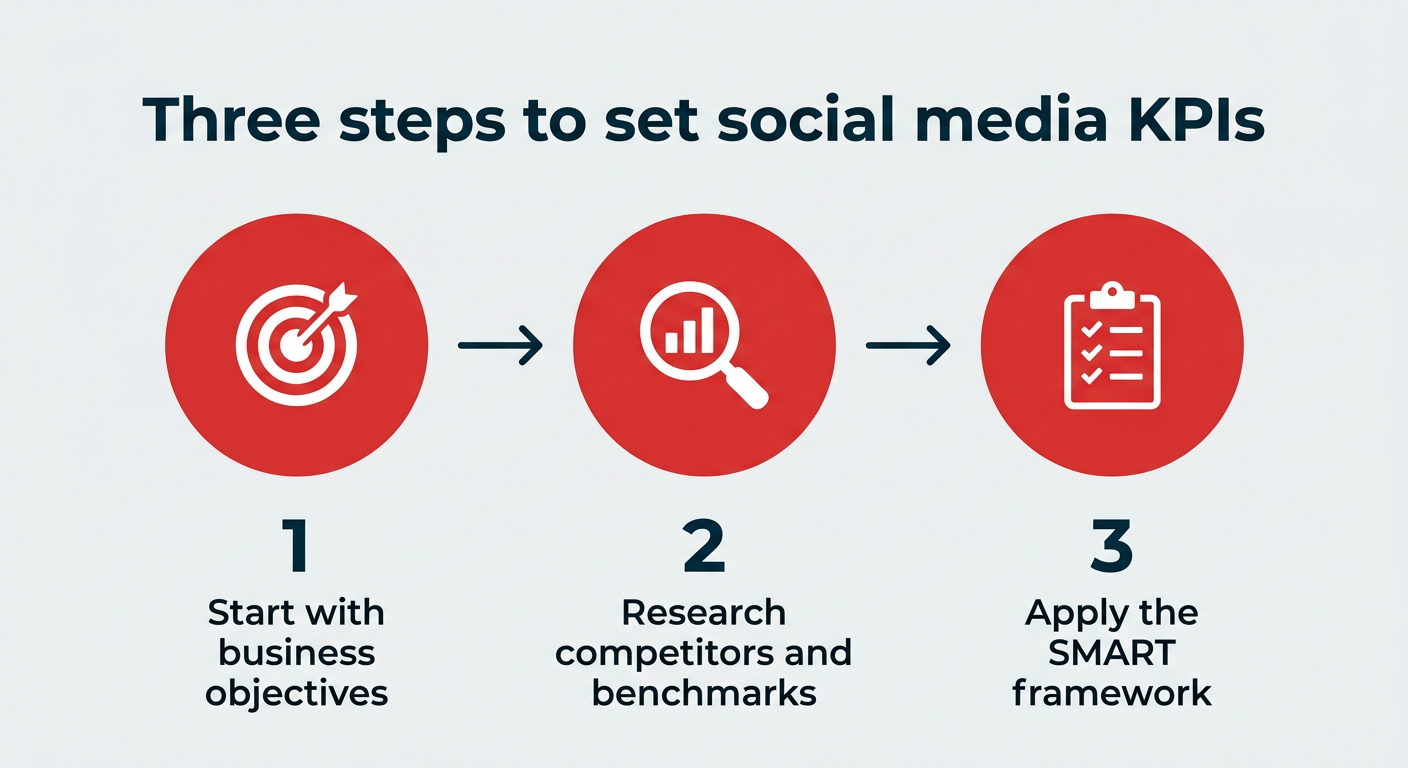
Implementing a sustainable measurement strategy requires a methodical, three-step approach that aligns operational execution with enterprise-level objectives.

The process begins with defining high-level business objectives. Because social media does not operate in a vacuum, every KPI must trace back to a broader corporate goal. Whether an enterprise seeks to accelerate brand awareness, capture high-value leads, or reduce customer churn, social media goals must be explicitly derived from these overarching targets.

The second phase involves rigorous competitor analysis and benchmarking. Relying on platform data alone offers an insular view of success. By leveraging competitive intelligence tools and industry benchmarks, organizations can contextualize their performance against direct competitors and broader industry standards. Establishing a historical baseline allows marketing teams to evaluate whether an incremental increase in click-through rate or a shift in sentiment is an anomaly or a sign of sustained market penetration.

The final step requires the application of the SMART framework. KPI targets must be Specific, Measurable, Achievable, Relevant, and Time-bound. Vague aspirations to "improve engagement" are replaced by concrete milestones, such as "increasing the LinkedIn lead conversion rate by 15% over the next fiscal quarter."
Tracking, Review Cadences, and Executive Reporting
Once KPIs are established, organizations must determine how data is collected, reviewed, and presented. Operating with native platform analytics alone often creates organizational friction; because each social network defines metrics differently and lacks cross-platform integration, teams are forced into tedious manual exports and spreadsheet calculations. Implementing a unified analytics dashboard or social management suite resolves this inefficiency, consolidating multi-channel data into a single source of truth.
Maintaining an effective review cadence is equally critical to prevent data from becoming obsolete. Marketing teams should adhere to a structured evaluation schedule:

- Weekly reviews allow tactical adjustments, helping teams catch early performance dips and optimize ongoing campaigns.
- Monthly evaluations facilitate strategic assessments, ensuring that content distribution aligns with broader marketing objectives.
- Quarterly reviews prompt a macro-level audit to determine whether the chosen KPIs remain relevant to evolving corporate goals.
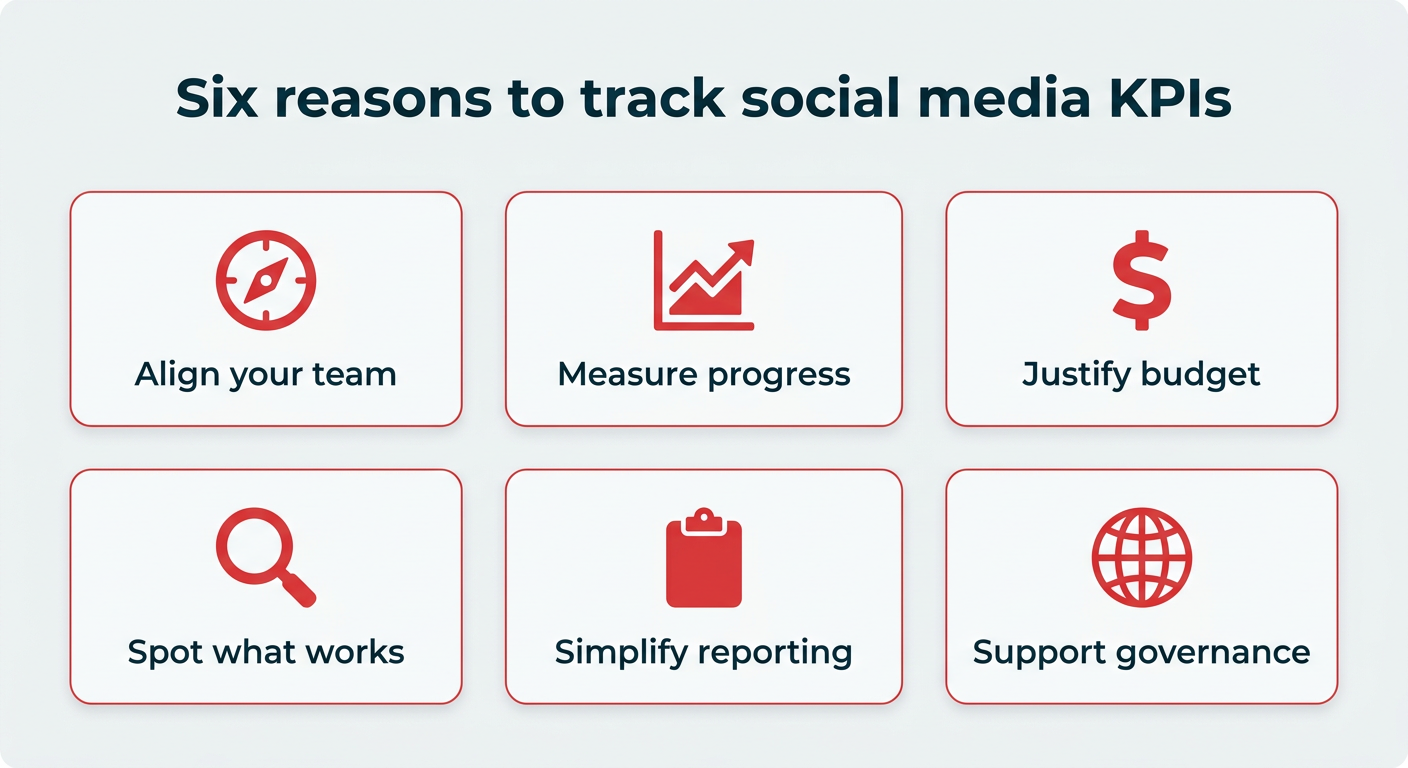
When presenting findings to executive leadership, communicators must tailor their reporting style to match executive priorities. Leadership teams care deeply about financial impact, pipeline velocity, and operational efficiency, rather than granular, post-level metrics. Effective reporting leads with high-level financial outcomes—such as cost per acquisition, pipeline generated, and earned media value—while housing supporting platform data in an appendix for deeper exploration. By framing social media performance through the lens of business revenue and risk mitigation, marketing leaders can definitively prove the indispensable value of their social strategies in an increasingly competitive marketplace.