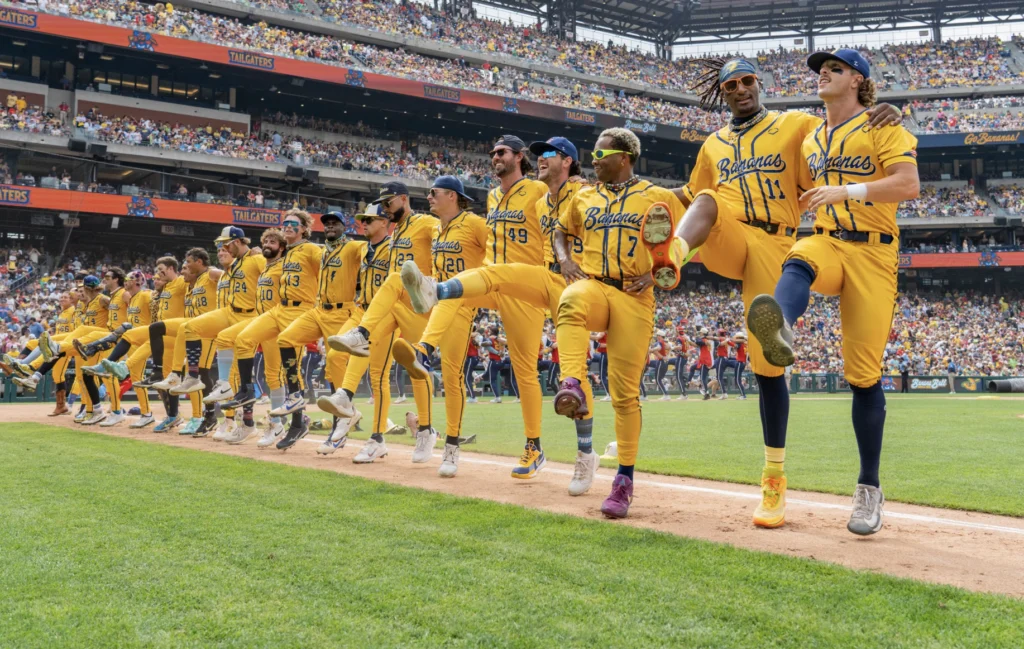
The Savannah Bananas, the viral sensations of the baseball world, have entered their 2026 season not only as a dominant force in sports entertainment but as a case study in sophisticated crisis management. While the organization is best known for its "Fans First" philosophy, yellow tuxedos, and choreographed on-field dances, its recent handling of a financial controversy surrounding its nonprofit arm, Bananas Foster, has provided a roadmap for how modern brands can navigate reputational threats through discipline and transparency. As the league expands its footprint into major league venues and record-breaking ticket lotteries, the resolution of a 2025 investigation into its charitable expenditures marks a pivotal moment in the brand’s maturation.
The Foundation of Banana Ball and the "Fans First" Ethos
To understand the weight of the controversy that emerged in late 2025, one must first understand the unique market position of the Savannah Bananas. Founded by Jesse and Emily Cole, the team moved away from traditional minor league baseball to create "Banana Ball," a fast-paced, entertainment-heavy version of the game designed to eliminate "boring" segments. Central to their success has been a radical commitment to financial transparency and affordability. The league famously built its own ticketing platform to bypass traditional resellers, ensuring that tickets remained accessible to average families without the burden of hidden fees or predatory markups.
This identity—built on being the "anti-establishment" alternative to Major League Baseball—made the organization particularly vulnerable to any suggestion of financial impropriety. When allegations surfaced regarding the league’s charitable entity, Bananas Foster, they struck at the very heart of the brand’s promise: that the organization exists for the benefit of the fans and the community, rather than the enrichment of its owners.
The 2025 Defector Investigation: Unpacking the Allegations
In September 2025, the sports and culture publication Defector published a detailed report raising questions about the financial practices of Bananas Foster. The nonprofit, which focuses on supporting the foster care community through education and engagement, found its 2024 tax filings under intense scrutiny. The investigation highlighted that of the charity’s programmatic expenditures, approximately $52,000—representing nearly 80% of its total spending—was used to purchase game tickets and merchandise from the Savannah Bananas themselves.
The optics of the report suggested a potential for "self-dealing," a term in nonprofit law describing transactions that unfairly benefit the leaders of an organization or their related businesses. Because the nonprofit was purchasing goods and services from the for-profit league owned by the same entity, critics argued that the "charity" was effectively acting as a circular revenue stream for the team. For a brand that marketed itself as a champion of the underdog, the suggestion that donor funds were being recycled back into the league’s coffers represented a significant reputational risk.
Chronology of Events: From Scrutiny to Resolution
The timeline of the controversy and the subsequent recovery follows a trajectory of measured engagement rather than defensive posturing:
- September 2025: Defector publishes its investigation into Bananas Foster’s 2024 IRS filings. The story gains traction among sports business analysts and skeptical observers.
- Late September 2025: Rather than issuing a defensive press release to the general public, the leadership of Bananas Foster engages directly with the reporting outlet. Executive Director Jolie Chabala and volunteer CFO Sarah Trumler provide detailed context on the nonprofit’s operations.
- October 2025: The organization admits that as a "young and developing" nonprofit, its initial filings required correction. They announce that a national accounting firm has been retained to audit and amend the IRS returns.
- Winter 2025-2026: The league maintains its "on-mission" storytelling, focusing on the actual families served by Bananas Foster during the off-season.
- Spring 2026: The Savannah Bananas launch their most ambitious season to date, with no discernible impact on ticket sales or brand sentiment.
Strategic Restraint: The Methodology of the Response
The success of the Bananas’ crisis management strategy relied on what communications experts call "channel discipline." In many corporate crises, the instinct is to "over-respond"—to blast a rebuttal across all social media channels, thereby informing millions of people about a problem they may not have known existed. The Bananas took the opposite approach.
By engaging substantively with Defector but refraining from a mass-market public relations campaign, the league ensured that the audience most likely to be concerned—the readers of investigative sports journalism—received a thorough explanation. Meanwhile, the millions of casual fans who follow the team on TikTok and Instagram were not burdened with complex accounting disputes that did not affect their fan experience. This surgical approach to communication prevented a localized investigative report from metastasizing into a global brand crisis.
Substantive Engagement and the "Learning Curve" Defense
A key element of the organization’s defense was its willingness to admit fallibility. In her communications with investigators, Jolie Chabala did not stonewall; instead, she framed the errors as part of the growing pains of a nascent organization. By stating that the team was "still learning" and proactively hiring a national accounting firm to fix the filings, the organization shifted the narrative from "malicious self-dealing" to "administrative inexperience."
Furthermore, the organization provided data to contextualize the $52,000 expenditure. They argued that the mission of Bananas Foster is to provide foster families with "unforgettable experiences," which necessitates the purchase of tickets and gear. They clarified that no donor dollars were used to pay salaries to league executives, and that the transactions were conducted at cost or at a discount to ensure the nonprofit’s funds went as far as possible. This level of detail made it difficult for critics to maintain a narrative of intentional fraud.
Supporting Data: The 2026 Expansion and Market Resilience
The true test of a brand’s crisis management is its performance in the aftermath. If the allegations of financial misconduct had resonated with the public, one would expect to see a cooling of the "Banana Fever" that has gripped the nation. However, the data from the 2026 season launch suggests the opposite:
- Ticket Demand: The league reported that 4.2 million fans entered the ticket lottery for the 2026 season, a record high that far exceeds the capacity of their scheduled venues.
- League Growth: The league expanded from four teams to six, indicating a robust internal economy and the ability to attract new players and staff despite previous scrutiny.
- Venue Scaling: The 2026 schedule includes stops at two of the six largest sports venues in the United States, moving from minor league parks to massive stadiums that require high-volume sellouts to be profitable.
- Broadcast Footprint: The league has successfully expanded its broadcast partnerships, reaching a wider audience through both digital streaming and traditional cable highlights.
These metrics indicate that the "Fans First" brand remains untarnished in the eyes of the consumer. The organization’s ability to compartmentalize a technical accounting issue while continuing to deliver a high-quality entertainment product has allowed it to maintain its growth trajectory.
Broader Implications for Crisis Communications
The Savannah Bananas’ experience offers several broader lessons for organizations in the public eye. First, it highlights the value of "narrative risk" management. In the modern era, the facts of a story are often less important than the narrative they support. By quickly moving to frame the story as one of a "young nonprofit learning the ropes," the Bananas neutralized the more damaging narrative of "corporate greed."
Second, the incident underscores the importance of having a "trust reservoir." Because the Bananas had spent years building a reputation for fairness—such as their war on ticket scalpers—the public was more inclined to give them the benefit of the doubt when an accounting discrepancy arose. A brand with a history of predatory behavior would likely not have survived the same scrutiny with its reputation intact.
Finally, the case demonstrates that transparency does not always mean loud, public declarations. Effective transparency can be quiet and targeted. By providing the necessary documents and explanations to the regulators and reporters who asked for them, the organization satisfied the requirements of accountability without creating unnecessary alarm among its broader fan base.
Conclusion: The Road Ahead for Banana Ball
As the 2026 season progresses, the Savannah Bananas appear to have successfully navigated the most significant threat to their organizational integrity to date. The transition from a local novelty to a national sports powerhouse requires more than just viral videos; it requires the administrative and communicative maturity to handle the scrutiny that comes with scale.
By choosing restraint over aggression and substantive engagement over evasiveness, the Bananas have protected their "Fans First" legacy. The lessons learned from the Bananas Foster inquiry will likely serve as a foundational element of the organization’s corporate governance as it continues to redefine the boundaries of professional sports. For now, the focus remains on the field, where the "greatest show in baseball" continues to play to sold-out crowds, their reputation bolstered by a crisis that was managed with the same precision as a ninth-inning trick play.