The minivan, once the undisputed king of suburban American driveways in the 1980s and 1990s, is experiencing a profound identity shift. After decades of being eclipsed by the aesthetic dominance of the SUV, the segment is seeing a resurgence. As the automotive industry grapples with an average new vehicle price hovering near the $50,000 threshold, consumers are returning to the practical, high-utility roots of the minivan. In 2025 alone, the sector saw a 21% jump in sales, signaling that buyers are increasingly prioritizing cost-effective passenger capacity and cargo volume over traditional SUV styling.
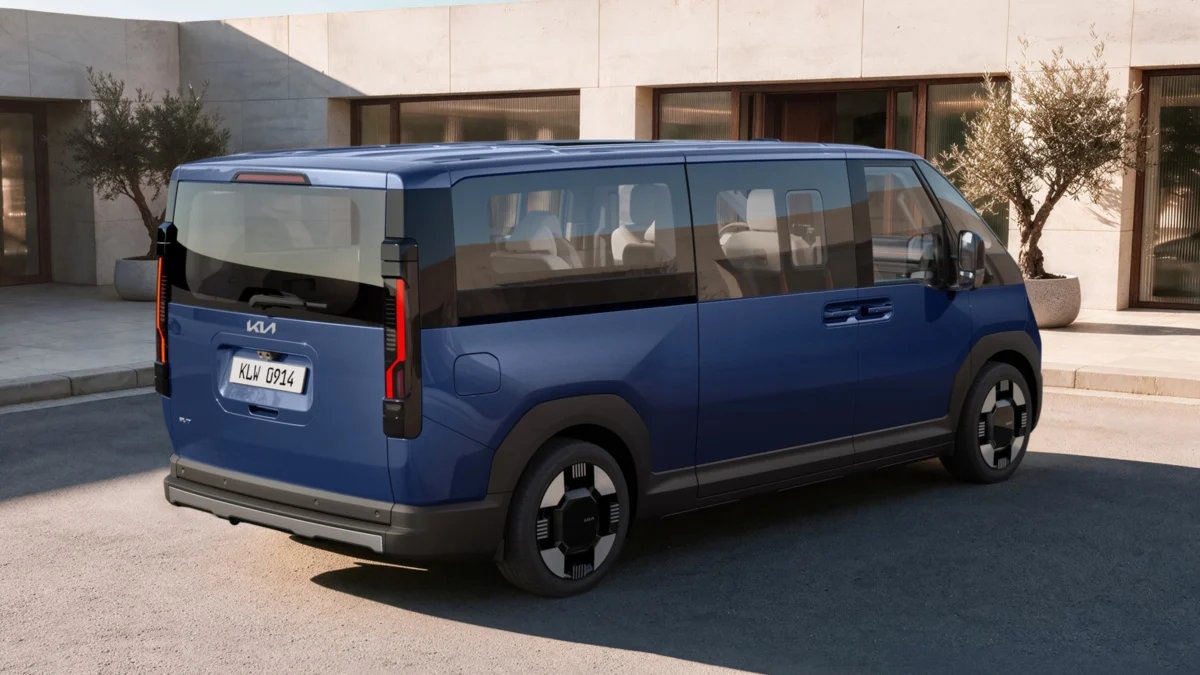
While demand is rising, the electric transition for this segment has been notably sluggish. Currently, the Volkswagen ID. Buzz stands as the primary contender in the electric minivan space within the United States, though production pauses have severely throttled its availability. Amidst this supply vacuum, Kia has unveiled the PV7, an ambitious entry in its Platform Beyond Vehicle (PBV) lineup. While the vehicle promises to push the boundaries of design and efficiency, it currently leaves American families wanting, as the automaker has designated the PV7 exclusively for European and South Korean markets upon its late 2027 release.
The Evolution of the Kia PBV Strategy
The PV7 is not merely a standalone product; it is the logical expansion of Kia’s Platform Beyond Vehicle strategy. The initiative debuted in 2025 with the PV5, a smaller electric van that established the design language and technological framework for Kia’s future commercial and passenger-hauling fleet.
The chronology of this development began with a focus on modularity. By utilizing a "skateboard" architecture, Kia has aimed to bridge the gap between dedicated commercial delivery vehicles and family-oriented transport. The PV7 builds upon the foundation of the PV5 by increasing the footprint—extending the length by approximately two feet—and significantly upgrading the electrical architecture to accommodate the needs of long-distance travelers and high-intensity fleet users. This strategic move highlights Kia’s dual-track focus: capturing the fleet-management market while simultaneously offering a "lifestyle" vehicle capable of camper conversions and multi-passenger transport.
Technical Specifications and Performance Metrics
At the heart of the PV7’s appeal is its technical flexibility. While the smaller PV5 offers a 71.5 kWh battery as an optional upgrade, the PV7 makes this the standard entry point. For those requiring extended range, a robust 96.2 kWh battery pack is available, pushing the vehicle into a competitive tier for long-range electric transport.
Performance-wise, the PV7 is engineered to address the specific pain points of current electric van owners. The vehicle is equipped with an 800-volt charging architecture, a significant leap over the 400-volt system found in the PV5. This upgrade allows the PV7 to be compatible with ultra-fast DC charging stations, capable of replenishing the battery from 10% to 80% in approximately 20 minutes. The long-range variant of the cargo model is projected to achieve a WLTP-rated driving range of 289 miles. While EPA-estimated ranges are typically more conservative, these figures represent a substantial improvement for the segment.
Kia has also balanced power with versatility. Initially, the PV7 will launch as a single-motor, front-wheel-drive vehicle delivering 268 horsepower. However, the manufacturer has confirmed plans to introduce a dual-motor, all-wheel-drive configuration, addressing one of the primary criticisms of the FWD-only PV5.
Design Philosophy and Interior Innovation
The exterior aesthetic of the PV7 marks a departure from the sleek, aerodynamic curves of the Kia Carnival, the brand’s internal combustion engine minivan. The PV7 adopts a "cab-forward" design—boxy, upright, and utilitarian. This design choice prioritizes internal volume, providing a flat floor that maximizes passenger comfort and cargo loading capabilities.
Inside, the cabin is designed to function as a mobile command center. The dashboard features a 14.6-inch high-definition touchscreen paired with a digital gauge cluster. Powering these systems is the new Android-based Pleos Connect OS, which prioritizes a user experience akin to modern smartphones. The interface includes an integrated AI-powered voice assistant capable of managing navigation, climate control, and vehicle diagnostics.
For passenger configurations, the PV7 can accommodate up to nine occupants. The modular nature of the interior allows for swiveling seats, enabling a face-to-face configuration that transforms the vehicle into a collaborative space or a mobile living room. Safety remains a pillar of the design, with the inclusion of Pedal Misapplication Safety Assist 2.0, a system designed to mitigate the risks associated with sudden, unintended acceleration.
Implications for the Camper and Commercial Sectors
The dimensions of the PV7—being both longer and wider than the PV5—have already generated significant interest within the outdoor recreation industry. Companies such as the UK-based Sussex Campervans have already signaled their intent to develop conversion kits for the PV7. The vehicle’s flat-floor architecture and expansive interior volume make it an ideal canvas for mobile living, a trend that has grown alongside the rise of "van life" and remote work.
From a fleet management perspective, the integration of the Kia Business Solutions Portal allows operators to monitor vehicle health, optimize routes, and manage maintenance schedules in real-time. This B2B capability suggests that Kia is not just targeting suburban parents, but also logistics firms and shuttle services, creating a diverse revenue stream that justifies the development of a vehicle that might be considered "niche" in the traditional sense.
Market Analysis: The Missing U.S. Piece
The absence of the PV7 from the North American market at launch is a point of contention for analysts. In the United States, the minivan segment has historically been defined by the Chrysler Pacifica, the Honda Odyssey, and the Toyota Sienna. These vehicles rely on massive internal combustion engines or traditional hybrid systems. The entry of a truly modern, 800-volt electric van with nine-passenger capacity would, in theory, disrupt this established order.
However, Kia’s decision to limit the initial rollout to Europe and South Korea may be a calculated risk. The North American market has shown a historical aversion to the "cab-forward" design language prevalent in the PV7. Furthermore, the existing manufacturing capacity for Kia’s electric vehicles is currently focused on fulfilling high demand for the EV6 and EV9 models.
By limiting the release to Europe and Korea, Kia is likely testing the product in markets that are more receptive to compact, high-efficiency urban transport before committing to the massive logistics and regulatory hurdles of a U.S. launch. The company’s focus remains on the "Business-to-Business" (B2B) aspect of the PBV line, aiming to refine the software and battery performance in markets where infrastructure for electric commercial vehicles is more mature.
Conclusion and Future Outlook
The Kia PV7 stands as a testament to the ongoing evolution of the minivan from a "soccer mom" stereotype to a high-tech, modular mobility solution. While the specifications regarding its battery capacity, ultra-fast charging, and intelligent interior design are impressive, the true test will be how the vehicle performs in the real-world conditions of the European and South Korean markets starting in late 2027.
For American consumers, the PV7 serves as a benchmark for what is possible in the electric segment. Whether or not it eventually makes its way across the Pacific to U.S. showrooms will depend on how successfully Kia navigates the global supply chain, local infrastructure limitations, and shifting consumer preferences. As the price of new vehicles continues to rise, the market for a highly efficient, multi-purpose, and long-range electric van is likely to only grow, leaving the door wide open for manufacturers like Kia to redefine the family vehicle for the next generation.