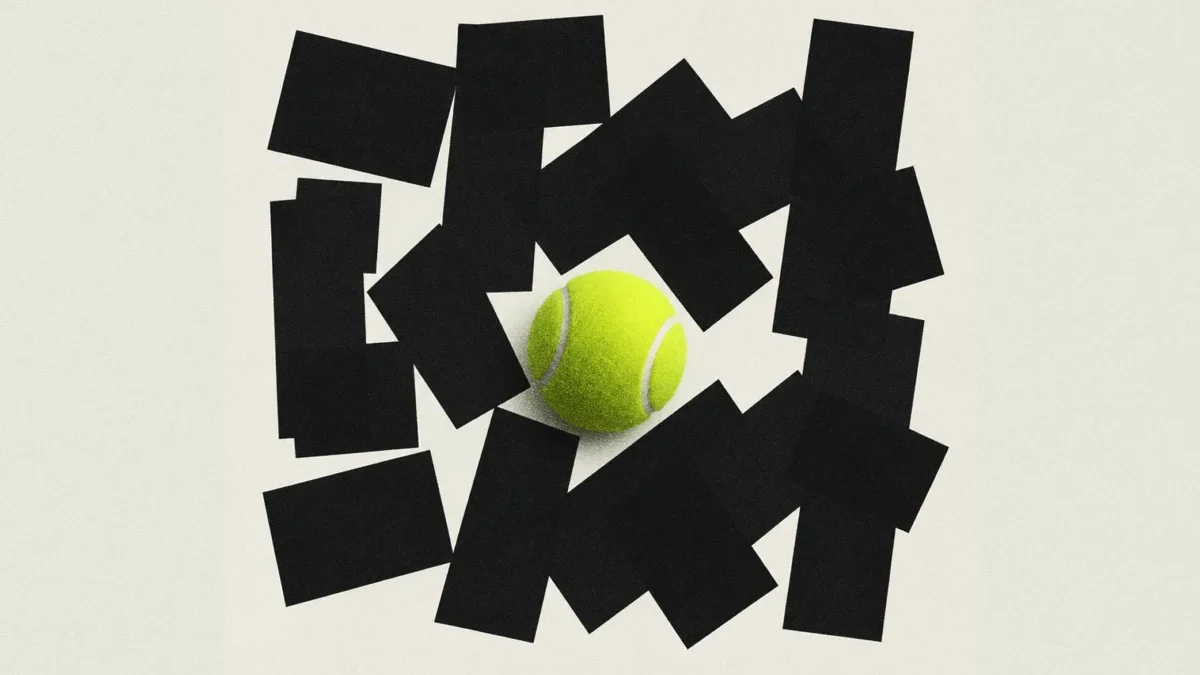
The 2026 US Open served as a definitive case study in the modern tension between traditional sports viewership and the rapidly evolving landscape of digital content creation. While the tournament shattered broadcast records, highlighted by a 13% year-over-year increase in opening-day viewership across ESPN and ABC, the event also ignited a heated debate regarding the presence of social media influencers in professional arenas. As the United States Tennis Association (USTA) expanded its official creator cohort to approximately 100 participants—doubling the figure from the previous year—the collision between content-hungry creators and the quiet, focused environment required for elite tennis reached a boiling point, prompting calls for stricter professional standards and better event management.
The controversy peaked on August 31, 2026, during a high-stakes opening match featuring Naomi Osaka. Play was temporarily halted when spectators in a nearby hospitality suite deployed flash photography, an action strictly prohibited during active rallies in professional tennis. The incident was further inflamed when a viral video circulated on TikTok, depicting an attendee using a ring light to capture self-promotional content mid-match. While subsequent reports from ESPN clarified that the individuals involved were not part of the USTA’s official, credentialed creator cohort, the optics of the situation drew widespread condemnation from fans, media outlets, and the athletes themselves.
Reflecting on the incident, Naomi Osaka expressed frustration during her post-match press conference, urging attendees to "respect the sport" and familiarize themselves with the nuanced etiquette that defines tennis. This sentiment was echoed across various media platforms, including The Daily Mail, which published critical commentary regarding the influence of social media figures on the sanctity of the game. On social media platform X, the backlash against influencers was swift, with many users arguing that the pursuit of "content" was undermining the professional atmosphere that has historically characterized the Grand Slam event.
A Structured Approach to Creator Integration
The USTA’s decision to formalize its creator program in 2025 was designed to mitigate the chaos of ad-hoc influencer attendance. By issuing specific credentials, the organization aimed to create a collaborative environment where brands and creators could coexist without disrupting the fan experience. In its inaugural year, the USTA reported that this structured approach generated over 5.5 million social media engagements, proving the undeniable marketing power of creators.
However, the 2026 season exposed the limitations of this model. Industry experts, including marketing strategists and agency executives, suggest that the issue is not the presence of creators themselves, but the lack of preparation provided to them by sponsoring brands. Cayley Stonehouse, a senior social media strategist at Gupta Media, emphasizes that the relationship between a brand and a creator must extend beyond deliverables and talking points. According to Stonehouse, the failure often lies in the onboarding process, where creators are not sufficiently briefed on the specific rules of the sport, appropriate capture zones, and the expected conduct in a tennis-specific setting.
The Balancing Act: Etiquette vs. Accessibility
The fundamental difference between tennis and other global sporting events, such as the 2026 FIFA World Cup, is a primary driver of the current friction. During the World Cup, FIFA granted creators unprecedented access, resulting in content that consistently outperformed traditional celebrity endorsements. However, soccer is inherently a high-energy, high-volume environment where rowdiness is often an accepted part of the fan experience. Tennis, conversely, relies on silence and deep concentration, creating a binary conflict between the goals of a content creator—who seeks high-engagement, dynamic imagery—and the requirements of the sport.
Becky Owen, CMO of the social agency Billion Dollar Boy, advocates for a "high-standard" approach to creator management. Her firm enforces strict protocols designed to protect both the athletic integrity of the match and the experience of long-term, paying fans. Similarly, Gabby Gamad, co-founder of the influencer marketing agency LV8, argues that while clear boundaries are necessary, they should not be overly restrictive. The objective is to provide creators with enough context to produce meaningful content that adds value to the event, rather than subtracting from it.
The Economics of Audience Expansion
Despite the backlash, the strategic imperative for sports leagues to engage with new audiences remains unchanged. As traditional broadcast models face challenges from shifting demographics, organizations like the USTA, as well as Formula 1 and major golf tours, are looking to creators to bridge the gap. Unlike mainstream sports such as football or basketball, which have inherent, broad-based accessibility, tennis and other "premium" sports often face barriers to entry related to perceived exclusivity and cost.
Beni Brown, global director of strategy at Buttermilk, points out that the backlash usually occurs when the event stops being about the game and starts being about the spectacle. If the sport is treated merely as a backdrop for influencer photoshoots, the "always-on" loyalist base risks alienation. However, when done correctly, creators can serve as educators, demystifying the game for younger, digitally native demographics.
The success of creators like Morgan Riddle, who has been credited with rebranding the tennis circuit into a high-fashion, lifestyle-adjacent event, demonstrates the potential for positive integration. Riddle’s "get ready with me" content, which includes rule explainers and behind-the-scenes vlogs, has attracted millions of views and helped bring new demographics into the fold. Her approach is built on three pillars: genuine affinity for the sport, explicit briefing, and active, on-the-ground management.
Lessons Learned and Future Implications
The 2026 US Open controversy serves as a pivot point for sports marketing. Industry leaders agree that the solution is not a total exclusion of influencers, but rather a more rigorous selection and management process. Emily Steele, CEO and co-founder of Hummingbirds, argues that brands must move away from "dropping in" influencers who lack a genuine connection to the sport. Instead, the focus should be on creators who understand the culture and the specific etiquette of the venue.
There is also a growing consensus that the "spectacle vs. sport" debate is part of a larger, ongoing maturation process for the sports-creator relationship. Similar friction was observed during the early years of influencer integration at Coachella and Formula 1 races. In those instances, as the novelty wore off and better, more integrated strategies were adopted, the tension largely subsided.
Ultimately, the future of the US Open and similar events will likely involve a more segmented approach to creator management. This may include designated "content zones" that allow for high-production value capture without interfering with play, alongside mandatory training for all credentialed creators regarding the rules and etiquette of the sport. As Jess Dashner of Gupta Media notes, creators are essentially the "eyes and ears" for modern audiences who may never step foot in a physical stadium. Their role is invaluable, provided they act as ambassadors for the sport rather than disruptors of it.
As the industry looks toward future Grand Slam tournaments, the consensus among marketing professionals is clear: the integration of creator culture is a permanent fixture of modern sports, but its success will be measured by the ability of organizers and brands to harmonize the excitement of social media with the sacred, concentrated tradition of professional tennis. The challenge for the USTA and other governing bodies will be to ensure that in their pursuit of new fans, they do not lose the very essence that makes the sport worth watching in the first place. Through better briefing, smarter creator selection, and a renewed focus on the game as the primary attraction, the sport can successfully navigate this transition, turning potential friction into a sustainable growth engine.