The arrival of the iPhone Duo, Apple’s inaugural foray into the foldable smartphone market, has signaled a significant shift in the company’s mobile strategy. Two weeks after the device began reaching the hands of early adopters and global retail partners, Apple has officially announced that the ecosystem for its foldable hardware is expanding at an unprecedented rate. According to the company, there are now well over 100,000 applications on the App Store that have been specifically optimized to leverage the unique physical form factor of the iPhone Duo. This milestone, achieved within a fortnight of the product’s commercial launch, underscores the technical agility of the Apple developer community and the company’s extensive preparatory measures.
The Evolution of the Foldable Ecosystem
The transition to a foldable interface represents one of the most substantial hardware pivots in the history of the iPhone. Unlike traditional static displays, the iPhone Duo requires applications to seamlessly transition between the exterior cover screen and the expansive, unfolded interior display. This architectural shift necessitates a sophisticated approach to UI/UX design, where content must dynamically reorient, resize, and maintain state continuity without interruption.
Apple’s announcement that thousands of new optimized titles are being submitted to the App Store daily highlights a robust adoption rate among major software houses. The "Made for iPhone Duo" badge has become a key indicator of quality for consumers, signifying that an application has been refined to utilize the device’s hinge-aware APIs and custom layout capabilities.
Chronology of the iPhone Duo Launch
The path to this current state of app availability began long before the device hit the shelves. Apple initiated its developer outreach program months in advance, recognizing that the success of a foldable device is predicated entirely on the quality of its software experience.
- Pre-Launch Development: Apple provided advanced hardware prototypes and simulation tools within Xcode to key partners, allowing them to test their applications against the unique screen ratios of the Duo.
- The Launch Phase: Two weeks ago, the iPhone Duo made its global retail debut. Initial reviews focused on hardware build quality, hinge durability, and the fluidity of the iOS transition between display states.
- Post-Launch Acceleration: Over the past fourteen days, Apple has maintained an aggressive cadence of support, hosting workshops and providing documentation to ensure that the "Day One" experience for users was not limited to first-party applications.
- The 100,000 Milestone: Today’s announcement serves as a validation of these efforts, confirming that the developer ecosystem has moved beyond the "initial discovery" phase and into a period of widespread optimization.
Strategic Developer Support and Technical Integration
A critical component of this rapid growth has been Apple’s commitment to education. Susan Prescott, Apple’s vice president of Worldwide Developer Relations, noted that the company has conducted more than 50 in-person workshops across 19 major cities over the past month. These sessions, attended by over 2,000 developers, were designed to bridge the gap between traditional app design and the nuances of foldable computing.
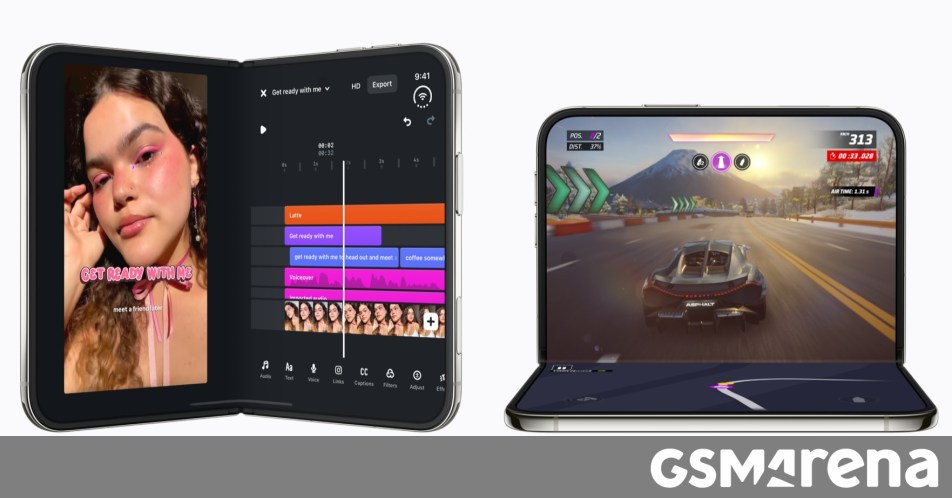
Technically, the ease of this transition is largely due to the maturity of SwiftUI and UIKit. For many developers, adapting an app to the iPhone Duo was not a complete rewrite, but rather a configuration of responsive layout containers. By utilizing standardized components, apps can automatically adapt to the screen’s geometry. However, for more complex applications—such as those requiring multi-pane navigation or specific "hinge-pose" interactions—Apple introduced new APIs. These tools allow developers to detect exactly how far the device is folded, enabling features like a "laptop mode" or "split-screen workstation" capability.
While older applications remain functional through backward compatibility, they often default to letterboxing or suboptimal scaling on the larger inner screen. This disparity is what drives the current industry push for full optimization, as users have demonstrated a clear preference for apps that fully utilize the hardware’s capabilities.

A Growing List of Supported Applications
The catalog of optimized applications now spans a diverse array of categories, reflecting the varied use cases for a foldable device. Productivity suites have been at the forefront of this movement, with Microsoft leading the charge. Excel, OneNote, PowerPoint, and Word have all been updated to take advantage of the increased screen real estate, allowing for side-by-side document editing that was previously impossible on a standard iPhone.
In the creative and media sectors, high-profile apps have also updated their interfaces. Streaming platforms such as Netflix, Amazon Prime Video, and YouTube have optimized their players to account for the hinge, while professional tools like Halide Mark III for photography and Goodnotes for note-taking have introduced specialized toolbars that shift based on the device’s orientation. Other notable entries in the optimized ecosystem include:
- Social and Communication: Instagram and WhatsApp, which now offer enhanced layouts for viewing media and managing chat threads.
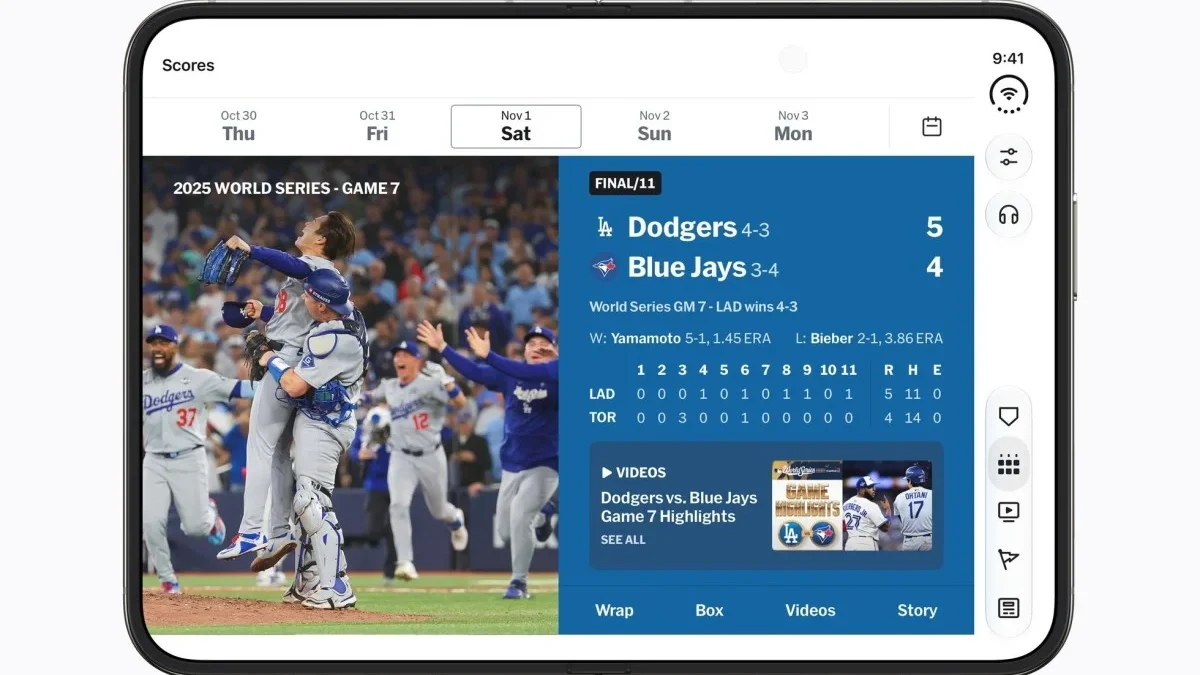
- Sports and Entertainment: The NBA, NHL, and MLB apps, which allow for real-time score tracking alongside live video feeds.
- Utility and Wellness: SmartGym, Fantastical, and Flighty, all of which provide expanded data visualization on the larger canvas.
Even with these successes, gaps in the ecosystem remain. The recent update to Google Maps is a notable example of a major utility that took additional time to reach full compatibility, serving as a reminder that even the largest technology firms face significant challenges when adapting to the foldable form factor.
Market Implications and Future Outlook
The rapid proliferation of optimized apps carries significant weight for the smartphone market. For consumers, the decision to invest in a premium device—with prices ranging from roughly £1,999 to over £2,500 depending on configuration—is heavily influenced by the "utility value" of the software. A foldable device with a limited app ecosystem is a luxury novelty; a foldable device with 100,000 optimized apps is a professional-grade tool.

From a market analysis perspective, Apple’s strategy reflects a "software-first" philosophy. By focusing on developer relations and providing the necessary toolsets to ensure a consistent experience, Apple is attempting to avoid the fragmentation that has plagued early foldable devices from other manufacturers. The company’s ability to mobilize its developer base to reach six-figure optimization numbers in just two weeks is a testament to the strength of the App Store’s internal architecture and the influence Apple exerts over its software ecosystem.
Looking ahead, the momentum is expected to increase. As more users adopt the iPhone Duo, the demand for optimized experiences will become a market imperative for any developer hoping to maintain a high App Store ranking. The focus will likely shift from basic layout adaptations to more advanced, feature-rich implementations that take advantage of the device’s hardware sensors and display flexibility.
Conclusion
The launch of the iPhone Duo has transitioned from a hardware rollout to a software-centric success story. By prioritizing developer education, leveraging the maturity of existing frameworks, and fostering a collaborative environment, Apple has ensured that its first foldable device does not suffer from the "empty store" syndrome that often haunts new hardware categories. While the work of optimizing the millions of remaining apps on the App Store continues, the 100,000-app milestone provides a stable foundation for the future of the foldable iPhone. As the hardware continues to permeate the market, the definition of what a smartphone application can do is being rewritten in real-time, effectively blurring the lines between a mobile phone and a portable computing device. For the end user, this means that the iPhone Duo is not merely a different way to view an app, but a fundamentally different way to interact with the digital world.