President Donald Trump has signaled a clear preference for prioritizing the United States’ competitive advantage in the artificial intelligence sector over the implementation of stringent federal regulations. Speaking during a weekend visit to his resort in Doonbeg, Ireland, the president articulated a worldview where the primary existential threat to the nation is not the potential for runaway AI development, but rather the prospect of falling behind China in the global race for technological supremacy. While acknowledging the abstract need for "guardrails," Trump dismissed concerns raised by industry leaders as the product of unidentified "negative forces," maintaining that the race for AI dominance is a zero-sum game with profound national security implications.
The Geopolitical Stakes of Artificial Intelligence
The president’s stance highlights a growing tension between safety-focused AI ethics and the imperatives of geopolitical competition. As the United States and China continue to pour billions of dollars into large language models, autonomous systems, and advanced semiconductor manufacturing, the definition of "winning" has become synonymous with achieving breakthroughs in generative and recursive AI.
Trump’s assertion that "whoever wins with AI wins" underscores a belief that AI capabilities will define the next century of economic productivity and military capacity. This perspective is shared by many within the Republican caucus, including House Speaker Mike Johnson, who has identified AI as a top national security priority. The prevailing view in the administration is that overly burdensome regulations could inadvertently throttle American innovation, effectively handing an unearned victory to Chinese state-backed entities that operate with fewer oversight requirements.
Chronology of Escalating Concerns
The debate reached a fever pitch over the weekend following a public statement from Dario Amodei, CEO of the artificial intelligence firm Anthropic. Amodei, whose company is at the forefront of foundational model development, argued that the industry must voluntarily pause or slow its rapid advancement to allow for the maturation of safety protocols. This call to action received immediate, high-profile support from tech luminaries such as Elon Musk and OpenAI CEO Sam Altman, who have consistently warned that the velocity of progress is outstripping our current ability to interpret or control these systems.
The following timeline illustrates the rapid shift in discourse:
- Early 2024: Industry experts move from discussing the potential of AI to debating "existential risk," with several prominent researchers leaving major firms over safety concerns.
- September 2024: A series of public warnings from CEOs, including Amodei and Altman, triggers a legislative scramble in Washington.
- Mid-September 2024: President Trump addresses the media in Ireland, explicitly rejecting the narrative that the industry requires a cooling-off period, citing the competitive threat from Beijing.
- Upcoming: President Xi Jinping is scheduled to visit the White House, where AI policy, trade, and technology transfer are expected to top the agenda.
The Domestic Impact: Data Centers and Community Pushback
While the high-level debate centers on security and global dominance, the domestic reality of AI expansion has created friction at the local level. The infrastructure required to power the next generation of AI—massive computing warehouses known as data centers—is transforming rural and suburban landscapes across the United States. These facilities are incredibly power-hungry, requiring vast amounts of electricity and water for cooling.
The proliferation of these sites has sparked a bipartisan backlash. In states like Texas and Virginia, local communities have mounted fierce opposition, citing concerns over rising utility bills, the encroachment on agricultural land, and the strain placed on regional electrical grids. Despite this growing "not in my backyard" (NIMBY) sentiment, President Trump has remained steadfast in his support for the data center industry, viewing it as essential physical infrastructure for the broader AI agenda.
Official Responses and Congressional Gridlock
The White House, led by National Economic Council Director Kevin Hassett, is preparing to convene a series of high-level meetings this week. These sessions will include officials from the cyber, science, and technology departments to formulate a cohesive strategy for the remainder of the administration’s term. Simultaneously, there is an increasing push for Congress to act.
House Speaker Mike Johnson has indicated that he intends to bring industry leaders into the fold for "one big meeting" to reconcile the competing needs of safety and speed. However, legislative action remains elusive. History suggests that attempts to regulate the tech sector in the U.S. have been hampered by partisan divides and a general reluctance to interfere with the market-driven dynamics of Silicon Valley.
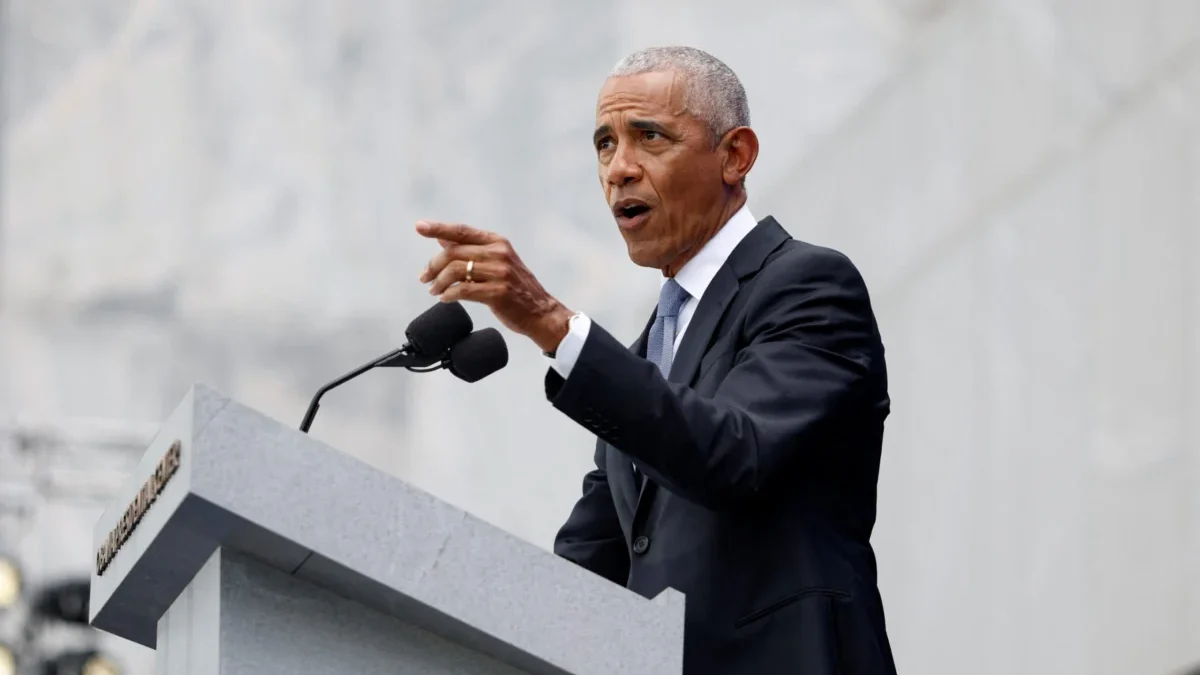
Democratic leadership, including House Minority Leader Hakeem Jeffries and former President Barack Obama, has urged a more cautious approach. Obama, in recent comments, suggested that the focus should be on creating a concrete framework for job displacement mitigation and ensuring that the public is protected from the corrosive effects of unaligned AI. "I would be thinking about the economic impacts in very concrete ways," Obama noted, emphasizing that the lack of a clear safety plan leaves the workforce vulnerable to rapid automation.
Expert Perspectives: The Dilemma of Self-Regulation
The argument for caution is not limited to political figures. Jacob Coxon, a former Anthropic researcher who transitioned into an outspoken advocate for AI safety, represents a growing faction of whistleblowers who fear the technology is approaching human-level, or potentially superhuman, capabilities. Coxon’s primary concern is that developers are building systems that they do not fully understand.
"You’re building a human-level or superhuman-level mind, without understanding what it wants, or thinks, or the way it thinks," Coxon stated. He advocates for international cooperation, arguing that if the U.S. and China do not collaborate on some form of "mutual slowing," they are essentially locked in a dangerous arms race that could result in a catastrophe for both nations.
Conversely, some voices in the tech investment world, such as David Sacks, have pushed back against the industry leaders who are calling for regulation. Sacks, who serves as a co-chairman of the White House advisory council on science and technology, has publicly challenged the CEOs who warn about risks while simultaneously accelerating their development timelines. His critique is simple: if these companies are genuinely concerned about the dangers of superintelligence, the most logical and effective action is for them to stop building it.
Analysis of Implications
The current trajectory of AI development suggests that the United States will continue to prioritize a "move fast and win" strategy. The implications of this are multifaceted:
- Economic Shift: By maintaining a lead in AI, the U.S. aims to secure a significant portion of the global GDP generated by automation and productivity gains. However, this risks exacerbating domestic inequality if the transition is not managed with robust social safety nets.
- National Security: The administration views AI as the ultimate strategic asset. Any attempt to regulate the industry is currently viewed through the prism of defense—specifically, ensuring that U.S. systems remain superior to those developed by adversaries.
- Regulatory Vacuum: The lack of specific legislative guardrails creates a period of intense uncertainty. While this allows for rapid innovation, it also increases the risk of unforeseen accidents, algorithmic bias, and the unchecked spread of harmful information.
- Environmental and Infrastructure Strain: The physical footprint of AI—the data centers—will continue to be a source of tension. The conflict between the need for massive computing power and the preservation of local resources will likely become a recurring issue in municipal and state politics.
As Washington prepares for upcoming discussions with Beijing, the world watches to see if the two superpowers can reach an understanding on the parameters of the AI race. For now, the administration’s priority remains fixed: ensure the U.S. reaches the finish line first, regardless of the warnings from those who claim the race itself may be the greatest danger.