With global social media adoption reaching unprecedented heights, platforms have transformed from simple communication tools into robust enterprise ecosystems essential for modern commercial success. Recent metrics indicate that active social media users worldwide have surpassed 5.66 billion, providing organizations with an expansive digital landscape to acquire new audiences, cultivate consumer loyalty, and extract actionable market intelligence. When integrated thoughtfully into corporate operations, social media strategies simultaneously fuel marketing initiatives, streamline customer service workflows, enhance market research capabilities, and drive scalable lead generation.

The evolution of digital networking has fundamentally altered how enterprises interact with consumers. What began decades ago as basic online directories has matured into sophisticated multimedia channels where brand discovery, customer retention, and transaction execution occur seamlessly. Corporate executives now recognize that maintaining an active, strategic digital footprint is no longer optional; it serves as a foundational pillar of modern market competitiveness.
Accelerating Brand Awareness and Market Discovery

Increasing brand visibility remains the primary objective for the vast majority of digital marketers, with approximately 83 percent of industry professionals citing enhanced exposure as the chief advantage of social media marketing. By consistently publishing relevant content and capitalizing on algorithmic recommendations, hashtags, and peer-to-peer sharing mechanisms, brands can penetrate markets that were previously unreachable through traditional advertising models.
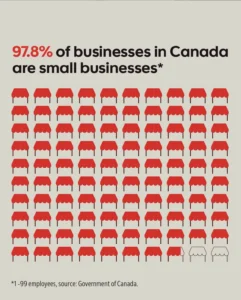
This discovery effect carries significant weight in contemporary consumer behavior. Modern buyers frequently utilize social networks as a primary research channel before executing a purchasing decision. Emerging brands and established enterprises alike leverage platforms like Instagram and TikTok to establish cultural relevance and build community anticipation long before commercial rollouts. Industry analysts note that organic discovery driven by consistent posting helps level the playing field, allowing smaller businesses to capture significant market share by demonstrating authenticity and engaging directly with niche communities.

Direct Consumer Engagement and Real-Time Communication
Beyond traditional broadcasting, social media provides organizations with an immediate, bidirectional communication channel. Platforms such as Facebook, X, and LinkedIn allow corporate customer service teams to address inquiries, resolve grievances, and participate in industry conversations in real time. This direct line of communication offers a faster, more personalized alternative to legacy support systems like email ticketing or traditional hotline queues.

Companies that prioritize responsive social engagement frequently observe higher customer satisfaction scores and stronger brand advocacy. By treating comment sections and direct messages as active dialogue spaces rather than static notice boards, businesses transform casual followers into dedicated brand advocates. Furthermore, addressing customer concerns publicly and constructively demonstrates corporate accountability, reinforcing trust across the broader consumer base.
Targeted Lead Generation and Revenue Optimization

Commercial investment in social media advertising continues to climb exponentially, with United States advertisers alone projected to allocate over $121 billion toward social network ad spending. This financial commitment reflects the sophisticated targeting capabilities currently embedded within major platforms. Modern advertising tools enable brands to segment target audiences based on granular parameters including demographic profiles, geographic locations, spoken languages, behavioral patterns, and declared interests.
Through precision targeting, marketing and sales teams can ensure that promotional expenditures are directed exclusively toward individuals demonstrating the highest propensity for conversion. Social selling techniques, when paired with robust paid advertising campaigns, establish a continuous, predictable pipeline of qualified prospects. Consequently, social media has transitioned from an auxiliary brand-awareness tool into a direct, measurable revenue-generating engine.
Market Research and Comprehensive Social Listening
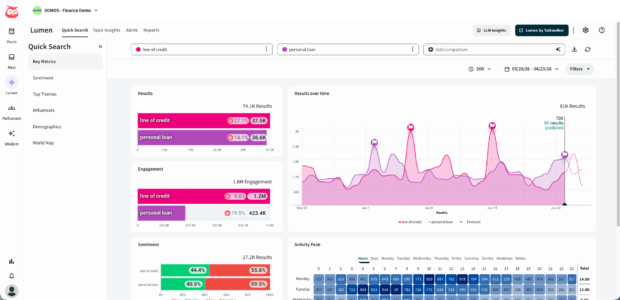
Social media environments function as real-time focus groups, offering brands unprecedented visibility into consumer sentiment, emerging preferences, and industry trends. Through advanced social listening and analytics tools, corporate strategy teams can monitor online conversations, track brand mentions, and evaluate shifting consumer attitudes without commissioning expensive, time-consuming traditional surveys.
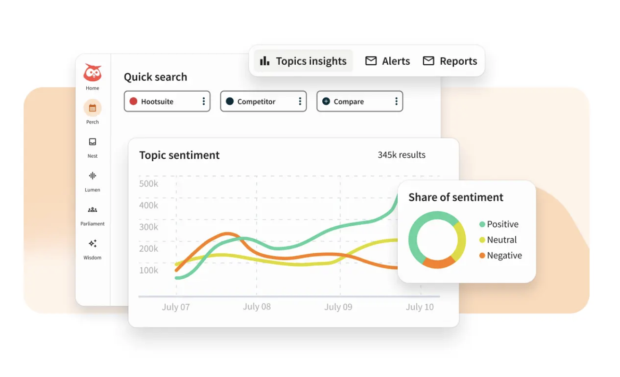
This continuous stream of qualitative and quantitative data informs critical business decisions ranging from product development cycles to overarching marketing campaigns. By analyzing what customers praise, criticize, or request online, organizations can adapt their offerings rapidly to match market demands. Additionally, early identification of emerging trends allows agile companies to position themselves at the forefront of industry shifts, outperforming competitors who rely solely on retrospective market analysis.
Reputation Management and Crisis Mitigation

In an interconnected digital economy, consumers discuss brands continuously; the decisive factor for modern enterprises is whether internal leadership actively monitors these conversations. Social listening mechanisms empower security and public relations teams to track brand sentiment, identify operational issues, and intercept potential public relations crises before minor complaints escalate into widespread controversies.
Proactive reputation management involves more than merely deleting negative commentary; industry leaders frequently convert criticism into constructive engagement. When brands transparently address product flaws, explain manufacturing processes, or release educational tutorials addressing common user frustrations, they neutralize negative sentiment and display corporate maturity. Celebrating vocal brand advocates similarly amplifies positive reinforcement, cultivating a resilient corporate reputation capable of weathering market volatility.
Proving Return on Investment Through Advanced Analytics
A historical challenge for marketing departments has been quantifying the exact financial return generated by brand awareness campaigns. Contemporary social media analytics tools bridge this gap by connecting social engagement metrics directly to website traffic, lead acquisition, email subscriptions, and overall sales conversions.
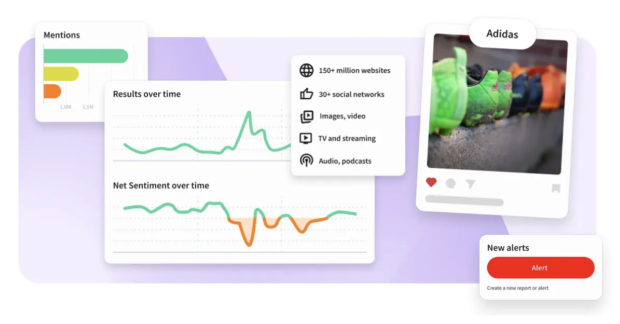
The integration of enterprise analytics platforms with digital tracking mechanisms—such as UTM parameters and customized attribution models—allows data analysts to trace user journeys from an initial social media impression to a finalized commercial transaction. By establishing clear key performance indicators (KPIs) and monitoring both organic and paid campaign performance, marketing teams can present leadership with concrete evidence of financial return, transforming social media from an ambiguous cost center into a transparent profit driver.
Developing a Structured Social Media Strategy
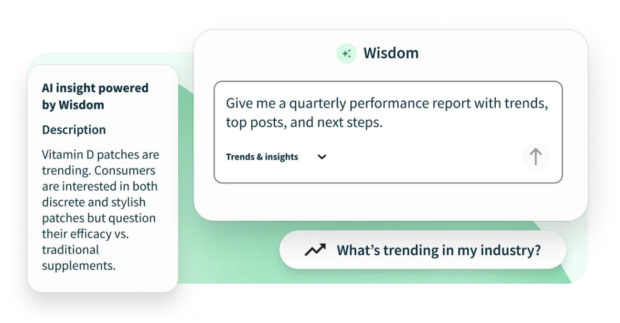
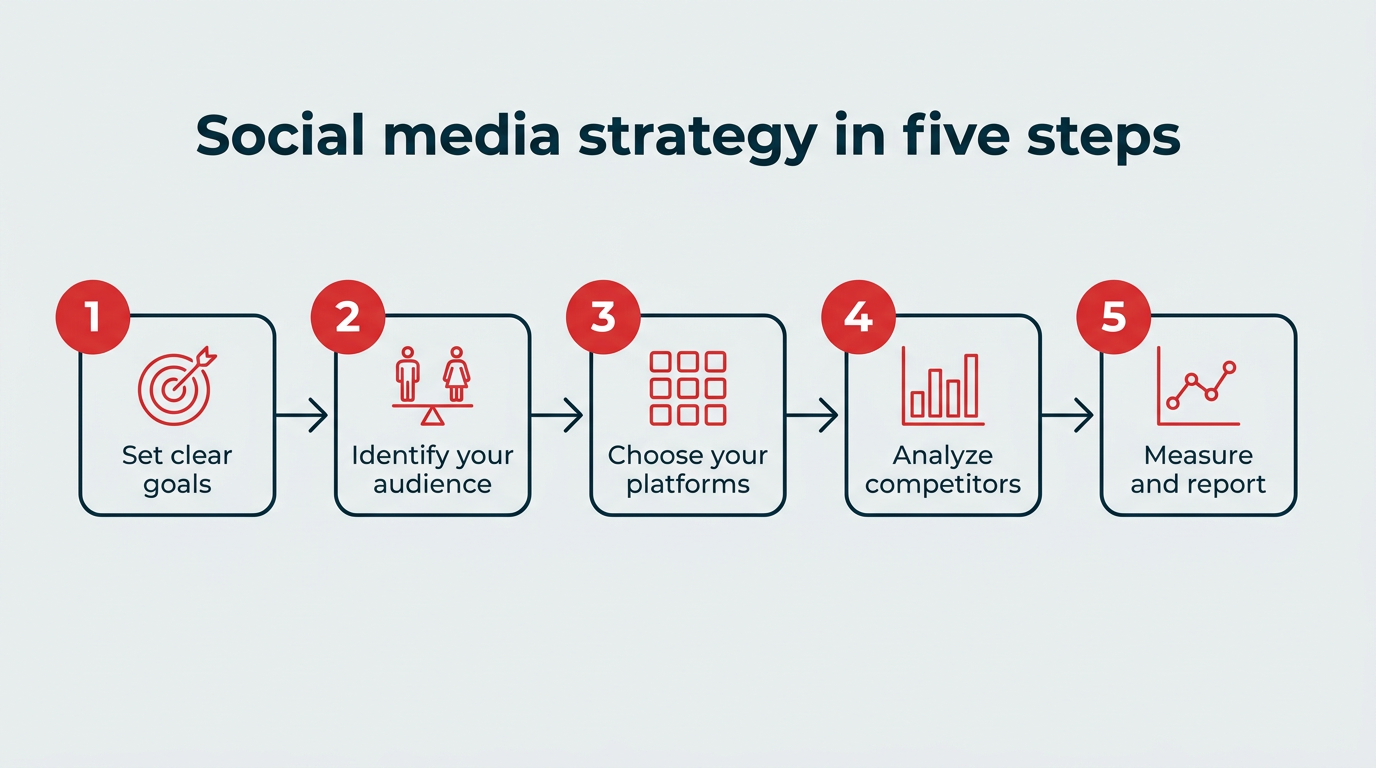
Constructing a successful social media operation requires more than sporadic posting; it demands a structured, goal-oriented framework. Enterprises must begin by defining specific objectives that align with broader corporate milestones.
-
Establishing Clear and Measurable Goals
Effective social media strategies rely on well-defined targets that adhere to SMART criteria—ensuring goals are specific, measurable, attainable, relevant, and time-bound. Organizations must consciously avoid distraction by vanity metrics, such as raw follower counts or superficial likes, which rarely correlate with actual business value. Instead, teams should concentrate on meaningful performance indicators including engagement rates, click-through metrics, and conversion percentages.
-
Identifying and Profiling the Target Audience
Comprehensive audience research prevents wasted marketing expenditures. Utilizing advanced audience insights dashboards, companies can analyze demographic data, geographic distributions, and content consumption habits across millions of websites and social channels. Integrating artificial intelligence agents into analytics workflows enables rapid summarization of complex data sets, translating raw listening insights into actionable content and customer care strategies. -
Selecting Appropriate Social Media Platforms
No single social network appeals universally to all demographic segments or supports every content format equally. Strategic selection dictates that brands focus their resources on the specific channels where their target audience actively spends time. For instance, B2B enterprises frequently achieve superior results on professional networking platforms, whereas consumer-facing cosmetic or lifestyle brands often thrive on visually driven networks like Instagram and TikTok.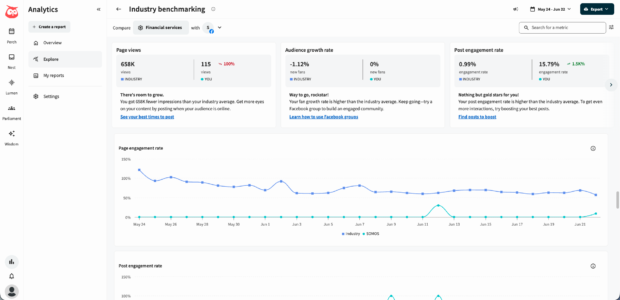
-
Conducting Thorough Competitor Benchmarking
Market intelligence requires continuous observation of competitor activity. By analyzing rival strategies, identifying content gaps, and monitoring industry benchmarks, organizations can refine their own positioning. Competitive analysis highlights successful tactics while revealing market vulnerabilities that your brand can exploit. -
Establishing Measurement and Reporting Frameworks
Accountability requires pre-established measurement protocols. Teams must determine their tracking metrics, integrate platform analytics with web data systems, and commit to a consistent reporting cadence—typically monthly reviews supplemented by weekly pulse checks during live campaigns.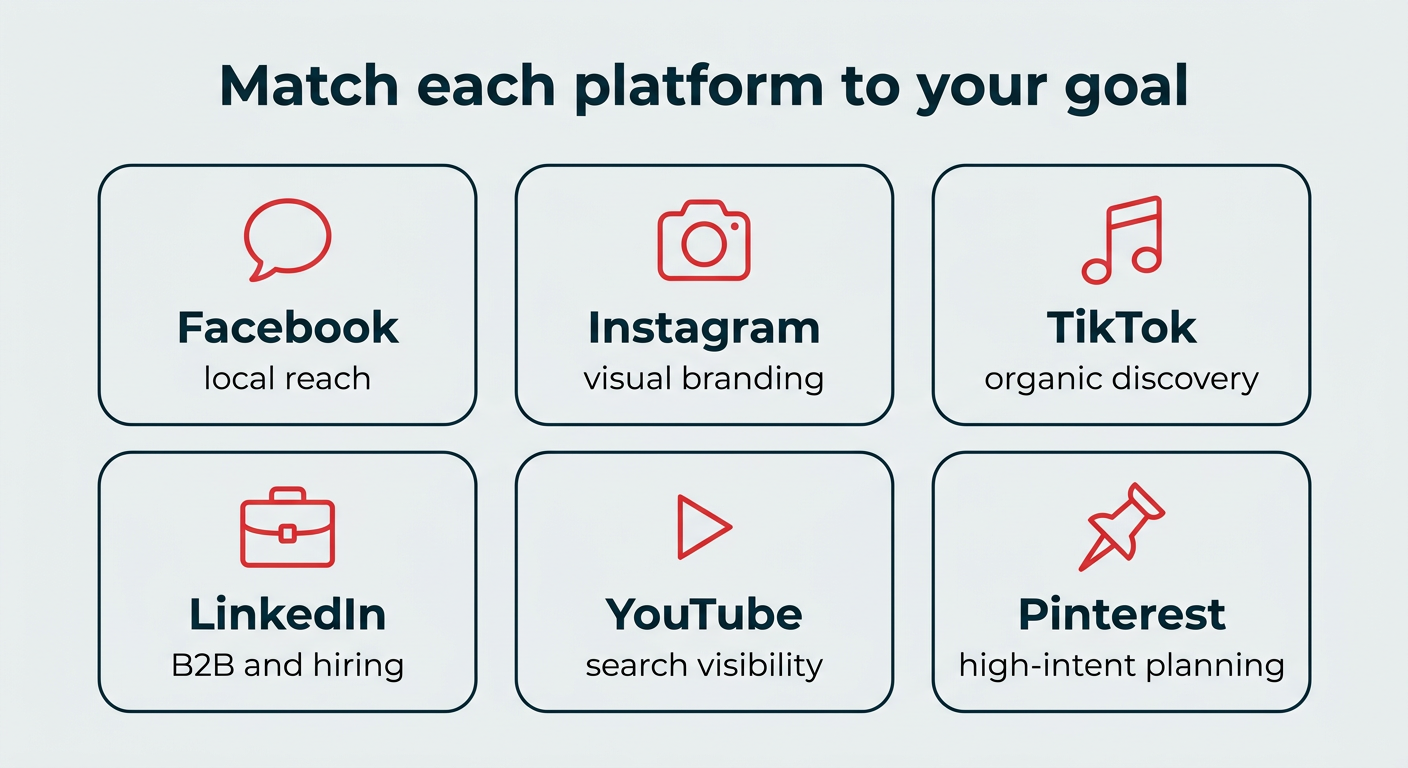
Comparative Analysis of Major Social Media Platforms
Understanding the distinct utility of each major social platform enables marketing teams to allocate resources efficiently rather than spreading themselves thin across unmanageable channels.
- Facebook: Excels in local community building and broad-audience reach, skewing toward users aged 25 to 54. Primary formats include video content, external links, and specialized community groups, making it ideal for local marketing and customer service operations.
- Instagram: Serves as a premier visual branding and social commerce engine, appealing heavily to demographics aged 18 to 34. Core formats—Reels, carousels, and Stories—drive high rates of product discovery.
- TikTok: Renowned for rapid organic discovery and short-form video consumption among younger demographics. It functions as a primary driver of cultural trends and creator partnerships.
- LinkedIn: The definitive ecosystem for business-to-business (B2B) marketing, professional networking, and corporate recruitment, primarily serving professionals aged 25 to 54 through text posts, documents, and professional video.
- YouTube: Commands long-term search visibility across all age groups through long-form educational videos and short-form clips, proving essential for product tutorials and evergreen content.
- Pinterest: Powers high-intent planning and e-commerce traffic, particularly among female users aged 25 to 44 seeking inspiration in fashion, home decor, and culinary arts.
Creating and Executing a Content Plan
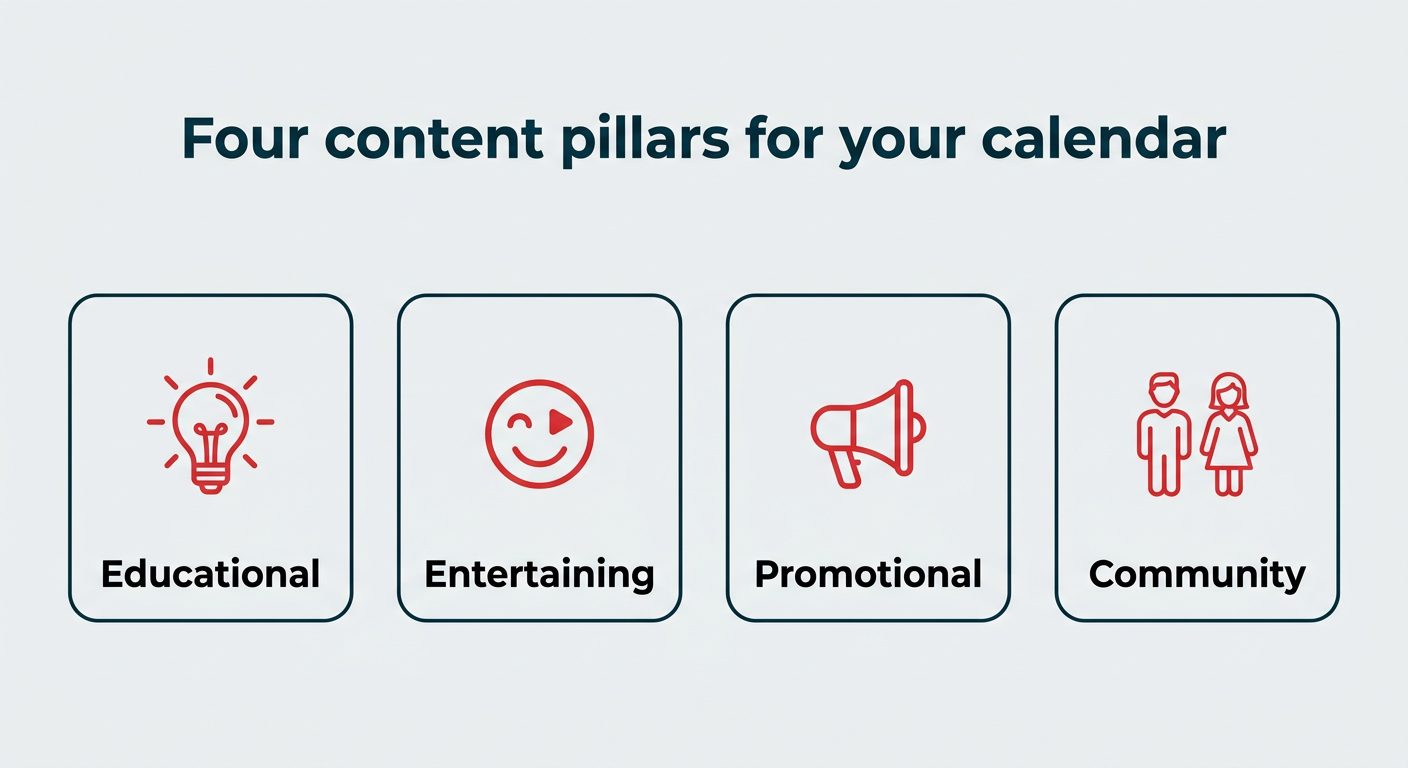
A disciplined content calendar eliminates erratic publishing schedules and ensures consistent brand messaging. Successful operations rely on a balanced content mix categorized into core pillars: educational material, entertaining content, promotional posts, and community-driven user-generated content (UGC).

User-generated content serves as powerful social proof, keeping feeds authentic while reducing internal content production burdens. Additionally, optimizing posts for discovery through social SEO—incorporating descriptive keywords alongside strategic hashtags—ensures that platform algorithms correctly categorize and surface your brand to interested searchers.
Best Practices for Sustained Social Media Success

Maintaining long-term relevance across digital channels requires adherence to proven operational best practices.
- Practice Consistent Social Listening: Continuously monitor brand mentions, industry keywords, and emerging consumer sentiments to remain attuned to market shifts.
- Collaborate with Credible Influencers: Partner with digital creators and micro-influencers whose authentic voices align with your brand values to foster trust within targeted subcultures.
- Engage Actively with Your Community: Treat comments sections and direct messages as active conversation spaces, responding promptly to inquiries and humanizing your corporate identity.
- Maintain Brand Authenticity: Showcase behind-the-scenes processes, transparent communication, and genuine personality to differentiate your organization in crowded digital feeds.
- Adapt to Algorithmic and Trend Shifts: Monitor evolving platform algorithms and emerging content formats to ensure your promotional tactics remain effective.
- Commit to Consistent Posting Cadence: Show up regularly according to a planned schedule to keep your business top-of-mind among consumers.
- Integrate Paid Social Strategically: Amplify organic top-performers with targeted ad budgets to expand reach efficiently.
- Continuously Review Analytics: Regularly audit performance metrics to refine strategy, improve content quality, and ensure alignment with business outcomes.
The Integration of Artificial Intelligence in Social Media Workflows

Artificial intelligence has transitioned from an experimental novelty into an indispensable operational layer within modern marketing departments. The primary advantage of AI integration lies in velocity: accelerating content drafting processes, parsing vast volumes of unstructured conversation data, and automating initial customer service inquiries.
AI-driven tools assist marketing professionals by summarizing audience sentiment, identifying emerging discourse spikes, and suggesting tactical next steps for brand strategy. However, industry experts emphasize that artificial intelligence serves to augment human creativity and strategic judgment rather than replace it entirely, streamlining the manual labor required to transition from data insight to commercial action.

Navigating Privacy, Compliance, and Governance
As digital operations expand, corporate governance regarding privacy compliance and platform security becomes paramount. Social media governance encompasses the protocols governing customer data handling, publication approvals, and account access permissions. Regulatory non-compliance carries severe legal, financial, and reputational penalties.
Growing enterprises must implement robust administrative frameworks—such as centralized permission management, multi-layered approval workflows, and strict access controls—before scaling their social media operations. Establishing formal governance early protects the organization against unauthorized access and ensures adherence to international data privacy regulations.
Essential Tools for Modern Social Media Management
Executing a comprehensive social media strategy requires specialized enterprise software designed to unify disparate workflows. Leading organizations deploy integrated ecosystems that combine planning, publishing, customer care, listening, and analytics.
- Enterprise Social Suites: Platforms like Hootsuite consolidate calendar management, automated inbox routing, brand health tracking, and AI-driven recommendations into centralized dashboards, enabling teams to manage multi-channel campaigns seamlessly.
- Visual Design Platforms: Tools such as Canva provide intuitive drag-and-drop interfaces and extensive template libraries, allowing teams without dedicated graphic designers to produce polished, branded visual assets rapidly.
- Writing and Proofreading Assistants: AI-powered writing tools like Grammarly ensure that all public-facing copy, captions, and customer replies maintain professional grammar, appropriate tone, and clear readability.
- Web Analytics Integration: Platforms such as Google Analytics (GA4) track post-click user behavior on corporate websites, linking social media activity directly to conversions, lead generation, and overall revenue attribution.
Conclusion

Mastering social media for business requires a harmonious blend of clear strategic goal-setting, disciplined content planning, active community engagement, and rigorous data analysis. By matching platform capabilities to specific corporate objectives, leveraging advanced analytics, and maintaining operational consistency, organizations can transform their digital presence into a powerful engine for brand awareness, customer loyalty, and sustainable revenue growth.