The digital landscape has evolved into an attention economy where the primary currency is the user’s click. For content creators, publishers, and digital marketers, the title of an article serves as the singular gateway between obscurity and engagement. Data analytics consistently show that the vast majority of web traffic is dictated by the effectiveness of a headline, which functions as the primary vehicle for search engine optimization (SEO) and social media discovery. When a title fails to resonate, the underlying content—regardless of its quality or depth—is statistically likely to languish in digital archives, unseen by the intended audience.
The anatomy of a successful headline is not merely an exercise in creativity; it is a calculated application of psychological triggers and algorithmic optimization. Industry experts have long emphasized that the title is the most significant investment a writer can make in their work. Because a headline is the only component of a piece of content that appears in search results, RSS feeds, social media shares, and email newsletters, it must perform the heavy lifting of convincing a reader that the time spent clicking will yield a tangible reward.
The Psychology of Engagement and the Ogilvy Principle
The foundational theory governing modern headline construction stems from the principles established by legendary advertising executive David Ogilvy. In his seminal work, Ogilvy on Advertising, he posited a simple yet immutable law: the purpose of a headline is to entice the reader to engage with the first line of the body copy. This logic remains the bedrock of digital copywriting.
From a psychological perspective, a headline must create an immediate "information gap." When a user encounters a title, their brain assesses the utility of the content. If the title provides a clear, high-value promise, the user experiences a cognitive pull to bridge that gap by clicking through. Conversely, titles that are cryptic, overly clever, or ambiguous often fail because they require the user to invest mental energy to decipher the topic, a cost most casual browsers are unwilling to pay.

Analytical Data on Headline Performance
Quantitative analysis of click-through rates (CTR) underscores the necessity of deliberate title construction. Research conducted by platforms such as HubSpot and BuzzSumo indicates that headlines containing specific structural elements consistently outperform generic titles. For instance, list-based headlines—often called "listicles"—frequently see a 20% to 30% increase in CTR compared to standard declarative headlines. This is attributed to the reader’s preference for "scannable" content that promises a structured, predictable format.
Furthermore, SEO studies have demonstrated that keywords placed at the beginning of a title are indexed more effectively by major search engines. When a title is kept under 65 characters, it avoids truncation in Google search results, ensuring the full value proposition is visible to the user. These data points suggest that the intersection of search engine algorithms and human behavior is where the most successful headlines reside.
Eight Strategic Pillars for Effective Headlines
To maximize the reach and impact of digital content, writers are encouraged to employ a set of established strategies designed to capture attention without resorting to deceptive practices.
1. The Primacy of Utility and Benefit
The most effective headlines communicate a clear benefit. Users arrive at a search engine with a specific intent, whether it is to learn a skill or solve a problem. Titles such as "How to Master X" or "Ten Proven Methods for Y" signal that the content provides an immediate solution. This transparency builds trust and establishes the article as a reliable resource.
2. Leveraging Controversy and Debate
Controversy, when handled with intellectual integrity, acts as a powerful catalyst for engagement. By framing a topic as a point of contention, authors invite the audience to participate in a larger cultural or industry-wide conversation. However, this strategy carries the risk of alienating segments of the audience if the content fails to substantively support the provocative stance taken in the headline.

3. The Inquiry-Based Approach
Questions engage the reader’s innate need for resolution. By posing a question directly to the reader—specifically by utilizing the word "you"—the headline shifts from a passive statement to an active dialogue. This technique is particularly effective in comment-driven environments, as it prompts the reader to formulate an opinion before they have even opened the article.
4. The Power of Personalization
Direct address is a staple of effective communication. By integrating the reader into the headline, the content feels less like a broadcast and more like a tailored consultation. This strategy reduces the perceived barrier between the author and the audience, making complex or broad topics feel relevant to the individual reader’s personal circumstances.
5. Keyword Optimization for Visibility
Keywords serve as the bridge between human interest and machine discovery. Using industry-specific terminology ensures that content is surfaced when users perform targeted searches. When including names of companies, products, or prominent figures, the headline benefits from the high search volume associated with those specific entities.
6. The Application of Power Words
Certain linguistic choices are proven to evoke stronger emotional responses. Terms that imply speed, exclusivity, or transformation—such as "essential," "ultimate," "proven," or "rapid"—can increase interest. However, caution is advised; overuse of these terms can lead to "clickbait fatigue," where readers become skeptical of the content’s quality, ultimately damaging the publisher’s credibility.
7. Bold Claims and Guaranteed Outcomes
While similar to communicating a benefit, the "big claim" approach elevates the promise to a definitive, often transformative, level. This creates a high-stakes expectation that forces the reader to investigate the content to see if the promise is substantiated. The risk here is significant: the quality of the content must be commensurate with the magnitude of the claim, or the audience will perceive the headline as dishonest.
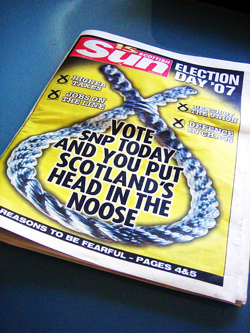
8. Strategic Use of Humor
Humor can be an effective differentiator in a crowded digital marketplace. A well-executed, witty, or ironic headline can humanize a brand and establish a rapport with the reader. However, humor is highly subjective and culturally dependent. A joke that fails to land can leave the reader confused or uninterested, making this the most difficult strategy to master consistently.
Broader Implications and Best Practices
The evolution of headline writing is inextricably linked to the broader trends in digital publishing. As search engine algorithms become more sophisticated, they increasingly prioritize user experience (UX). If a title draws a high volume of clicks but the user bounces immediately because the content is irrelevant, the search engine penalizes the site’s ranking. Therefore, the "secret" to a successful title is not just the ability to attract a click, but the ability to attract the right click.
Industry best practices now suggest a "slow and deliberate" approach to headline creation. Rather than rushing to publish, content creators are encouraged to draft multiple iterations of a title, testing different angles and word choices. The time invested in perfecting a headline is widely considered a high-yield investment, often determining the long-term success of the article.
Conclusion: The Synthesis of Art and Data
Ultimately, the craft of writing headlines is a balance between art and data science. While the principles of psychology provide the framework, the application requires an understanding of the specific audience and the context of the platform. By avoiding excessive punctuation that interrupts the reading flow—such as unnecessary periods—and maintaining a concise, readable structure, writers can ensure that their work is both discoverable by algorithms and appealing to human readers. As the digital landscape continues to fragment, the ability to distill complex ideas into a single, compelling sentence will remain the most critical skill for any content creator.