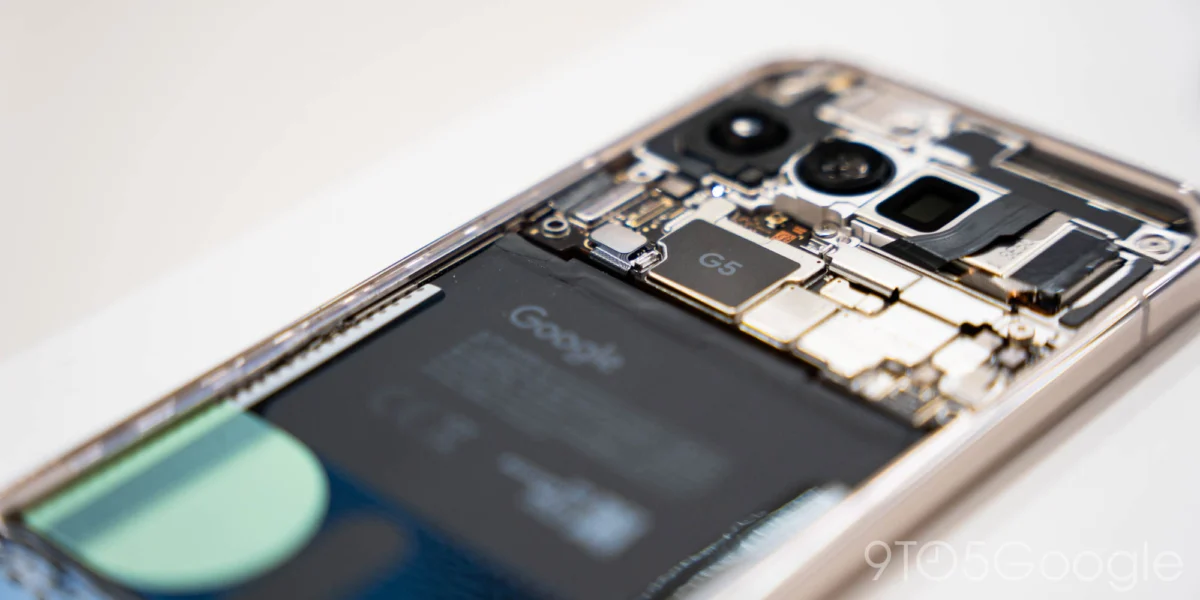
The evolution of Google’s custom silicon, the Tensor processor, has reached a critical juncture. Since the launch of the original Google Tensor chip in 2021, the company has prioritized machine learning capabilities and unique software features over raw computational power. While this strategy successfully differentiated the Pixel brand, it has resulted in a widening performance deficit compared to rival chipsets from Qualcomm and Apple. As Google enters the second generation of its TSMC-manufactured chips—the Tensor G5 and G6—industry observers are increasingly calling for a “Ryzen moment,” a fundamental architectural shift that mirrors AMD’s successful pivot in the desktop computing market to regain competitive parity.
![The Google Pixel is fine and all, but still needs a ‘Ryzen moment’ [Video]](https://9to5google.com/wp-content/uploads/sites/4/2025/08/pixel-10-repair-tensor-g5-1.jpg?quality=82&strip=all&w=1600)
The Historical Context: The Bulldozer Parallel
To understand the current state of Google’s silicon, one must look at the history of high-performance computing. In the early 2010s, Advanced Micro Devices (AMD) faced a existential crisis. Its "Bulldozer" microarchitecture, which powered the FX series of desktop processors, failed to meet expectations. The chips were characterized by high power consumption, significant thermal throttling, and multi-threaded performance that often lagged behind the company’s own previous-generation Phenom II architecture.
Intel, the dominant market leader at the time, capitalized on this technological stagnation by maintaining a comfortable, incremental approach to performance gains. The result was a decade of industry complacency. AMD’s eventual recovery began with the development of the "Zen" architecture, a complete ground-up redesign that launched in 2017 as the Ryzen series. Ryzen did not just match the competition; it fundamentally altered the market, offering multi-threaded performance that rivaled and eventually surpassed high-end Intel chips.
![The Google Pixel is fine and all, but still needs a ‘Ryzen moment’ [Video]](https://9to5google.com/wp-content/client-mu-plugins/9to5-core/includes/obfuscate-images/images/9to5google-default.jpg)
The current discourse surrounding Google’s Tensor program suggests that the company is at a similar crossroads. Like the early FX chips, current Tensor iterations are often viewed as "good enough" for everyday tasks but struggle when subjected to intensive workloads, such as sustained 4K video recording, high-fidelity gaming, or complex background processing.
Chronology of the Tensor Transition
Google’s journey into custom silicon began with a reliance on Samsung’s foundry services. While this partnership allowed Google to bring its unique AI-focused vision to market quickly, it also tied the company to the limitations of Exynos-based manufacturing processes.
![The Google Pixel is fine and all, but still needs a ‘Ryzen moment’ [Video]](https://9to5google.com/wp-content/uploads/sites/4/2026/08/App-drawer-on-Pixel-11-Pro-XL-and-iPhone-17-Pro-Max.jpg?quality=82&strip=all&w=800)
- 2021 (Tensor G1): The debut of custom silicon in the Pixel 6 series. Focus remained on neural processing units (NPU) and camera image signal processing (ISP).
- 2022–2024 (Tensor G2, G3, G4): Incremental improvements were made, but thermal management remained a common point of critique among reviewers and power users.
- 2025 (Tensor G5): A pivotal shift occurred as Google moved production to TSMC’s advanced nodes. Industry experts anticipated a major performance leap, similar to how Qualcomm saw massive efficiency gains when it moved the Snapdragon 8+ Gen 1 from Samsung to TSMC.
- 2026 (Tensor G6): Currently powering the Pixel 11 lineup, this chip represents the second generation of the TSMC era. While power efficiency has improved, the generational leap in raw processing power remains subtle rather than revolutionary.
The Data Gap: Analyzing Performance Metrics
When benchmarking the current Tensor lineup against top-tier competitors, the disparity is evident. While Google’s hardware-software integration allows for a smooth user experience in daily tasks, synthetic benchmarks—such as Geekbench 6 or 3DMark—consistently show that the flagship chips from Apple (A-series) and Qualcomm (Snapdragon 8 Elite/Gen 4) maintain a lead in both single-core and multi-core throughput.
The implications of this gap extend beyond simple benchmark scores. Modern mobile operating systems are increasingly becoming desktop-class environments. As Google continues to refine Android’s desktop-windowing capabilities, the demand for sustained, high-performance compute becomes essential. Currently, Tensor chips exhibit thermal limitations that prevent the hardware from acting as a reliable desktop replacement, a feat that Apple has successfully achieved with its M-series chips and the integration of smartphone silicon into fanless, portable form factors.
![The Google Pixel is fine and all, but still needs a ‘Ryzen moment’ [Video]](https://9to5google.com/wp-content/uploads/sites/4/2022/09/tensor-g2.jpeg?quality=82&strip=all&w=800)
The Challenge of Longevity
One of Google’s primary marketing pillars for the Pixel 11 and its predecessors is the promise of seven years of operating system updates. This commitment is unprecedented in the Android ecosystem. However, there is a fundamental tension between long-term support and hardware capability.
A chip that provides adequate performance today may struggle to handle the resource-heavy demands of Android iterations in 2030 or 2031. If the processing overhead of future software updates grows at the current rate, the Tensor chips of today may become the bottleneck for the devices of tomorrow. This raises concerns regarding the "effective" life of a flagship device. If a user is expected to keep a $1,000 phone for five to seven years, the processor must possess sufficient thermal and computational headroom to age gracefully.
![The Google Pixel is fine and all, but still needs a ‘Ryzen moment’ [Video]](https://9to5google.com/wp-content/uploads/sites/4/2025/08/pixel-10-repair-tensor-g5-2.jpg?quality=82&strip=all&w=800)
Broader Industry Implications
The success of the "Ryzen moment" for AMD was rooted in a willingness to sacrifice short-term gains for a complete architectural overhaul. For Google, the path forward likely involves a departure from the "AI-first" marketing narrative to a "performance-first" engineering reality.
Industry analysts note that Google is playing a high-stakes game. By relying on AI to "paper over" hardware limitations, the company risks alienating power users and tech enthusiasts who prioritize raw responsiveness. Furthermore, the lack of cutting-edge video features—such as local 8K recording or high-frame-rate pro-tier capture—is directly tied to the current limits of the Tensor architecture.
![The Google Pixel is fine and all, but still needs a ‘Ryzen moment’ [Video]](https://9to5google.com/wp-content/uploads/sites/4/2026/04/macbook-neo-citrus-0002.webp)
If Google aims to transition Android into a platform that spans phones, tablets, and desktop-docked environments, the chip cannot merely be a "fine" component. It must be a powerhouse capable of handling professional-grade productivity without thermal throttling.
Future Outlook
As Google moves into the next phase of its hardware roadmap, the pressure to deliver a transformative chip is mounting. The transition to TSMC has provided the stable, efficient foundation necessary to attempt a more radical architecture. The next generation of Tensor will need to demonstrate that Google can do more than just iterate; it must show that it can lead.
![The Google Pixel is fine and all, but still needs a ‘Ryzen moment’ [Video]](https://9to5google.com/wp-content/uploads/sites/4/2026/08/Tensor-G6.jpg?quality=82&strip=all)
Whether or not the company achieves its "Ryzen moment" will depend on its ability to shift its engineering priorities. The foundation—a sophisticated, software-integrated ecosystem—is already in place. The missing piece is a silicon architecture that can sustain the high-performance demands of the next decade of mobile computing. For now, the industry watches to see if Google will move beyond the "good enough" threshold to reclaim its position as a hardware innovator capable of rivaling the absolute best in the silicon market.