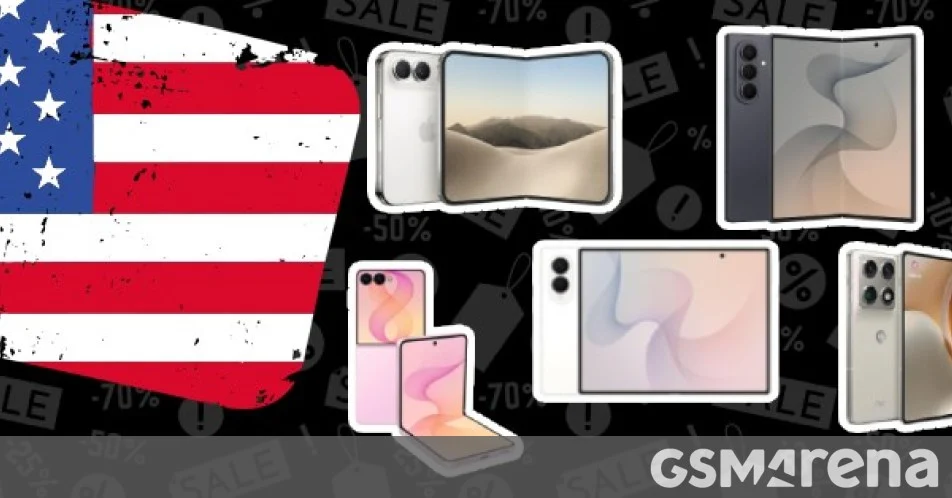
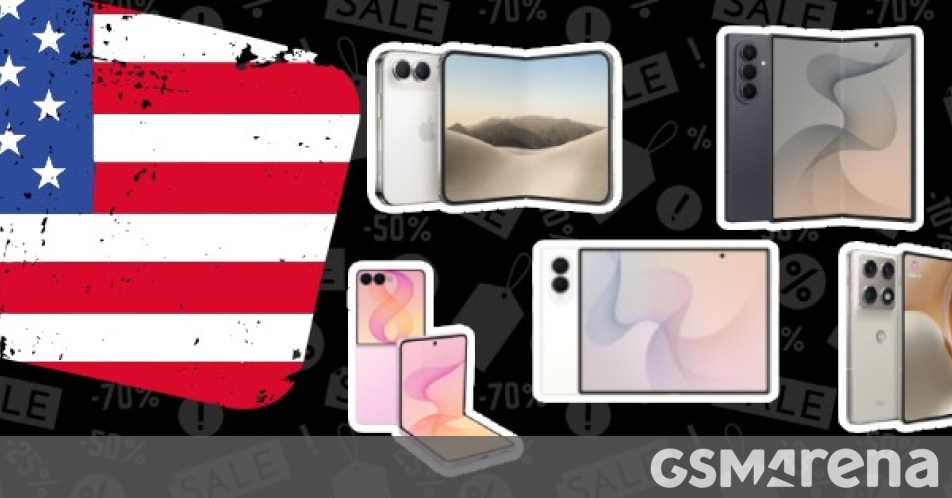
The Apple iPhone Duo, the company’s highly anticipated foray into the foldable smartphone segment, officially entered the market this Friday. The launch represents a watershed moment for Apple, as the tech giant moves to capture a share of the premium mobile device sector that has been dominated by Samsung and other Android manufacturers for several years. However, the initial rollout has been marred by supply chain constraints, with Apple confirming limited in-store availability and significant lead times for online orders. Industry analysts suggest that while demand remains robust, the company’s manufacturing capacity for the complex hinge and flexible display components remains the primary bottleneck for a smooth market entry.
A Chronology of the iPhone Duo Rollout
The road to the iPhone Duo has been characterized by years of intense industry speculation, followed by a condensed marketing cycle. Apple’s official acknowledgment of the project occurred earlier this year, following rumors that the company was testing several prototypes, including "clamshell" and "book-style" variants.
On the supply side, reports emerged late last month that Apple had placed an emergency order for 44 million additional units of critical components from its primary suppliers to mitigate anticipated shortages. Despite these efforts, the current reality for consumers is one of scarcity. Walk-in buyers at Apple Retail locations across North America and Europe were met with restricted stock, and online shipping estimates quickly slid into multi-week windows. Market experts indicate that Apple is likely employing a "controlled launch" strategy, common for first-generation hardware, to ensure quality control while scaling production in its manufacturing hubs.

Pricing and Positioning in the Ultra-Premium Tier
The iPhone Duo enters the market at a daunting price point. The entry-level 256GB configuration starts at $2,000, while the top-tier 2TB storage model climbs to a staggering $3,200. This pricing structure positions the device firmly in the "ultra-luxury" category, significantly higher than the standard iPhone 18 Pro Max, which retails for $700 less.
The strategy appears to be one of market segmentation. By pricing the Duo as a specialized tool for power users and early adopters, Apple is effectively shielding its core iPhone 18 Pro series from direct cannibalization. For those seeking a more portable, conventional experience, the standard iPhone 18 Pro remains a more cost-effective choice, saving consumers approximately $800 compared to the entry-level foldable.

Competitive Landscape: Samsung and the Foldable Ecosystem
The competitive environment for the iPhone Duo is perhaps the most fierce it has ever been for an Apple product. The Samsung Galaxy Z Fold8 remains the primary competitor in the US market, offering a more mature, refined experience. Samsung has positioned its Galaxy lineup as a direct value alternative, with the Z Fold8 currently retailing for $300 less than the iPhone Duo, bolstered by aggressive promotional discounting.
From a hardware specification standpoint, the competition is stark. The Galaxy Z Fold8 is notably more ergonomic, weighing 201g compared to the iPhone Duo’s 254g, and maintaining a slimmer profile of 9.7mm versus 11.3mm. Both devices utilize expansive 7.6-inch inner displays, yet they diverge in their philosophical approach to camera hardware. Notably, both the iPhone Duo and the Z Fold8 have omitted dedicated periscope telephoto lenses in their latest iterations, opting instead for dual-sensor arrangements (48MP for Apple, 50MP for Samsung) that prioritize wide and ultra-wide performance.

Samsung’s "Ultra" tier, represented by the Galaxy Z Fold8 Ultra, introduces further differentiation. Featuring an 8.0-inch inner display and a 200MP main camera sensor, the Ultra is designed to appeal to users who demand desktop-class performance in a mobile form factor. The device’s 8.9mm thickness, achieved through advanced material engineering, poses a direct challenge to Apple’s weight-to-size ratio.
Alternative Market Entrants: Motorola and Google
While Samsung and Apple battle for the high-end, Motorola has carved out a unique position with the Razr Fold. Unlike its competitors, Motorola has focused on power efficiency and battery endurance, equipping the Razr Fold with a 6,000mAh battery—significantly larger than the 4,883mAh cell found in the iPhone Duo. Furthermore, Motorola’s commitment to a seven-year software support cycle mirrors Samsung’s, providing long-term value that is increasingly important to consumers in the $1,500-plus price bracket.

The Motorola Razr Ultra 2025 has also seen price reductions, currently sitting at approximately $700. Despite using older silicon, the device offers competitive RAM and storage configurations, making it a viable entry point for users curious about foldable technology without the "early adopter" tax associated with the iPhone Duo.
The Tablet and Desktop Convergence
Apple’s broader ecosystem strategy is currently undergoing a period of recalibration. The launch of the new Samsung Galaxy Tab S12+ and Ultra series, supported by a $100 promotional credit (PYPL100), continues to put pressure on the iPad segment. These tablets leverage the MediaTek Dimensity 9500 chipset and offer full DeX support, creating a desktop-like environment that Apple has historically been hesitant to fully implement in its iPadOS ecosystem.

The conversation regarding hardware utility has recently shifted toward the MacBook Air and Mac mini. With the integration of the Apple M5 and M6 chips, the desktop and laptop lines offer a level of performance-per-dollar that remains difficult to justify against a $2,000 foldable phone. The recent $200 price hike on the 16/512GB MacBook Air has slightly narrowed this gap, yet the Mac remains the primary productivity workhorse for the majority of Apple’s customer base.
Strategic Implications and Future Outlook
The release of the iPhone Duo is as much an exercise in brand preservation as it is an attempt to capture the foldable market. By waiting until the foldable display technology reached a level of durability suitable for its standards, Apple has avoided the early failures that plagued the industry in the late 2010s. However, the decision to launch with limited inventory and a premium price tag suggests that the company is content to let the market mature before attempting a full-scale push.

Industry analysts expect that as the Apple A20 Pro chipset achieves greater production yields and supply chains for the foldable displays stabilize, Apple will likely introduce a "non-Pro" version of the foldable, potentially bringing the price point closer to the $1,500 threshold. For now, the iPhone Duo serves as a prestige piece—a statement of technical capability that signals Apple’s long-term commitment to the foldable form factor.
Ultimately, the impact of this launch will be measured by the rate of adoption among existing iPhone users. If the Duo can successfully transition users from the Pro Max series to the folding form factor without significant attrition to the Android ecosystem, it will be viewed as a tactical victory. However, the presence of refined, cheaper, and arguably more capable hardware from Samsung and Motorola ensures that the foldable segment remains one of the most dynamic and competitive spaces in the global consumer electronics industry. For the consumer, the choice is no longer just about operating systems; it is about deciding whether the novelty of a foldable display justifies a premium that is, in some cases, double the cost of a high-performance, non-folding equivalent.