The landscape of customer service is undergoing a profound structural evolution, shifting rapidly away from traditional call centers and email queues toward instant, public-facing digital platforms. According to recent industry data, more than 75% of consumers now expect to communicate with businesses through the same messaging applications they use to converse with friends and family. As modern buyers demand lightning-fast resolution and frictionless digital interactions, organizations are increasingly forced to merge their marketing and customer support departments. This convergence has elevated social media customer service from a basic PR monitoring task into a core revenue driver and an essential pillar of corporate brand equity.

The historical shift from telephonic support to digital messaging channels reflects a broader transformation in consumer habits over the past decade. Early enterprise adoption of social platforms was largely reactive, functioning primarily as a digital complaints box where disgruntled users voiced grievances with little expectation of immediate corporate intervention. However, the proliferation of smartphones, the rise of mobile-first social networks such as Instagram and TikTok, and the integration of sophisticated artificial intelligence have completely altered these dynamics. By the late 2010s, forward-thinking brands recognized that public support interactions acted as open windows into corporate culture. Today, as industry analysts project that self-service and live chat technologies will surpass traditional phone and email channels, social media has emerged as the definitive battleground for consumer loyalty.
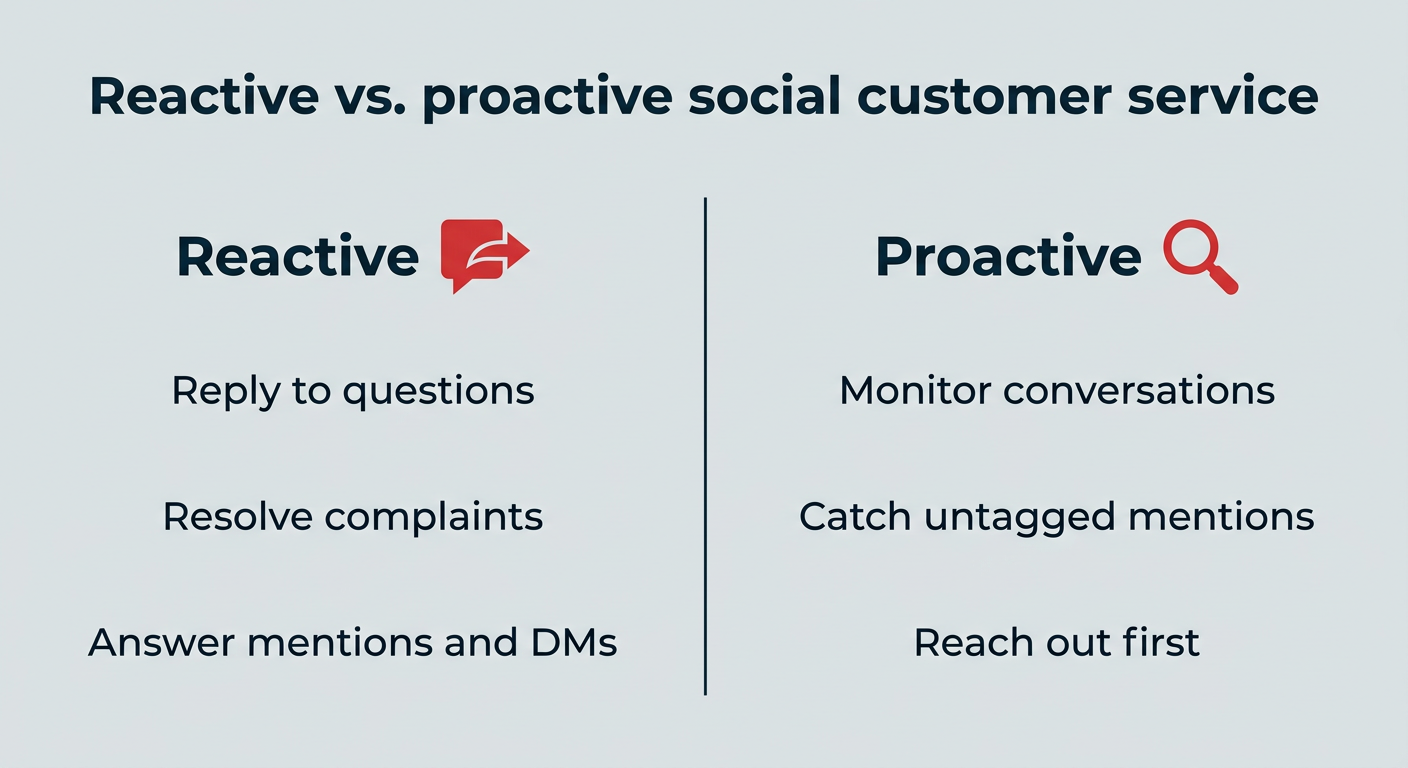
Modern social customer care operates along two distinct vectors: reactive and proactive support. Reactive support entails addressing direct inquiries, public complaints, and tagged mentions submitted directly to corporate profiles. Proactive support, by contrast, leverages advanced social listening tools to monitor un-tagged conversations across the internet, enabling brand representatives to intercept frustrated customers or answer questions before public issues can escalate. This proactive posture is increasingly vital as consumers shift toward conversational commerce. Recent enterprise studies indicate that companies successfully integrating generative artificial intelligence and proactive digital frameworks into their customer journeys can achieve up to 25% higher revenue growth over a five-year period compared to competitors focused exclusively on operational productivity.

Industry leaders across various sectors have already demonstrated the profound commercial benefits of mastering social support. Direct-to-consumer pet supply brand Chewy has long set the benchmark for personalized digital engagement by greeting pet owners by name, referencing specific animals, and resolving complex order issues within unified direct messaging threads. Similarly, major airlines like JetBlue utilize platforms such as X to resolve flight disruption queries in real-time, publicly reassuring travelers while moving sensitive ticket modifications into private channels. Fast-food giant Wendy’s has successfully balanced brand personality with rigorous customer resolution, proving that witty public banter must invariably be backed by concrete, helpful support infrastructure. Meanwhile, technology enterprises like Adobe employ proactive social listening to identify users struggling with software crashes or licensing errors who never officially tagged the corporate handle, thereby mitigating potential public relations crises.

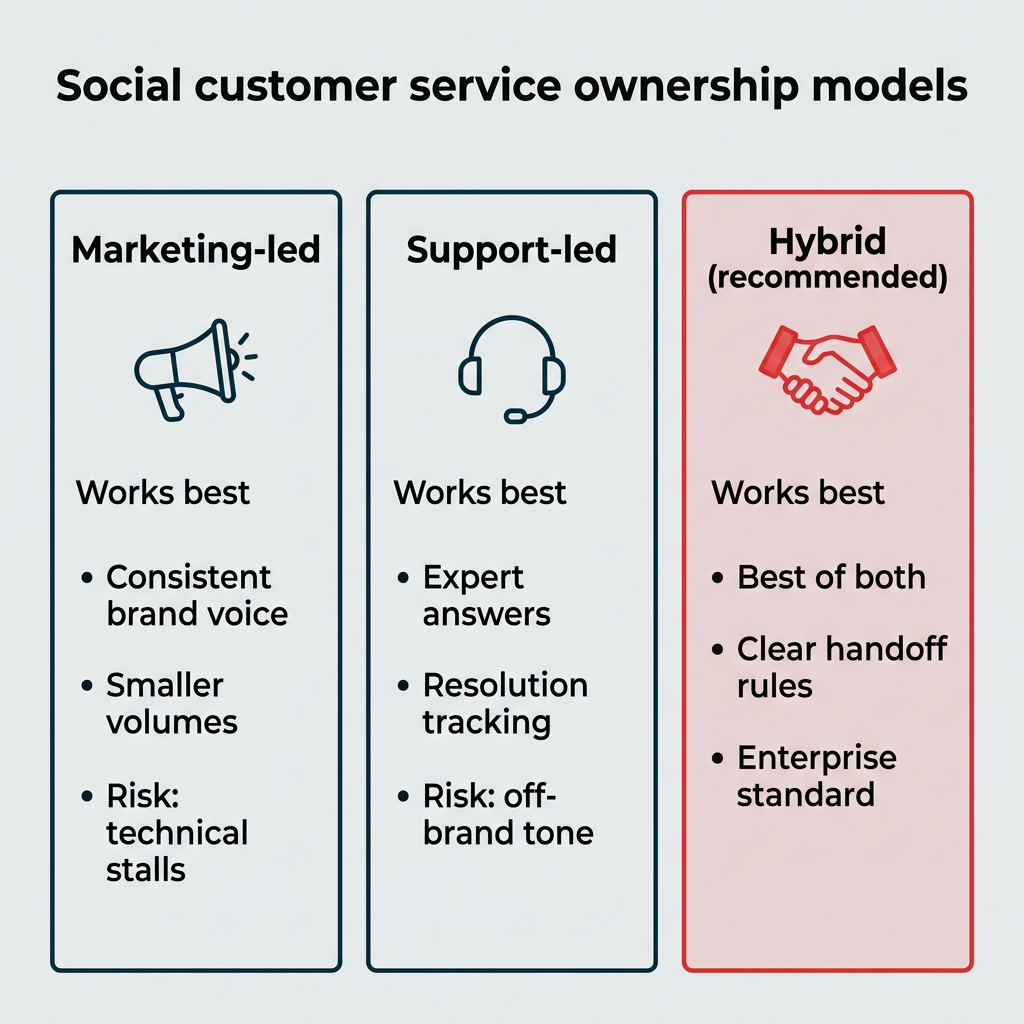
Despite the clear commercial advantages, deploying a robust social media customer service strategy introduces significant operational hurdles. Chief among these trade-offs is the high visibility of public interactions; a mishandled complaint or a delayed response can instantly transform a minor administrative error into a viral public relations crisis. Furthermore, the sheer volume of inbound traffic across multiple platforms—ranging from Facebook and Instagram to WhatsApp and LinkedIn—can easily overwhelm decentralized support teams. To manage these pressures effectively, enterprises must implement hybrid ownership models where marketing and support divisions share operational responsibility, guided by strict internal escalation workflows and clear governance policies.
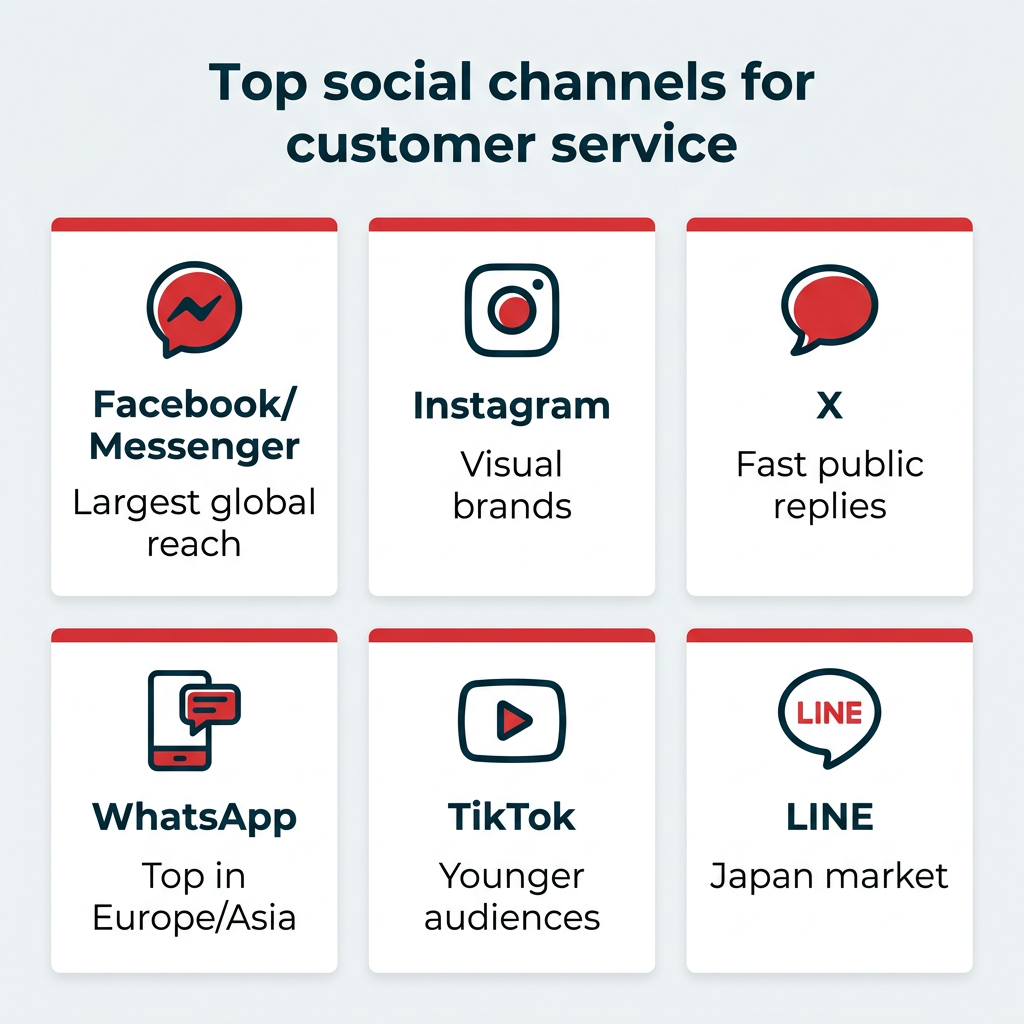
The technological foundation required to sustain this high-volume environment relies heavily on unified social inboxes and AI-driven automation. Modern customer care applications, such as Hootsuite’s Nest and Lumen platforms, allow enterprise teams to consolidate comments, direct messages, and global web mentions into a single governed dashboard. Automated AI chatbots now play a critical role in clearing routine frequently asked questions around the clock, allowing human agents to focus on complex, high-empathy scenarios. However, technological deployment must be handled with care; consumer research highlights that nearly 68% of customers will abandon a company’s chatbot entirely after a single negative or frustrating experience. Consequently, maintaining a seamless, frictionless handoff from automated systems to live human representatives remains essential for preserving customer trust.
The broader market implications of this digital transformation extend far beyond immediate cost efficiencies. Because every public social media response functions simultaneously as a customer resolution and a public brand demonstration, social channels now contribute heavily to customer acquisition, often outperforming traditional digital advertising and email marketing campaigns in B2B environments. Furthermore, robust social customer care directly influences key business metrics, including Customer Satisfaction Scores (CSAT), Net Promoter Scores (NPS), and overall brand sentiment. As self-service technologies and generative AI continue to mature, organizations that successfully bridge the gap between marketing engagement and expert technical support will secure a decisive competitive advantage in an increasingly interconnected global economy.