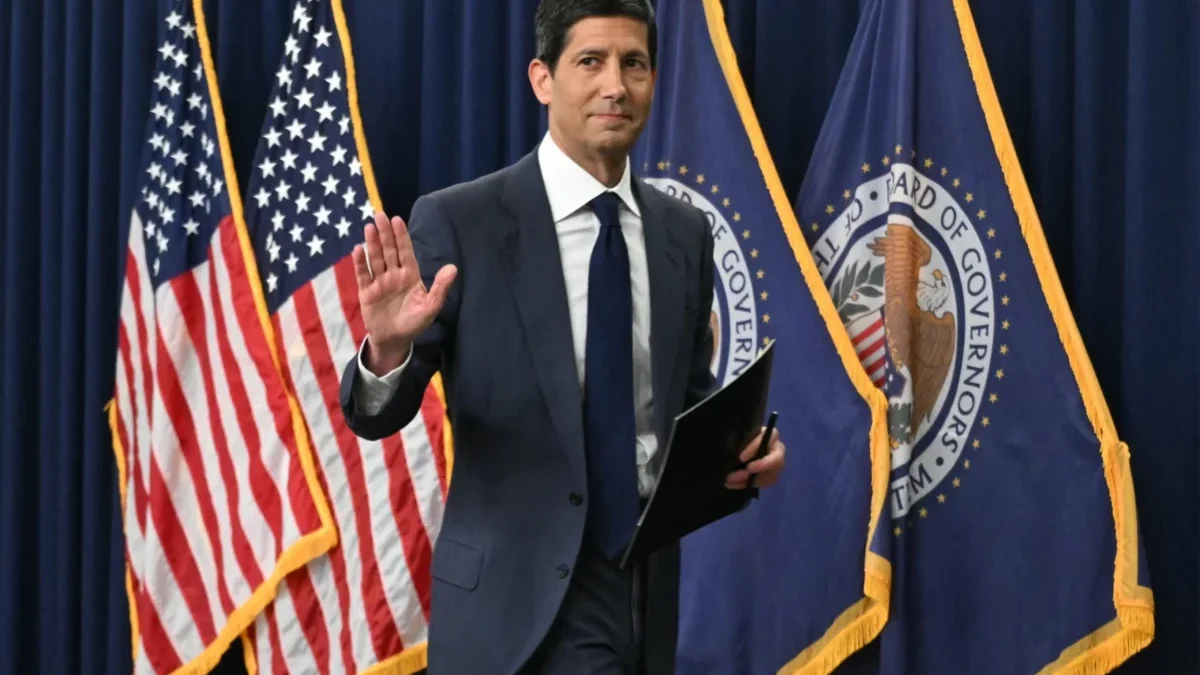
Wall Street is currently gripped by a peculiar analytical exercise: attempting to decipher the ideological leanings of Federal Reserve Chairman Kevin Warsh. Since his appointment by President Donald Trump, Warsh has defied traditional categorization, oscillating between hawkish rhetoric and dovish policy maneuvers in a manner that has left institutional investors searching for a coherent narrative. However, new analysis suggests that characterizing the Fed chair as either a hawk or a dove misses the fundamental shift currently occurring within the central bank—a transition toward de facto yield curve management necessitated by the precarious state of United States public debt.
A Chronology of Mixed Signals
The confusion surrounding Warsh’s policy framework stems from a series of contradictory public stances and actions taken throughout 2026. Initially, market participants anticipated that a Trump-appointed chair would prioritize looser monetary policy to support executive growth agendas. This expectation was briefly reinforced by the administration’s focus on deregulation and industrial expansion.
However, the tone shifted abruptly when Warsh characterized inflation as a "choice," a statement that served as a clarion call for a more restrictive, hawkish approach to monetary tightening. Throughout the summer of 2026, Warsh further muddied the waters by suggesting that the Federal Reserve could afford to be less aggressive, positing that the bond market would naturally perform the heavy lifting of tightening financial conditions. This dovish pivot suggested a reliance on market forces rather than central bank intervention.
The narrative was upended once more during the August Jackson Hole economic symposium. In a landmark speech, Warsh adopted a distinctly hawkish posture, emphasizing the necessity of price stability. This rhetoric culminated in September, when he successfully guided the Federal Open Market Committee (FOMC) toward a unanimous interest rate hike. Yet, the momentum stalled shortly thereafter. By October, despite data indicating that inflationary pressures were reigniting, Warsh refrained from supporting further rate hikes. His refusal to provide a forward-looking rationale for this pause left markets in a state of uncertainty, effectively producing a dovish outcome despite the backdrop of rising prices.
The Thesis of Yield Curve Management
Robin Brooks, a senior fellow at the Brookings Institution, argues that these fluctuations should not be viewed through the lens of traditional monetary theory. Instead, Brooks suggests that the Federal Reserve is increasingly tethered to the constraints of the U.S. Treasury market.
"We are not in hawkish or dovish land," Brooks wrote in a recent assessment. "What is happening is yield curve management, which itself is a function of how precarious the U.S. debt picture is."
This perspective shifts the focus from the Fed’s inflation mandate to the sustainability of the federal government’s balance sheet. With gross U.S. debt exceeding $40 trillion and publicly held debt now accounting for 100% of GDP, the federal government faces a daunting fiscal reality. In fiscal year 2026, which concluded in September, debt-interest costs surpassed $1 trillion, officially eclipsing the nation’s annual defense budget. This milestone underscores the sensitivity of the U.S. fiscal position to even minor fluctuations in Treasury yields.
Institutional Coordination and Market Intervention
The interplay between the Federal Reserve and the Treasury Department suggests a level of coordination that challenges the traditional concept of central bank independence. Analysts have pointed to the surprise announcement by Treasury Secretary Scott Bessent regarding the buyback of long-term bonds as a critical indicator of this strategy. By purchasing these instruments, the Treasury effectively put a floor on bond prices, thereby lowering yields and easing the cost of government borrowing.
Furthermore, Secretary Bessent’s intervention in the currency markets to bolster the yen—without requiring Japan to divest from its substantial holdings of U.S. Treasuries—serves as a tactical move to maintain yield stability. Had Japan been forced to sell its U.S. debt to support the yen, domestic yields would have faced upward pressure, further complicating the fiscal outlook.
Global Pressures and the Safe Haven Dynamic
The efficacy of this yield management strategy is constantly tested by exogenous shocks. The escalation of regional conflicts, specifically the potential for an intensified war in Iran, has acted as a primary driver for oil price volatility and subsequent upward pressure on bond yields. Simultaneously, reports of a robust U.S. economy—often interpreted as a sign of "running hot"—have forced markets to recalibrate their inflation and interest rate expectations higher.
However, the United States has benefited from a series of global economic headwinds that have inadvertently shielded the Treasury market. Persistent political and fiscal instability in France has triggered fears of a broader eurozone debt crisis, prompting international investors to seek shelter in U.S. Treasuries. This "flight to quality" has been a significant factor in keeping the 10-year Treasury yield below the 5% threshold, despite the domestic inflationary environment. Additionally, while the AI boom remains a volatility factor, concerns regarding its long-term productivity sustainability have tempered investor exuberance, preventing yields from spiraling out of control.
The Specter of Fiscal Dominance
The current strategy of managing long-term yields carries significant risks, most notably the transition toward "fiscal dominance." This economic phenomenon occurs when the size of government debt and the burden of servicing that debt become so large that the central bank loses the ability to act independently. In such a scenario, the primary mandate of the Federal Reserve—maintaining stable prices—is subordinated to the government’s need for affordable financing.
The Congressional Budget Office (CBO) has recently modeled scenarios that highlight the fragility of the current trajectory. Under a baseline scenario, interest rates are projected to remain manageable; however, the CBO was asked to stress-test the economy under conditions where yields are 50 to 150 basis points higher than current forecasts.
In the 150-basis-point scenario, the implications are stark: net interest costs would balloon by an additional $4.9 trillion over the next decade, with publicly held debt rising to 133% of GDP by 2036. Bank of America analysts, reviewing these projections, warned that under these adverse conditions, the effective interest rate on government debt would exceed long-term nominal GDP growth by 2028. Such a crossover would indicate the onset of a debt spiral, where the government is forced to issue new debt simply to pay interest on existing obligations, creating a feedback loop that is historically difficult to break.
Conclusion: The Growth Imperative
For the current economic model to remain viable, nominal GDP growth must consistently outpace the interest rates paid on government debt. While nominal growth was reported at a robust 5.6% in the third quarter of 2026—buoyed by artificial intelligence investments and inflationary tailwinds—economists remain skeptical that this pace is sustainable.
As Bank of America noted in their October assessment, "Both forces are likely to prove more temporary than permanent unless AI adoption ultimately delivers substantial productivity gains." Without a fundamental increase in long-term productivity, the reliance on economic growth to offset debt burdens may prove overly optimistic.
Ultimately, the ambiguity surrounding Kevin Warsh’s policy decisions reflects a central bank trapped between two irreconcilable realities: the mandate to curb inflation and the necessity of preventing a fiscal collapse. Whether or not one classifies the current chair as a hawk or a dove, the reality is that the Federal Reserve’s room for maneuver is narrowing. As long as the U.S. remains reliant on the bond market to sustain its fiscal trajectory, the actions of the Federal Reserve will likely continue to be dictated by the health of the Treasury yield curve rather than traditional indicators of economic heat. For investors and policymakers alike, the coming fiscal years will be defined not by the choice between hawks and doves, but by the structural limitations of an indebted sovereign state.