Alphabet investors, long vocal about their apprehension regarding the colossal investments in artificial intelligence and their uncertain returns, can find some solace in the company’s latest financial disclosures. The tech behemoth’s recent earnings report reveals a robust performance, particularly within its cloud division, largely propelled by a significant uptick in enterprise AI adoption. This surge in Google Cloud’s revenue not only surpasses analyst expectations but also provides a powerful counter-narrative to the prevailing anxieties surrounding Alphabet’s ambitious AI buildout.
The striking takeaway from the earnings report is the phenomenal growth of Google Cloud, which has become a primary engine of the company’s financial success. This segment experienced an astonishing 82% year-over-year revenue increase, climbing to $24.8 billion. This figure significantly eclipses the already impressive 63% revenue growth reported in the preceding quarter, which saw Google Cloud reach $20 billion. Wall Street analysts had projected a more modest growth of $22.46 billion for the current quarter, making Alphabet’s actual performance a substantial beat and a testament to the accelerating demand for its cloud-based AI solutions.
Enterprise AI Fuels Cloud Dominance
The company explicitly attributed these substantial cloud gains to the widespread adoption of its enterprise AI solutions and infrastructure. This indicates a strategic alignment between Alphabet’s substantial AI investments and the tangible needs of businesses seeking to leverage artificial intelligence for operational efficiency, innovation, and competitive advantage. Furthermore, Alphabet disclosed a burgeoning backlog of cloud contracting work, valued at an astounding $514 billion. This backlog represents future revenue that has been committed but not yet recognized, signaling a strong pipeline of ongoing and future business that will continue to fuel cloud growth in the coming periods.
The financial performance extends beyond the cloud segment, painting a picture of broad-based strength across Alphabet’s diverse portfolio. The company’s overall profit surged dramatically to $112.1 billion, a stark contrast to the $28.1 billion reported in the same period last year. This monumental increase in profitability underscores the company’s enhanced operational efficiency and the lucrative nature of its expanding business operations. Concurrently, Alphabet’s total revenue experienced a healthy 24% year-over-year increase, reaching $119.8 billion for the past quarter. Within this total, the Google Services segment, which encompasses its core search and advertising businesses, also demonstrated significant momentum, with revenue climbing 15% to $94.5 billion.
Pichai Highlights AI’s Transformative Impact
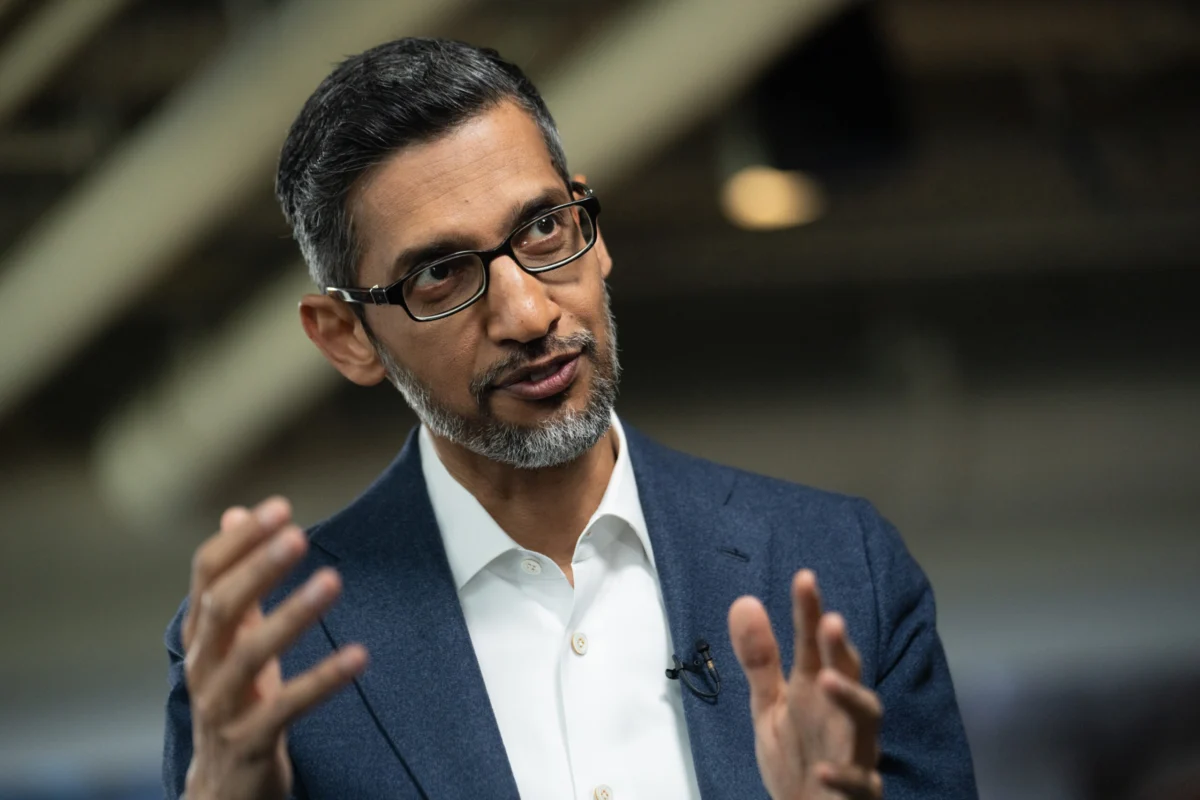
During the earnings call, Google CEO Sundar Pichai articulated a clear vision of AI’s central role in the company’s strategy. "Our AI investments are redefining what’s possible across every part of our business," Pichai stated, emphasizing the broad impact of their artificial intelligence initiatives. He further expressed a sense of palpable momentum, adding, "We have exciting momentum across the board." This optimistic outlook from the company’s leadership directly addresses investor concerns, framing the substantial AI spending not as a risky gamble, but as a strategic imperative driving innovation and future growth.
The widespread adoption of Google’s AI offerings is further evidenced by the impressive user numbers for its AI chatbot, Gemini. The company reported that Gemini now boasts 950 million monthly active users, a significant increase from the 750 million users reported in the fourth quarter of 2025. This rapid user growth suggests that Gemini is resonating with consumers and is becoming an integral part of their digital lives, potentially opening up new avenues for monetization and further integration into Google’s ecosystem.
A Pattern of Sustained Growth
While the current quarter’s performance is exceptionally strong, it’s important to contextualize it within Alphabet’s established track record of consistent growth. This marks the company’s 12th consecutive quarter of double-digit revenue growth, a testament to its resilient business model and its ability to adapt and innovate in a rapidly evolving technological landscape. However, even by this high standard, the recent quarter stands out as a particularly bountiful period, showcasing Alphabet’s ability to not only maintain but accelerate its growth trajectory.
Addressing the Investment Horizon
Despite the overwhelmingly positive financial results, the substantial capital expenditures associated with Alphabet’s AI ambitions remain a focal point for analysts and investors. The company anticipates spending between $180 billion and $190 billion on capital expenditures for the year, which includes investments in data centers, chip procurement, and infrastructure expansion. During the earnings call, several analysts pressed Pichai on the timeline and magnitude of returns from these significant investments.
In response, Pichai expressed confidence in the long-term payoff of these strategic decisions. "I think our compute capacity investments in ’27," he stated, indicating a forward-looking perspective on when the full benefits of these investments will materialize. He further elaborated on the current demand signals: "We are seeing strong demand indicators, including long-term deals." This suggests that businesses are not only exploring AI but are actively committing to long-term partnerships and deployments with Google, underscoring the tangible value they derive from Alphabet’s AI capabilities. Pichai concluded his remarks on this topic with a reassuring statement: "I think, if anything, the dynamics look healthier than where we were about a year ago, so that’s what gives us the confidence to undertake those investments." This sentiment indicates that the current market conditions and customer adoption rates are validating Alphabet’s strategic direction and investment thesis.
Broader Implications and Future Outlook
The robust performance of Google Cloud, driven by enterprise AI adoption, has significant implications for the broader technology sector. It signals a maturing market for AI solutions, where businesses are moving beyond experimentation to large-scale deployment. This trend bodes well for cloud providers like Google, which are essential for the scalable infrastructure required to support these advanced AI workloads. The increasing demand for AI infrastructure also points to a sustained need for specialized hardware, such as advanced semiconductors, potentially benefiting companies within the semiconductor supply chain.
Furthermore, the success of Gemini as a widely adopted AI chatbot highlights the growing integration of AI into everyday consumer and business applications. As AI models become more sophisticated and accessible, their impact on productivity, creativity, and user experience is expected to deepen. Alphabet’s ability to drive such widespread adoption suggests a strong competitive position in the AI race, with the potential to shape the future of human-computer interaction.
The substantial backlog of cloud contracts ($514 billion) provides a significant degree of revenue visibility for Alphabet. This financial buffer allows the company to continue its ambitious AI investments with a greater degree of certainty, knowing that a considerable amount of future revenue is already secured. This can instill confidence in investors and enable more strategic, long-term planning, rather than being solely reactive to market fluctuations.
However, the sheer scale of Alphabet’s AI investment ($180-$190 billion in capital expenditures) remains a critical factor to monitor. While current demand indicators are positive, the company will need to demonstrate continued strong revenue growth and profitability to justify these expenditures over the long term. The successful monetization of AI services, the expansion of its AI-powered product portfolio, and the ongoing efficiency of its cloud infrastructure will be key determinants of its future success.
The company’s historical ability to consistently deliver double-digit revenue growth provides a strong foundation for optimism. The current earnings report, with its impressive cloud performance and surge in profitability, serves as a powerful validation of Alphabet’s AI strategy. As the company continues to navigate the evolving AI landscape, its ability to translate these substantial investments into sustained financial success will be closely watched by investors, competitors, and the wider technology industry. The recent financial results, however, have undoubtedly provided a much-needed reprieve for investors concerned about the burgeoning costs of the AI revolution, demonstrating that the future, while expensive, is also proving to be highly rewarding.