
The landscape of digital publishing and email marketing has undergone a dramatic transformation over the past decade. As independent creators, bloggers, and media entrepreneurs seek the most efficient ways to monetize their audiences and distribute content, email service providers (ESPs) have evolved from simple bulk-mailing tools into sophisticated content management ecosystems. Amid this competitive evolution, two distinct platforms have captured the market’s attention: Beehiiv and ConvertKit. While conventional software reviews typically position these platforms as direct adversaries in a winner-take-all matchup, a closer examination of modern publishing portfolios reveals a more nuanced strategy. Many high-volume creators are discovering that deploying both platforms simultaneously yields optimal results, capitalizing on the distinct architectural strengths of each service.

Historical Context and the Evolution of Email Service Providers
To understand the current market bifurcation between Beehiiv and ConvertKit, one must examine the trajectory of email marketing over the last fifteen years. Early digital publishing relied heavily on legacy ESPs such as AWeber, Mailchimp, and GetResponse. These platforms were largely built for traditional e-commerce and generalized broadcasting, prioritizing visual drag-and-drop templates over dynamic content curation.
As the creator economy expanded, platforms like ConvertKit emerged to fill a vital gap for professional bloggers, course creators, and niche entrepreneurs. Founded in 2013, ConvertKit centered its philosophy around creator-centric marketing, emphasizing robust tagging, advanced visual automations, and sophisticated subscriber segmentation. It became the gold standard for businesses selling high-value digital products, coaching, and specialized services where individual subscriber behavior dictated targeted sales funnels.

Conversely, Beehiiv entered the market much later, founded in 2021 by former Morning Brew executives specifically tailored to the modern media and newsletter boom. Recognizing that many publishers wanted to operate like traditional newsrooms—focusing on high-volume subscriber acquisition, content curation, and native monetization—Beehiiv prioritized a seamless writing interface, integrated recommendation networks, and advanced growth tools. This divergence in origin and philosophy explains why experienced
publishers often find that neither platform serves as a universal panacea.

Comparative Cost Analysis and Financial Scalability
For digital publishers managing thousands of subscribers, the financial implications of an ESP choice are paramount. Pricing models across the industry typically scale in direct proportion to active subscriber counts, but the rate of cost acceleration varies significantly between providers.
Industry data highlights a stark contrast in pricing structures for medium-to-large publishing portfolios. For instance, managing an audience of approximately 47,000 subscribers across multiple publications on Beehiiv typically incurs a flat-rate tier of around $99 per month, supporting scaling capacities up to much higher thresholds without prohibitive cost spikes. In contrast, managing a smaller database of roughly 19,000 subscribers on ConvertKit under advanced automation tiers can easily exceed $279 per month due to feature-gated pricing and contact-based billing increments.

This financial divergence introduces a critical strategic consideration regarding subscriber value. Publications operating within broad hobbyist, lifestyle, or consumer (B2C) niches often generate a lower revenue yield per subscriber. For these properties, deploying an expensive, enterprise-grade automation platform can quickly erode profit margins. Conversely, high-value B2B, finance, or specialized education niches can easily absorb higher software overhead costs because individual subscriber conversion values are substantially larger.
Editorial Workflow, Writing Interfaces, and Curation Capabilities
The daily user experience of drafting and formatting newsletters heavily influences publishing efficiency. A comparison of the native editors reveals divergent priorities between the two platforms.

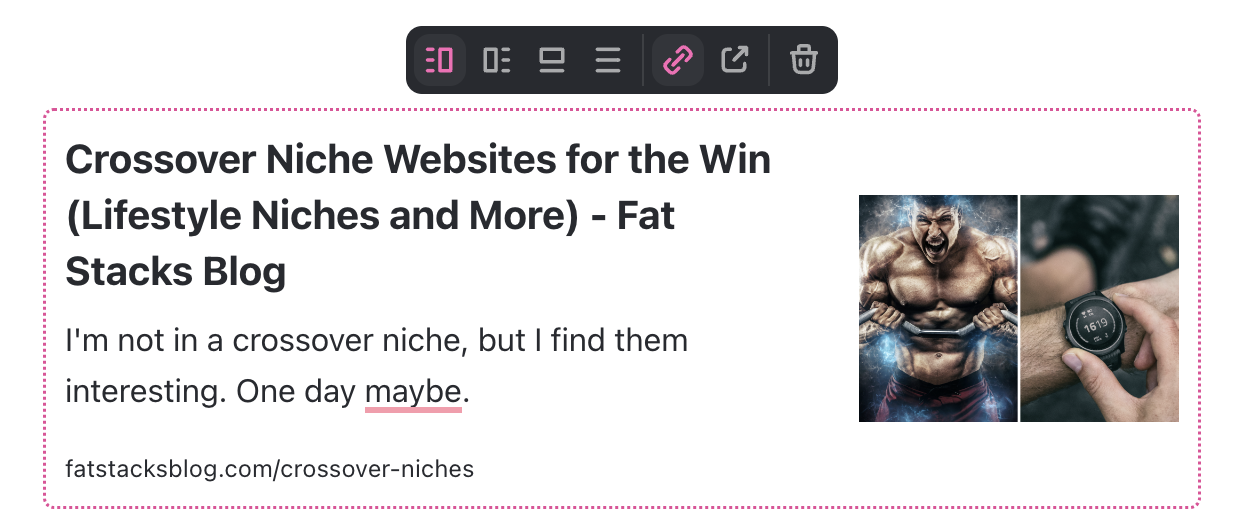
Beehiiv’s writing environment is widely regarded as superior for editorial content, particularly for curated newsletters that aggregate third-party articles and media from across the web. A standout feature within the Beehiiv editor is its automated URL embed functionality. By simply pasting a link, the editor automatically generates a clean, formatted preview card containing the destination article’s title, description, and featured image, with customizable layout options. This capability dramatically accelerates production timelines for publishers who rely on content curation.
ConvertKit, while reliable for straightforward text-based broadcasting, has historically lagged in aesthetic flexibility and native formatting options within its primary editor. Furthermore, user feedback frequently highlights operational frustrations, such as the historical absence of a reliable "undo" command within certain interface iterations. While ConvertKit excels at clean, minimalist text communication that mimics personal emails, it requires significantly more manual formatting to achieve the polished, media-rich layouts common in modern digital publications.

Automation, Tagging, and Third-Party Integrations
When evaluating backend infrastructure, ConvertKit maintains a decisive advantage in marketing automation, subscriber segmentation, and behavioral triggers. Its visual automation builder allows publishers to construct intricate, multi-branched funnels based on link clicks, tag applications, and custom field data.
This robust framework is essential for creators running sophisticated sales funnels, such as integrated online courses or cohort-based programs. For example, publishers utilizing external learning management systems like Teachable can leverage ConvertKit’s direct integrations to instantly apply specific tags to course purchasers, triggering targeted onboarding sequences and excluding them from promotional broadcasts for items they already own.

While Beehiiv has introduced basic sequencing capabilities, its ecosystem relies more heavily on native growth features than on deep third-party integrations. Publishers requiring complex, multi-platform software stacks often find Beehiiv’s direct integration library limited compared to ConvertKit’s extensive directory, frequently forcing reliance on middleware tools like Zapier or Integrately, which introduce additional monthly expenses and potential points of technical failure.
Monetization and Revenue Opportunities
Both platforms have recognized that helping creators generate revenue is critical to platform retention, leading to the development of built-in monetization mechanisms that extend beyond traditional affiliate marketing and direct sponsorships.

Beehiiv has aggressively developed native monetization features, most notably its internal Ad Network and Boosts program. The Beehiiv Ad Network connects newsletter publishers with relevant brand sponsors, facilitating cost-per-click (CPC) or flat-fee advertising placements directly within the editorial layout. Additionally, the Boosts feature allows publishers to earn revenue by recommending other newsletters to their incoming subscribers on a pay-per-acquisition basis.
ConvertKit approaches monetization through a combination of built-in digital product landing pages and cart functionality, allowing creators to sell e-books, guides, or services without requiring external e-commerce software. For broader newsletter cross-promotion, ConvertKit integrates seamlessly with third-party growth networks like SparkLoop, enabling publishers to monetize subscriber acquisition through reciprocal recommendation loops. However, financial yields from these external programs vary wildly depending on audience demographics, often proving more lucrative in business and finance niches than in broad consumer categories.
Growth Infrastructure and Subscriber Acquisition Tools
Building and scaling an audience requires specialized acquisition infrastructure. Here, the two platforms diverge significantly in their out-of-the-box offerings.
Beehiiv provides a comprehensive suite of native growth tools designed to accelerate audience expansion without additional software overhead. These include:

- Referral Programs: Built-in reward mechanisms that incentivize existing subscribers to share the publication with peers.
- Recommendations: An internal network allowing publishers to form reciprocal recommendation partnerships with other newsletter creators.
- Magic Links: Unique tracking links that enable a subscriber on one publication to opt into a sister publication with a single click.
- Boosts: A direct marketplace for purchasing verified subscribers from other network publishers.
ConvertKit achieves similar functionality primarily through its Creator Network, which facilitates peer-to-peer subscriber recommendations at the point of opt-in via a clean post-subscription modal. However, accessing the advanced growth mechanics available natively on Beehiiv often requires ConvertKit users to integrate and pay for external partner services, reinforcing the platform’s modular ecosystem approach.
Strategic Implications for Modern Publishers
The coexistence of Beehiiv and ConvertKit within professional publishing portfolios underscores a fundamental shift in digital media strategy: software selection should be dictated by business model rather than brand loyalty.

Publishers operating high-volume, low-margin informational or lifestyle newsletters benefit immensely from Beehiiv’s cost-effective scaling, superior editorial formatting, and native growth loops. Conversely, creators managing high-ticket sales funnels, digital products, and complex customer journeys rely on ConvertKit’s superior automation architecture and deep third-party integrations.
Ultimately, market analysis suggests that as the digital publishing sector matures, creators will increasingly adopt specialized toolsets tailored to specific segments of their operations. Rather than seeking a singular software solution to manage all publishing needs, successful media entrepreneurs are evaluating platforms based on their functional ROI, ensuring that operational overhead aligns precisely with revenue generation potential.