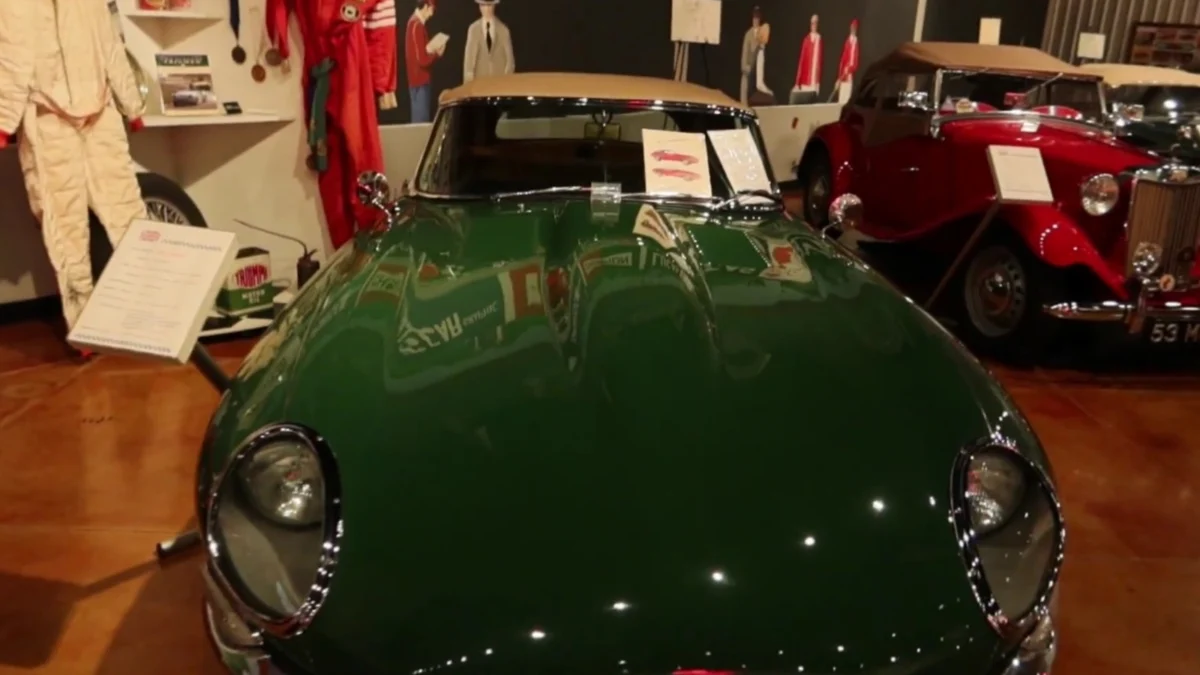
For twenty-four years, Snook’s Dream Cars in Bowling Green, Ohio, has served as a sanctuary for automotive history, preserving a collection that spans four decades of mechanical evolution. However, the museum’s proprietor, Jeff Snook, has announced that the facility will officially close its doors in October 2026. This decision, while deeply personal, highlights a mounting crisis within the automotive preservation sector: the vanishing population of master mechanics capable of maintaining vintage, analog-era vehicles. As the workforce ages and the gap between modern computerized automotive engineering and traditional mechanical repair widens, institutions like the Snook museum are finding it increasingly difficult to keep their collections in running order.
The closure marks the end of a legacy that began long before the museum’s doors first opened in 2002. The collection, which includes iconic marques ranging from British Triumphs and Japanese Datsuns to American stalwarts like Ford and Packard, was the culmination of a lifelong passion shared by Jeff Snook and his father, Bill. The duo’s journey into the world of automotive restoration began over six decades ago with the collaborative revival of a Model A Ford, a project that instilled in them a commitment to keeping history on the road rather than merely on display.
A Living Museum Defined by Functionality
Unlike many institutions that prioritize static preservation, Snook’s Dream Cars was operated as a "living museum." Jeff Snook consistently maintained that the value of an automobile lies in its performance. "I drive one or another of them around town on a regular basis, weather permitting," Snook noted on the museum’s official website. This philosophy required the collection to be kept in a state of mechanical readiness, a feat that demanded constant maintenance and a deep, intuitive understanding of outdated technologies such as carburetors, manual chokes, and mechanical ignition systems.
For years, this standard was upheld by Terry Stetler, a highly skilled mechanic whose expertise became the bedrock of the museum’s operational model. Stetler’s role was not merely that of a technician but that of a curator of mechanical integrity. His recent retirement created a void that Snook has been unable to fill. In his statements to the Toledo Blade, Snook candidly identified the core issue: the current generation of automotive professionals is overwhelmingly trained in electronic diagnostics, software calibration, and modular component replacement. The specialized, tactile knowledge required to diagnose a stalling 1950s engine or tune a multi-carbureted European sports car is becoming a rare commodity.
The Broader Crisis: A Shortage of Specialized Talent
The predicament facing Snook’s Dream Cars is a microcosm of a global trend in the heritage automotive industry. As cars have become increasingly software-dependent, the curricula in vocational and technical schools have shifted accordingly. This has left a significant skills gap for owners and museums responsible for pre-1990s vehicles.
In February 2026, Emily-Sianne Cox, manager at the U.K.-based restoration firm Clayton Classics, highlighted this systemic issue in an interview with The Financial Times. Cox noted that while the demand for classic car restoration and maintenance is at an all-time high, the supply of qualified specialists is dwindling. "There is a large demand for certain types of classic car work, but not enough specialists in the industry to handle the work," Cox explained.
This scarcity creates a "gatekeeper" effect. Without a trusted, highly skilled professional to oversee the complex maintenance of such diverse collections, the risks of mechanical failure—or worse, improper repair that damages the historical value of the vehicle—become too high for private owners and museum curators to justify. For Snook, the inability to find a successor for Stetler meant that the very thing that made his museum unique—its functionality—was being compromised. Rather than transition into a static museum where the cars would become mere sculptures, Snook elected to cease operations.
A Legacy Offered to the Public
In an effort to ensure the collection remains in the hands of enthusiasts who value the history of these machines, the museum has partnered with Hagerty to auction off its inventory. This process, currently underway, serves as a final chapter for the collection. Among the notable pieces being brought to market are a 1971 Datsun 240Z 5-Speed, a 1957 Chevrolet Bel Air Convertible, and a variety of smaller historical curiosities, including a rare Kaiser Darrin Roadster Pedal Car.
The bidding activity reflects the sustained, and even growing, interest in classic automotive culture. As of the latest reporting, the 1957 Chevrolet Bel Air was attracting significant attention with bids reaching $48,000, while the Datsun 240Z remained a strong contender for collectors at $30,000. These auctions are not merely financial transactions; they represent the dispersal of a carefully curated historical timeline into the hands of a new generation of caretakers.
Historical Chronology: Two Decades of Preservation
The trajectory of Snook’s Dream Cars offers a clear view of the evolution of the classic car hobby in the 21st century:
- 1960s: Jeff and Bill Snook begin their collaborative journey, restoring a Model A Ford.
- 2002: The museum officially opens in Bowling Green, Ohio, featuring immersive, era-specific displays, including a replica 1960s racetrack.
- 2002–2025: The collection grows, maintained by Terry Stetler, who ensures all vehicles remain roadworthy.
- 2025: Terry Stetler announces his retirement, triggering a search for a replacement technician.
- 2026 (February): Industry experts confirm a widespread shortage of vintage mechanics.
- 2026 (September): Jeff Snook confirms the permanent closure of the museum, scheduled for October 2026, citing the lack of qualified professional support.
- 2026 (Late): The Hagerty auction series commences to ensure the preservation of the vehicles under new ownership.
Implications for the Future of Automotive Museums
The closure of Snook’s Dream Cars serves as a bellwether for the future of small-to-medium-sized automotive museums. As the "living museum" model faces the headwinds of a changing labor market, institutions may be forced to choose between two paths: either pivoting to purely static, non-running exhibits—which risks alienating purist enthusiasts—or investing heavily in the creation of in-house apprenticeship programs to train the next generation of analog mechanics.
However, such programs are prohibitively expensive for many private institutions. The loss of the Snook collection’s functional status is a poignant reminder that history is not just about the objects themselves, but the knowledge required to interact with them. When the skill set to operate a machine dies, the machine effectively loses its primary purpose.
As October 2026 approaches, the automotive community will look toward the Hagerty auction as a moment of transition. While the museum building in Bowling Green will eventually close its doors, the dispersal of the collection ensures that these vehicles will not simply be consigned to a warehouse. Instead, they will continue to be driven, maintained, and admired by private collectors.
The story of Snook’s Dream Cars is, ultimately, a story of the cyclical nature of technology. Just as the internal combustion engine eventually superseded the horse and carriage, the modern digital vehicle is superseding the analog car. The challenge for the coming decade will be whether the cultural and historical value of these machines can be preserved in a world that is rapidly moving toward a future where the mechanical "stuff" of the past is increasingly misunderstood. Jeff Snook’s decision to retire serves as a cautionary tale: the preservation of history requires more than just money and a garage; it requires the continuous transfer of specialized knowledge from one generation to the next. Without that bridge, even the most vibrant "living" histories must eventually fade into memory.