The intersection of public relations, institutional governance, and consumer behavior has entered a volatile phase, underscored by a series of high-profile legal battles, corporate reckonings, and macroeconomic pressures. This week’s communications landscape is defined by three major developments: the ongoing constitutional clashes over White House press access, DoorDash’s record-breaking $131.5 million labor settlement marked by an uncharacteristically candid admission of fault, and fresh consumer data revealing how holiday shoppers are recalibrating their spending habits against a backdrop of rising prices and tariff concerns.
For public relations professionals, corporate executives, and brand strategists, these events serve as high-stakes case studies in credibility management, crisis communication, and the shifting dynamics of modern media relations. As institutions face mounting scrutiny from both regulators and the public, the margin for error in strategic communications has narrowed significantly.
Constitutional Flashpoints: The White House Press Access Battles
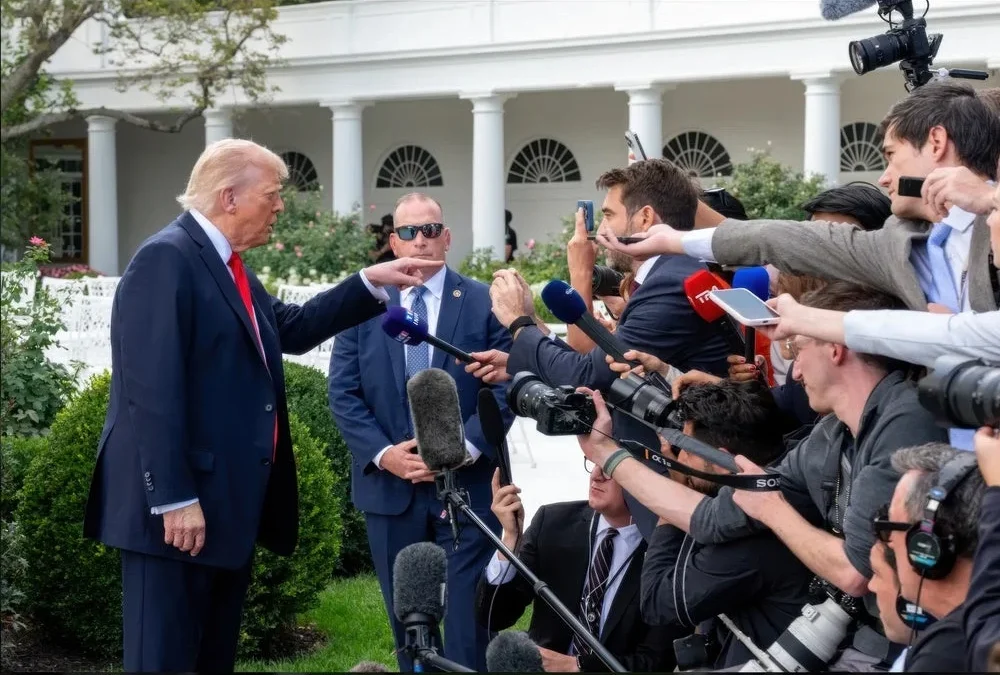
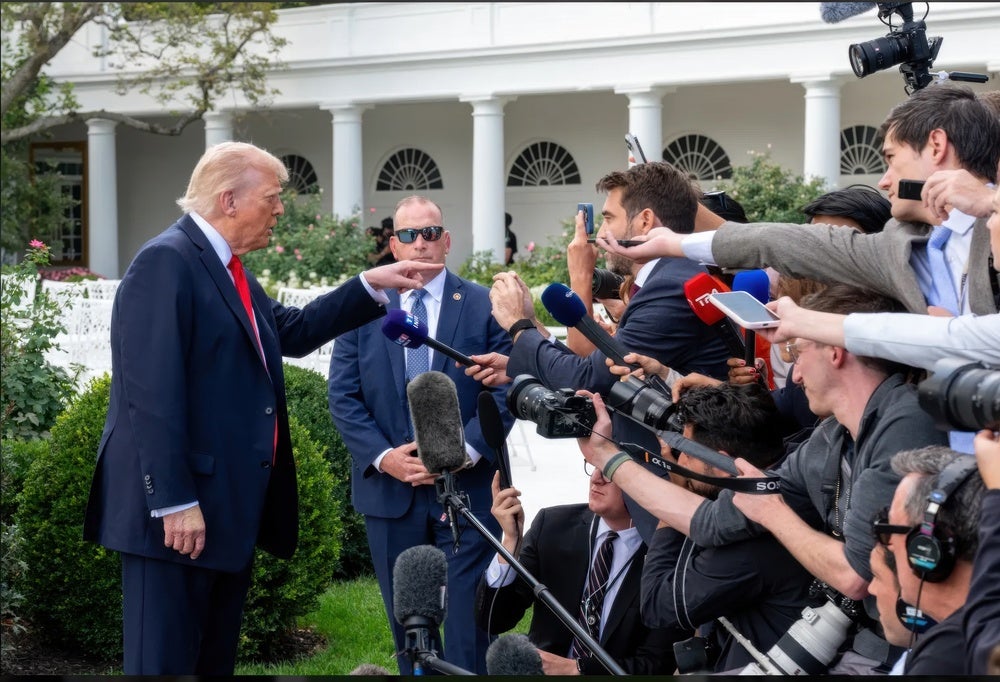
The fragility of institutional media credentialing came under intense judicial scrutiny following a series of unprecedented bans implemented by the executive branch. The controversy erupted on September 18, when the administration barred journalists from CNN, MS NOW, and Politico from accessing White House grounds and press briefings. Administration officials justified the exclusion by citing alleged violations of professional standards and decorum, though critics and legal experts immediately pointed to the retaliatory nature of the decision.
The affected media outlets filed immediate legal challenges, arguing that the blanket bans violated their First and Fifth Amendment rights. The case was assigned to U.S. District Judge Timothy Kelly, a federal judge appointed during the Trump administration. In an early morning ruling on September 24, Judge Kelly issued a preliminary injunction ordering the White House to temporarily restore press access to the banned outlets. The court found that the revocation of physical press passes without prior notice or a formal opportunity to be heard constituted a clear violation of due process.
However, the judicial directive was met with immediate operational friction. On the morning of September 24, reporters from CNN, MS NOW, and Politico arrived at the White House complex only to be turned away by security personnel. In several instances, hard press passes were physically confiscated by the Secret Service, highlighting a glaring disconnect between the federal judiciary’s orders and the executive branch’s enforcement mechanisms.
Prompted by this non-compliance, the media organizations filed an emergency request for an immediate clarification and enforcement hearing. Judge Kelly ordered the administration to respond by 12:30 p.m. that same day. By midday, compliance was visibly re-established: CNN’s Betsy Klein broadcasted live from the White House lawn, MS NOW’s Laura Barrón-López gained entry following initial resistance, and Politico confirmed successful re-entry for its reporting team. The court-ordered restoration of access is set to remain in place for a 14-day window while litigation proceeds.
This incident is part of a broader, systemic pattern of friction between the current administration and the journalistic pool. Earlier in 2026, the White House barred the Associated Press from covering official events after the news agency declined to adopt administration-mandated terminology in its reporting, specifically regarding geographic and geopolitical designations. That ban was similarly overturned by a federal court on First Amendment grounds. Concurrently, the Pentagon faced legal challenges over allegations that military public affairs offices systematically targeted and forced out independent journalists deemed unfavorable to defense leadership.
Communication Takeaways and Industry Analysis
The implications of the White House press access battles extend far beyond political journalism, offering critical lessons for any corporate or institutional entity that manages media credentials, corporate events, or stakeholder access.
The core legal argument articulated by Judge Kelly—that an organization cannot arbitrarily and selectively revoke established access privileges without due process—serves as a cautionary framework for private corporations. When a brand establishes a public forum or an accredited press ecosystem, sudden exclusionary practices invite severe legal and reputational vulnerabilities.
Furthermore, the morning hours of non-compliance highlighted a classic crisis communication failure: when the observable gap between institutional policy and institutional reality becomes visibly public in real-time, credibility damage compounds exponentially. Observers note that attempting to bypass or delay compliance with binding legal orders projects weakness and bad faith.
Industry experts emphasize that shutting out critical media inquiries is rarely an effective long-term strategy. Parry Headrick, founder and chief evangelist at Crackle, notes that corporate entities should almost never advise clients to stonewall the press, barring the highly regulated quiet periods immediately preceding a public offering.
"Shutting out the press gives the impression, whether true or not, that there’s something to hide," Headrick explains. "That does two things: it erodes trust and inspires intrepid reporters to dig even harder to gather the facts. As always, sunlight is the best disinfectant."
DoorDash’s $131.5 Million Settlement and the Power of Radical Accountability
While political institutions struggled with transparency, the corporate sector provided a fascinating study in crisis management through a major legal settlement involving food delivery giant DoorDash. New York City Mayor Zohran Mamdani announced a landmark $131.5 million settlement with the company, resolving a high-stakes dispute over non-compliance with the city’s municipal minimum pay regulations for delivery workers, which were enacted in 2023.
The agreement directly impacts approximately 264,000 independent contractors—commonly referred to as "Dashers"—who will receive retroactive financial compensation for underpayment and delayed wage disbursements over the operational lifecycle of the city ordinance.
While the financial magnitude of the settlement is historic, the communications strategy deployed by DoorDash has attracted intense scrutiny from public relations analysts. Eschewing the standard corporate playbook of legalistic, defensive PR statements, DoorDash published a dedicated post on its corporate newsroom site titled "Making It Right: Our Settlement with the City of New York."
Notably, the company’s statement opened with a blunt, three-word admission rarely seen in corporate crisis communications: "We screwed up."
The statement departed from corporate obfuscation by detailing the exact mechanics of the operational failures that led to the underpayments. DoorDash explicitly cited technical software bugs, inaccurate geographical boundary mapping for deliveries, and banking data processing errors. Furthermore, the communication quantified the impact for stakeholders: it noted that the average underpayment was $7.70, with 65% of affected workers shorted by $1 or less. The company also addressed the contentious $83 million dispute regarding on-call pay methodology, explaining that while it believed its initial calculation model was legally sound, it chose to settle rather than subject workers and the platform to years of protracted litigation.
Evaluating Corporate Transparency
DoorDash’s communication approach stands in stark contrast to the vague, defensive language typically accompanying multi-million-dollar regulatory settlements. By naming the error, quantifying the human and financial impact, and outlining a concrete remediation plan, the company aligned with contemporary consumer expectations regarding corporate accountability.
This approach reflects broader shifts in public trust research. According to recent credibility studies conducted by the Resonant Advisory Group, approximately 79% of consumers report that a corporation earns significantly more credibility and long-term goodwill when it proactively discloses adverse news about itself rather than waiting for regulatory exposure or journalistic investigation.
However, communication professionals emphasize that a well-crafted apology is merely the opening chapter of a remediation strategy, not the conclusion. Rebuilding institutional trust with a gig economy workforce requires sustained, verifiable operational changes rather than transient messaging campaigns.
Michelle Bonner, vice president of public relations at Adams & Knight, argues that true corporate rehabilitation must prioritize internal and operational audiences over external consumer PR.
"In this case, the first audience [to rebuild trust with] isn’t the customer," Bonner says. "It’s the workers. Be clear about what changed, put real accountability behind it and then prove over time that this wasn’t just a bad chapter you’re trying to message your way past."
Bonner cautions that corporate leadership frequently misdiagnoses reputation crises as mere communication challenges, failing to address the underlying operational behaviors that triggered public backlash in the first place.
"Sometimes the communications are fine," she notes. "The business’s behavior is the problem. And no brand gets to declare, ‘Trust us again.’ People decide that for you."
Despite the severity of the legal penalty and the friction with its labor force, industry analysts predict that consumer demand for app-based delivery services will remain largely insulated due to the entrenched nature of consumer convenience. However, they warn that the erosion of goodwill diminishes a brand’s institutional capital, leaving it more vulnerable to public backlash during future controversies.
Holiday Shopping Shift: Consumer Retrenchment and Social Commerce
As the corporate and political worlds navigate crisis management, retail brands are bracing for a radically altered holiday shopping season. Economic pressures, persistent inflationary concerns, and the looming prospect of international trade tariffs are fundamentally reshaping consumer sentiment and purchasing behaviors.
According to comprehensive data from Sprout Social’s Q3 Pulse Survey, over half of surveyed holiday shoppers (56%) intend to scale back their overall holiday expenditures this year. Macroeconomic anxiety is acutely focused on trade policy: nearly 70% of consumers express direct concern over tariff-induced price hikes. In response, 36% of shoppers plan to initiate their holiday purchasing cycles significantly earlier than in previous years to hedge against anticipated cost increases.
This behavioral shift has compressed the traditional holiday retail calendar. Brands are facing an elongated shopping season that effectively begins in late summer and early autumn, intensifying the competition for consumer attention at a time when shoppers are inherently more cautious.
The Dominance of Social Media in the Retail Journey
The Sprout Social survey highlights that social media platforms are no longer merely top-of-funnel awareness drivers; they now anchor the entire consumer shopping journey. Key insights from the data indicate that modern shoppers increasingly rely on social channels for product discovery, peer reviews, direct customer service interactions, and final checkout transactions.
For brand communicators and marketing executives, this transition mandates a strategic pivot away from traditional, broadcast-style advertising toward utility-driven digital engagement. Analysts suggest that campaigns prioritizing transparent pricing, creator-led product demonstrations, and responsive social care mechanisms will significantly outperform conventional promotional strategies in a tighter economic climate.
Scott Morris, chief marketing officer at Sprout Social, emphasizes the necessity of cross-channel alignment as brands finalize their fourth-quarter strategies.
"Because of a tighter economic climate, every purchase carries more weight, making it critical for brands to refine their messaging to ensure it is thoughtful and grounded," Morris states.
Morris advises brands to empower their influencer and creator partners to prioritize educational content and product utility over pure lifestyle promotion, while simultaneously bolstering customer service infrastructure to guarantee rapid response times across social platforms.
"Our data shows shoppers are using social media for their entire holiday journey, and delivering genuine utility across that total presence helps brands maximize their ROI while building lasting trust," he concludes.
Conclusion
The convergence of these events—judicial intervention in institutional press credentialing, DoorDash’s radical accountability in crisis messaging, and consumer retrenchment paired with social commerce adoption—illustrates the evolving demands placed on modern organizations. Whether managing freedom of the press, addressing multi-million-dollar labor disputes, or adapting to cautious holiday shoppers, transparency, operational integrity, and respect for due process remain the ultimate arbiters of organizational survival and reputation.