Orcas Shatter Sunfish with Explosive Ramming Behavior, Hinting at Evolved Hunting and Social Dynamics

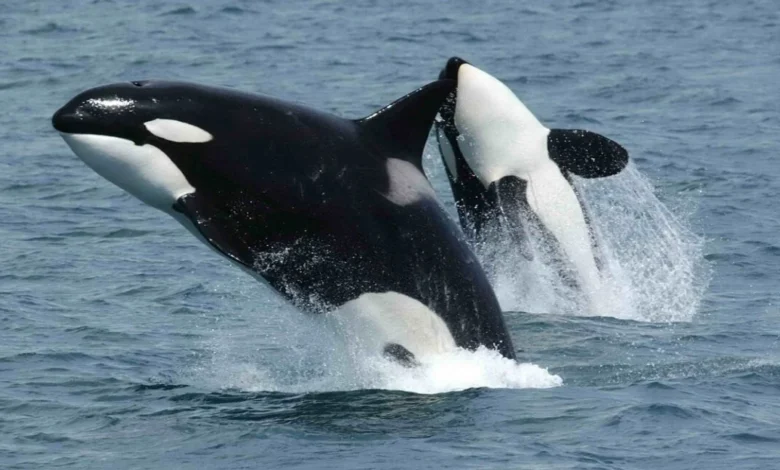
Numerous accounts in recent years have documented orcas engaging in unusual interactions with boats, ranging from playful nudges to deliberate ramming that has, in some instances, led to vessels sinking. Scientists have widely theorized that these behaviors might stem from culturally learned patterns passed down through generations within orca pods. Now, striking new evidence has emerged from the Gulf of California, where orcas were filmed employing a remarkably forceful and collaborative hunting technique: ramming sunfish with such intensity that the prey’s carcasses exploded into fragments. This behavior, detailed in a recent publication in the journal Frontiers in Ethology, goes beyond previously observed methods of flesh removal and suggests a potentially novel evolution in orca hunting strategies and social dynamics.
The groundbreaking observations, captured on video by a tourism operator, showcase a coordinated effort by a pod of orcas to dismember a sunfish. Co-author Kathryn Ayres of Beneath The Waves, a non-profit organization dedicated to ocean health, suggested potential motivations for this behavior. "We think this may help younger orcas feed more easily, or it could also just be for fun," Ayres stated. "Orcas are known for playing with their food." This perspective aligns with the complex social lives of orcas, which are highly intelligent and capable of intricate cooperative behaviors.
Orcas are renowned for their sophisticated hunting strategies, which often involve teamwork and a diverse array of tactics to subdue and consume prey. These methods can include striking, biting, or even creating waves to dislodge prey. While the primary goal is often sustenance, the researchers emphasize that these actions can also be interpreted as social interactions, play, or crucial practice for younger individuals, facilitating social learning. Prior documented instances of cooperative hunting include orcas ramming whale sharks while another member of the pod stabilized the prey, herding mobile rays, strategically blocking escape routes for white sharks, and deliberately generating waves to knock penguins off ice floes.
The traditional orca hunting method for species like the sunfish typically involves a three-stage process. Initially, an orca will target the sunfish’s pectoral fins, a critical area for maneuverability. This is followed by a powerful slash across the body to remove the viscera, the internal organs. Finally, the orca would employ its beak to access and consume the remaining flesh. The newly documented "ram-to-fragment" technique appears to represent a more advanced and destructive iteration of this fundamental strategy, enabling a more efficient and perhaps even playful method of prey dismemberment.
A Timeline of Discovery and Observation
The initial filming of this remarkable behavior occurred in July 2024 off the coast of San Jose del Cabo, Mexico. The footage emerged from a local tourism operator who was documenting marine life. The sequence of events began with three adult female orcas, one male, and one juvenile observed successfully hunting and consuming a spine-tail devil ray. Shortly after this initial feeding, the same operator captured a second instance involving a sunfish carcass.
One of the adult female orcas was seen holding a sunfish carcass in her mouth. The fish clearly bore a significant lateral wound, indicating that its viscera had likely already been removed, consistent with prior orca feeding behaviors. In a striking display of coordination, the male orca then initiated a powerful charge directly at the carcass. The female orca released the sunfish just moments before the impact, allowing the male to strike it with full force. The collision was audibly captured, with the sunfish carcass visibly fragmenting upon impact, scattering pieces of flesh into the surrounding water. The juvenile orca was then observed actively feeding on these smaller fragments, while the adult orcas continued to consume the larger portions of the now-split-open body.
This specific incident provided the empirical data that formed the basis of the Frontiers in Ethology paper. The detailed video evidence allowed researchers to meticulously analyze the sequence of actions, the force involved, and the subsequent feeding patterns of the pod members. The timing of the observation, occurring in July 2024, places it within a period of heightened scientific interest in orca behavior, following numerous reports of boat-ramming incidents in preceding years.
Broader Context: The Enigma of Orca Behavior
The phenomenon of orcas ramming boats, which gained significant public attention starting in 2020, has been a subject of intense scientific scrutiny. While the initial incidents were often attributed to curiosity or playful interaction, the increasing frequency and apparent deliberateness of these encounters have led to more complex theories. One prominent hypothesis suggests that these behaviors are learned and transmitted culturally, akin to traditions in human societies. The boat-ramming events, particularly involving certain pods off the Iberian Peninsula, have been observed to be concentrated within specific family groups, further supporting the idea of cultural transmission.
The newly documented sunfish-ramming behavior offers a compelling parallel to these boat-ramming observations. Both instances suggest a capacity for learned, coordinated actions within orca pods that extend beyond immediate survival needs. The "ram-to-fragment" technique, in particular, points to an adaptive innovation in hunting that could enhance efficiency or provide a novel avenue for social engagement.
Supporting Data and Scientific Analysis
The Frontiers in Ethology paper, published on July 23, 2026, provides a detailed ethological analysis of the observed behavior. The authors, including Kathryn Ayres, emphasize the unique nature of the forceful dismemberment. Unlike previous documented instances of orcas using their mouths or bodies to tear flesh from prey, this involves a direct, high-impact collision designed to break apart the entire carcass.
Sunfish, particularly the Ocean Sunfish (Mola mola), are the heaviest known bony fish in the world, with adult specimens frequently exceeding 1,000 kilograms (2,200 pounds) and reaching lengths of over 3 meters (10 feet). Their immense size and robust bodies would typically present a significant challenge for predators. The ability of a coordinated group of orcas to effectively shatter such a large and tough prey item through ramming suggests a remarkable application of combined strength and precision.
The paper highlights that while orcas are known to kill and consume a wide variety of prey, including large marine mammals, the "ram-to-fragment" technique in this context is novel. It implies a level of force and destructive capability not previously cataloged for this specific type of prey interaction. The fact that the juvenile orca actively consumed the fragments further supports the hypothesis that this method could be a way to make prey more accessible for younger, less experienced hunters.
Potential Implications and Future Research
The implications of this discovery are far-reaching, offering new insights into the cognitive abilities and social complexity of orcas.
- Evolution of Hunting Strategies: The "ram-to-fragment" behavior could represent a significant evolutionary adaptation in hunting tactics, allowing orcas to efficiently exploit a challenging prey source. This may lead to broader dietary shifts or increased success rates in specific environments.
- Social Learning and Cultural Transmission: The collaborative nature of the observed ramming further strengthens the argument for sophisticated social learning and cultural transmission within orca pods. If this behavior is learned, it can be passed down through generations, potentially leading to regional variations in hunting techniques.
- Understanding Orca Intelligence: The ability to coordinate such a forceful and destructive maneuver suggests a high degree of cognitive function, including planning, communication, and shared understanding of objectives within the pod.
- Conservation and Management: A deeper understanding of orca hunting behaviors can inform conservation efforts. For instance, identifying key feeding grounds and the specific techniques used there can help protect critical habitats and prey populations.
The research team plans to continue monitoring orca populations in the Gulf of California and other regions to ascertain the prevalence of this behavior. Future studies may focus on identifying specific vocalizations or body language associated with the ramming, further elucidating the communication and coordination involved. Comparative analysis with boat-ramming incidents will also be crucial to understand the continuum of learned behaviors in these highly intelligent marine mammals.
The discovery underscores the ongoing mysteries of the ocean and the remarkable adaptability and intelligence of its inhabitants. As scientists continue to unravel the complexities of orca behavior, each new observation provides a vital piece in the puzzle of these apex predators’ lives. The image of a sunfish exploding under the coordinated force of an orca pod serves as a powerful reminder of the dynamic and often surprising nature of the natural world.