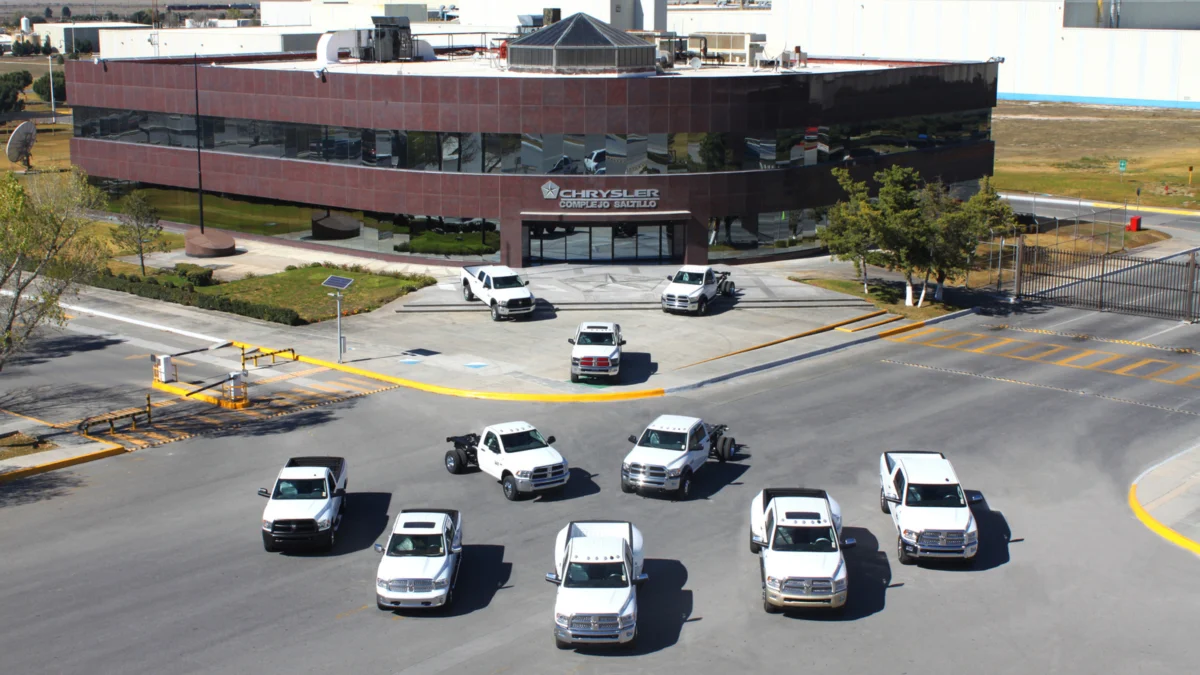
Stellantis is currently engaged in high-level internal and supplier-facing discussions to evaluate the economic feasibility of relocating the production of its Ram heavy-duty pickup truck lineup from its long-standing manufacturing hub in Saltillo, Mexico, to its historic Warren, Michigan, assembly facility. This strategic reassessment comes as automakers across North America grapple with the imposition of new federal tariffs on Mexican-made vehicles, a policy environment that has fundamentally altered the cost-benefit analysis for multinational manufacturers operating under the United States-Mexico-Canada Agreement (USMCA) framework.
The Saltillo facility has served as the bedrock of Ram’s heavy-duty manufacturing since 2009, producing the 2500, 3500, 4500, and 5500 series trucks. However, the current political and economic climate, characterized by aggressive trade policies and volatile supply chain costs, has forced Stellantis leadership to determine whether the logistical and tariff-related penalties of Mexican production have eclipsed the traditional labor cost advantages that originally drew the company to the region.
A Historical Perspective: The Saltillo and Warren Footprints
The Saltillo plant represents a significant industrial investment for Stellantis, spanning over 212,850 square feet. Since transitioning to heavy-duty truck production fifteen years ago, the plant has become a specialized center of excellence for the brand’s most profitable and complex commercial vehicles. The site has historically benefited from proximity to a dense network of Tier 1 and Tier 2 automotive suppliers that have grown alongside the Mexican automotive corridor.
Conversely, the Warren Truck Assembly plant in Michigan is a historic bastion of American automotive manufacturing, with a lineage dating back to 1938. Spanning approximately 3.31 million square feet, the Warren facility is vastly larger than its Saltillo counterpart. Currently dedicated to the production of the premium Jeep Grand Wagoneer, the plant possesses significant underutilized capacity that could theoretically accommodate a shift in production. The logistical advantage of being centered in the heart of the American automotive industry—with direct access to engineering headquarters and domestic logistics infrastructure—presents a compelling argument for reshoring, provided the capital expenditure required for a retooling of this magnitude can be justified.
The Economics of Tariffs and Labor Costs
The central tension in the current deliberations is the trade-off between the lower operating expenses in Mexico and the escalating costs of importing vehicles into the United States under the current tariff regime. With duties reaching as high as 25% on certain imported vehicles, the thin margins inherent in the competitive heavy-duty truck market are under unprecedented pressure.
Stellantis must balance these tariff-related expenses against the reality of domestic manufacturing costs. The current United Auto Workers (UAW) contract, which remains in effect until April 30, 2028, established a high-water mark for wages and benefits. While these contracts provide stability and a skilled workforce, they represent a significantly higher per-unit labor cost compared to the Saltillo workforce.
Furthermore, the supply chain transition presents a monumental hurdle. Moving production is not merely a matter of shifting assembly lines; it requires the relocation or replacement of hundreds of specialized component suppliers. If Stellantis were to move production to Michigan, it would need to source parts from U.S.-based vendors, who may not currently have the capacity to meet the volume requirements for the Ram heavy-duty series, potentially leading to initial production bottlenecks and inflationary pressure on the bill of materials.
Competitive Benchmarking and Market Positioning
Stellantis is not acting in a vacuum. Its primary rivals, Ford Motor Company and General Motors, maintain significant heavy-duty truck production within the United States. Ford manufactures its Super Duty trucks in Kentucky and Ohio, while GM builds its heavy-duty Silverado and Sierra models in Michigan and Indiana. By producing domestically, these competitors have largely insulated their flagship commercial products from the specific tariff risks now haunting Stellantis.
As the industry looks toward the 2027 model year, including the highly anticipated 2027 Ram Power Wagon, the company must ensure that its pricing remains competitive. If Stellantis maintains production in Mexico, it may be forced to pass tariff-related costs on to the consumer, a move that could erode market share if Ford and GM choose to hold their pricing steady. Conversely, moving to Michigan involves a massive "sunk cost" of retooling that would need to be amortized over the production life of future vehicle platforms.
Political and Regulatory Variables
The uncertainty surrounding the 2028 presidential election and the longevity of current trade policies adds a layer of complexity to the decision-making process. Corporate investment cycles are typically measured in decades, while political cycles are measured in four-year increments. Executives at Stellantis are tasked with determining if the current protectionist trade stance is a permanent structural change or a temporary policy swing.
Trade data from 2024 underscores the scale of this interdependence, with the U.S. importing over $86 billion in motor vehicles and $63 billion in auto parts from Mexico. Any sudden, broad-based shift in production threatens to destabilize these established trade flows. If Stellantis signals a departure from Mexico, it may face pressure from both domestic stakeholders advocating for job creation and Mexican officials concerned about the impact on their manufacturing sector.
Strategic Implications for the Supply Chain
The decision process involves a granular analysis of "landed cost"—the total cost of a product once it has arrived at the buyer’s door. This includes the manufacturing cost, duties, tariffs, logistics, and inventory carrying costs. Stellantis is currently polling its primary suppliers to determine the viability of a North American-centric supply chain that avoids the border friction currently plaguing the Saltillo-to-U.S. pipeline.
If the internal audit concludes that the "tariff premium" exceeds the "labor premium" of the United States, a transition plan would likely be phased over several years. This would involve a gradual migration of tooling, specialized equipment, and staff training programs. The company’s ability to execute this transition without disrupting the availability of the Ram heavy-duty series will be the ultimate test of its operational agility.
Conclusion: The Path Forward
The situation for Stellantis is a microcosm of the broader challenges facing global manufacturers in the 21st century. The era of "offshoring for maximum efficiency" is being supplanted by an era of "reshoring for maximum security." Whether the company chooses to remain in Saltillo and absorb the costs of tariffs or embark on the monumental task of re-industrializing its Warren facility will be one of the most consequential decisions in the automaker’s recent history.
As of early 2025, no official announcement regarding a move has been made. The automaker remains in a period of rigorous analysis, weighing the long-term financial health of its most profitable segment against the volatile political and economic landscape. For the workers in Saltillo and the UAW members in Michigan, the outcome of these boardroom discussions will have profound implications for their livelihoods, marking a potential turning point in the geography of the American automotive industry. The company’s upcoming quarterly filings and investor updates are expected to be closely scrutinized for any indicators of a finalized strategy, as stakeholders seek clarity on the future of the Ram brand’s heavy-duty production footprint.