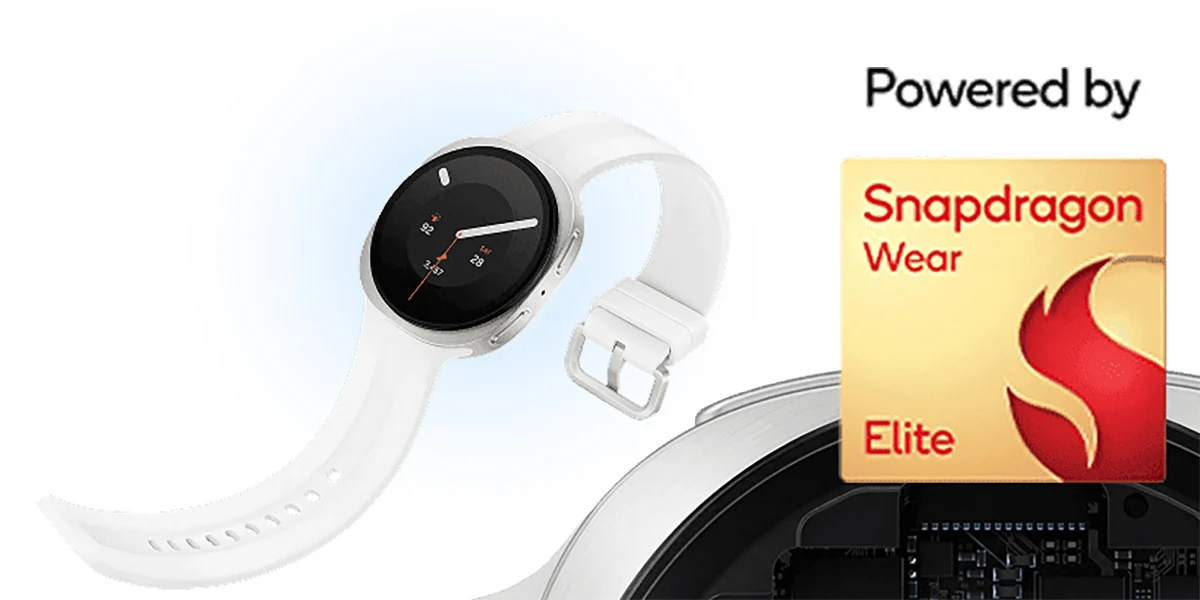
Samsung is poised to make a substantial change in the core technology powering its next-generation smartwatch, the Galaxy Watch 9, by adopting Qualcomm’s latest Snapdragon Wear Elite chipset. This strategic move, confirmed by newly surfaced images, signals a departure from Samsung’s long-standing reliance on its own Exynos processors for its wearable devices. The integration of Qualcomm’s advanced silicon is anticipated to bring notable improvements in performance, power efficiency, and artificial intelligence capabilities to the popular Galaxy Watch lineup.
The Snapdragon Wear Elite platform was officially unveiled by Qualcomm earlier this year, generating considerable excitement within the wearable technology sector. This new chipset is built on a 3nm process, a manufacturing node renowned for its ability to deliver enhanced processing power while simultaneously reducing energy consumption. Qualcomm had previously hinted at strong partnerships with major device manufacturers, and the adoption by Samsung for its flagship smartwatch is a testament to the chipset’s promising advancements, particularly in its capacity to handle complex AI tasks directly on the device.
![Galaxy Watch 9 is ‘Powered by Snapdragon Wear Elite,’ leaked images confirm [Gallery]](https://i0.wp.com/9to5google.com/wp-content/uploads/sites/4/2026/07/galaxy-watch-9-snapdragon-2.jpg?resize=1200%2C628&quality=82&strip=all&ssl=1)
For years, the Galaxy Watch series has been a flagship product for Samsung’s in-house Exynos chip development. While this strategy provided Samsung with a degree of vertical integration and control over its hardware, it also meant that the performance of its smartwatches was intrinsically linked to the progress of its own mobile processor division. During periods where Qualcomm’s smartwatch chips were perceived as less competitive, Samsung’s Exynos offerings often held an advantage, allowing them to maintain a strong position in the market. However, the landscape of wearable technology has evolved rapidly, with increasing demands for sophisticated AI features, extended battery life, and seamless connectivity. The decision to transition to the Snapdragon Wear Elite suggests that Samsung believes Qualcomm’s latest offering is best positioned to meet these evolving consumer expectations.
The confirmation of this significant shift comes from a notable leaker, Evan Blass, who, through his "Leakmail" newsletter, has shared a series of images providing an early glimpse into the upcoming Galaxy Watch 9. One of the most revealing images explicitly states that the Galaxy Watch 9 (distinguishing it from the anticipated Ultra 2 model) will be "Powered by Snapdragon Wear Elite." This direct labeling leaves little room for doubt regarding Samsung’s strategic direction for its mainstream smartwatch offering.
A New Era for Galaxy Watch Performance
The implications of this chipset switch are far-reaching. The Snapdragon Wear Elite is not just an incremental upgrade; it represents a significant leap forward in wearable processing power. Built on an advanced 3nm architecture, the chipset is designed to offer a substantial boost in overall performance compared to previous generations. This translates to a snappier user experience, faster app loading times, and more fluid navigation through the watch’s interface. For users, this means a more responsive and enjoyable interaction with their device for everyday tasks.
![Galaxy Watch 9 is ‘Powered by Snapdragon Wear Elite,’ leaked images confirm [Gallery]](https://9to5google.com/wp-content/uploads/sites/4/2026/07/galaxy-watch-9-snapdragon-2.jpg?quality=82&strip=all&w=1200)
Furthermore, the Snapdragon Wear Elite is engineered with a strong emphasis on artificial intelligence capabilities. This suggests that the Galaxy Watch 9 could introduce more advanced AI-driven features. Potential applications include enhanced health and fitness tracking with more sophisticated algorithms for analyzing biometric data, smarter contextual awareness for personalized notifications and suggestions, and improved voice assistant performance with more natural language processing. The ability to process these AI tasks locally on the device, rather than relying heavily on cloud connectivity, can lead to faster responses, improved privacy, and better performance even in areas with limited or no cellular service.
The move away from Exynos for the primary Galaxy Watch line also raises questions about the future of Samsung’s in-house processor development for wearables. While the company has historically championed its Exynos chips, the decision to embrace Qualcomm’s leading-edge silicon for its most prominent smartwatch suggests a strategic reassessment of its internal development priorities. It is possible that Samsung may focus its Exynos resources on other product categories or explore different avenues within wearable technology where its custom silicon might offer unique advantages. This could also be a move to free up internal resources to focus on other critical aspects of the Galaxy Watch, such as battery technology, display innovations, or software integrations.
The Road to Snapdragon Wear Elite: A Historical Context
Qualcomm’s journey in the smartwatch chipset market has been one of evolution. While the company has been a dominant player in mobile processors for smartphones, its wearable division has faced its share of challenges and triumphs. In the early days of the smartwatch boom, Qualcomm’s chips were instrumental in powering many devices. However, as the market matured and consumer expectations for performance and battery life grew, the company faced increased competition.
![Galaxy Watch 9 is ‘Powered by Snapdragon Wear Elite,’ leaked images confirm [Gallery]](https://9to5google.com/wp-content/uploads/sites/4/2026/07/galaxy-watch-9-snapdragon-1.png)
Samsung’s long-standing partnership with Qualcomm has been evident in other product lines, such as its Galaxy smartphones, which have often featured Qualcomm Snapdragon processors in certain regions alongside their Exynos variants. This dual-sourcing strategy has allowed Samsung to leverage the strengths of both its internal chip development and the broader market offerings. However, for the Galaxy Watch, the commitment to Exynos has been more singular.
The introduction of the Snapdragon Wear Elite platform represents Qualcomm’s renewed commitment to leading the wearable chip space. By focusing on advanced process nodes like 3nm and integrating robust AI acceleration, Qualcomm aims to provide manufacturers with a platform that can support the next generation of intelligent and connected wearables. Samsung’s adoption of this chip underscores the growing industry-wide recognition of Qualcomm’s advancements in this critical area.
What to Expect from the Galaxy Watch 9
While the exact specifications and features of the Galaxy Watch 9 are yet to be officially announced by Samsung, the integration of the Snapdragon Wear Elite chipset provides strong indicators of potential improvements. Beyond raw performance and AI capabilities, the efficiency of the 3nm process is expected to contribute to enhanced battery life, a perennial concern for smartwatch users. Longer battery life would allow for more consistent tracking of health metrics, extended use of power-intensive features, and reduced charging frequency.
![Galaxy Watch 9 is ‘Powered by Snapdragon Wear Elite,’ leaked images confirm [Gallery]](https://i0.wp.com/9to5google.com/wp-content/uploads/sites/4/2026/07/galaxy-watch-9-leakmail-1.png?ssl=1)
The timing of the Galaxy Watch 9’s release is also noteworthy. It is slated to be unveiled next week, alongside Samsung’s new foldable devices. This suggests a major product launch event for the South Korean tech giant, potentially showcasing a refreshed vision for its flagship mobile and wearable offerings. The convergence of these launches indicates a strategic effort by Samsung to present a cohesive ecosystem of advanced technology to its consumers.
The visual evidence from Evan Blass’s leaks, particularly the clear labeling of the "Snapdragon Wear Elite" powering the Galaxy Watch 9, solidifies the anticipation surrounding this transition. While the full impact of this chipset change will only be understood upon the device’s official release and subsequent in-depth reviews, the underlying technology promises a more powerful, intelligent, and efficient smartwatch experience. This move positions Samsung to better compete in an increasingly sophisticated wearable market, where performance, AI integration, and battery longevity are paramount for consumer satisfaction. The era of the Exynos-powered mainstream Galaxy Watch may be drawing to a close, ushering in a new chapter defined by Qualcomm’s cutting-edge silicon.