The Press Gazette has received an unprecedented influx of more than 500 emailed complaints after Times Higher Education (THE) secured a nomination at the upcoming British Journalism Awards. The recognition stems from the publication’s tenacious reporting on the high-profile controversy surrounding Professor Jason Arday. The specialist journalism shortlist, which highlights exceptional reporting within niche fields, was curated by a panel of four independent judges who rigorously evaluated over 50 submissions across the category before making their final selections.
The vast majority of these protests arrived via automated channels, specifically through Newscord, an advocacy platform that allows users to generate and transmit pre-formatted or customized grievance letters regarding media coverage. The sheer volume of these emails highlights the intense public polarization and digital-era lobbying tactics that frequently accompany contentious investigative reporting in the United Kingdom.
At the core of the complainants’ objections is the argument that because Liverpool John Moores University formally cleared Professor Arday of plagiarism allegations concerning his PhD thesis following an internal investigation, THE’s foundational reporting was fundamentally flawed. Critics have pointed to the tragic death of Professor Arday on August 14, 2026, and a subsequent statement from his grieving family, which described a devastating "campaign of misinformation" that proved too much for him to bear.
Prominent voices within the journalism community have also weighed in on the ethics of the nomination. Investigative journalist Carole Cadwalladr took to Bluesky to express profound skepticism regarding whether the public interest was genuinely served by the collective media coverage directed at Professor Arday. Cadwalladr further argued that celebrating any piece of journalism before an official coroner’s inquest has fully examined the evidence surrounding an individual’s death is premature and insensitive to the family, while questioning whether the industry holds itself to the rigorous standards it demands of others.
Chronology of the Controversy
The intricate timeline of the Jason Arday affair spans several months of escalating tension between academic institutions, legal teams, and investigative reporters.
The story began in the summer of 2025, when THE reporter Jack Grove started inquiries into Professor Arday’s research papers and curriculum vitae after receiving a series of confidential tip-offs from concerned academics. By September 2025, THE was poised to publish an investigative feature detailing alleged plagiarism within Arday’s 2015 PhD thesis, supported by a comprehensive 97-page report compiled by Grove. Numerous senior academics from both the UK and the United States had reportedly confirmed that the dossier provided prima facie evidence requiring formal institutional inquiry.
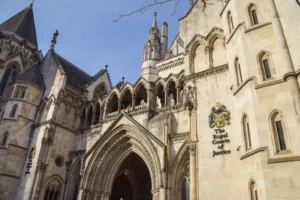
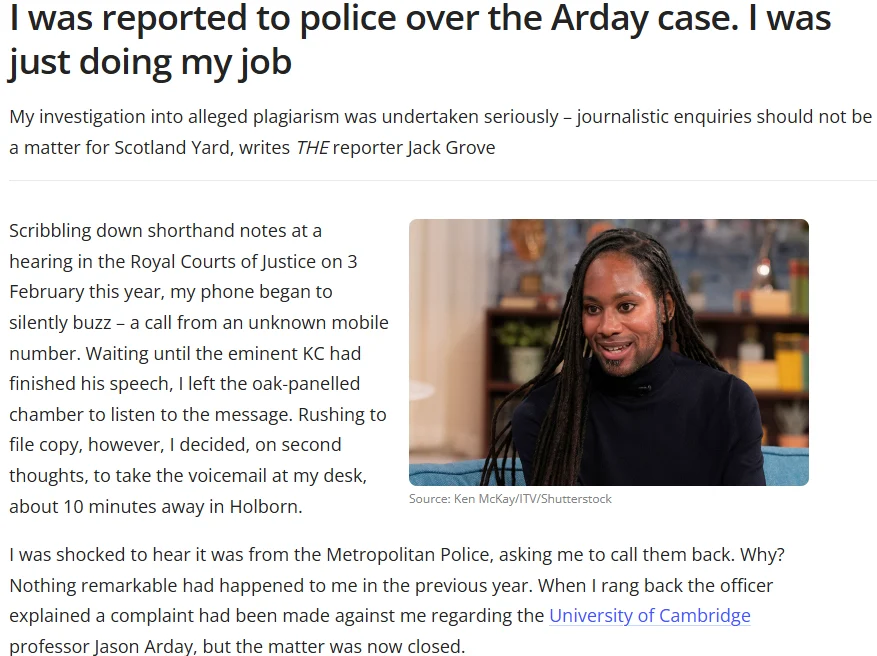
However, the publication of the article was abruptly halted following intervention from the law firm Carter Ruck, representing Professor Arday. Legal warnings and subsequent developments intensified the pressure on the journalistic team. In February 2026, Grove was informed by a Metropolitan Police officer that a four-month police investigation into his professional activities had been concluded without charges, though he was instructed to cease all direct contact with Professor Arday. Grove later maintained that while he stood entirely by his reporting, the financial risk of defending a defamation lawsuit could have been ruinously expensive for an independent outlet like THE. The police inquiry itself had reportedly been triggered by the transmission of three politely worded inquiries and a standard right-of-reply letter.
The narrative shifted dramatically on July 24, 2026, when an independent analysis published by The Telegraph scrutinized Professor Arday’s PhD thesis and identified more than 100 passages that were identical or nearly identical to a 2009 doctoral thesis authored by Paula Zwozdiak-Myers at Brunel University. This widespread revelation triggered an explosion of mainstream and social media coverage across platforms including radio, television, X, YouTube, Substack, Reddit, Facebook, TikTok, and various prominent podcasts.
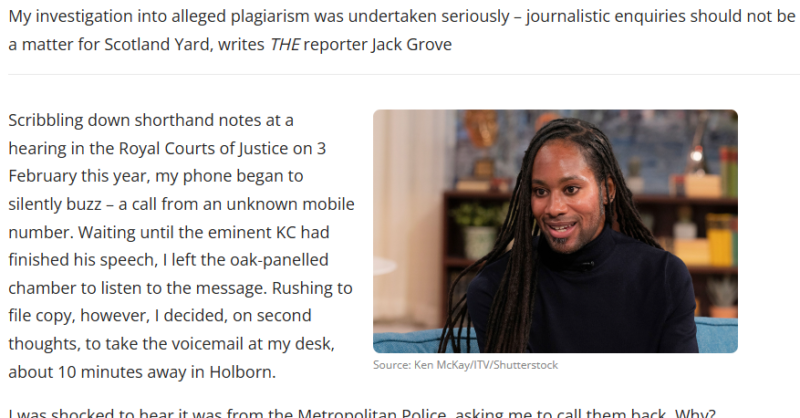
Following Arday’s subsequent resignation as a Cambridge professor, Jack Grove authored an analytical article published on August 4, 2026, contextualizing the controversy and detailing the immense legal challenges confronting investigative journalism in the UK. It was this specific piece that caught the attention of the British Journalism Awards judging panel, leading to his current nomination.
Institutional Responses and Stances
Despite the intense scrutiny, the institutional landscape surrounding Professor Arday’s academic credentials remains complex. Liverpool John Moores University has maintained that Professor Arday’s PhD qualification remains entirely valid, asserting that their internal review formally rejected the plagiarism complaints lodged against him. However, the specifics of that review have been kept confidential, and the academic journal articles facing external scrutiny have not been formally retracted by their publishers.
Addressing the overwhelming wave of complaints, the editorial leadership of the Press Gazette issued a definitive statement defending the integrity of the awards process and the journalistic merit of Grove’s work. The publication clarified that it is not the role of journalism awards to adjudicate contested academic disputes or make final legal determinations on plagiarism allegations. Furthermore, the Press Gazette noted that no formal complaints had been lodged with the Independent Press Standards Organisation (IPSO) challenging the factual accuracy of Grove’s shortlisted article.
"Our view is that Jack Grove raised legitimate questions, diligently and responsibly, seeking to hold the world of higher education to account, and that his nomination should stand," the Press Gazette editorial team stated. The judges, the publication emphasized, were not evaluating the proportionality of the broader media furore that engulfed the internet in the summer of 2026, but rather assessing a single piece of specialist reporting that offered a unique perspective on the perilous legal climate for investigative reporting in Britain.
Broader Implications for Investigative Journalism
The fierce debate surrounding the Times Higher Education nomination underscores a deepening crisis within modern media ethics: the delicate balance between robust public interest accountability and the personal toll on subjects of investigation, particularly in the shadow of tragedy.
Industry analysts point out that the case exposes the vulnerabilities of specialized reporting in higher education, where complex academic misconduct allegations often collide with high-powered legal representations, preemptive police involvement, and trial-by-social-media dynamics. As Jack Grove observed in his award-nominated commentary, had established publication channels not been initially silenced by aggressive legal threats, the matter might have remained a relatively contained, niche discussion regarding academic integrity rather than escalating into an international media storm.
As the British Journalism Awards approach, the controversy serves as a stark reminder of the pressures facing contemporary journalists who investigate powerful institutions and prominent figures. While the Press Gazette extends its sympathies to the family of the late Professor Jason Arday, the decision to uphold Grove’s nomination signals a steadfast commitment by the judging panel to recognize tenacity, transparency, and the difficult pursuit of truth within specialized academic reporting.