Securing official verification on social media platforms has long been a primary objective for public figures, prominent brands, and growing enterprises operating in the digital ecosystem. In an era where online impersonation, brand spoofing, and malicious scam networks routinely target established entities, establishing authenticity is no longer merely a branding luxury—it is a critical operational necessity. On Meta’s flagship platform, this digital authentication is symbolized by the coveted blue verification badge. While the mechanism for requesting this badge appears deceptively straightforward, the internal evaluation protocols employed by platform moderators remain notoriously complex and opaque. Understanding the precise prerequisites, strategic pre-application preparations, and stringent post-approval compliance mandates is essential for any organization seeking to safeguard its digital footprint and maximize its visibility within the social media landscape.
The Evolution and Definition of Platform Verification
To understand the current verification ecosystem, it is helpful to examine its origins. In May 2013, Facebook officially introduced its verified pages and profiles program, directly mirroring a concept pioneered by Twitter years prior. Initially, the blue checkmark was strictly reserved for high-profile entities operating in the public eye, including global celebrities, renowned artists, politicians, and massive legacy organizations. Over the subsequent decade, as digital commerce expanded and fraudulent profiles proliferated, the platform adapted its policies. By 2018, verification access was widened to encompass business pages with substantial follower counts. More recently, the criteria have evolved further to accommodate individual profiles that achieve specific audience thresholds and demonstrable public interest metrics.
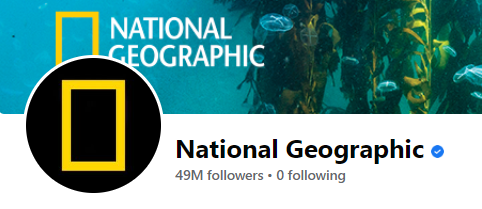
It is vital to distinguish the verification badge from other platform identifiers. Over the years, Meta has experimented with various recognition markers, such as top seller badges for Marketplace vendors and top fan designations for active community members. However, none of these hold the official status or protective utility of the blue checkmark. Historical iterations, such as gray verification badges for local businesses and specific Marketplace verification tiers, have been entirely deprecated by the platform in favor of a unified blue badge system. This badge serves a dual purpose: it confirms to the user base that the entity behind the account is genuine, and it functions as a signaling mechanism for the platform’s internal search algorithms, frequently allowing verified business pages to achieve higher rankings in search results and thereby facilitating easier discovery for prospective consumers and clients.
The Mechanics of the Application Process
Applying for verification on Facebook requires navigating an official request form accessible to logged-in users. Once an administrator accesses the submission portal, the interface automatically detects eligible profiles and pages managed by that user. The application process is generally structured around several distinct phases designed to prevent fraudulent submissions and ensure that only qualified entities receive the credential.
The first phase involves selecting the specific asset—either an individual profile or a business page—that requires authentication. For personal profiles, applicants must provide the precise uniform resource locator (URL).
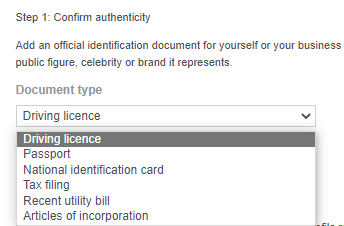
The second phase centers on establishing absolute identity. To thwart scammers and impersonators, Facebook mandates the submission of official documentation proving the applicant’s real-world existence or the legal establishment of the enterprise. Accepted documentation varies by geographic region and entity type, but universally includes government-issued photo identification such as passports, driver’s licenses, or national identity cards for individuals, as well as official business formation documents, tax filings, or utility bills for corporate entities. Applicants must digitally scan and upload these documents directly through the secure verification portal.
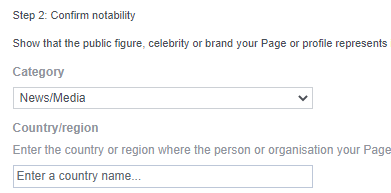
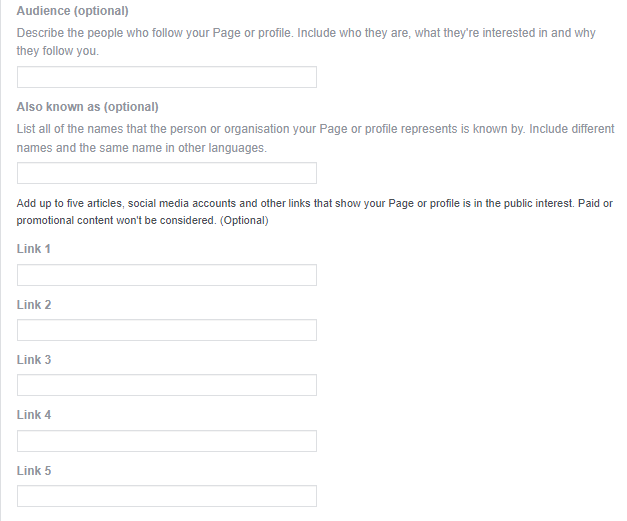
The third and most challenging phase requires establishing notability. Platform administrators evaluate whether an account is in the public interest and whether it faces a genuine risk of impersonation due to public prominence. Applicants must designate the category of their account—such as news, entertainment, business, or government—and specify the geographic regions where their audience is primarily concentrated. Additionally, the platform provides optional fields for defining the target audience, explaining user demographics, and listing alternative names under which the brand operates globally. Crucially, applicants must supply up to five independent web links—such as news articles, features in reputable publications, or official external social media profiles—that substantiate their public standing. Platform policy explicitly excludes paid or promotional content from consideration during this notability assessment.
Following submission, the application enters an administrative review queue. Platform representatives manually and algorithmically evaluate the provided documentation and public metrics. This review period typically spans from 48 hours to 45 days, culminating in an official notification delivered via email regarding the approval or rejection of the request.
Strategic Frameworks to Enhance Approval Probabilities
Because the internal algorithms and human review criteria governing verification decisions are proprietary and closely guarded, applicants frequently face rejections if their digital presence is incomplete or poorly maintained. Industry analysts and digital marketing specialists have identified several core factors that significantly influence whether a verification request is granted. Meeting these benchmarks prior to submitting the application drastically improves the likelihood of a successful outcome.
First, comprehensive updating of company and personal information is non-negotiable. Platform reviewers cross-reference the data provided in the application with the information displayed on the Facebook Page itself. Discrepancies between legal identification documents and profile details will result in immediate rejection. Page administrators must ensure that names, contact details, operational hours, and category classifications are completely accurate and synchronized with external public records.
Second, depth of detail matters. A sparse profile signals inactivity or lack of genuine organizational backing. Entities should thoroughly populate the "About" section of their page, including founding dates, mission statements, exhaustive contact details, and precise service descriptions.
Third, maintaining strict digital professionalism is paramount. The visual aesthetic, tone, and published content of a Facebook Page must align seamlessly with the brand’s professional reputation in the broader digital and physical marketplace. Content that undermines public credibility—such as inflammatory statements, low-quality media, unverified claims, or associations with questionable online behavior—will negatively impact the review process. Organizations are advised to audit their historical posts from the perspective of an objective third-party reviewer and remove or revise any content that fails to meet professional publishing standards.
Fourth, establishing robust cross-platform digital integration is essential. Verified brands must maintain an active, official website that prominently features accurate corporate information. Crucially, this official web property must include a direct, working link to the brand’s Facebook Page, while the Facebook Page must reciprocate by linking directly to the official website. This bi-directional digital referencing establishes a verifiable chain of custody for the brand’s online identity.
Fifth, utilizing a dedicated Facebook Business Page rather than a standard personal profile is strongly recommended for corporate entities. Setting up a business page is free and provides access to advanced analytics, advertising tools, and structured organizational features that signal commercial legitimacy to platform reviewers.
Finally, cultivating an active, engaged community is critical for satisfying the notability requirement. Because verification is heavily dependent on public prominence, accounts with stagnant follower counts or minimal engagement rates rarely pass the evaluation stage. Implementing consistent organic content strategies, encouraging user interaction, and fostering genuine community dialogue demonstrate to platform evaluators that the account serves a vibrant, active audience.
Post-Approval Governance and Security Mandates
Securing the blue checkmark represents a major milestone, but maintaining the credential requires ongoing adherence to strict platform regulations. Meta retains the unilateral right to revoke a verification badge at any time if an account violates platform policies or experiences a significant decline in notability.
The primary vulnerability facing verified accounts is digital hijacking. Because a verified badge significantly elevates the market value and perceived authority of an account, malicious actors and cybercriminal syndicates frequently target these assets for takeover. To mitigate this severe risk, account administrators are strongly advised to implement robust security measures, chief among them being two-factor authentication (2FA). By requiring an additional verification step beyond a standard password—such as authentication app codes or hardware security keys—account holders erect a formidable barrier against unauthorized access, safeguarding their authenticated status.
Furthermore, verified accounts are held to rigorous compliance with Facebook’s Community Standards. While all users must abide by fundamental rules prohibiting hate speech, illegal activities, and harassment, verified entities are subject to heightened scrutiny regarding intellectual property rights and privacy violations. When sharing user-generated content or curated media—a common tactic for community building—brands must ensure strict adherence to copyright laws and data protection regulations. Unauthorized republishing of copyrighted material can result in copyright strikes, policy penalties, and the subsequent forfeiture of the verification badge.
Finally, long-term retention of the badge requires sustained digital marketing and public relations efforts. Because the platform continuously monitors whether an account maintains its public prominence, entities must continue to invest in comprehensive digital marketing strategies. Whether through organic publishing, targeted advertising campaigns, or public relations initiatives that generate independent media coverage, maintaining an active, influential presence in the digital landscape ensures that the account continues to justify its verified status over the long term. Organizations that leverage enterprise management dashboards, such as Hootsuite, to streamline cross-platform publishing, audience engagement, and performance analytics often find it easier to sustain the consistent activity levels required to protect their digital investments.