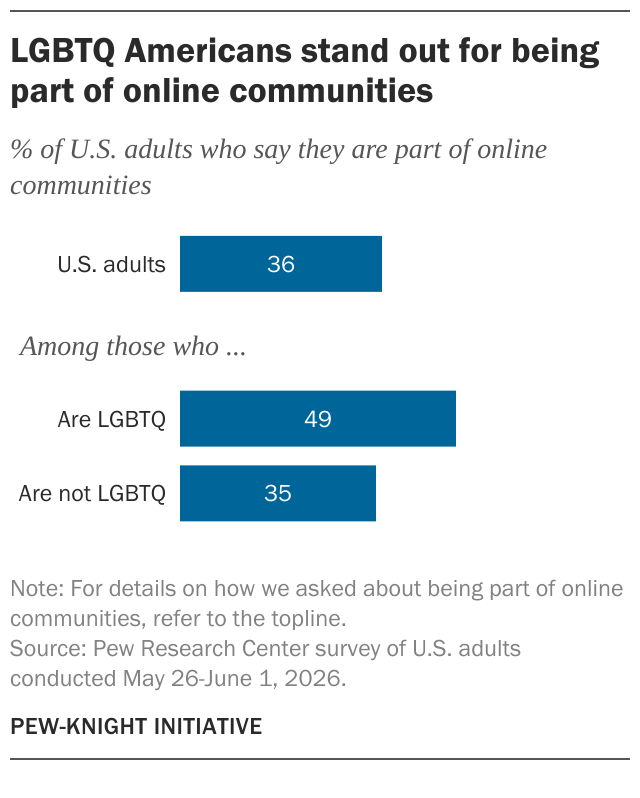
For decades, the digital landscape has served as a critical frontier for the LGBTQ community, functioning as a sanctuary for self-expression, identity formation, and social connection. A new comprehensive study released by the Pew Research Center, conducted through the Pew-Knight Initiative, highlights that this trend has only accelerated in the modern era. According to the survey of 9,750 U.S. adults conducted between May 26 and June 1, 2026, nearly half of LGBTQ Americans (49%) report being active participants in an online community, a significantly higher proportion than the 35% reported by non-LGBTQ adults.
These findings provide a nuanced look at how marginalized populations leverage digital spaces to circumvent geographical isolation and societal barriers. The data suggests that for many, these online networks are not merely recreational; they are essential infrastructure for social support and validation.
A Historical Trajectory of Digital Connection
The roots of this phenomenon can be traced back to the early days of the internet, when nascent digital bulletin boards and Usenet groups, such as soc.motss, served as the first global hubs for queer individuals to exchange information and support outside the gaze of traditional, often exclusionary, offline institutions. By the 1990s and early 2000s, the rise of web-based forums and chat rooms further democratized access to these communities.
As social media platforms like Facebook, X (formerly Twitter), and specialized Discord servers became ubiquitous, the nature of these connections evolved. No longer limited to text-based archives, modern online communities for LGBTQ individuals encompass immersive video games, real-time messaging apps, and niche social media circles. This shift has enabled a more fluid and immediate form of community building, allowing users to find peers based on specific shared interests—ranging from literature and film to gaming and advocacy—rather than just identity alone.
Quantifying the Value of Digital Spaces
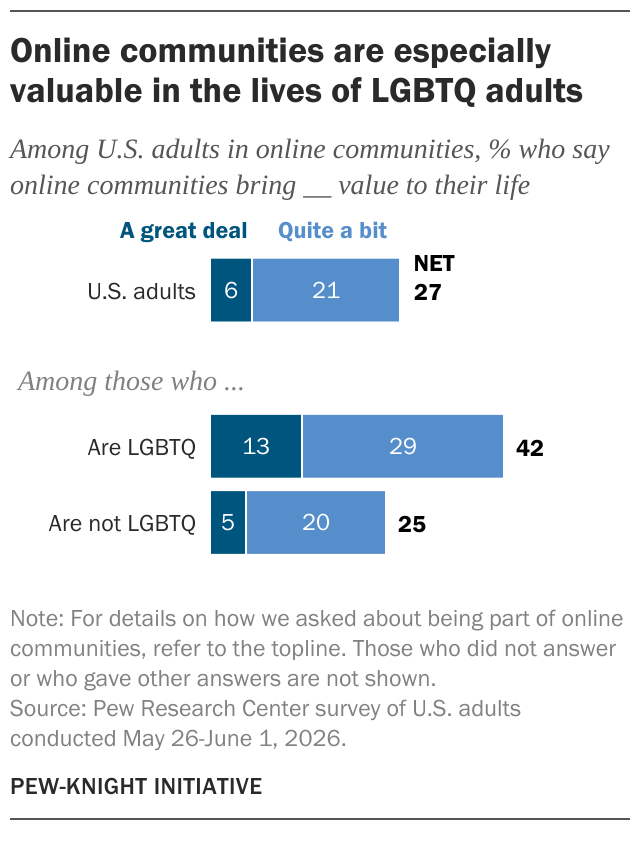
The Pew Research Center data reveals that the perceived value of these online spaces is strikingly higher among LGBTQ adults compared to their counterparts. Among those who participate in online communities, 42% of LGBTQ adults report that these spaces bring a “great deal” or “quite a bit” of value to their lives. In contrast, only 25% of non-LGBTQ participants report a similar level of impact.
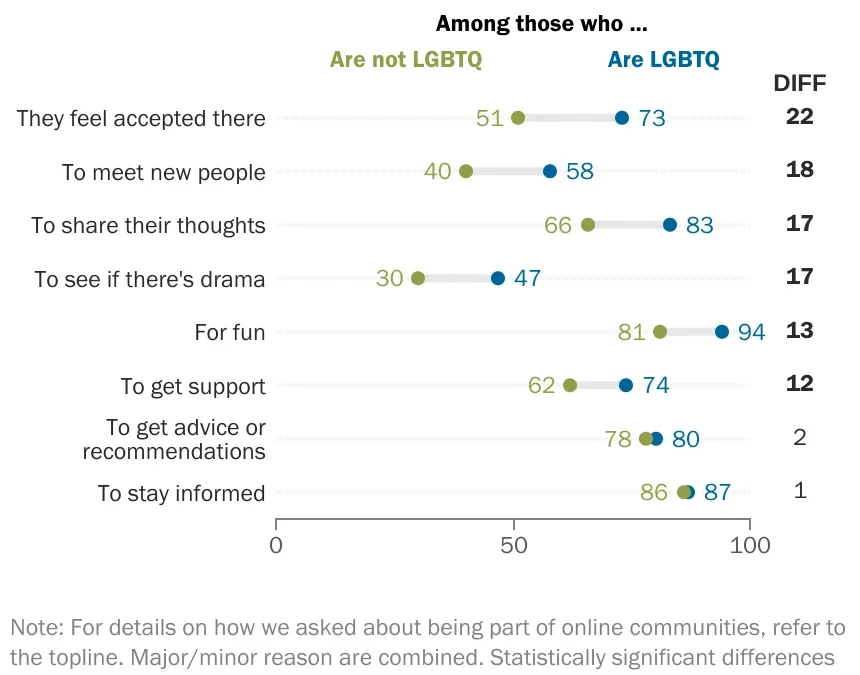
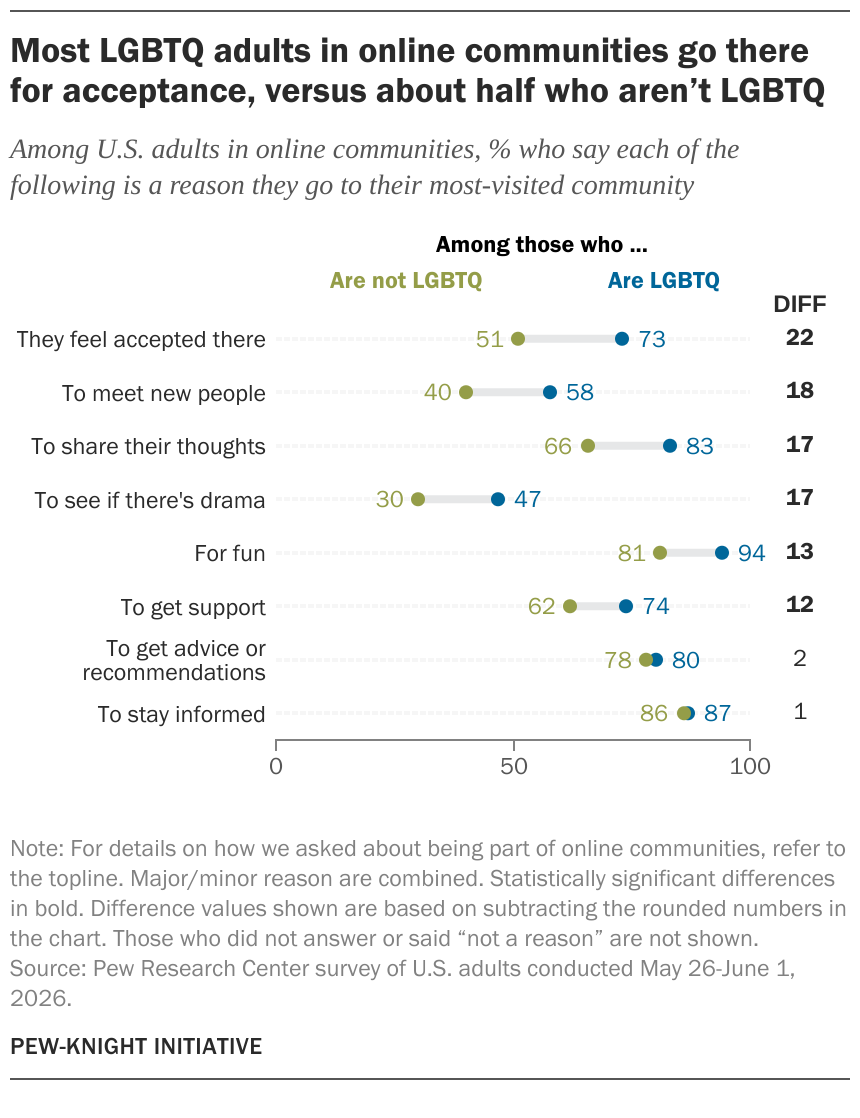
This disparity in valuation is reflected in the reasons participants cite for their engagement. When asked why they frequent their most-visited online community, 73% of LGBTQ adults identified feeling accepted as a primary motivator, compared to only 51% of non-LGBTQ adults. This 22-point gap underscores the role of digital platforms as a vital remedy for the potential lack of acceptance in local, physical environments.
Furthermore, the data shows that LGBTQ users are more likely to seek out these spaces for:
- Meeting new people: 58% vs. 40%
- Sharing thoughts and ideas: 83% vs. 66%
- Accessing social support: 74% vs. 62%
- Entertainment and fun: 94% vs. 81%
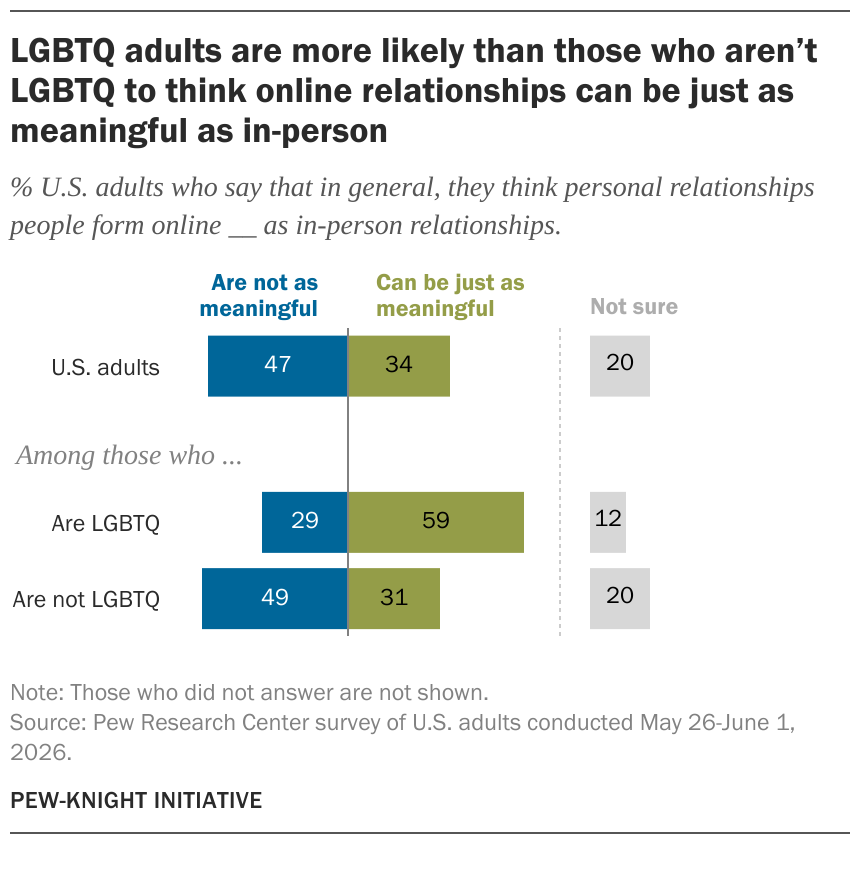
Perhaps most tellingly, 59% of LGBTQ adults believe that personal relationships formed online can be just as meaningful as those formed in person. Among non-LGBTQ adults, that figure drops to just 31%, suggesting a fundamental difference in how different demographic groups conceptualize the legitimacy and depth of digital friendships.
The Double-Edged Sword: Harassment and Exclusion
Despite the clear benefits, the study also highlights the systemic challenges inherent in online spaces. The digital world is not immune to the prejudices of the physical one. LGBTQ adults who have left an online community are statistically more likely to cite negative social experiences as the catalyst for their departure.
Data indicates that 57% of LGBTQ adults who left a community did so because they were harassed, compared to 41% of non-LGBTQ adults. Similarly, 57% of LGBTQ users left because they felt they did not belong, a sentiment shared by 44% of non-LGBTQ users. These statistics point to a persistent issue of moderation and inclusivity within digital spaces. While these platforms offer a "home" for many, the risk of hostility remains a significant barrier to sustained participation.
Broader Implications for Civic Life
The Pew-Knight Initiative’s focus on how Americans absorb civic information and form identities is particularly relevant here. As the digital sphere continues to act as a primary venue for political and social discourse, the fact that LGBTQ individuals are more deeply embedded in these networks has profound implications for how they engage with broader society.
By forming strong, interconnected networks online, LGBTQ adults are better positioned to mobilize, share resources, and advocate for their interests. However, the reliance on these spaces also raises questions about digital silos. When a community is formed primarily for acceptance, does it insulate its members from broader societal debates, or does it serve as a launchpad for civic engagement?
Experts observing these trends suggest that the "online-first" nature of these social ties reflects a broader shift in human interaction. For many, the physical location of a person has become secondary to their digital affinity. For marginalized groups who have historically lacked physical spaces dedicated to their needs, the internet is not just an alternative; it is the primary venue for community life.
Methodology and Research Context
The data presented in this report is derived from the American Trends Panel (ATP), a nationally representative, probability-based survey. The 9,750 participants were surveyed in late May and early June of 2026. Because the survey captures a wide cross-section of the U.S. adult population, it allows for a rigorous comparison between LGBTQ and non-LGBTQ experiences while controlling for variables like age, geography, and education levels.
The Pew-Knight Initiative, a collaboration between the Pew Research Center and the John S. and James L. Knight Foundation, aims to provide nonpartisan, fact-based insights into how technology and information consumption shape American life. This study, led by researchers such as Olivia Sidoti, serves as a foundational text for understanding the intersection of digital technology and identity.
Future Outlook
As we move further into the 2020s, the role of virtual reality, artificial intelligence-driven social tools, and decentralized social networks will likely continue to reshape how these communities form. If the trend holds, LGBTQ Americans will continue to be early adopters and primary beneficiaries of these technologies, provided that platforms can effectively address the persistent issues of harassment and exclusion.
The takeaway for policymakers, platform developers, and social researchers is clear: online communities are not a "second-tier" form of social interaction. For a significant portion of the population, they are the first line of defense against isolation and the primary stage for building meaningful human connection. As digital spaces grow more sophisticated, the challenge will be to ensure they remain safe, inclusive, and welcoming environments for those who depend on them most.
The persistence of these digital habits suggests a permanent shift in the American social fabric. Whether through niche forums or broad-based social media, the ability of individuals to curate their own communities has become a defining feature of modern life, and for the LGBTQ population, it remains a transformative and necessary evolution of the human experience.
Conclusion
The data provided by the Pew Research Center offers an essential snapshot of a community that has successfully navigated the challenges of the digital age to build robust, supportive, and deeply valued networks. While the risks of harassment and digital exclusion persist, the willingness of LGBTQ adults to lean into these spaces for support, acceptance, and connection highlights the resilience and adaptability of the community. As society continues to grapple with the role of technology in our lives, these findings serve as a reminder that the "digital world" is, for many, the very real, very vital world where they truly belong.