The digital landscape for WordPress site management is dominated by two primary search engine optimization (SEO) solutions: Yoast SEO and All in One SEO (AIOSEO). As search engine algorithms continue to evolve toward prioritizing user intent, site architecture, and technical performance, the selection of an SEO plugin has transitioned from a basic necessity to a strategic business decision. While Yoast SEO has historically maintained a significant market share due to its longevity and early adoption of the "traffic light" scoring system, AIOSEO has gained substantial momentum by offering a broader suite of integrated tools and more flexible pricing tiers. This report examines the technical capabilities, market positioning, and operational impact of both plugins to provide clarity for web administrators and developers.

The Evolution of WordPress SEO Plugins
The history of WordPress SEO is intrinsically linked to these two platforms. AIOSEO holds the distinction of being the first SEO plugin ever created for WordPress, launching in 2007. It provided the foundational framework for metadata management that many users now take for granted. Shortly thereafter, in 2010, Joost de Valk released Yoast SEO, which quickly became the industry standard. Yoast differentiated itself by simplifying complex technical SEO concepts—such as XML sitemaps, canonical tags, and readability analysis—into a user-friendly interface.
For over a decade, the rivalry between these two has driven innovation. In recent years, AIOSEO underwent a significant modernization under the stewardship of the Awesome Motive team, shifting its focus toward high-performance features, such as advanced schema markup and automated internal linking, to compete directly with Yoast’s established user base.
Comparative Feature Analysis: Technical Architecture
When evaluating these tools, users must distinguish between "on-page" assistance and "technical" SEO infrastructure.
Yoast SEO utilizes a semantic analysis engine that evaluates text based on readability scores and keyword density. Its primary appeal remains its consistency; it provides a reliable, predictable experience for writers who need to ensure their content meets basic SEO thresholds. However, from a technical perspective, Yoast has maintained a relatively conservative feature set in its free iteration, often requiring users to upgrade to premium tiers or purchase specific add-ons for features like local SEO or WooCommerce integration.
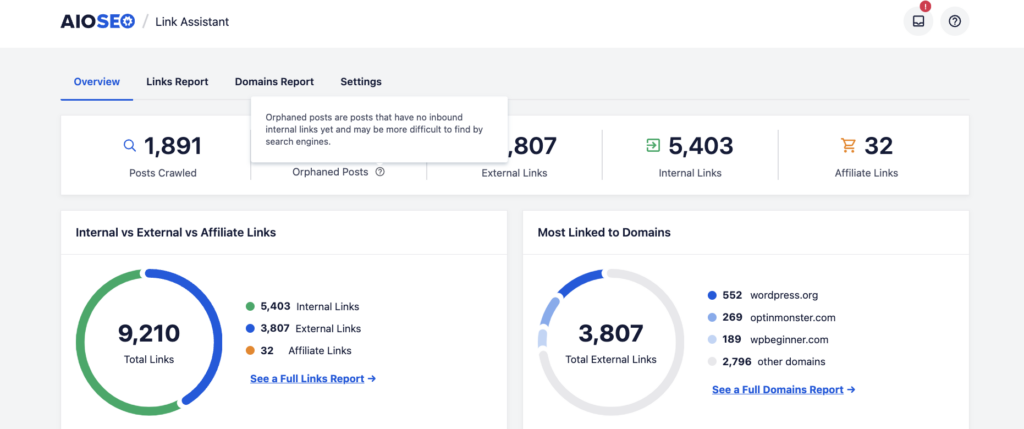
Conversely, AIOSEO has adopted a "toolkit" philosophy. By integrating features such as a dedicated Link Assistant, comprehensive Google Search Console integration, and advanced schema configuration directly into the core plugin architecture, it seeks to minimize the number of auxiliary plugins a site requires. Data suggests that site speed is a critical ranking factor for Google’s Core Web Vitals; therefore, the reduction of plugin bloat is a significant technical advantage for AIOSEO.
Data-Driven Performance Comparison
An analysis of current feature availability reveals a widening gap in value propositions. While both plugins offer robust support for standard metadata, their divergent approaches to advanced tasks offer different ROI outcomes for site owners.
Key Functional Comparison
| Feature | Yoast SEO (Free) | AIOSEO (Free) |
|---|---|---|
| Focus Keywords | Single | Unlimited |
| Social Previews | Basic | Advanced |
| Schema Markup | Standard | Enhanced |
| Search Console Integration | Limited | Native |
| Redirect Manager | No | No (Requires Add-on) |
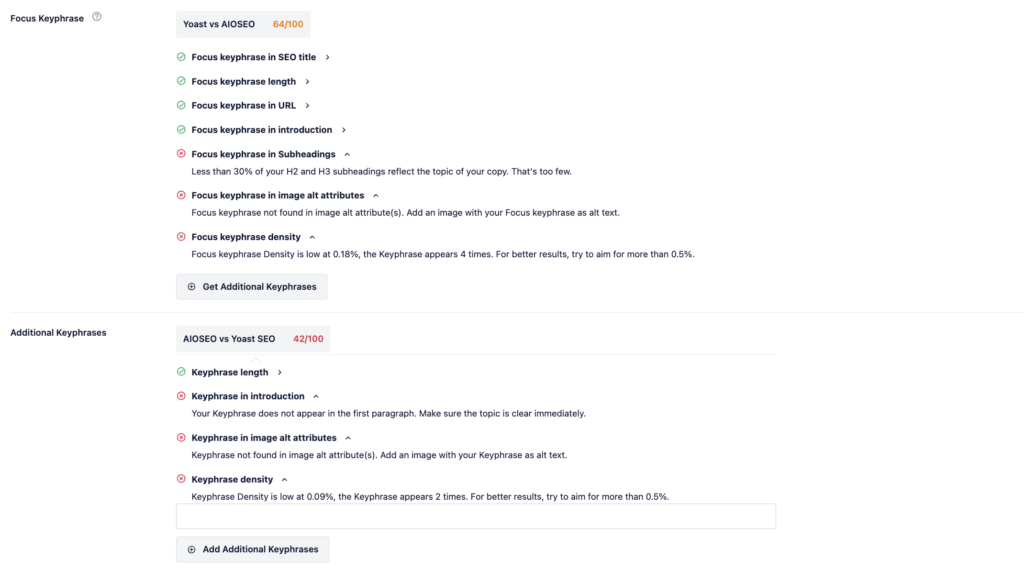
The most significant divergence is found in the management of multiple keywords. AIOSEO allows users to target multiple phrases within its free version, providing a more granular data set for tracking performance. Yoast, while highly effective for singular keyword focus, requires a premium subscription to unlock the ability to target variations and synonyms, which may prove costly for smaller publishers or independent bloggers.
Strategic Implications of Internal Linking
One of the most consequential developments in modern SEO is the importance of internal link architecture. Search engine crawlers use internal links to discover new content and distribute "link equity" across a website.
AIOSEO’s Link Assistant is a notable addition to the ecosystem. It automatically scans a website’s content to identify "orphaned" posts—pages that have no incoming links—and suggests relevant anchor text opportunities. In professional SEO audits, this tool has demonstrated the ability to increase crawl efficiency and improve the time-on-page metrics by facilitating better navigation for human users and bots alike. While Yoast does offer internal linking suggestions, its implementation is often considered more manual and less predictive than the automated insights provided by the newer AIOSEO modules.
Industry Perspectives and User Adoption
Industry experts often debate whether the "traffic light" system popularized by Yoast is beneficial or detrimental to long-term SEO health. Critics argue that relying too heavily on green indicators can lead to "over-optimization" or "keyword stuffing," where writers prioritize satisfying the plugin over providing genuine value to the reader.
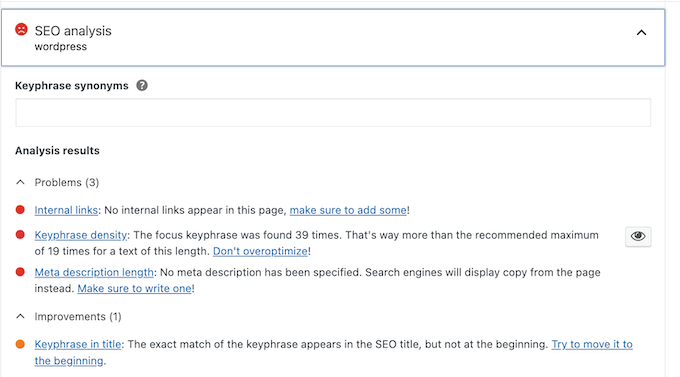
Supporters of both platforms emphasize that these tools should be treated as guidance systems rather than algorithmic mandates. The consensus among SEO professionals is that while these plugins are essential for managing technical headers, meta-tags, and site maps, they cannot replace high-quality, original content.
Broader Impact on Digital Infrastructure
The choice between these two plugins has implications for site scalability. For small, single-author blogs, the differences in advanced features may seem negligible. However, for e-commerce platforms using WooCommerce or large-scale content networks, the distinction is significant.
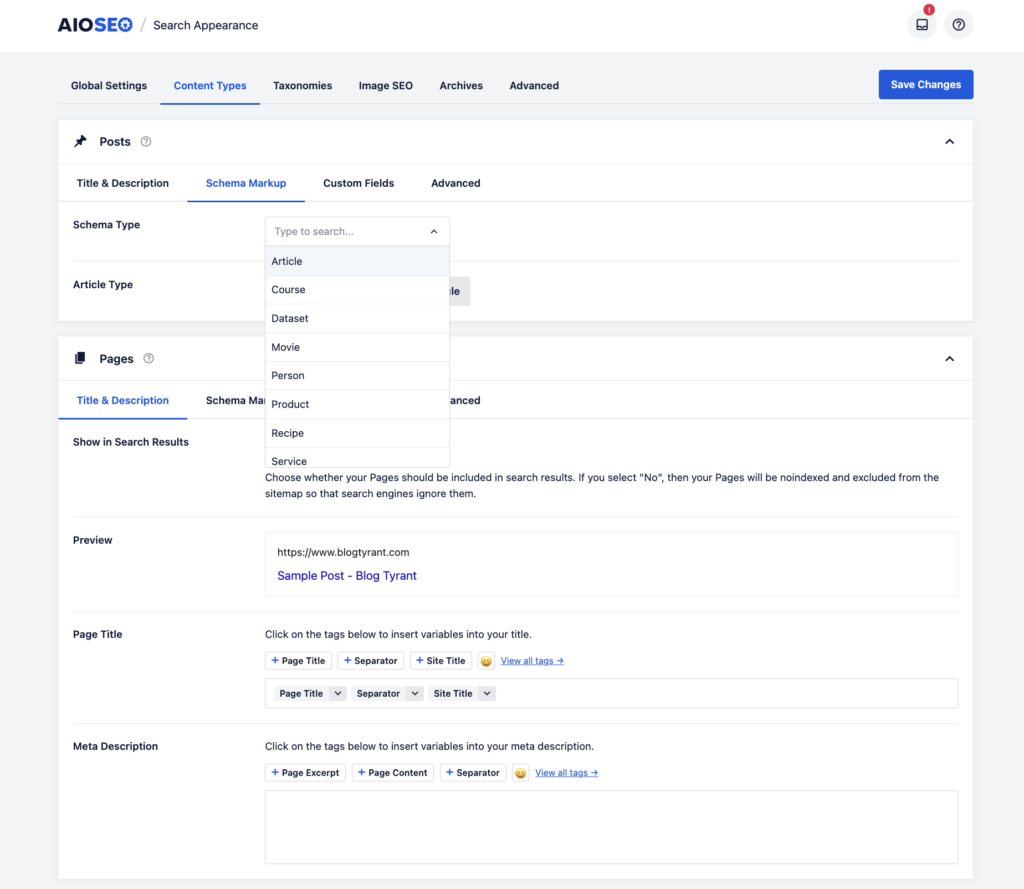
AIOSEO’s inclusion of e-commerce specific SEO features—such as product schema and enhanced search appearance for products—without necessitating additional purchases, provides a clear financial advantage for online retailers. In contrast, Yoast’s modular approach allows for a highly customized, albeit potentially more expensive, configuration.
Evaluating Long-Term Suitability
The decision-making process for site administrators should center on the specific needs of the project:
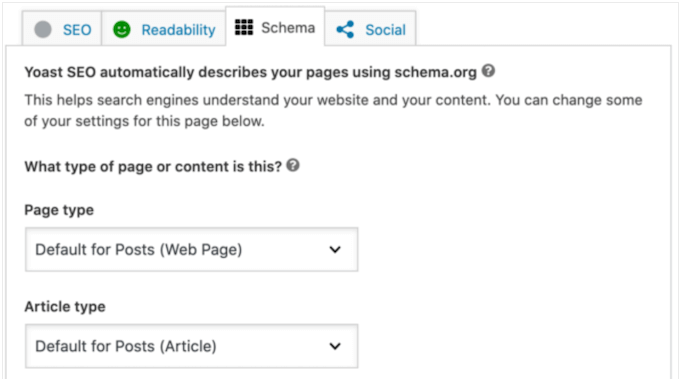
- Simplicity and Predictability: Users who prefer a standardized, well-documented, and time-tested interface may still find Yoast SEO to be the preferred choice. Its massive library of documentation and tutorials remains an industry benchmark.
- Feature Density and Cost Efficiency: Organizations seeking to consolidate their plugin stack and leverage advanced automation (such as AI-driven title generation and internal link optimization) will likely find AIOSEO to be the more efficient investment.
- Multi-Site Management: AIOSEO’s licensing structure, which often covers multiple sites under a single premium tier, presents a superior cost-benefit ratio for agencies or entrepreneurs managing portfolios of websites.
Conclusion
The competition between Yoast SEO and AIOSEO is ultimately a competition between two distinct methodologies. Yoast represents the traditional approach, emphasizing readability and standard on-page SEO within a familiar, consistent framework. AIOSEO represents the modern, integrated approach, prioritizing comprehensive technical toolsets and broader feature accessibility.
As the SEO landscape shifts toward AI-generated content and complex schema structures, the ability of a plugin to automate technical maintenance becomes increasingly vital. While both tools remain highly capable of managing the basic requirements of WordPress SEO, the current trajectory favors solutions that provide granular control and integrated performance tools. Site owners are encouraged to perform an internal audit of their specific SEO requirements—including e-commerce functionality, internal linking needs, and budget constraints—to determine which of these two industry titans best aligns with their long-term digital strategy.