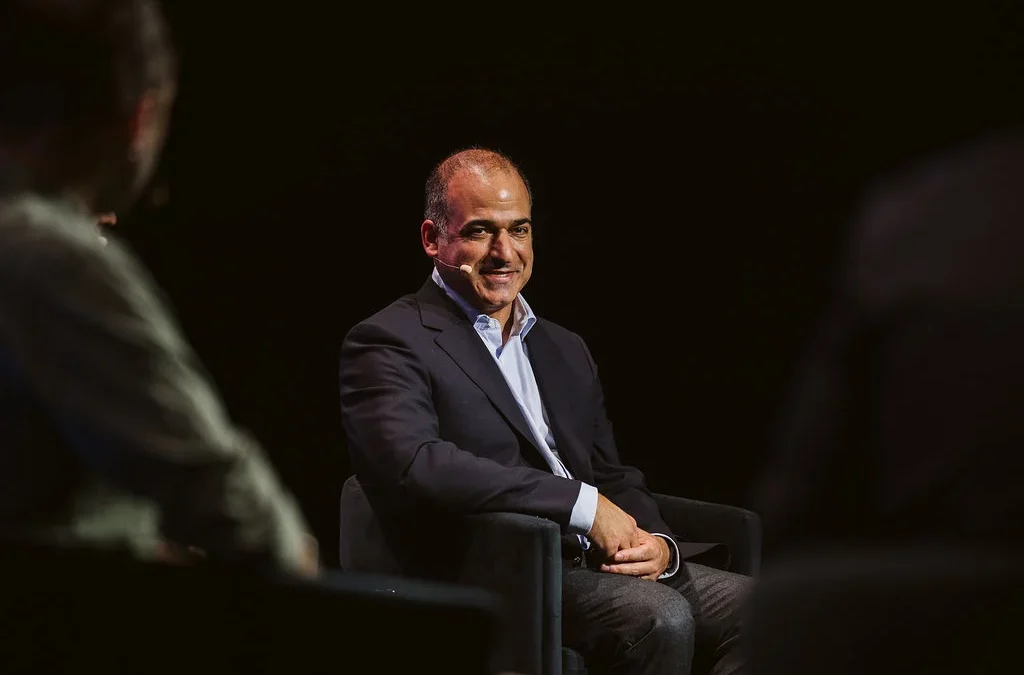
This week, the All In conference—a gathering of technologists, investors, and researchers—became the stage for a silent standoff in one of the most mysterious and high-stakes sectors of artificial intelligence: world models. While the industry has been dominated by the linguistic prowess of Large Language Models (LLMs), a new cohort of labs is shifting the focus toward spatial intelligence. At the vanguard of this movement are Yann LeCun’s AMI Labs and Fei-Fei Li’s World Labs. Despite commanding massive valuations and attracting top-tier venture capital, these entities remain remarkably tight-lipped regarding their path to commercialization, leaving analysts and even their own supply chains in the dark.
The Rise of Spatial Intelligence
World models represent a fundamental shift in how AI perceives reality. Unlike LLMs, which predict the next token in a sequence of text, world models are designed to understand the physical laws of the universe. This "spatial intelligence" is the holy grail for robotics, autonomous navigation, and sophisticated digital simulation. By enabling an AI to predict how objects move, interact, and persist in a three-dimensional space, researchers hope to bridge the gap between digital reasoning and physical action.
The potential use cases are vast and highly lucrative. Proponents argue that world models will eventually power the next generation of humanoid robots capable of navigating chaotic human environments, revolutionize the CGI and video game industries by generating photorealistic, interactive environments on the fly, and provide the "brain" for self-driving systems that can anticipate rare, high-stakes edge cases with human-like intuition.
A Chronology of Silence
The current ambiguity surrounding these labs is not merely a byproduct of their youth; it is a calculated operational strategy. AMI Labs, for instance, has existed for less than a year, and its leadership has maintained a posture of extreme discretion since its inception.
- Early 2025: The "World Model" narrative gains significant traction in Silicon Valley, as researchers move beyond text-only models toward systems that can process video and sensor data to simulate physical outcomes.
- Mid-2025: World Labs, led by Fei-Fei Li, begins showcasing "Marble," a platform capable of generating explorable, 3D environments. While the demos are technically impressive, they remain largely experimental.
- September 2026: During the All In conference, the industry’s lack of transparency is brought to the forefront. Michael Rabbat, VP of World Models at AMI Labs, deflects inquiries regarding product timelines, noting that the company is strictly in a "research and building phase."
- Present Day: The divide between the massive capital influx into these labs and the lack of visible revenue streams continues to grow, creating a "caginess" that has begun to ripple through the broader AI ecosystem.
The Supply Chain Disconnect
The mystery surrounding product roadmaps is not contained within the walls of these labs; it is creating friction for the secondary market of data suppliers. Data is the fuel for world models, requiring vast amounts of high-fidelity, labeled 3D video and physical sensor feedback.
Alex de Vigan, CEO of Physicl, a firm that specializes in the data infrastructure required to train these models, expressed frustration during the conference regarding the opacity of his own clients. According to de Vigan, while his company is successfully delivering data packages, the lack of communication from the labs prevents them from optimizing their collection methods. "I wish they would tell us more," de Vigan noted. "We could build more useful data if we knew what they were working on." This disconnect underscores a broader issue: the labs are so fearful of potential competitors catching a scent of their specific research direction that they are willing to stifle their own efficiency by keeping their suppliers in the dark.
Analyzing the "Dark Forest" Strategy
In the context of the Cixin Liu-inspired "Dark Forest" theory, the silence of these labs is a survival mechanism. In a market where venture funding is abundant and readily available, any company that reveals its commercial path—whether it be in healthcare, robotics, or media rendering—risks immediate exposure to a swarm of competitors.
If AMI Labs were to pivot fully toward, for instance, high-end medical imaging software via their Nabia partnership, they would immediately face a threat from established giants like NVIDIA or Siemens, as well as deep-pocketed startups that can pivot their own general-purpose models to target that specific vertical. By keeping their intentions broad—claiming to be interested in everything from biomedicine to robotics—these companies avoid the target that comes with specialization.
The Economics of Obfuscation
The lack of urgency to monetize is a unique characteristic of the current AI bubble. Historically, startups are forced to generate revenue to survive. Today, however, the ability to raise hundreds of millions of dollars based on potential and "capability demonstrations" means that labs can afford to defer the difficult work of finding product-market fit.
Data from recent investment trends shows that "spatial intelligence" startups have attracted record-breaking rounds, yet the "trying-to-make-money scale" for these entities remains low. This suggests that the current investment climate is valuing the possession of the technology over the application of the technology. Investors are essentially betting on the intellectual property and the talent density of these labs, rather than the viability of a specific software product.
Future Implications for the AI Landscape
As the industry moves toward 2027 and beyond, the "dark forest" phase cannot last forever. Eventually, the pressure from limited partners and the necessity of demonstrating tangible returns will force these labs to commit to specific sectors.
The consequences of this transition will be significant:
- Market Consolidation: Once a clear winner emerges in a specific domain—such as humanoid motor control—the other "generalist" labs will likely be forced to consolidate or pivot, leading to a wave of M&A activity.
- Increased Regulatory Scrutiny: As world models become more integrated into physical infrastructure, such as logistics or healthcare, the current lack of public disclosure will become a liability. Governments will likely demand greater transparency regarding how these models are trained and what physical risks they might pose.
- Specialization of Data: Suppliers like Physicl will eventually be forced to move up the value chain, becoming strategic partners rather than just data vendors, as the labs realize that proprietary data is their primary competitive advantage.
For now, the secrecy remains the dominant feature of the world model space. While the silence protects these companies from early-stage competition, it also creates an environment of uncertainty that makes it difficult for the broader industry to understand the pace of progress. Whether this strategy is a stroke of competitive genius or a symptom of an industry delaying the inevitable confrontation with market reality remains to be seen. Until the labs decide they are ready to talk, the rest of the world is left to observe the demos, speculate on the potential, and wait for the lights to come on in the forest.