The digital landscape is saturated with content, creating an environment where the average human attention span has shrunk to approximately eight seconds. In this high-competition ecosystem, the opening sentence of a blog post functions as the primary gatekeeper for reader engagement. If the headline acts as the digital storefront, the opening line serves as the threshold that determines whether a user enters the establishment or immediately navigates away. Industry analysts have long identified that while titles drive clicks, the opening paragraph is the fundamental determinant of bounce rates and dwell time.
The Anatomy of Reader Retention
Research in digital media consumption suggests that readers typically decide whether to commit to an article within the first fifty words. This phenomenon, often referred to as the "hook phase," requires writers to bridge the gap between a promise made in a headline and the value provided in the body of the text. Failure to secure this connection often leads to a high bounce rate, a metric that search engines like Google use to assess the quality and relevance of a webpage.
1. The Strategy of Identifying and Addressing Needs
Successful content creators prioritize the identification of a specific user pain point within the first two sentences. By explicitly acknowledging the challenge the reader faces, the author establishes immediate relevance. This technique functions by signaling to the reader that the content is a solution-oriented asset rather than filler. Data indicates that posts which explicitly state the "why" of the article in the introduction see a 15% increase in scroll depth.
2. Utilizing the Single-Answer Question (The "Yes" Loop)
Cognitive psychology suggests that when a reader is presented with a question that elicits an internal "yes," they are psychologically more inclined to continue the interaction. By framing the opening around a shared experience or a common struggle, the author creates a sense of alignment. This "yes" loop is a standard practice in professional copywriting, designed to foster a subtle but effective consensus between the creator and the consumer.
3. The Power of Intriguing Queries
Unlike questions that seek a simple confirmation, an intriguing question acts as a narrative cliffhanger. By presenting a problem or a paradox that requires an answer, the writer leverages the "curiosity gap"—a term coined by behavioral economists to describe the urge to resolve an information void. When a headline poses a mystery, the opening line must deepen that mystery, ensuring the reader feels compelled to continue for the sake of intellectual closure.
4. Leveraging Surprising Anecdotes and Personal Narrative
In an era of automated content generation, personal anecdotes provide a distinct human element that algorithms struggle to replicate. Whether it is a story of a personal blunder or an unexpected realization, a narrative-driven opening can "snap" a reader out of their passive scrolling state. Historical data on engagement shows that articles starting with a personal narrative often experience higher levels of social sharing, as readers find it easier to form an emotional connection with the author.
5. The Use of Analogies and Storytelling
Analogies are highly effective for simplifying complex topics. By drawing a comparison between a difficult subject and a familiar concept, the author lowers the cognitive load for the reader. Whether the story is a brief one-liner or a more descriptive account, it serves as a bridge that grounds abstract information in reality. Professional editors note that this technique is particularly vital for technical or formal blogs that risk alienating audiences with dry, jargon-heavy prose.
6. Asserting Bold Claims
A bold claim or a definitive promise provides the reader with a clear expectation of the post’s value. This method is effective for establishing authority. However, it requires significant follow-through. If an author leads with a strong assertion, the subsequent body text must provide the evidence necessary to justify that claim. Failure to deliver on the premise of an opening claim is the most common cause of negative reader feedback and loss of trust.
7. Introducing Strategic Controversy
Controversy, when used judiciously, is a potent tool for driving engagement. By challenging a status quo or offering a contrarian viewpoint, the author creates a natural incentive for the reader to evaluate the argument. From a journalistic perspective, this must be handled with care; while it attracts attention, it also requires a robust, evidence-based defense to ensure the article maintains credibility and avoids being categorized as mere inflammatory clickbait.
8. Painting a Vivid Sensory Picture
Engaging the reader’s imagination is a sophisticated technique that moves beyond simple text. By prompting the reader to visualize a scenario, the author creates a visceral connection. This is particularly effective in instructional or persuasive writing, where the goal is to make the reader feel the impact of a problem before presenting the solution. By engaging the senses, the writer ensures the content is memorable long after the reader has left the page.
9. Integrating Startling Statistics
Hard data serves as an immediate validation of a topic’s importance. When an article opens with a statistic that highlights the severity of an issue or the prevalence of a trend, it provides objective proof that the subject matter is worth the reader’s time. For example, citing a statistic regarding low engagement rates can immediately justify the need for a guide on how to improve those very metrics. Data-driven openings are perceived as more professional and reliable by audiences.
10. Incorporating Authoritative Quotes
Starting with a quote from an expert or a historical figure can instantly grant a post gravitas. It aligns the author’s message with established wisdom, providing a foundation for the subsequent argument. This is an effective strategy for long-form, thought-leadership pieces where the objective is to establish a serious tone and build trust with a sophisticated audience.
11. Visual-First Openings
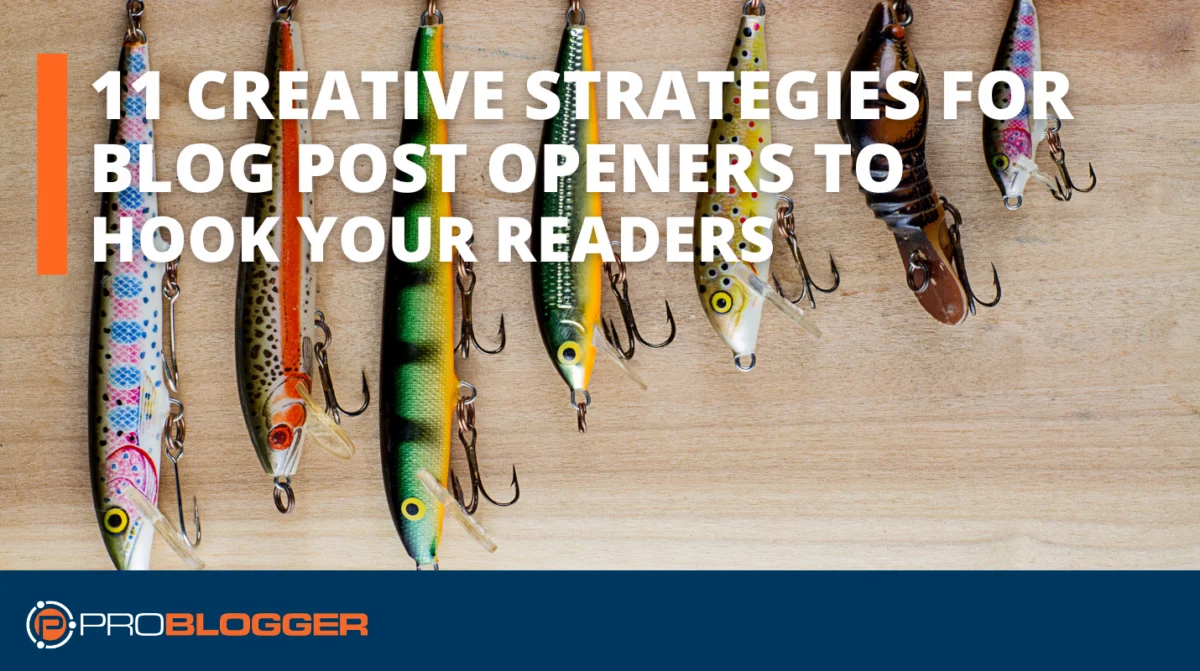
In the modern, image-heavy web environment, the first thing a reader sees is often an image rather than text. An impactful image acts as a psychological anchor. Research into eye-tracking studies indicates that users process images significantly faster than text. By pairing a high-quality, relevant image with a compelling opening line, the author creates a multi-sensory experience that increases the likelihood of the reader committing to the text.
Implications and Analytical Summary
The evolution of content strategy suggests that the role of the opening line is expanding. As artificial intelligence continues to generate standardized content, the premium on original, engaging, and human-centric openings will increase. Data analysts at major publishing platforms note that while SEO and keywords remain essential for discoverability, retention is entirely dependent on the quality of the "hook."
The chronological evolution of these strategies shows a shift from simple "keyword stuffing" to "user-experience optimization." Organizations that invest in refining their opening sequences report higher conversion rates, longer session durations, and improved brand loyalty. Ultimately, the opening line is not just a sentence; it is a strategic business asset that dictates the reach and impact of any written communication. Writers are encouraged to cycle through these eleven strategies, as reliance on a single technique can lead to content fatigue, where loyal readers begin to disengage due to predictability.