A significant victory for academic freedom, journalistic integrity, and free speech advocates unfolded this month as a federal judge temporarily blocked an immigration policy initiated by the Trump administration. The controversial directive sought to restrict entry into the United States, or lead to deportation, for individuals deemed by the U.S. government to be "complicit in censoring Americans." The ruling, delivered on July 14, 2026, by Federal District Judge James Boasberg, effectively suspends the policy’s enforcement until the ongoing litigation, spearheaded by a coalition of technology researchers and civil liberties groups, is fully resolved.
The policy, which drew immediate criticism from a broad spectrum of civil society organizations, aimed to penalize individuals involved in content moderation, fact-checking, and research related to online trust and safety. Judge Boasberg’s detailed 54-page ruling underscored that the policy "sweeps into the category of ‘foreign censorship’ a substantial measure of the research, reporting, advocacy, and association through which (the plaintiffs) and institutions like it carry out their protected work, and it does so on the basis of viewpoint, in violation of the First Amendment." This judicial intervention marks a crucial moment in the escalating debate over free speech, government power, and the regulation of online platforms.
Chronology of Events Leading to the Injunction
The roots of this legal battle can be traced back to the Trump administration’s growing skepticism and open hostility towards social media companies and their content moderation practices. Throughout its tenure, the administration frequently accused platforms of bias against conservative viewpoints and engaged in rhetoric that framed content moderation as a form of political censorship.
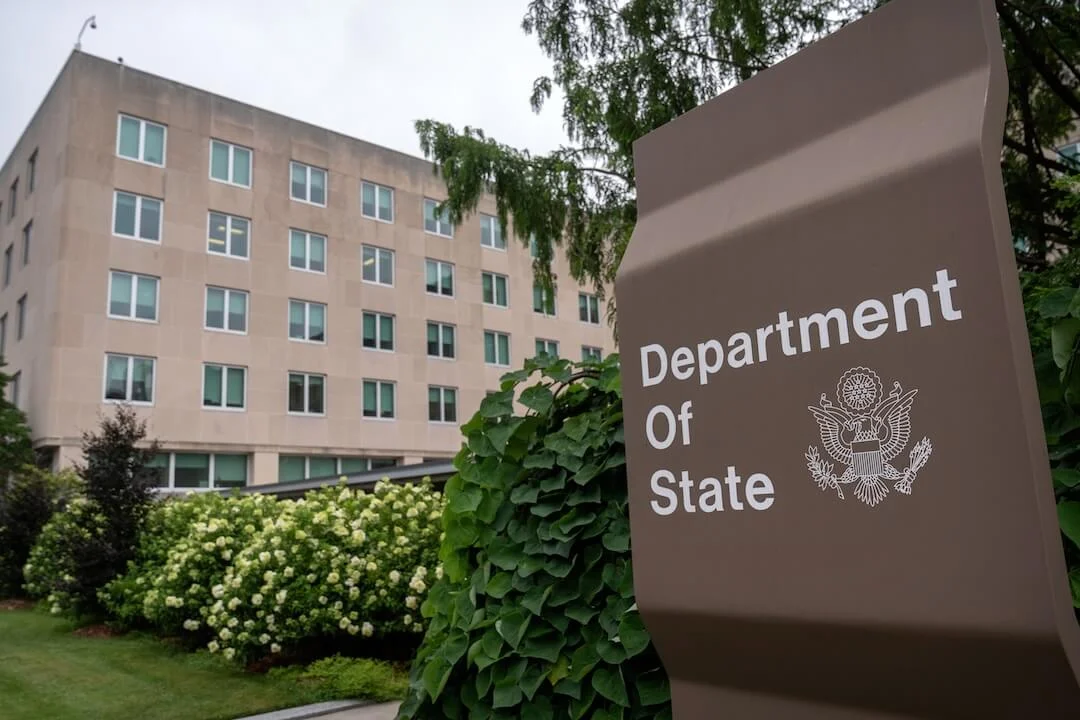
- May 2025: Secretary of State Marco Rubio formally issues the immigration policy. While the precise details were initially vague, reports indicated its intent was to target individuals deemed responsible for "foreign censorship" of American speech online. This move was seen as a direct extension of the administration’s broader efforts to pressure tech companies.
- December 2025: News outlets widely report that the State Department had begun instructing U.S. consular officers to specifically scrutinize visa applicants involved in fields such as misinformation, disinformation, fact-checking, content moderation, trust and safety, and compliance. Individuals found to be "complicit in censorship" faced the prospect of visa denials or even deportation.
- December 23, 2025: Under Secretary of State Sarah B. Rogers publicly confirms the policy’s implementation, naming five individuals who had already been "sanctioned." These included prominent figures like Thierry Breton, a former European Commissioner; Imran Ahmed, founder of the Center for Countering Digital Hate; Clare Melford, co-founder of the Global Disinformation Index; and Josephine Ballon and Anna-Lena von Hodenberg, co-founders of HateAid. Rogers emphasized that this list was "illustrative not exhaustive" and expressed a readiness to expand it.
- Early 2026: The Coalition for Independent Technology Research, an alliance dedicated to protecting and promoting independent technology research, along with other plaintiffs including Protect Democracy, files a lawsuit in federal court in Washington, D.C., seeking to block the policy. They argued it violated constitutional rights and federal administrative law.
- May 13, 2026: Oral arguments are heard in federal court. Carrie DeCell, a senior staff attorney and legislative adviser at the Knight First Amendment Institute, represented the plaintiffs, presenting arguments that the policy unconstitutionally discriminated against specific viewpoints and violated Fifth Amendment due process protections and the Administrative Procedure Act.
- July 14, 2026: Federal District Judge James Boasberg issues his ruling, temporarily blocking the policy’s enforcement, setting the stage for continued litigation and a potential appeal from the government.
Details of the Policy and Legal Challenge
The core of the Trump administration’s policy rested on the premise that efforts by foreign entities, including individuals and organizations, to moderate or fact-check online content constituted "censorship" of American speech. This definition extended to a wide array of activities critical to maintaining a healthy information ecosystem, such as identifying and mitigating disinformation campaigns, combating hate speech, and ensuring the accuracy of public discourse. The policy essentially weaponized immigration law to target those engaged in practices that the administration disagreed with politically.
The plaintiffs, a consortium of academics, journalists, and researchers, argued that this policy was a direct assault on the First Amendment. Their lawsuit, Coalition for Independent Technology Research v. Rubio, contended that by singling out individuals based on their professional engagement in content moderation and related fields, the government was imposing legal burdens on specific viewpoints within an ongoing public debate. The suit also highlighted concerns about due process and the administrative legitimacy of the policy’s creation.
The International Fact-Checking Network (IFCN), owned by the Poynter Institute, submitted an amicus curiae brief in support of the plaintiffs. The IFCN brief articulated a grave concern that the policy would "dissuade foreign journalists from challenging, fact-checking, or even accurately reporting on the Trump administration for fear of retribution." This underscored the potential chilling effect not just on academic research but on global journalism, essential for a well-informed citizenry.
The Court’s Rationale and Constitutional Underpinnings
Judge Boasberg’s ruling delved deeply into the constitutional implications of the policy, particularly its conflict with the First Amendment. He acknowledged the complex and evolving nature of public discourse in the digital age, noting that "Online platforms now carry an outsized share of our political arguments, exchange of critical news, and commerce, as well as much of our private conversations. This migration away from traditional forms of media has recast a timeless question: how, and by whom, should the bounds of public debate be drawn?"
The judge then meticulously explained that while this question is subject to legitimate debate, the government cannot use its power to unilaterally resolve it by punishing one side. He stated unequivocally: "Much of American political debate consists of disagreement over whether a practice is liberty or regulation, safety or suppression, accountability or censorship. The First Amendment does not permit officials to resolve that dispute by attaching legal burdens to the side they condemn."
This central argument is rooted in the principle of viewpoint neutrality, a cornerstone of First Amendment jurisprudence. Governments are generally prohibited from discriminating against speech based on the message it conveys or the ideas it expresses. By targeting individuals involved in content moderation, which the Trump administration characterized as "censorship," the policy was seen as punishing a particular viewpoint in the ongoing debate about online speech governance. The ruling makes it clear that the government cannot use visa policy as a tool to stifle dissenting or critical perspectives, even if those perspectives pertain to how digital platforms should operate.
Reactions and Broader Implications
The temporary injunction was met with widespread relief and affirmation from civil liberties groups, academic institutions, and journalistic organizations. Carrie DeCell of the Knight First Amendment Institute lauded the ruling, stating it "concluded that the policy unconstitutionally discriminates against one set of viewpoints in the public debate surrounding social media." This sentiment was echoed by Nicole Schneidman, tech counsel and policy strategist at Protect Democracy, who called the ruling "a major victory in our ongoing fight to protect free speech and independent technology research." Schneidman emphasized that the order allows researchers and advocates to continue their vital work "without the fear of retaliatory visa denials or deportations while we continue to advocate for permanent relief."
The implications of this ruling are far-reaching.
- Protection of Academic Freedom: It safeguards the ability of academics and researchers, both domestic and international, to study critical issues like misinformation, disinformation, and the societal impact of social media without fear of government reprisal. This is crucial for evidence-based policymaking and public understanding.
- Journalistic Independence: The policy’s potential to deter foreign journalists from reporting critically on U.S. administrations or engaging in fact-checking activities has been a major concern. The injunction offers a temporary shield against such a chilling effect, preserving the global flow of information.
- Precedent for Free Speech: The ruling reinforces the robust protections afforded by the First Amendment, particularly against government attempts to regulate speech based on viewpoint. It serves as a reminder that even in complex digital environments, constitutional principles remain paramount.
- International Collaboration: Many critical issues, such as disinformation and cyber threats, require global collaboration. The policy threatened to isolate U.S. researchers and policymakers from their international counterparts, hindering efforts to address these transnational challenges. The injunction allows for the continuation of these vital exchanges.
Government’s Stance and Future Steps
Despite the temporary setback, the federal government has indicated it is evaluating its options. It has requested 60 days to determine whether to file a notice of appeal. In its initial motion replying to the lawsuit, the government defended the policy, arguing that its "broad sweep is targeted toward deterring foreign censorship of American speech" and that the Secretary of State has a "legitimate reason for denying visas to those that seek to suppress Americans’ constitutional rights."
Should the government appeal, the case would move to a higher court, likely the U.S. Court of Appeals for the D.C. Circuit. An appeal would escalate the legal battle, potentially leading to a more definitive judicial pronouncement on the limits of executive power in regulating speech through immigration policy. The core arguments from the government would likely revolve around national sovereignty over immigration matters, the executive branch’s inherent authority in foreign policy, and a continued assertion that content moderation can indeed be a form of censorship that harms American interests. The outcome of such an appeal could set a significant precedent for future administrations and their interactions with the digital sphere.
The Contested Landscape of Online Speech
Judge Boasberg’s observation that "Online platforms now carry an outsized share of our political arguments, exchange of critical news, and commerce" perfectly encapsulates the contemporary challenge. The debate over "how, and by whom, should the bounds of public debate be drawn?" is not new, but it has gained unprecedented urgency with the advent of global digital platforms.
On one side are those who advocate for minimal intervention, fearing that any content moderation, even against hate speech or disinformation, can lead to censorship and stifle legitimate discourse. This perspective often aligns with the Trump administration’s view, which frequently characterized fact-checking and content removal as politically motivated suppression. This viewpoint is often underpinned by a belief in an unbridled marketplace of ideas, where even harmful speech should be allowed to compete.
On the other side are those who argue that unchecked online platforms can be exploited to spread harmful disinformation, incite violence, and undermine democratic processes. They advocate for responsible content moderation, fact-checking, and transparency, often pointing to the real-world consequences of viral falsehoods. This perspective emphasizes the responsibility of platforms to curate a safe and trustworthy environment, acknowledging that "more speech" isn’t always the solution to "bad speech."
The federal court’s ruling does not resolve this fundamental philosophical disagreement but rather asserts that the government cannot use its coercive power to enforce one side of the debate as official policy, especially when it infringes upon constitutionally protected rights. It highlights the distinction between private platform policies (which themselves are subject to ongoing legal and political scrutiny) and government-mandated restrictions on speech.
International Context and Impact
The policy’s designation of prominent international figures, such as former European Commissioner Thierry Breton and founders of European anti-disinformation organizations, underscored its global reach and potential for diplomatic friction. Breton, for example, played a significant role in crafting the European Union’s Digital Services Act (DSA), a landmark regulation aimed at making online platforms more accountable. Targeting individuals like him through immigration policy risked alienating key international partners and undermining cooperative efforts to address global digital challenges.
The very nature of misinformation and disinformation is transnational, requiring collaborative research and policy responses across borders. Organizations like the Center for Countering Digital Hate and the Global Disinformation Index operate internationally, contributing vital research and analysis that informs public understanding and policy debates worldwide. By threatening these experts with visa bans, the Trump administration’s policy risked isolating the U.S. from crucial international expertise and partnerships at a time when global cooperation on digital governance is more critical than ever.
The temporary blocking of this policy therefore represents not just a domestic legal victory but also a reprieve for international collaboration in the digital sphere. It allows for the continued free exchange of ideas, research, and expertise necessary to grapple with the complex realities of information ecosystems in a globalized world, without the looming threat of government-imposed travel restrictions based on political disagreements over online content. As the legal proceedings continue, the case will undoubtedly remain a focal point in the broader struggle to define the boundaries of free speech and government power in the digital age.