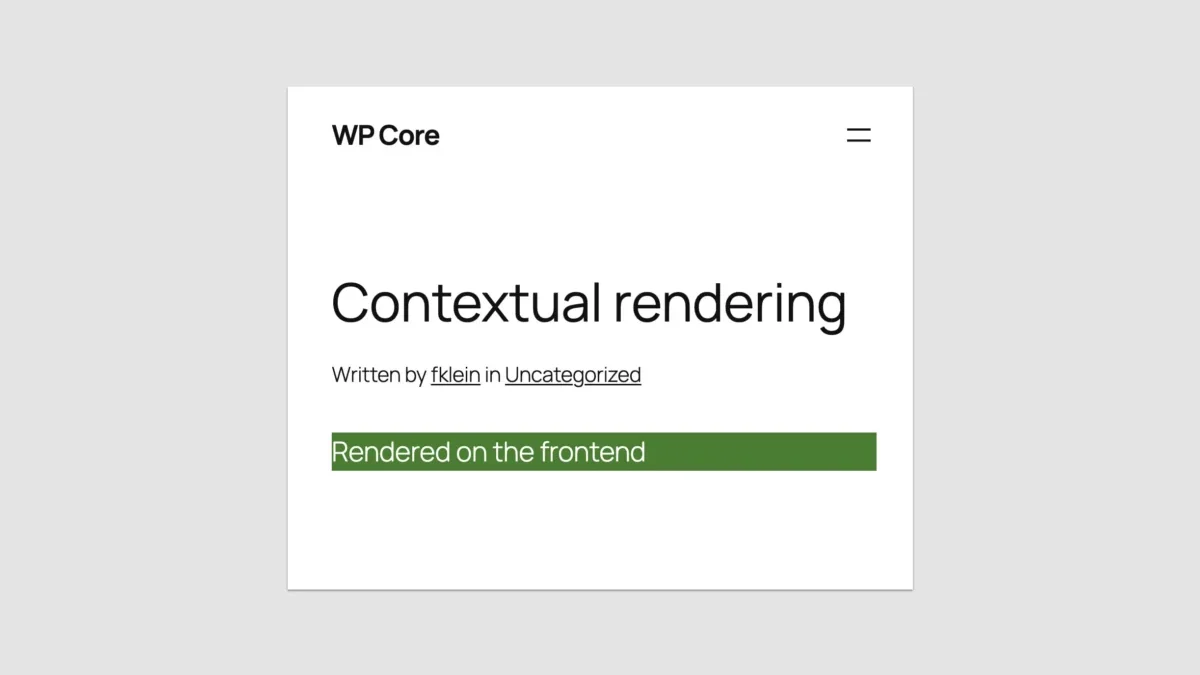
The WordPress project has officially released version 7.0, introducing a feature that addresses a long-standing friction point for developers transitioning from classic setups to modern block themes. Seven and a half years after the Gutenberg block editor was initially integrated into WordPress Core, developers can now register custom blocks using exclusively PHP. This structural update bypasses the traditional requirements of learning React, establishing complex build pipelines, or managing external NPM packages for straightforward server-rendered components.
Historically, developing a custom block demanded a dual-registration process requiring synchronization between PHP files on the server and JavaScript components on the client side. This architectural choice positioned a steep learning curve in front of traditional backend developers, many of whom maintained classic theme infrastructures simply to avoid the overhead of modern JavaScript tooling. With the debut of WordPress 7.0, the introduction of the autoRegister parameter within the register_block_type function allows the core application to automatically generate the necessary client-side registration and editor previews directly from server-side instructions.
The Evolution of WordPress Block Architecture
The journey toward PHP-only block registration spans several years of architectural debate within the WordPress community. When the block editor debuted in late 2018 with WordPress 5.0, it fundamentally shifted the publishing experience from a monolithic text area to a modular, component-driven paradigm. However, this shift created a profound divide in the developer ecosystem. Front-end engineers embraced the JavaScript-heavy REST API-driven environment, while back-end developers accustomed to writing procedural or object-oriented PHP faced a complex web of JSX, Webpack configurations, and Node.js dependency management.
Throughout successive releases, core contributors sought ways to ease this transition. Server-side rendering (SSR) was introduced early on, allowing dynamic blocks to output content via PHP callbacks. Yet, these SSR blocks still required a companion JavaScript file to register the block interface within the editor and handle attribute parsing. WordPress 7.0 eliminates this remaining JavaScript dependency for specific use cases, marking a significant philosophical shift in how core maintainers approach developer accessibility and ecosystem migration.
Technical Implementation and Capabilities
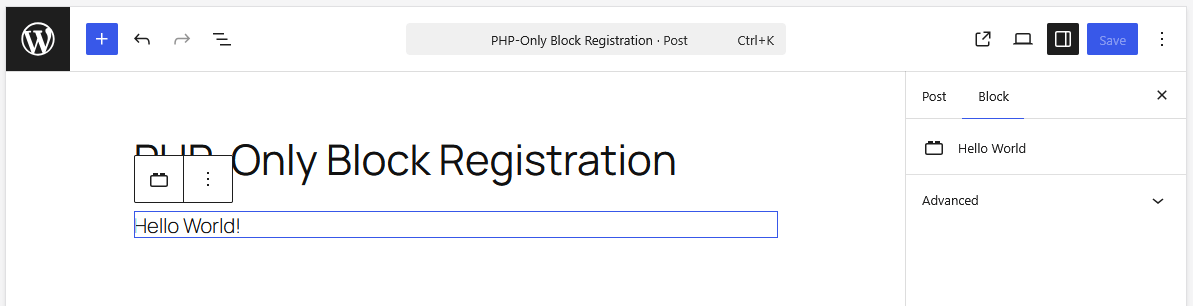
Under the new paradigm, registering a basic block requires only a standard PHP function hooked into the init action. By defining a render_callback and supplying the ‘autoRegister’ => true directive within the supports array, developers can output custom content that integrates natively into the block editor environment.
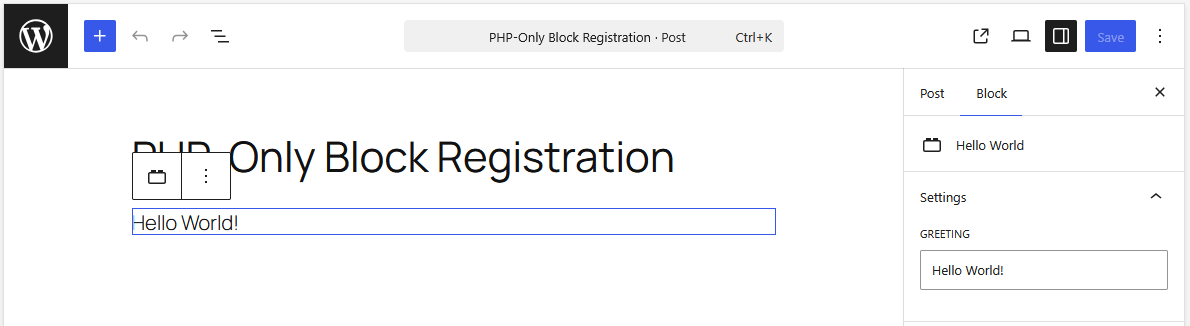
Attributes can similarly be defined directly within the PHP registration array. By specifying data types such as strings, numbers, or booleans, WordPress automatically constructs corresponding UI controls—such as text inputs, number fields, or checkboxes—within the block’s settings sidebar. This abstraction allows developers to expose functional customization parameters to content editors without writing custom React components.
Furthermore, developers can integrate stylesheets and view scripts cleanly by leveraging core registration functions. By passing handles to the style and view_script arguments of register_block_type, WordPress ensures that these assets load conditionally only when the specific block is present on a given page, preserving front-end performance. Advanced styling can be managed using the Block Supports API, allowing blocks to opt into core features like color customization, alignments, and spacing controls with minimal boilerplate code.
Architectural Limitations and Trade-Offs
Despite the streamlined development experience, core maintainers and early testers emphasize that PHP-only blocks are not a universal replacement for JavaScript-powered components. The architecture introduces distinct technical boundaries that developers must navigate.
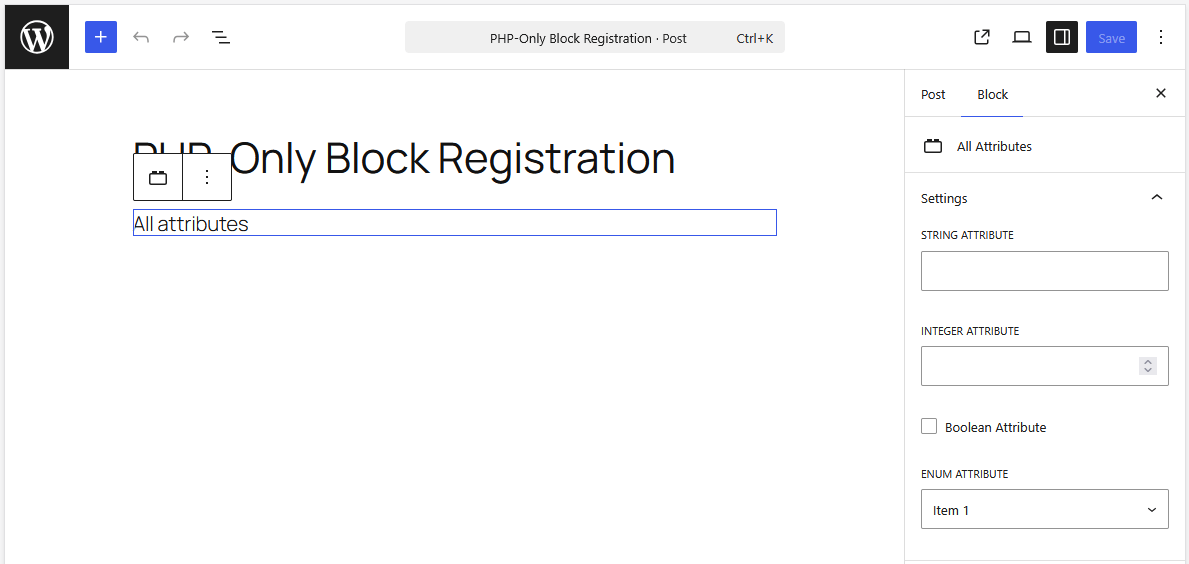
Because PHP-only blocks render via asynchronous requests to the REST API block-renderer endpoint, they operate outside the single-page application lifecycle that powers the core editor. Consequently, developers cannot build interactive UI elements directly inside the block preview canvas. All user configuration must occur through the auto-generated sidebar settings, and even those settings are currently constrained by a limited set of attribute types. Complex interfaces—such as rich text inline editing, media library image uploads, or multi-level nested structures—remain out of reach without custom JavaScript implementation.
Data synchronization presents another hurdle. Client-side state changes made within the editor—such as altering a post title or modifying featured metadata—are not immediately reflected in PHP-rendered blocks until the post is saved and the page is reloaded, due to the stateless nature of the underlying REST API requests. Additionally, out-of-the-box PHP block registration does not automatically pass the current post context ID to the render callback during editor previews, requiring developers to implement custom workarounds by parsing URL query parameters during the initialization hook.
The Strategic Use Case: Migrating Legacy Code

Industry analysts and veteran theme developers note that while the limitations render PHP-only registration suboptimal for building complex, highly interactive blocks from scratch, the feature serves a vital strategic purpose: legacy migration.
Thousands of active WordPress deployments remain tethered to classic themes not by design, but because the cost and complexity of rewriting years of legacy PHP shortcodes, custom widgets, and specialized template parts in JavaScript are prohibitively high. For agencies and solo developers managing enterprise sites or large portfolios, these migration barriers have historically delayed the adoption of high-performance block themes and Full Site Editing (FSE) capabilities.
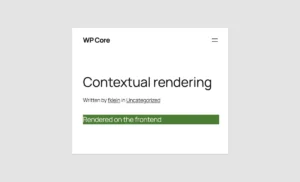
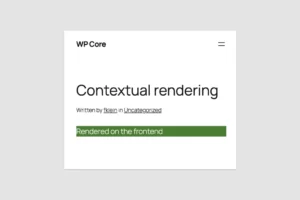
PHP-only blocks effectively neutralize this obstacle. By wrapping existing PHP functions, legacy sidebars, or custom template inclusions into server-rendered blocks, developers can port older codebases into modern block-based architectures in a fraction of the time. In these scenarios, the limitations of the editor preview matter very little; as long as the component renders accurately on the public-facing front end and allows basic placement within the editor canvas, the migration objective is successfully achieved.

Broader Industry Implications and Future Outlook
The release of WordPress 7.0 and the formalization of PHP-only block registration signal a broader recalibration within the open-source project regarding developer ergonomics. For years, the prevailing trajectory of WordPress Core leaned heavily toward JavaScript-first paradigms, occasionally alienating backend-focused contributors and traditional web agencies.
By lowering the barrier to entry for block creation, the core team aims to accelerate overall ecosystem adoption of block themes, which consistently outperform legacy themes in speed, accessibility, and maintainability. While core contributors have not outlined immediate plans to expand the limited attribute types or introduce advanced native UI controls for PHP-only blocks, the community response suggests that the feature will be widely adopted as a pragmatic bridge.

For development teams evaluating future architectural roadmaps, WordPress 7.0 provides a viable pathway to modernize aging digital properties. By leveraging existing PHP proficiencies, organizations can bypass the friction of modern build pipelines, resolve technical debt associated with classic themes, and fully integrate modern publishing workflows without demanding an immediate, wholesale retraining of their engineering workforce.