The release of the Lenovo Legion Tab Gen 5 marks a significant attempt to revive the niche of high-performance, small-form-factor Android tablets, a category that has remained largely dormant since the era of the Nvidia Shield Tablet. As mobile gaming continues to shift toward advanced emulation and high-fidelity titles, Lenovo has positioned this 8.8-inch device as a premium solution for enthusiasts. However, a rigorous analysis of the hardware, software optimization, and market positioning reveals a product that struggles to justify its $900 price point, particularly when compared to existing alternatives in the handheld and tablet markets.

The Evolution of the Gaming Tablet
To understand the context of the Legion Tab Gen 5, one must look back at the landscape of the mid-2010s. The Nvidia Shield Tablet, released in 2014 and followed by the K1 iteration in 2015, established a gold standard for mobile gaming. It featured front-firing speakers, a dedicated gaming controller interface, and a focus on portability that allowed it to serve as a secondary device to laptops. Since Nvidia’s withdrawal from the consumer tablet market to focus on the Shield TV and cloud-based gaming services, few manufacturers have dared to enter the "mini-tablet" space with a gaming-first ethos.

Lenovo’s entry into this space began in earnest with the Gen 3 model in 2025. The Gen 5, released in late 2026, serves as the latest iteration in this specialized lineage. Unlike general-purpose tablets from Samsung or Apple, which focus on productivity and multimedia, the Legion Tab is explicitly marketed toward users interested in mobile emulation and high-end gaming.

Hardware Specifications and Design Constraints
The Legion Tab Gen 5 is built around an 8.8-inch 16:10 LCD panel. While the screen offers a sharp resolution and high refresh rates, the choice of LCD technology is a notable point of contention for a device at this price bracket. Industry trends have largely shifted toward OLED technology for premium mobile devices, which offers superior contrast ratios and deeper black levels. Lenovo’s reliance on an LCD panel, combined with a peak brightness of 800 nits in High Brightness Mode (HBM), creates a display that is functional but falls short of the "premium" experience consumers expect at a $900 entry price.

The device’s physical construction mirrors its utilitarian roots. Weighing in at 360 grams, the slate is substantial, though its weight distribution can feel top-heavy during portrait-oriented tasks. One of the more controversial design choices is the inclusion of a prominent camera bump. In an era where tablet photography is rarely prioritized, the protrusion prevents the device from laying flat, a frustration for users who frequently use their tablets on desk surfaces. Furthermore, the absence of a fingerprint scanner—relying solely on front-facing camera-based facial recognition—is a significant oversight in biometric security, particularly for a device marketed as a high-end personal gaming machine.

Software Performance and Optimization Challenges
Perhaps the most significant hurdle for the Legion Tab Gen 5 is the state of its software. The device operates on a version of Android that, according to initial testing, suffers from optimization issues that diminish the benefits of its powerful internal hardware. Users have reported instances where the device becomes "stuck" in a 60Hz refresh rate mode, necessitating a manual restart of the display settings.

Beyond refresh rate bugs, the user experience is marred by aggressive, pre-installed software. The inclusion of bloatware—ranging from casual match-three games to various third-party utility applications—is an anomaly in a device retailing for nearly $1,000. For a premium product, the standard expectation is a clean, optimized software environment. Additionally, the auto-rotate functionality and general UI responsiveness have been noted as inconsistent, suggesting that Lenovo’s software engineering team has not yet fully bridged the gap between the high-performance hardware and a smooth user experience.

The Role of Emulation: DroidDeck and Beyond
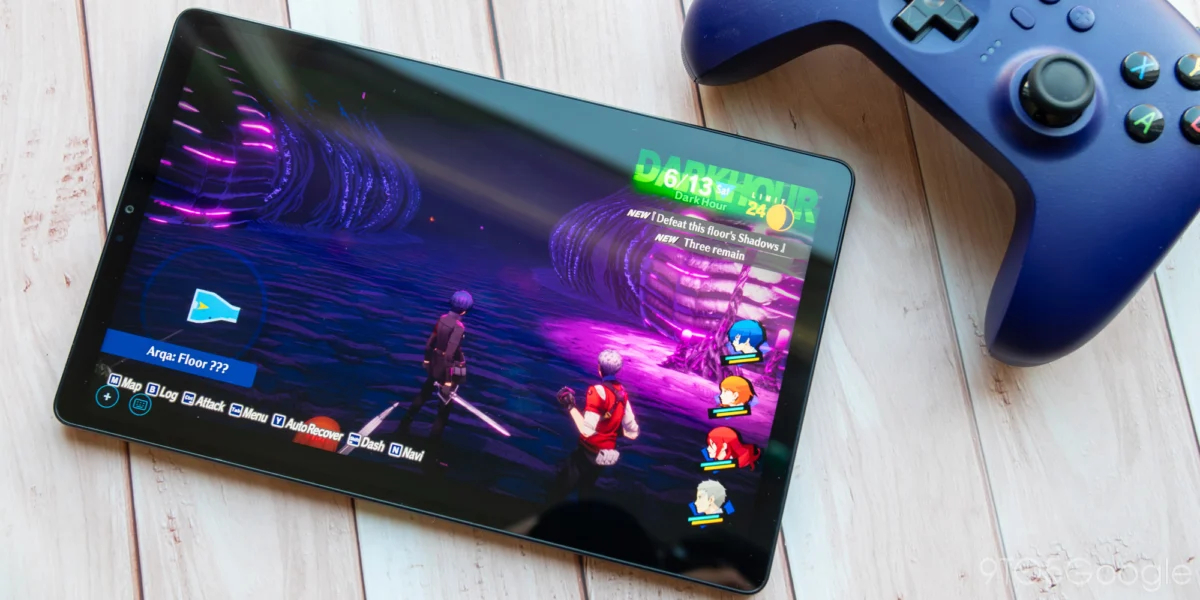
The primary appeal of the Legion Tab Gen 5 lies in its potential as a platform for PC emulation. With the rise of applications like DroidDeck, users are increasingly capable of running Steam-based titles on Android hardware. In testing, the device successfully handled modern, graphically demanding titles like Persona 3 Reload.

However, the experience is not plug-and-play. Achieving playable frame rates often requires significant manual adjustment of graphics settings, and the emulation process remains in its relative infancy. While the device demonstrates the raw power of the Snapdragon 8 Elite Gen 5 chipset, the current state of emulation software means that the "gaming tablet" experience is more of a technical hobby than a refined consumer feature. For many, the unreliability of this emulation layer may outweigh the excitement of having PC titles on a portable slate.

Comparative Market Analysis
When evaluating the $900 price point, the Legion Tab Gen 5 faces stiff competition. The Apple iPad Mini, while also subject to its own pricing criticisms, offers a more polished ecosystem and a more consistent, albeit locked-down, user experience. Furthermore, the Valve Steam Deck—the industry leader in portable PC gaming—is available at a lower price point, even after recent adjustments. The Steam Deck provides native support for PC games, removing the need for the complex, often buggy, emulation workarounds required on the Legion Tab.

Lenovo’s decision to launch at $850-$900 places the tablet in direct conflict with devices that offer more mature software, better-integrated biometrics, and, in many cases, superior display technologies. Even with holiday discounts reducing the price to $700, the value proposition remains difficult to justify against the backdrop of competitors that have been in the market for several years.

Future Outlook and Industry Implications
The trajectory of the Legion Tab series suggests that Lenovo is committed to the concept, but the execution remains in a "work-in-progress" phase. Reports indicate that a future iteration, potentially arriving in 2027, may include an OLED display and enhanced connectivity options. For the current Gen 5, however, the lack of these features makes it a difficult recommendation for the general consumer.

The broader implication for the tablet market is clear: there is a demand for specialized, gaming-centric hardware that deviates from the standard productivity-tablet mold. However, that demand is highly sensitive to price and software quality. Until Lenovo can refine its Android implementation and provide a more premium, bug-free user experience, the Legion Tab will likely remain a niche device for enthusiasts willing to tolerate software "jank" in exchange for the portability of a small-form-factor gaming powerhouse.

Conclusion
The Lenovo Legion Tab Gen 5 is a testament to the potential of high-performance, compact tablets, yet it serves as a cautionary tale regarding the importance of software optimization and competitive pricing. While it successfully brings a powerful chipset to an 8.8-inch form factor, the combination of a dated display technology, inconsistent UI performance, and the absence of basic security features like a fingerprint sensor creates a disconnect between the product’s premium price and its actual utility. For those seeking a mobile gaming experience, the current market offers more stable, purpose-built alternatives. Potential buyers would be well-advised to monitor the evolution of the Legion series, as the hardware foundation is promising, even if the current implementation requires further iteration to truly compete in the modern handheld market.