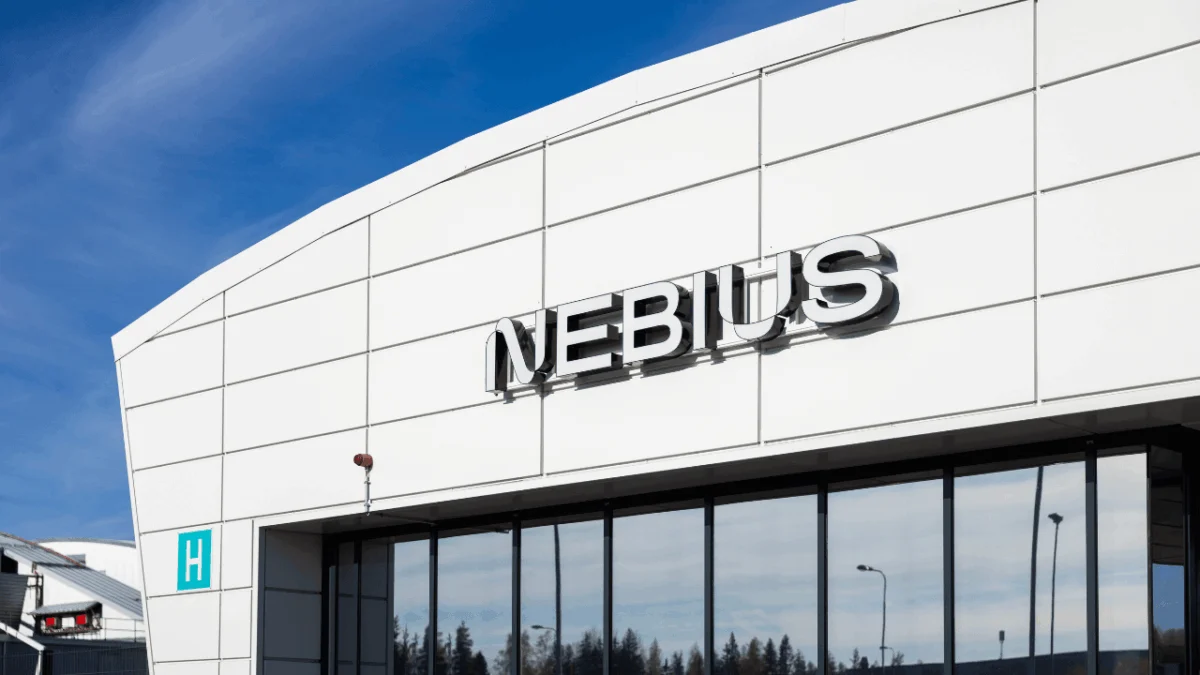
European artificial intelligence infrastructure provider Nebius has announced its financial results for the third quarter, revealing an astronomical year-on-year revenue surge to $981m alongside a narrowing net loss of $37.5m. The Amsterdam-listed company, widely classified as a specialized "neocloud," continues to ride the powerful wave of global enterprise demand for high-performance computing power, specialized software, and heavy-duty graphics processing units. However, this period of hyper-growth is not without operational friction. The infrastructure giant confirmed that infrastructural roadblocks, specifically power delays impacting its critical co-location data center sites, have forced a recalibration of its timeline, pushing projected revenues further out into 2027.
The latest financial figures illustrate the sheer velocity of the generative AI boom, which continues to drive corporations across every sector to acquire massive compute resources. Yet, the physical reality of building out the power-hungry infrastructure required to train and deploy advanced machine learning models has introduced unprecedented supply chain and logistical bottlenecks. As Nebius navigates these physical constraints while working to reassure jittery equity markets, the broader industry watches closely to see how specialized cloud providers can maintain momentum amid escalating capital expenditures and infrastructure delivery timelines.
Explosive Revenue Growth and Financial Trajectory
The scale of expansion highlighted in Nebius’s third-quarter report underscores the insatiable appetite for AI-related compute infrastructure. The company registered a staggering 571 per cent leap in revenues compared to the same period in the previous year, hitting $981m. This stellar performance is directly attributable to the rapid commercialization of its core business model: constructing and operating massive data centers, packing them with cutting-edge GPUs, and renting that capacity to artificial intelligence developers and enterprise clients alongside proprietary application software.
Despite the top-line explosion, Nebius continues to operate at a net loss as it aggressively scales its physical footprint and invests heavily in heavy-duty hardware. For the third quarter, the company posted a net loss of $37.5m. While significant, this figure represents a substantial improvement and narrowing of losses compared to the $119.6m deficit reported during the corresponding quarter in the previous year. Management remains confident in the company’s long-term financial trajectory, reiterating its strategic guidance that the business expects to achieve a pre-tax break-even point by the end of 2027.
This financial checkpoint arrives at a delicate moment for the broader tech sector. Just last month, Nebius shares experienced a steep correction, losing more than a third of their market value as institutional and retail investors alike began to question the financial sustainability of the relentless AI infrastructure boom. With capital expenditure requirements reaching unprecedented highs, the market has grown increasingly sensitive to any signal that revenue realization might be delayed by physical or logistical constraints.
Infrastructure Bottlenecks and the New Jersey Delay
The structural realities of building out next-generation computing facilities came into sharp focus as Nebius acknowledged that several of its co-location data center sites have encountered operational delays. Most notably, the company’s expansive 300-megawatt facility located in Vineland, New Jersey, has fallen behind schedule. The primary culprit behind the New Jersey campus delay is a complex web of local power provisioning and grid-connection constraints—a systemic issue currently plaguing data center developments across North America and Europe.
The New Jersey data center campus holds strategic importance for Nebius, not least because tech titan Microsoft is secured as a major anchor customer for the site. The grid-connection delays mean that the initial timeline for bringing the facility fully online has slipped, forcing the company to adjust its medium-term financial projections. Consequently, Nebius has confirmed that a portion of the anticipated revenue generation originally slated for 2026 will now shift into 2027.
Addressing these challenges head-on, Nebius CEO Arkady Volozh spoke candidly about the arduous nature of large-scale infrastructure engineering in the current macroeconomic climate. Building at this scale is hard, Volozh noted, emphasizing that supply chain and utility delays have simply become an inescapable reality of the modern data center industry. The CEO stressed that Nebius is not immune to these systemic headwinds. However, he was quick to reassure stakeholders regarding customer relationships, confirming that all affected clients have been kept fully informed and, crucially, that none of the contracted capacity has been canceled.
The Rise of Open-Weight Models and Market Diversification
Beyond the physical architecture of data centers, Nebius is also capitalizing on shifting software preferences within the artificial intelligence ecosystem. During the third-quarter earnings disclosure, leadership highlighted a marked acceleration in the adoption of open-weight models across its platform. While proprietary, closed-source models developed by major frontier labs continue to dominate headlines, open-weight alternatives have gained significant traction among enterprise clients seeking greater customization, data privacy, and cost efficiency.
Roman Chernin, Chief Business Officer at Nebius, elaborated on this strategic shift during the earnings call, pointing out that the diversification of the model landscape is a net positive for the company’s business model. Chernin observed that the adoption of open-source and open-weight models has accelerated dramatically over the preceding few months. According to Chernin, this growing diversity within the market benefits Nebius directly because it expands the total addressable universe of customers and specialized partners the company can service.
By catering to enterprises deploying diverse architectural approaches—ranging from massive foundational models to highly specialized, domain-specific open-weight applications—Nebius positions itself as a versatile infrastructure layer agnostic to specific model creators. This multi-model strategy helps insulate the neocloud from single-vendor dependencies, ensuring steady utilization rates across its GPU clusters even as the underlying software frameworks evolve at breakneck speed.
Background Context: The Rise of the Neocloud
To understand Nebius’s current market position, it is necessary to examine the structural evolution of the cloud computing market over the past half-decade. Traditionally, the enterprise cloud market was dominated by hyper-scalers—massive conglomerates like Amazon Web Services, Microsoft Azure, and Google Cloud. However, the generative AI explosion triggered by foundational models created a sudden, highly specialized demand for accelerated computing that traditional cloud architectures were initially ill-equipped to handle efficiently.
Enter the "neocloud"—a new breed of cloud service provider purpose-built from the ground up for artificial intelligence workloads. Unlike legacy providers whose infrastructure was designed primarily for general-purpose enterprise computing, web hosting, and relational databases, neoclouds like Nebius optimize every layer of the stack specifically for massively parallel GPU processing, high-speed networking fabrics like InfiniBand, and low-latency storage clusters.
Nebius emerged from a profound corporate restructuring of the prominent European technology firm formerly known as Yandex NV. Following the divestment of its Russian assets, the newly independent entity rebranded as Nebius and redirected its considerable engineering talent, technical infrastructure, and capital toward establishing a global AI infrastructure powerhouse. By securing access to scarce hardware components—chiefly enterprise-grade AI accelerators from manufacturers like NVIDIA—Nebius carved out a lucrative niche bridging the gap between hardware manufacturers and AI-native enterprises.
Chronology of Key Milestones
The trajectory of Nebius as an independent AI infrastructure pure-play is marked by several pivotal milestones over a compressed timeline:
- 2024 Corporate Rebirth: Following the successful completion of the Yandex NV asset divestment, the newly formed Nebius emerges publicly as an Amsterdam-listed European AI infrastructure company, immediately setting its sights on the global neocloud market.
- Early 2024 Expansion Phase: The company initiates aggressive capital deployment to secure Tier-3 and Tier-4 data center space across Europe and North America, stocking facilities with thousands of high-performance GPUs to meet soaring enterprise demand.
- Mid 2024 Market Pressures: Despite achieving rapid sequential revenue growth, Nebius shares face downward pressure amid broader macroeconomic and tech-sector anxieties regarding the astronomical capital expenditures required to sustain the AI infrastructure gold rush.
- Q3 2024 Financial Disclosure: Nebius reports a monumental 571 per cent year-on-year revenue surge to $981m, narrowing its net loss to $37.5m while formally disclosing operational and power-related delays at its Vineland, New Jersey co-location facility.
- Late 2024 Strategic Pivot: Leadership confirms that power grid constraints will shift certain revenue recognitions from 2026 into 2027, while simultaneously highlighting a strategic pivot to support the accelerating adoption of open-weight models on its platform.
Broader Market Implications and Industry Analysis
The challenges and successes reported by Nebius offer a revealing micro-lens into the broader macro-economic and engineering realities of the global artificial intelligence transition. The explosive revenue growth experienced by the firm confirms that enterprise demand for raw compute power remains unabated. Companies across finance, healthcare, manufacturing, and consumer technology are aggressively moving past the experimental phase and committing significant capital to production-grade AI deployments.
However, the Vineland data center delay underscores a looming bottleneck that threatens to constrain the entire technology sector: power infrastructure. Modern AI data centers are massive energy sinks, frequently requiring hundreds of megawatts of continuous electrical power to feed thousands of densely packed GPUs. Local electrical grids, particularly in developed industrial regions across North America and Europe, were simply not engineered to absorb such massive, localized surges in power demand on short notice.
Consequently, power provisioning—rather than silicon availability or software capability—is rapidly becoming the primary gating factor for the expansion of the global AI economy. Utility companies, regional transmission organizations, and municipal governments are now locked in a race against time to upgrade transmission lines, approve substation builds, and integrate clean energy sources to keep pace with the insatiable energy appetite of the artificial intelligence sector.
For investors, the situation requires a sophisticated balancing act. On one hand, the massive top-line growth demonstrated by Nebius proves that the underlying business model is exceptionally lucrative when compute capacity is successfully brought online. On the other hand, the reality of project delays and the resulting shift in revenue timelines from 2026 to 2027 serves as a cautionary reminder that digital infrastructure is inextricably bound to physical constraints.
Looking forward, the ability of neoclouds like Nebius to successfully navigate grid bottlenecks, secure reliable long-term power purchase agreements, and maintain high customer satisfaction will determine which players successfully transition from high-growth startups to entrenched pillars of the global technology infrastructure. As the market matures and enterprise clients increasingly diversify their architectures to embrace a healthy mix of proprietary and open-weight models, infrastructure providers capable of offering flexible, high-performance, and reliable compute environments will remain indispensable to the future of the digital economy.