The Jeep Gladiator, since its highly anticipated return to the mid-size truck market in 2019, has been celebrated for its off-road prowess, open-air design, and utility. However, a consistent point of contention among enthusiasts and industry critics alike has been the singular powertrain offering: the 3.6-liter Pentastar V6. While this engine provides a respectable 285 horsepower and 260 pound-feet of torque, the demand for higher displacement and increased output has persisted. As the 2025 model year approaches, Jeep is finally signaling a shift in its strategy, confirming that V8 power is destined for its lineup, even as specialized aftermarket tuners like America’s Most Wanted 4×4 (AMW4x4) continue to push the boundaries of what is possible with the Hellcat platform.
The Evolution of the Gladiator Powertrain Landscape
When the Jeep Gladiator (JT) debuted, it relied on the tried-and-true 3.6-liter V6, a powerplant that serves the Wrangler well but leaves some drivers wanting more when hauling heavy loads or navigating challenging technical terrain. In recent performance reviews, including the 2025 Jeep Gladiator Rubicon evaluation, the vehicle maintained its status as a top-tier off-roader, yet critics frequently noted the absence of diverse engine options.
For years, the void in the factory lineup was filled by custom shops. Because the Jeep chassis architecture—particularly the engine bay design shared with the Wrangler—is modular enough to accommodate larger displacements, the aftermarket community saw an immediate opening. Companies such as AMW4x4 identified a niche for customers who viewed the Gladiator not just as a mid-size truck, but as a high-performance vehicle capable of delivering supercar-level acceleration alongside mountain-climbing agility.
Jeep’s Strategic Pivot: The Return of the Hemi
The automotive industry experienced a significant shift in expectations when Jeep CEO Bob Broderdorf addressed the future of the brand during a 2025 briefing. Addressing concerns regarding the future of the high-performance 392 Wrangler, Broderdorf stated, "We will extend the availability of the 392 on Wrangler, and in fact, we will tap the power and performance of the Hemi across Jeep products."
This statement marks a pivotal moment in the history of the Gladiator. By confirming that the Hemi engine will find its way into the Gladiator lineup, Jeep is responding to years of consumer feedback and market pressure. While the specifics regarding which trim levels will receive the V8 treatment remain under wraps, the announcement serves as a strategic move to fend off competition from other mid-size trucks and retain customers who might otherwise look to third-party modifiers. For the average consumer, this means the prospect of a factory-warrantied, V8-powered Gladiator is no longer a pipe dream, but a near-future reality.
The Aftermarket Titan: AMW4x4 and the Hellcat Conversion
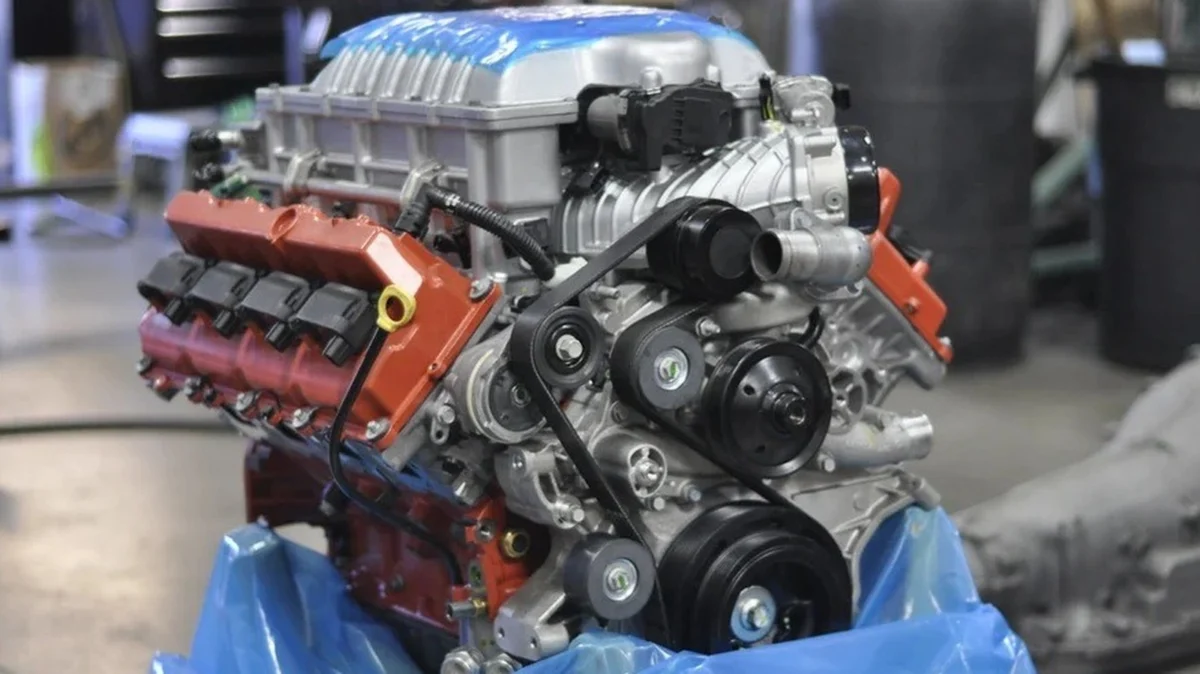
While factory V8 power is on the horizon, the current gold standard for performance remains the Hellcat-swapped Gladiator. AMW4x4, based in Michigan, has built its reputation on transforming stock Gladiators into monstrous off-road machines by integrating the supercharged 6.2-liter Hellcat Hemi engine.
The performance differential is stark. A stock 3.6-liter V6 Gladiator produces 285 horsepower. In contrast, an AMW4x4 conversion utilizing the supercharged Hellcat engine generates between 707 and 717 horsepower, depending on the specific tuning and configuration. Even more impressive is the torque output; where the stock engine manages 260 pound-feet, the Hellcat conversion provides a staggering 650 pound-feet of torque. This shift effectively places the converted Gladiator in a different performance class entirely, rivaling purpose-built desert racers rather than standard mid-size consumer trucks.
Engineering Complexity and Cost Factors
Converting a Jeep Gladiator to a Hellcat-powered beast is not merely a matter of engine swapping. It is an intricate engineering process that requires extensive modifications to ensure the vehicle remains reliable and drivable. According to technical documentation provided by AMW4x4, a standard conversion package involves approximately 65 hours of professional labor.
The scope of the work is extensive. To safely harness the 700+ horsepower output, the conversion includes:
- Thermal Management: The addition of a high-capacity oil cooler kit and a 940-watt cooling fan to prevent overheating under extreme stress.
- Drivetrain Reinforcement: The integration of a heavy-duty ZF automatic 8-speed transmission designed to handle significantly higher torque loads than the stock unit.
- Fuel and Electrical: The installation of a high-output alternator and a high-flow fuel pump system to sustain the engine’s thirst for fuel and electricity.
- Structural Integrity: A reinforced engine mounting system to manage the increased vibration and power transfer.
These conversions are reflected in the pricing. A complete, turnkey 2025 AMW 707 8LUG Hellcat Gladiator can command upwards of $210,000, including high-end upgrades such as 17-inch forged beadlock wheels, 8-piston brake calipers, and specialized suspension tuning. For those who already own a donor vehicle, the conversion package itself starts at approximately $60,000, which includes the necessary hardware to safely house the engine.
Implications for the Automotive Market
The existence of these two parallel paths—factory V8 integration and high-end aftermarket modification—illustrates a broader trend in the automotive world: the divergence between mass-market utility and extreme performance.
Jeep’s decision to move forward with a factory V8 signifies that the brand is confident in the longevity of internal combustion engines within their enthusiast segments, despite the broader industry push toward electrification. By keeping the Hemi alive, Jeep is doubling down on its brand identity as a purveyor of "trail-rated" power.
However, the aftermarket segment serves a different purpose. Companies like AMW4x4 cater to a demographic that values exclusivity, extreme specifications, and a level of performance that factory mass-production lines are often unable to achieve due to regulatory constraints and cost-efficiency mandates. While the factory V8 will undoubtedly be a success, it will likely remain a more balanced, street-legal, and warranty-compliant option, leaving the "Hellcat" segment as the ultimate choice for the ultra-enthusiast.
Broader Impact on the Mid-Size Segment
The entry of a factory-produced V8 Gladiator puts pressure on other manufacturers. Currently, the mid-size truck segment is highly competitive, with models like the Toyota Tacoma and Ford Ranger offering various performance packages. Jeep’s move forces the conversation back to displacement and power, potentially sparking a new "horsepower war" in the mid-size truck market.
Furthermore, the longevity of these high-performance options is tethered to emissions regulations. As federal and international standards for fuel economy and carbon emissions tighten, the window for massive V8s is narrowing. Both Jeep’s upcoming Hemi integration and the existing AMW4x4 conversions represent a "golden era" of sorts, where massive internal combustion engines are still accessible to the public before the industry shifts definitively toward hybrid and electric architectures.
Conclusion
The Jeep Gladiator is at a turning point. For years, the vehicle has been defined by its limitations as much as its strengths. With the manufacturer now committing to the Hemi platform, the Gladiator is poised to reclaim its position as the most powerful factory-built mid-size truck on the market. Simultaneously, the success of aftermarket shops like AMW4x4 proves that there is an enduring, albeit expensive, appetite for extreme performance. Whether a consumer opts for a factory-backed V8 or an aftermarket Hellcat, the future of the Gladiator is unequivocally louder, faster, and more capable than ever before. As the 2025 model year unfolds, enthusiasts will be watching closely to see exactly how Jeep executes its Hemi strategy and how the market responds to the long-awaited arrival of factory-grade, eight-cylinder power.