A New Chapter for Apple Hardware
For over a decade, Apple has maintained a reputation for entering emerging product categories only after the technology has matured, opting to refine existing concepts rather than pioneer them. The iPhone Duo is the culmination of years of internal research and development into flexible display materials and hinge durability. However, despite the brand’s history of "perfecting" designs, early testers have observed that the device remains susceptible to the same technical hurdles as the Samsung Galaxy Z Fold series.
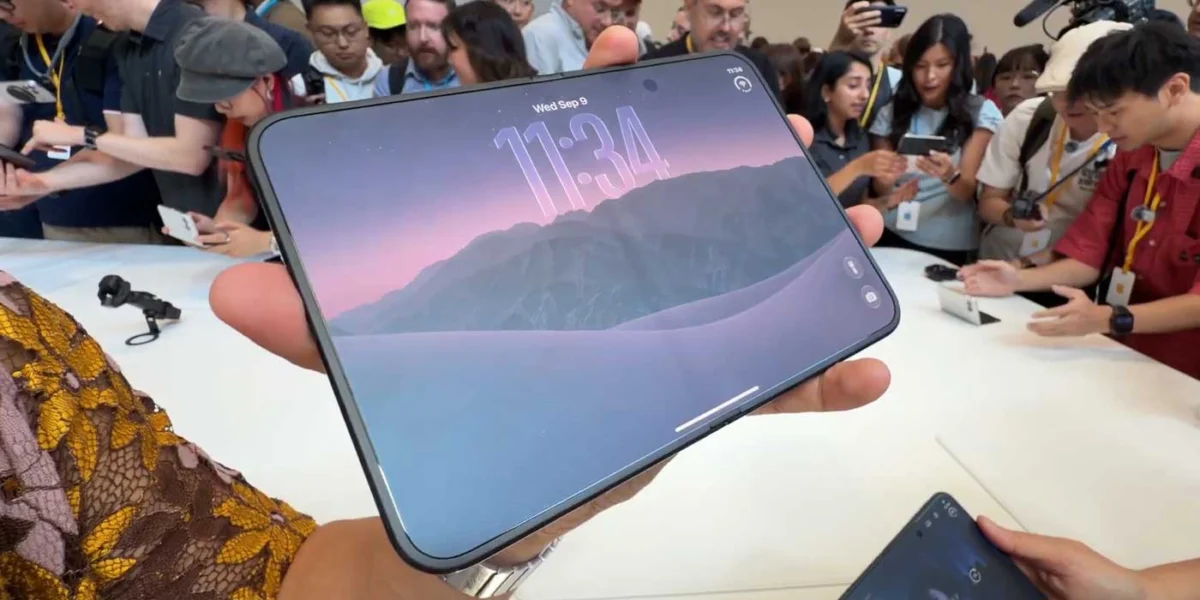
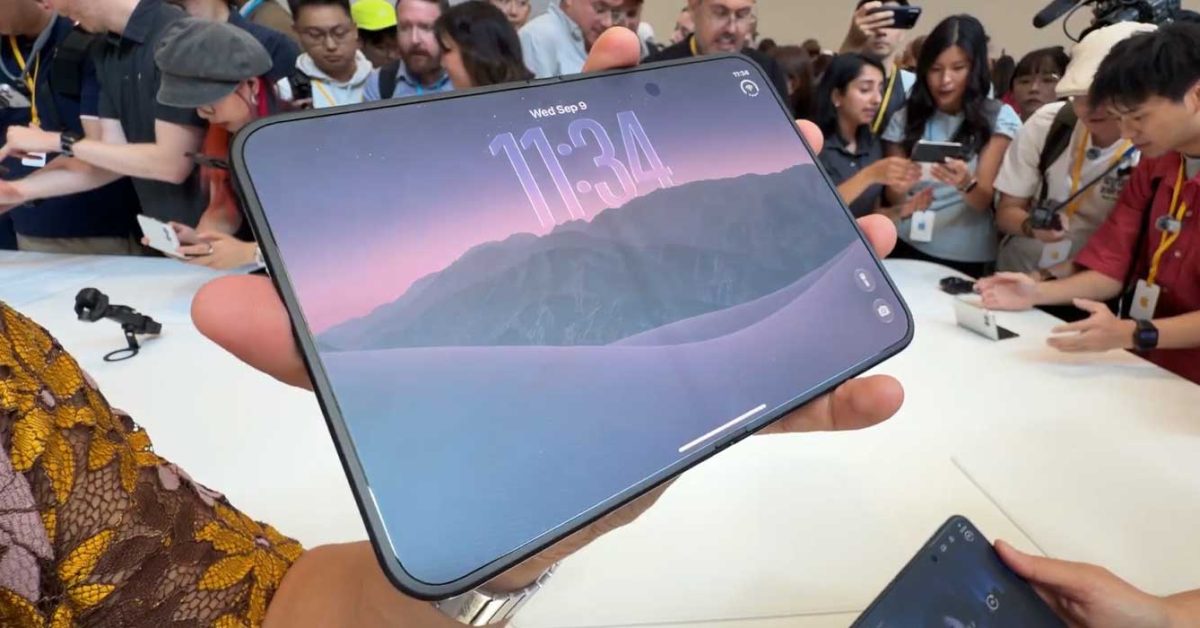
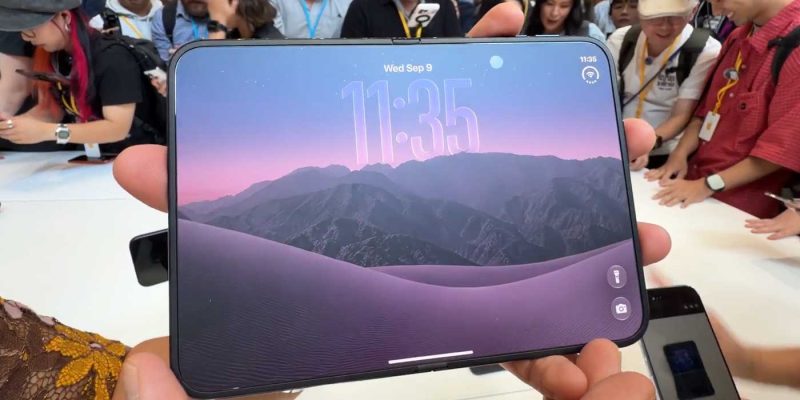
The primary point of contention among early reviewers is the internal display’s screen crease. Positioned along the central hinge line, the indentation is a physical reality of the current foldable display technology, where the folding glass must transition through a radius. While Apple employs a sophisticated two-layer flexible glass architecture designed to mitigate internal tension, the crease remains visible under direct lighting, mirroring the structural characteristics seen in the latest Galaxy Z Fold 8 and Fold 8 Ultra.
Visual Discrepancies and Under-Display Camera Challenges
Beyond the crease, observers have noted a distinct aesthetic difference between the outer and inner displays. The external display utilizes the latest iteration of Apple’s Ceramic Shield 2, providing a high-gloss, scratch-resistant finish. Conversely, the internal foldable panel features an anti-reflective coating that produces a decidedly matte appearance. While this helps in bright environments, it creates a visual disconnect when transitioning between the two screens.
This matte finish inadvertently highlights the device’s under-display camera (UDC). Because the camera module must function as a high-fidelity sensor for Face ID and biometric authentication, it lacks the matte treatment applied to the rest of the inner display. Consequently, the area housing the lens appears more reflective than the surrounding screen, making the "hidden" camera more noticeable than Apple’s marketing materials suggested. This mirrors the design challenges faced by Samsung, which has historically struggled to balance pixel density over the camera cutout with sufficient light intake for imaging sensors.
Chronology of the Development Cycle
The journey to the iPhone Duo began long before the September 2026 announcement. Industry analysts point to 2022 as the pivotal year when Apple began aggressively filing patents for hinge mechanisms and foldable screen layering. Throughout 2024, reports surfaced regarding Apple’s supply chain discussions with major display manufacturers, focusing on thin-film encapsulation and ultra-thin glass (UTG) durability.
- Late 2023: Initial reports confirm Apple has moved beyond "concept-only" testing to prototype endurance trials.
- Early 2025: Supply chain leaks suggest Apple is testing a "two-layer" glass system to prevent material binding.
- June 2026: Apple teases a "new way to experience iOS" during its Worldwide Developers Conference (WWDC), hinting at a UI shift.
- September 2026: Official reveal of the iPhone Duo at the Apple Park keynote event.
Technical Specifications and Durability Metrics
The iPhone Duo arrives with an IP68 rating for water and dust resistance, a significant engineering feat for a device with a mechanical hinge. However, industry experts are noting that this rating may be temporary, similar to the durability concerns seen with the Google Pixel 10 Pro Fold. The environmental seals required to keep debris out of the internal mechanism are prone to degradation over repeated folding cycles.
Data suggests that the device uses a proprietary titanium-aluminum alloy frame to maintain structural rigidity while keeping the total weight lower than its primary competitors. Despite these premium materials, the reliance on a mechanical hinge means that the device, like all foldables, requires careful handling. Apple has reportedly tested the hinge for over 300,000 cycles, yet the industry standard remains fluid as usage patterns in real-world environments—such as extreme temperature shifts and dust exposure—are difficult to simulate entirely in laboratory settings.
Software Integration: The iOS 27 Advantage
Where the iPhone Duo distinguishes itself most clearly is through the implementation of iOS 27. While Android manufacturers have spent years iterating on "One UI" or "OxygenOS" for foldables, Apple’s approach appears to be fundamentally rooted in how users interact with a device that shifts form factors.
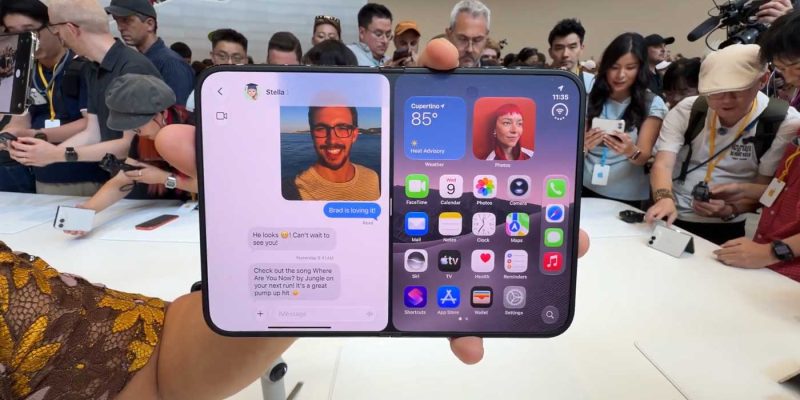
The software utilizes a dynamic scaling system that manages app continuity with minimal latency. During the keynote, Apple demonstrated how the OS adapts to the "half-folded" state—or "Flex Mode"—providing dedicated controls and interface elements that feel native rather than ported. Analysts suggest that this level of software-hardware synergy could force a shift in the Android ecosystem, as competitors may be compelled to redesign their own UX layers to match the fluidity of iOS 27. The competition is expected to be fierce, with major Android players likely to respond with software updates aimed at narrowing the usability gap within the next twelve months.
Market Implications and Industry Response
The launch of the iPhone Duo is not merely a product release; it is a signal that the foldable market has entered its "mainstream" phase. By entering the space, Apple validates the form factor for the general consumer, likely driving adoption rates higher. However, the presence of the crease and the visible UDC suggests that even Apple’s immense manufacturing leverage cannot yet bypass the laws of physics regarding flexible OLED displays.
From an economic perspective, the iPhone Duo is priced at the high end of the market, positioning it as a luxury item rather than a mass-market replacement for the standard iPhone line. This high price point, combined with the aforementioned design trade-offs, presents a nuanced value proposition. Consumers are paying for the Apple ecosystem integration and build quality, but they are also accepting the "early adopter" compromises that have defined the foldable category since its inception.

Looking Toward the Future
As more units reach the hands of consumers and independent repair shops, the long-term viability of the iPhone Duo’s display will become clearer. Apple has historically been proactive in addressing manufacturing defects through extended warranty programs, and observers expect the company to provide similar support for this device.
The broader impact of the iPhone Duo will likely be measured by how it influences the next generation of smartphones. If Apple successfully maintains its software lead, it could shift the industry focus away from raw hardware specifications and toward the "experience" of folding. For now, the iPhone Duo serves as a testament to the fact that while the foldable dream is reaching its most polished form yet, the technology remains in a state of rapid, iterative evolution. The device stands as a bridge between the traditional glass-slab smartphone and the flexible computing future, a bridge that is undoubtedly impressive, if not entirely seamless.